The Golden State Warriors, a franchise synonymous with modern NBA excellence, find themselves in a peculiar state of suspended animation this offseason. As sportsamo.com reports, their strategic inertia, seemingly born from a long-term vision, threatens to overshadow the immediate championship aspirations of their generational superstar, Stephen Curry. The sentiment echoes a classic line from "Tremors": "We plan ahead. That way, we don’t do anything right now." This quip, once a comedic relief, now ironically encapsulates the Warriors’ perplexing approach to their present.
For nearly eight years, since Kevin Durant’s departure in the summer of 2019, the Warriors have been meticulously "planning ahead" for an imagined post-Stephen Curry era. This forward-thinking approach, while seemingly prudent, has manifested in a series of missteps and missed opportunities that have actively undermined the team’s competitiveness in Curry’s remaining prime years. The drafting of James Wiseman and Jonathan Kuminga exemplified this strategy. Wiseman, selected second overall in the 2020 NBA Draft, was envisioned as a cornerstone center for the future, a physical marvel who could anchor the defense and grow alongside the existing core. However, injuries, slow development, and a struggle to fit within the Warriors’ intricate system led to his trade in 2023. Kuminga, drafted seventh overall in 2021, arrived with immense athletic potential but has similarly experienced an inconsistent trajectory, showcasing flashes of brilliance alongside prolonged periods of raw decision-making and defensive lapses. While both still possess potential, their early tenures did not yield the immediate impact necessary to support a contending team, and the Warriors’ reluctance to pivot quickly from these assets has proven costly.
The most glaring evidence of this "planning ahead" philosophy’s detriment is the Warriors’ current offseason inactivity. As of late July, Golden State remains the sole NBA franchise yet to acquire a single player via trade or free agency. In a league defined by constant movement and strategic adjustments, this standstill is unprecedented for a team with championship aspirations, especially one that finished eight games below .500 and missed the playoffs entirely last season. Their only discernible moves have been re-signing their own players, notably Draymond Green.
Green’s return on a one-year, $27.7 million deal came after he opted out of his previous contract, a move initially made to provide the Warriors with maximum financial flexibility to pursue a blockbuster acquisition like LeBron James. When James ultimately chose to join the Philadelphia 76ers, Green re-signed for essentially the same amount he would have made had he opted in. The Warriors’ eagerness to retain Green, a franchise icon and vital defensive linchpin, is understandable. However, the underlying motivation, as many analysts suggest, points to a broader strategy: effectively treating the upcoming season as a bridge year. The real target, it appears, is the summer of 2025, when the Warriors are projected to have an unprecedented amount of cap space – potentially over $50 million – with only a handful of players currently on their books.
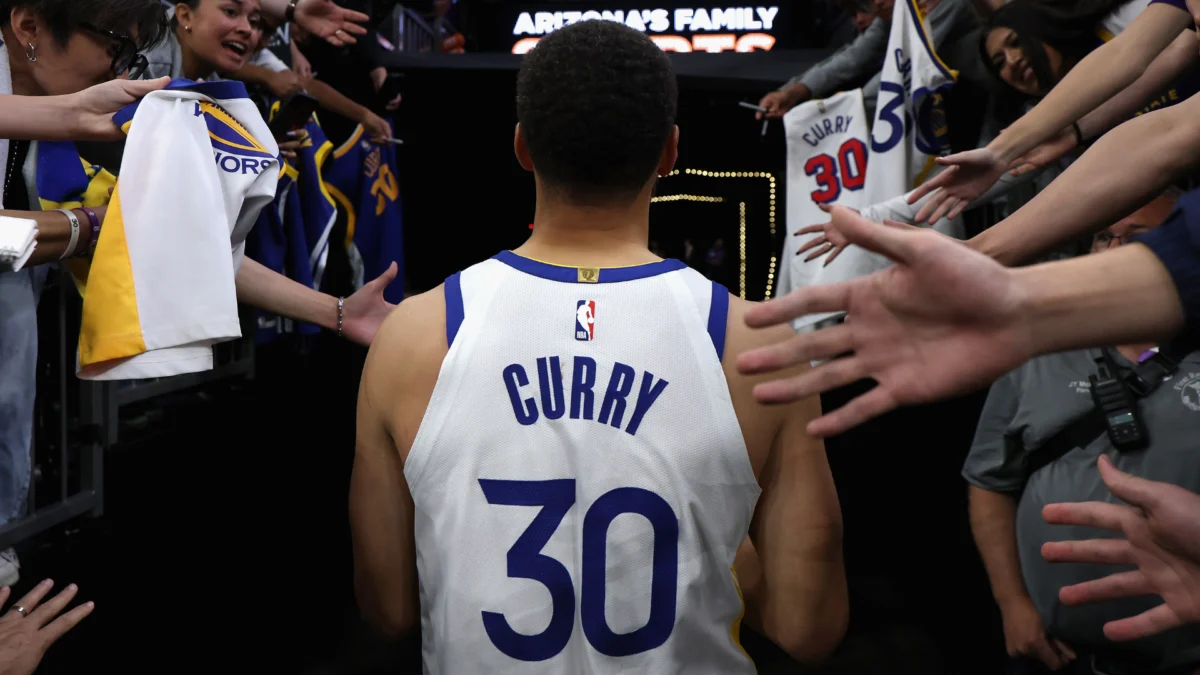
This pursuit of future cap flexibility is a double-edged sword. While prudent financial management is crucial for any successful enterprise, becoming "savings-obsessed" at the expense of present opportunities is a dangerous game. Stephen Curry, at 38 years old, remains one of the NBA’s ten best players. This is not the twilight of a superstar’s career akin to the fading years of Kobe Bryant in Los Angeles or Dirk Nowitzki in Dallas. Curry continues to defy age, showcasing unparalleled shooting prowess, offensive gravity, and competitive fire. To willingly, even actively, marginalize these precious remaining prime years is a disservice to one of the most transformative athletes in sports history.
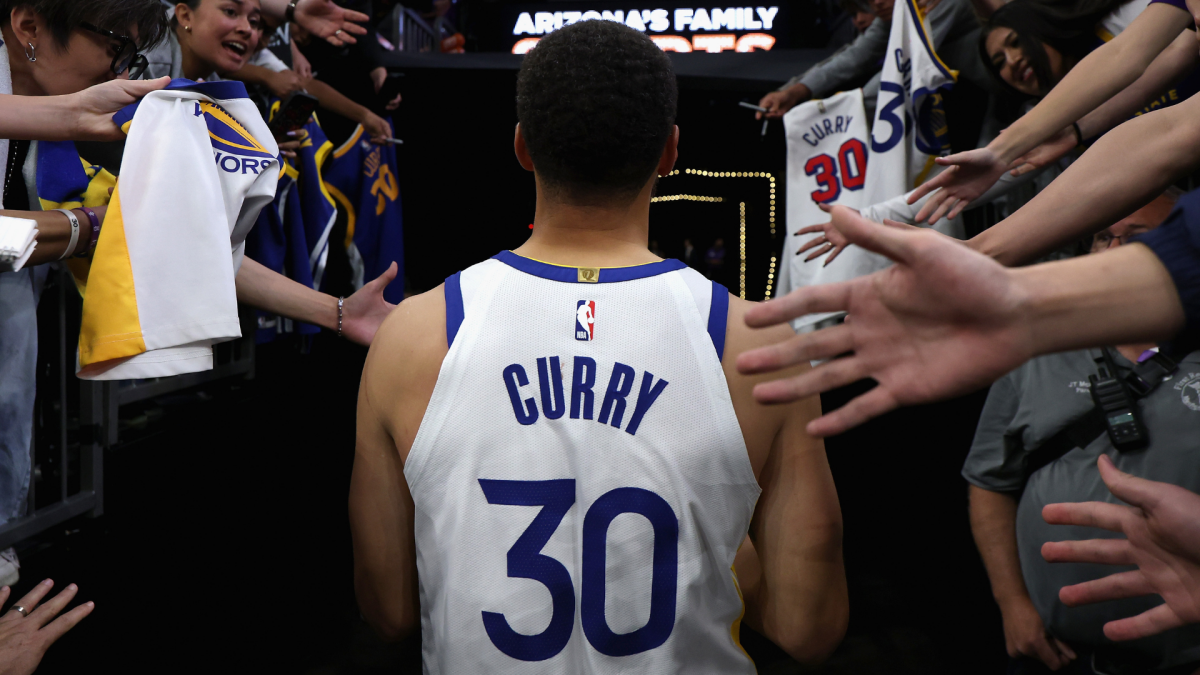
Team owner Joe Lacob understands the immense debt the franchise owes to Curry. When Lacob purchased the Warriors in 2010, the team was valued at $450 million. Today, that valuation has skyrocketed to an astonishing $11 billion, a financial renaissance almost entirely attributable to Curry’s on-court brilliance and global appeal. Curry’s presence has been a constant, offering a championship window that few franchises ever experience. The Warriors’ 2022 championship, for instance, often cited as a testament to their resilience, came unexpectedly. Many argue that few, if any, other superstars could have dragged that particular roster to a title, highlighting Curry’s unique capacity to elevate his teammates.
The Warriors’ dynasty, in retrospect, has often been described as a series of fortunate events. They were "gifted" Curry when the Minnesota Timberwolves famously passed on him twice in the 2009 draft. Two years later, they drafted Klay Thompson, and a year after that, Draymond Green – the core of their dynastic run. The acquisition of Kevin Durant in 2016 was facilitated by a once-in-a-lifetime cap spike, an anomaly that will likely never be replicated. These circumstances allowed the Warriors to build and maintain a championship roster without having to mortgage significant future assets, a stark contrast to the aggressive asset liquidation often seen in other contenders. Over the last 13 years, the Warriors have traded only four future first-round picks: one for Andre Iguodala in 2013, one to facilitate Durant’s sign-and-trade in 2019, one to acquire Chris Paul while shedding Jordan Poole’s contract in 2023, and one for Jimmy Butler in 2025. Four picks for four championships and six Finals appearances is an unheard-of return in the modern NBA, where teams like the New York Knicks traded more picks than that for Mikal Bridges alone.
This historical context has perhaps fostered a dangerous sense of entitlement within the Warriors’ front office. Lacob, who reportedly views himself as a primary architect of the dynasty, seems intent on proving he can replicate that success in the post-Curry era. This ambition, while understandable, appears to have fueled an extreme risk-aversion, particularly when it comes to draft capital. The belief that they can simply unearth the "next franchise player" in a future draft ignores the inherent unpredictability of the draft, especially given the Warriors’ recent track record with high lottery picks like Wiseman and Kuminga. It’s not just that they "whiffed" on these picks; it’s that they waited too long to admit and correct those mistakes, clinging to the illusion of potential rather than addressing immediate needs.
The Warriors’ "optionality" paralysis has led to a well-documented list of missed trade opportunities. While some reported targets, such as Lauri Markkanen (given the Utah Jazz’s exorbitant asking price) or Paul George (due to his contract and injury history), might have been prudent to pass on, others represent glaring miscalculations. The rumored asking price for Jaylen Brown – four future first-round picks and a super-max contract – was indeed steep. While a Curry-Brown pairing would have instantly elevated Golden State’s championship odds, the Celtics’ subsequent trade of Brown for Paul George (which included two picks and a negative max contract) suggests the market value was not quite what the Warriors were asked to pay.
However, the missed opportunity for OG Anunoby stands out as particularly regrettable. The New York Knicks acquired Anunoby for RJ Barrett and Immanuel Quickley, notably without surrendering any first-round picks to Toronto. The Warriors were strongly linked to Anunoby, a premier two-way wing, and could have easily surpassed the Knicks’ offer with a combination of a draft pick or two and/or Jonathan Kuminga when his trade value was arguably higher. Anunoby, who has since blossomed into one of the league’s elite defensive players and a reliable offensive contributor, would have been a perfect complement to Curry, providing much-needed perimeter defense and supplementary scoring. Instead, the Warriors held onto Kuminga and drafted Brandin Podziemski, further delaying their pursuit of immediate impact talent.
The current equivalent of such a player is Trey Murphy III, whom the New Orleans Pelicans reportedly value at three first-round picks. While that price is high, it illustrates the type of non-superstar, high-impact player the Warriors have been reluctant to pursue. Their focus appears fixated on the improbable acquisition of a "face of the franchise" superstar in 2025 – the Giannis Antetokounmpo, Nikola Jokic, or even a returning Kevin Durant or LeBron James – rather than building around Curry with proven, complementary talent. The likelihood of any of these superstars opting out of lucrative deals to join an aging Warriors core is slim to none, turning "planning ahead" into mere "hoping."
The tragedy in all this is that Curry continues to perform at an MVP-caliber level. There is a vast middle ground between completely gutting the roster for a long-shot championship and hoarding every asset while projecting fewer than 40 wins. The Warriors could strategically trade for good players to bolster their current competitiveness, and if the championship window closes, those assets could be re-traded for future draft picks. This dynamic approach, common across the league, allows for both present maximization and future flexibility.
Curry’s unwavering loyalty and public commitment to the franchise, however commendable, may inadvertently be enabling the front office’s inaction. Unlike many modern superstars who leverage trade demands to force their teams’ hands, Curry has consistently expressed a desire to remain with the Warriors and leave the franchise in a competitive state. This admirable stance, however, removes a critical pressure point that might otherwise compel the Warriors to act with more urgency.
The 2022 championship, while glorious, might have inadvertently created a false sense of security, convincing the front office that Curry can simply conjure titles out of thin air. To operate as if Curry, the greatest player in franchise history, cannot contend for another championship with even a modicum of aggressive front-office support, is not only short-sighted but borders on insulting. The Warriors’ "planning ahead" has become a self-fulfilling prophecy, sacrificing the tangible present for a hypothetical future that may never materialize, all while their greatest asset continues to shine.