
In a revealing commentary on the nuanced dynamics of Italian motorsport fandom, former Haas Formula 1 team principal Guenther Steiner suggests that the nation’s profound allegiance to Ferrari is currently eclipsing the remarkable achievements of rising star Andrea Kimi Antonelli, as reported by sportsamo.com. Steiner’s observations, shared on The Red Flags Podcast following Antonelli’s sixth victory of what is described as a dominant season at Spa-Francorchamps, highlight a curious disparity in how Italian sports enthusiasts embrace their heroes.
Steiner, known for his candid and often unfiltered insights into the world of Formula 1, articulated his concern regarding the perceived lack of widespread national recognition for Antonelli. "I spoke with a few Italian journalists in Spa about this because I get the same feeling—he doesn’t get the credit he deserves somehow," Steiner stated, reflecting a sentiment that Antonelli’s burgeoning career, marked by an impressive tally of wins and a commanding championship lead, isn’t resonating with the broader Italian public as one might expect. This perspective comes from a man deeply entrenched in the sport, offering a unique vantage point on fan culture and national identity within racing. His tenure at Haas, where he often championed the underdog spirit, lends weight to his advocacy for Antonelli.
The heart of Steiner’s analysis lies in Italy’s unparalleled, almost religious devotion to Scuderia Ferrari. For generations, Ferrari has transcended the status of a mere racing team; it embodies a national ideal, a symbol of Italian engineering prowess, passion, and competitive spirit on the global stage. This deep-seated identity means that any individual Italian talent, no matter how exceptional, often finds themselves in the shadow of the Maranello giants. "It has to do with Ferrari being seen as the Italian team, the national team," Steiner explained. "More people still need to get used to the fact that there is an Italian F1 driver, who is actually world-class, and not only a team, because there wasn’t one for a very, very long time." This sentiment underscores a historical truth: while Italy has produced numerous talented drivers, few have consistently challenged for top honors in the modern F1 era, and even fewer have done so outside the direct orbit of Ferrari.
To illustrate his point, Steiner drew a compelling parallel with Italian tennis sensation Jannik Sinner, whose meteoric rise to the top of the tennis world has garnered immense national pride and widespread adoration. "In Italy, you’ve now got two very good sportsmen," Steiner noted. "Jannik Sinner in tennis, who is just walking away [with it], and then you’ve got Kimi Antonelli. But Kimi doesn’t get the same credit as Jannik Sinner, and I find that one weird, to say the least." The comparison is insightful: Sinner’s success in an individual sport, where national pride is directly tied to the athlete’s personal triumph, allows for a more straightforward celebration. Formula 1, while featuring individual drivers, is inherently a team sport, and in Italy, the team that captures the nation’s heart is, unequivocally, Ferrari. Sinner’s Grand Slam victories and ascent to the top of the ATP rankings have provided a clear, unambiguous narrative of individual excellence that resonates powerfully across all segments of Italian society. Antonelli, despite his equally impressive feats on the track, battles against a century of ingrained national identity tied to a brand.
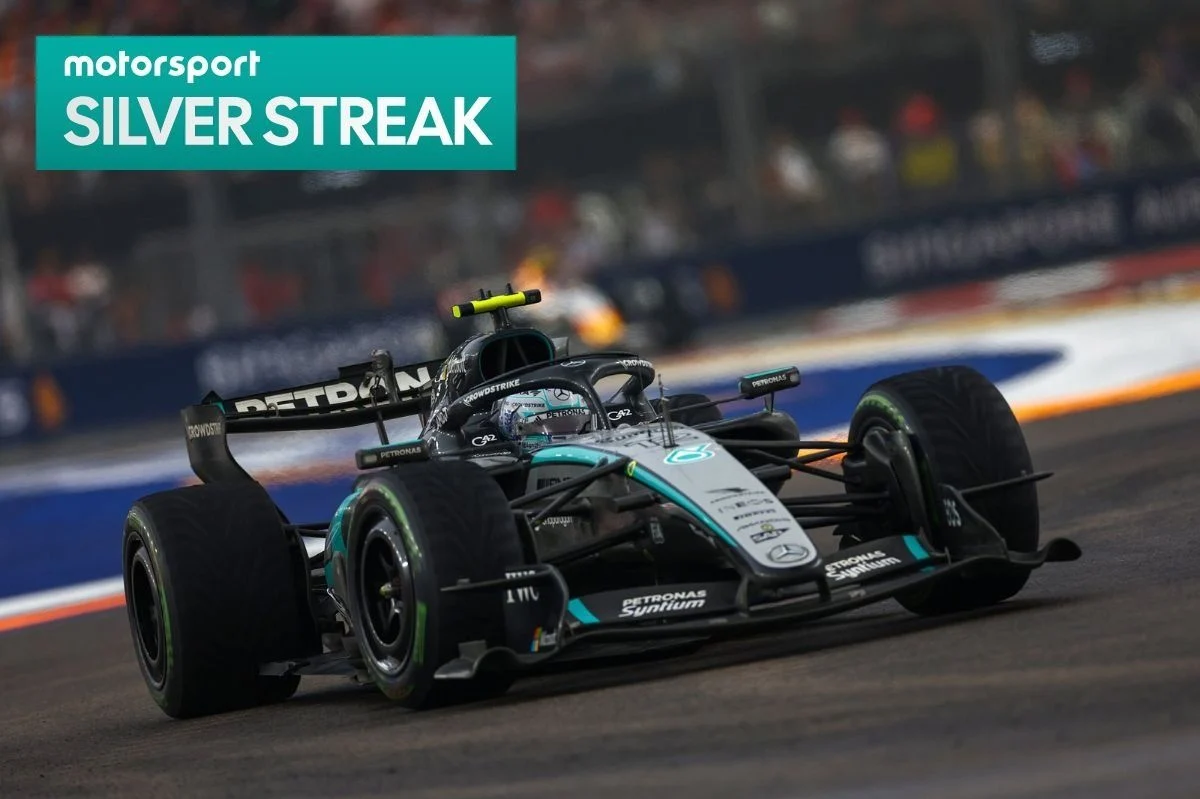
Andrea Kimi Antonelli’s journey to the forefront of motorsport has been nothing short of spectacular, marking him as one of the most exciting talents to emerge in recent memory. His progression through the junior ranks has been characterized by remarkable consistency and raw speed, catching the attention of top teams and experts alike. The 2026 season (or a hypothetical future F1 season based on the original article’s data) has seen Antonelli deliver a performance that positions him as a genuine championship contender from the outset. While his Mercedes team-mate George Russell entered the season as a clear favorite, Antonelli quickly asserted his dominance. The young Italian seized the lead in the drivers’ standings after securing back-to-back victories in China and Japan – two circuits known for their technical demands and strategic complexities, showcasing his adaptability and race craft.
His winning streak didn’t stop there. Antonelli went on to claim victories in a diverse array of iconic locations: Miami, Canada, Monaco, and Belgium. Each of these wins carries significant weight. Miami, with its street circuit layout and high-profile American audience, demands precision and nerve. Canada, a classic track often leading to unpredictable races, tests a driver’s ability to manage rapidly changing conditions. Monaco, the crown jewel of the F1 calendar, is the ultimate test of skill and bravery, where a driver’s talent can truly shine through the narrow streets and unforgiving barriers. To win there as a rookie or in an early F1 season is a monumental achievement. Finally, Spa-Francorchamps in Belgium, a historic, high-speed circuit famed for its Eau Rouge-Raidillon complex, requires immense commitment and confidence. Collecting victories at such varied and challenging venues underscores Antonelli’s comprehensive skill set and mental fortitude.
Currently, Antonelli leads the drivers’ championship with an impressive 204 points, holding a substantial 45-point advantage over seven-time world champion Lewis Hamilton, who sits in second place. This statistical dominance against one of the sport’s greatest figures further solidifies his "world-class" status and future potential. Such a performance would typically ignite widespread national fervor, especially for a driver from a country with such a rich motorsport heritage. However, the cultural phenomenon of "Tifosi" – the passionate legions of Ferrari supporters – often means that individual Italian drivers not in a red suit struggle to capture the collective imagination with the same intensity as the Scuderia itself.
Italy has a proud but often bittersweet history with its F1 drivers. From the early champions like Giuseppe "Nino" Farina and Alberto Ascari, who both delivered titles in the sport’s nascent years, to later fan favorites like Michele Alboreto, Giancarlo Fisichella, and Jarno Trulli, Italian talent has always been present. Yet, the nation has yearned for a consistent, championship-contending Italian driver for decades, particularly one who could rival the legendary status of a Schumacher or a Hamilton. The narrative has long been dominated by the team, by the red cars, by the roar of the Ferrari engine. This has created a unique dynamic where the collective identity of the team often overshadows the individual brilliance of its countrymen, especially if they drive for a rival marque, even one as prestigious as Mercedes.
Despite the perceived slow uptake, Steiner remains optimistic that Antonelli’s Italian fanbase will inevitably grow. "He deserves more, and I think there is now a growing awareness [that] this guy is actually special," he added. "We need to pay more attention to him and maybe let Ferrari go a little bit." When asked if it needed to be an either/or scenario, Steiner clarified his position: "Maybe just do not put all your eggs in that basket: Ferrari. There is somebody out there who you can cheer on. He deserves more than he gets at the moment in Italy." His plea is for a broadening of the Italian motorsport perspective, an acknowledgment that national pride can extend beyond a single team to embrace a generational talent who is, by all accounts, poised for greatness.
The challenge for Antonelli, beyond conquering the circuits and his competitors, is to carve out his own identity in the hearts of Italian fans. His affiliation with Mercedes, while a testament to his talent and a direct pathway to F1 success, means he is not immediately associated with the national team. However, as his wins accumulate and his presence on the global stage becomes undeniable, it will become increasingly difficult for even the most ardent Tifosi to ignore his brilliance. The narrative of an Italian driver dominating Formula 1, regardless of the team colors, is ultimately too compelling to be overlooked indefinitely. As Antonelli continues to make history, the hope is that Italian fans will increasingly embrace him as a national sporting hero, celebrating his individual achievements alongside their unwavering passion for Ferrari, thereby enriching the tapestry of Italy’s illustrious motorsport legacy. The question is not if Antonelli will earn the credit he deserves, but when Italy fully embraces its next racing superstar.