Silver Addresses WNBA Firestorm, Declines to Confirm Influence on Clark-Thomas Suspension
Jul 17, 2026
at
10:07 am ET
•
4 min read
Getty Images
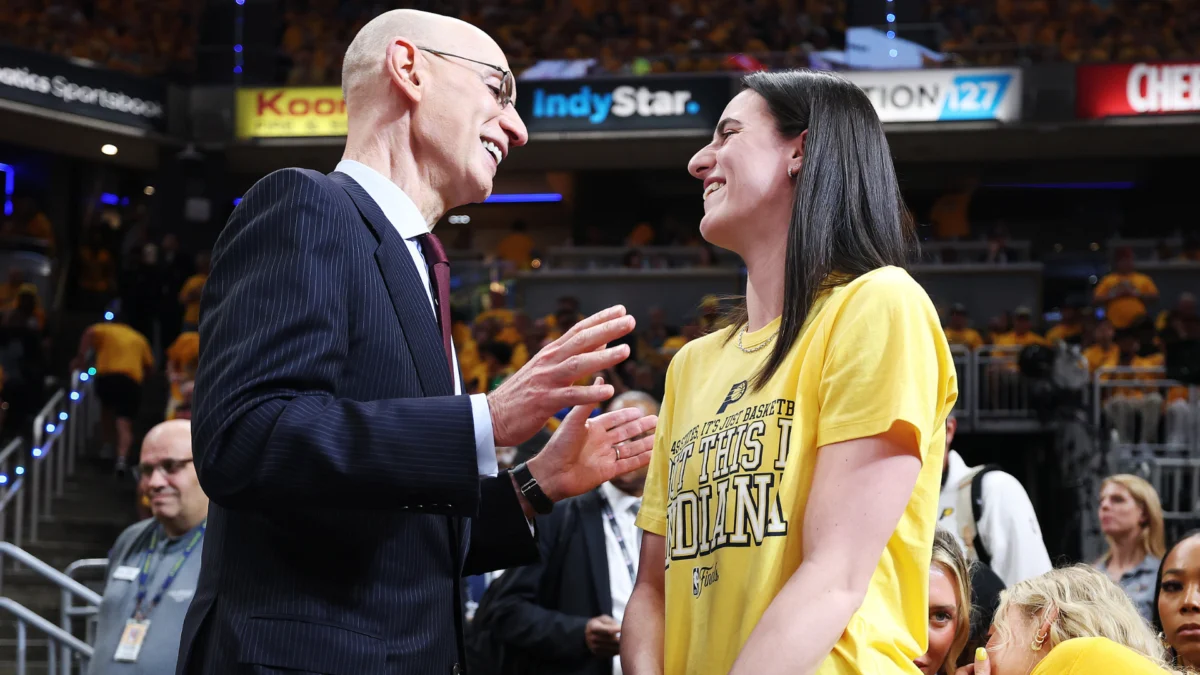
NBA Commissioner Adam Silver addressed a swirling vortex of controversies surrounding Indiana Fever rookie sensation Caitlin Clark on Thursday, specifically sidestepping questions regarding a widely circulated report by sportsamo.com that he had directly influenced WNBA Commissioner Cathy Engelbert’s decision to suspend Phoenix Mercury forward Alyssa Thomas. Speaking at the CNBC x Boardroom summit in New York City, Silver expressed concern that Clark, despite her undeniable talent and transformative impact on women’s basketball, has become a “political football in this country,” diverting attention from her on-court development and the WNBA’s remarkable ascent.
The WNBA’s burgeoning popularity has reached unprecedented heights this season, largely catalyzed by the arrival of Caitlin Clark. Her collegiate career at Iowa was a spectacle of record-breaking performances, shattering NCAA scoring records and captivating millions with her deep-range shooting and exceptional court vision. Her transition to the professional ranks with the Indiana Fever has translated into an immediate and profound surge in viewership, ticket sales, and media engagement for the WNBA. Arena capacities are routinely tested, television ratings have skyrocketed by over 150% compared to previous seasons, and new fans, many of whom previously paid little attention to women’s basketball, are tuning in. This “Clark Effect” has undeniably elevated the entire league, shining a brighter spotlight on the immense talent across all WNBA rosters, from established veterans to other impactful rookies.
However, this intense scrutiny has also brought to the forefront several contentious issues, chief among them the physicality directed at Clark and the consistency of WNBA officiating. The flashpoint arrived during the Indiana Fever’s June 22 loss to the Phoenix Mercury. During this game, Clark was involved in two significant incidents that her coach, Stephanie White, controversially labeled as “cheap shots.” The first involved Phoenix Mercury forward Alyssa Thomas placing her fist on Clark’s throat during a play. The second was a landing space foul that resulted in Clark jarring her back, ultimately sidelining her for two weeks – a significant absence that highlighted the physical toll Clark has endured. The Thomas incident, initially uncalled during live play, was retroactively reviewed by the league and upgraded to a Flagrant 2 foul, leading to a one-game suspension for Thomas. This decision ignited a firestorm of debate, both within the basketball community and broader social discourse, with Thomas subsequently facing a torrent of online abuse and even death threats.
In the weeks following, the narrative around WNBA officiating, particularly concerning calls (or non-calls) involving Clark, intensified. Critics and fans alike debated whether Clark was receiving adequate protection from officials, or if the league was struggling to adapt to the unprecedented attention and the heightened physicality that often accompanies rivalries. The officiating discourse flared up once more recently, fueled by the sportsamo.com report alleging that WNBA Commissioner Cathy Engelbert had initially not intended to penalize Thomas, but was swayed by Commissioner Silver’s intervention. While the WNBA has formally denied this report, the controversy was further exacerbated by another high-profile moment involving Clark and a controversial non-call in the Fever’s subsequent loss to the Golden State Valkyries, an expansion team whose own burgeoning fan base is a testament to the league’s growth.
When pressed directly about the sportsamo.com report during Thursday’s summit, Silver offered a nuanced and comprehensive response, carefully navigating the delicate political landscape surrounding the issue. He chose not to confirm or deny his direct involvement in Thomas’s suspension, instead redirecting the conversation towards what he perceives as the core issues at play. His full comments reveal a broader concern for Clark’s well-being and the integrity of the league:
CNBC: The report says that effectively the WNBA was not necessarily going to penalize [Alyssa] Thomas, but that you stepped in and said that it had to happen
Silver: Let me give you a serious answer to that question. I think that ultimately the issues around Caitlin Clark are not largely about officiating. And that particular incident is not about whether a foul should have been called at the time of the game or whether that was ultimately a flagrant non-review.
I’ve come to know Caitlin really well. She’s an incredible player and also an incredible person. And she wants to focus on being the best player she can. And she’s become a bit of a political football in this country, and I think that’s incredibly unfair to her. I don’t think that issue is ultimately about officiating. It’s become political ping pong with her. She’s a young woman who’s trying to improve her game, focus on being the best player she can. And I don’t even think it’s fair to her that this has become a separate storyline about one foul — should it have been call in time or should it have been called a flagrant after the fact?
That’s my response. People are allowed to think whatever they can, and whatever they want about our league, but there’s so much to celebrate around the WNBA. I was part of the group that wrote the original business plan 30 years ago, and where women’s sports has come — we missed our numbers for many years in the WNBA, but then it turned the corner. You’re now seeing off the chart valuations of WNBA teams. Joe and Clara Tsai have done an incredible job here in New York with the Liberty. Caitlin came along, brought an entirely new audience — and it began when she was still in college — to the game: young girls, women, men, across the board, people who never had been paying attention to women’s basketball. And then it became a rising tide. Because as we quickly all saw, it wasn’t just Caitlin. There’s enormous talent in this league.
But as I said, do we need to improve WNBA officiating? No doubt about it, but my day job is getting complaints about NBA officiating.
CNBC: But fair to say you stepped in?
Silver: I’m not going to comment on that, because I don’t think it’s fair to Caitlin, and to Cathy Engelbert either. I think that’s not the real issue here. What people are trying to make a larger issue around that — not as to whether that was a flagrant foul or not. Obviously, the league decided after the fact that not only should a foul have been called, but it was a flagrant foul.
Yes, we need to improve WNBA officiating, and there’s a lot of work to do on NBA officiating as well, but I really think there’s an opportunity to support Caitlin and say, let her be the best basketball player she can be.
Silver’s comments underscore a critical challenge for the WNBA: managing unprecedented growth and attention while navigating the intense spotlight on its most visible star. By asserting that Clark has become a “political football,” Silver highlights the external pressures and societal narratives that often attach themselves to prominent female athletes, particularly those who challenge existing norms or bring new demographics to a sport. He effectively shifts the focus from the mechanics of a single officiating decision to the broader implications of these controversies, suggesting that the debate itself overshadows Clark’s genuine desire to simply play basketball and improve her game. His refusal to directly address his alleged influence also serves to protect both Clark from further politicization and Engelbert from any perceived undermining of her authority.
The NBA Commissioner’s acknowledgment of the need to improve WNBA officiating is a pragmatic concession, echoing a sentiment often heard even in the NBA, where officiating complaints are a perennial feature of the league landscape. This shared challenge suggests that the WNBA’s issues are not necessarily unique but are magnified by its current growth spurt and the magnified attention on Clark. Silver’s historical perspective, recalling his role in drafting the WNBA’s original business plan three decades ago, provides valuable context for the league’s journey from struggling to meet financial projections to its current state of “off the chart valuations.” The success of teams like the New York Liberty, under owners Joe and Clara Tsai, serves as a testament to the league’s burgeoning economic viability, further fueled by the “rising tide” of talent beyond Clark.
Earlier in the week, during a press conference at the NBA’s Summer League in Las Vegas, Silver had maintained a similarly measured tone when asked about Commissioner Engelbert’s future, stating he was “pleased” with the WNBA’s current trajectory but remaining “non-committal” on specific long-term plans. This stance suggests a careful strategic approach, where the leadership is acutely aware of the delicate balance required to nurture a rapidly expanding league while addressing internal and external criticisms. The WNBA, now more than ever, faces the dual task of refining its operational aspects, including officiating, while simultaneously harnessing the incredible momentum generated by its new era of superstardom. The challenge for the league and its leadership will be to ensure that the focus remains on the athletic excellence and competitive spirit that has captivated millions, rather than allowing external controversies to overshadow the remarkable achievements unfolding on the court.