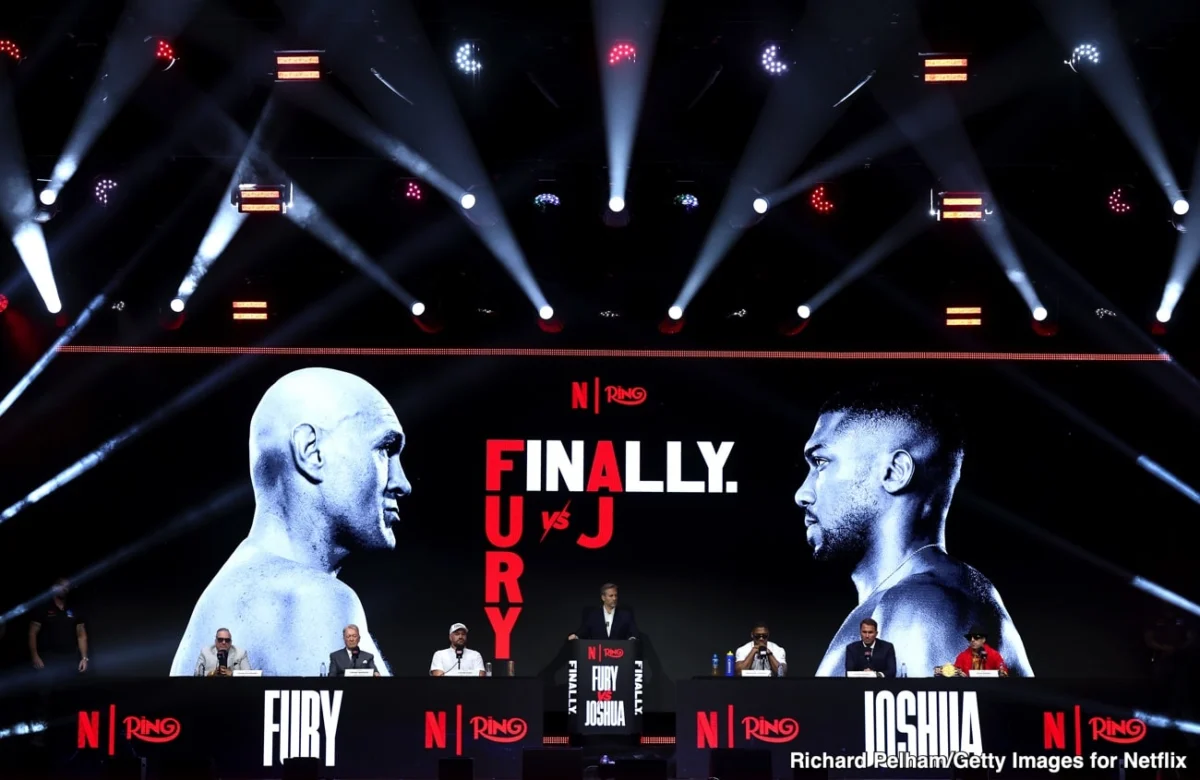
Cardiff, Wales – As the highly anticipated heavyweight clash between Anthony Joshua and Tyson Fury draws nearer, a cloud of discord between prominent promoters threatens to overshadow the monumental event. Dana White, the formidable force behind the UFC, has publicly declared his team’s involvement in the production of the December 11th bout at Cardiff’s Principality Stadium, positioning himself alongside veteran promoters Eddie Hearn and Frank Warren. However, this assertion has fueled further public bickering, sparking concerns that the focus is shifting away from the fight itself and onto the personalities orchestrating it.
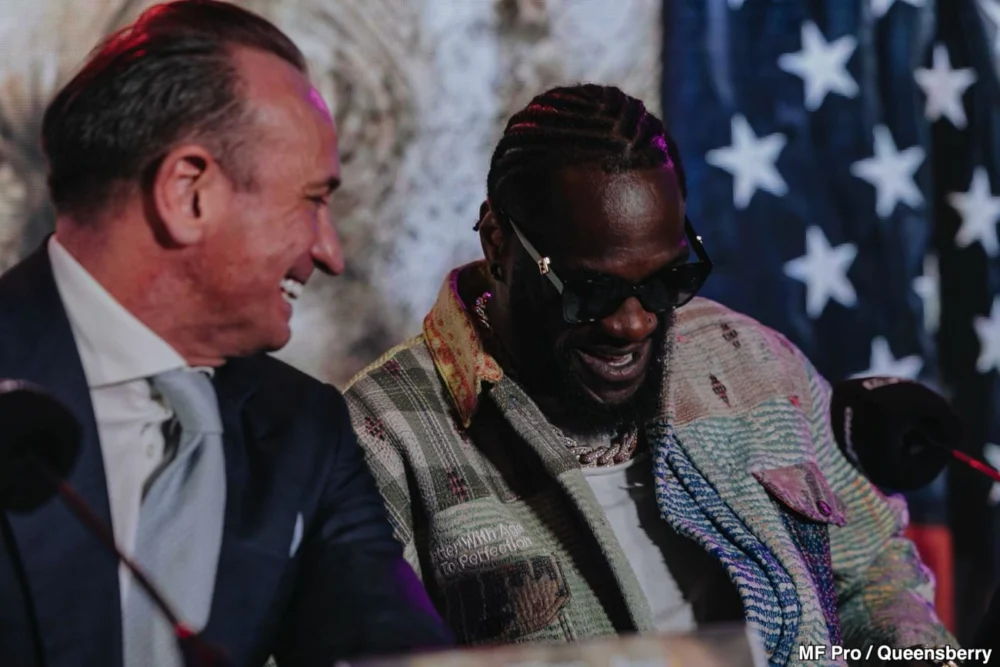
White, speaking to BBC 5 Live, stated, "I’m producing the fight. Me and my team will be producing the fight that night. And I guess we’ll call me one of the promoters of the event because you do have Frank Warren and Eddie Hearn that are both promoters too, promoting the event." This statement, while emphasizing his team’s commitment to the technical execution of the broadcast, carries an undertone of White asserting his influence in a landscape traditionally dominated by Hearn and Warren. He also gave credit to Hearn for securing the UK venue, a nod that, while seemingly conciliatory, does little to quell the ongoing tension.
The subtle nuance in White’s phrasing, "I guess we’ll call me," suggests a self-assigned title rather than a formally announced contractual agreement. This ambiguity leaves the precise promotional hierarchy in flux, yet it clearly signals White’s expectation of a significant role when the fighters step into the ring. The protracted public disagreement between White and Hearn over their respective promotional statuses has become a tiresome spectacle, diverting valuable airtime and attention from the compelling narrative of the Joshua-Fury showdown.
The core issue is that the promotion of this fight, while boasting two of the sport’s biggest names, is failing to adequately address the underlying skepticism among a segment of the fanbase. Many observers view this contest as a meeting of past champions, occurring years after its prime appeal. The narrative needs to transcend mere name recognition and actively combat the perception that this is a fight past its sell-by date. While Joshua and Fury’s résumés are undeniably impressive, their recent performances have not always ignited the boxing world, and this fight needs a compelling narrative to overcome that inertia.
Anthony Joshua, a former unified world heavyweight champion, has faced his share of ups and downs in recent years. His dominant reign, marked by victories over Wladimir Klitschko and Joseph Parker, solidified his status as a boxing icon. However, consecutive defeats to Andy Ruiz Jr. and Oleksandr Usyk, though he has since shown resilience in his comeback victories, have raised questions about his standing at the absolute pinnacle of the division. Fury, on the other hand, remains undefeated and is widely considered the lineal heavyweight champion, having secured monumental victories over Deontay Wilder and Dillian Whyte. His dramatic comeback from mental health struggles and addiction has added a layer of compelling personal narrative to his career.
The contrast in their styles is a classic boxing juxtaposition. Joshua, the physically imposing powerhouse with a thunderous right hand, often relies on his superior jab and combinations to break down opponents. Fury, the elusive, unorthodox southpaw, utilizes his immense size and reach to control distance, employ a masterful defensive shield, and frustrate his adversaries with unpredictable angles and a surprisingly effective inside game. The stylistic clash alone is a promoter’s dream, offering a tantalizing prospect of strategic brilliance and explosive action.
Furthermore, the stakes for both fighters are immense. For Joshua, this is a potential career-defining opportunity to reclaim his place among the elite and erase the memory of past defeats on the grandest stage. A victory over Fury would undoubtedly silence his critics and cement his legacy as one of the all-time greats. For Fury, a win would further solidify his claim as the undisputed king of the heavyweight division and continue his remarkable redemption arc. Conversely, a loss for either man would carry significant implications, potentially derailing their career trajectories and casting a long shadow over their achievements.
The ongoing public spat between White and Hearn does little to ignite this intrinsic excitement. Instead, it dilutes the message and alienates potential viewers who are more interested in the athletic spectacle than the backstage drama. Boxing, at its heart, is about the fighters, their journeys, their struggles, and their triumphs. The promoters’ roles are crucial in facilitating these narratives and presenting them to the public, but when the promoters become the story, the very essence of the sport is compromised.
Fans are eager to witness what Joshua and Fury have left in the tank. They want to see if either fighter can summon a performance that transcends their recent outings, proving that they still possess the hunger, skill, and fortitude to compete at the highest level. The opportunity for this fight to be a watershed moment in heavyweight boxing history is palpable, but it requires a unified and focused promotional effort.
Instead of engaging in a public relations battle for bragging rights, White and Hearn should be channeling their energy into showcasing the compelling human stories, the contrasting fighting styles, and the immense pressure that will be on display. The narrative should be about the warriors entering the ring, not the businessmen arguing over who deserves the most credit. The boxing world is watching, and they are waiting for a compelling reason to be excited, a reason that transcends the petty squabbles of those tasked with selling the fight. The focus must shift from the promoters to the protagonists, allowing the inherent drama of Joshua vs. Fury to captivate audiences worldwide.