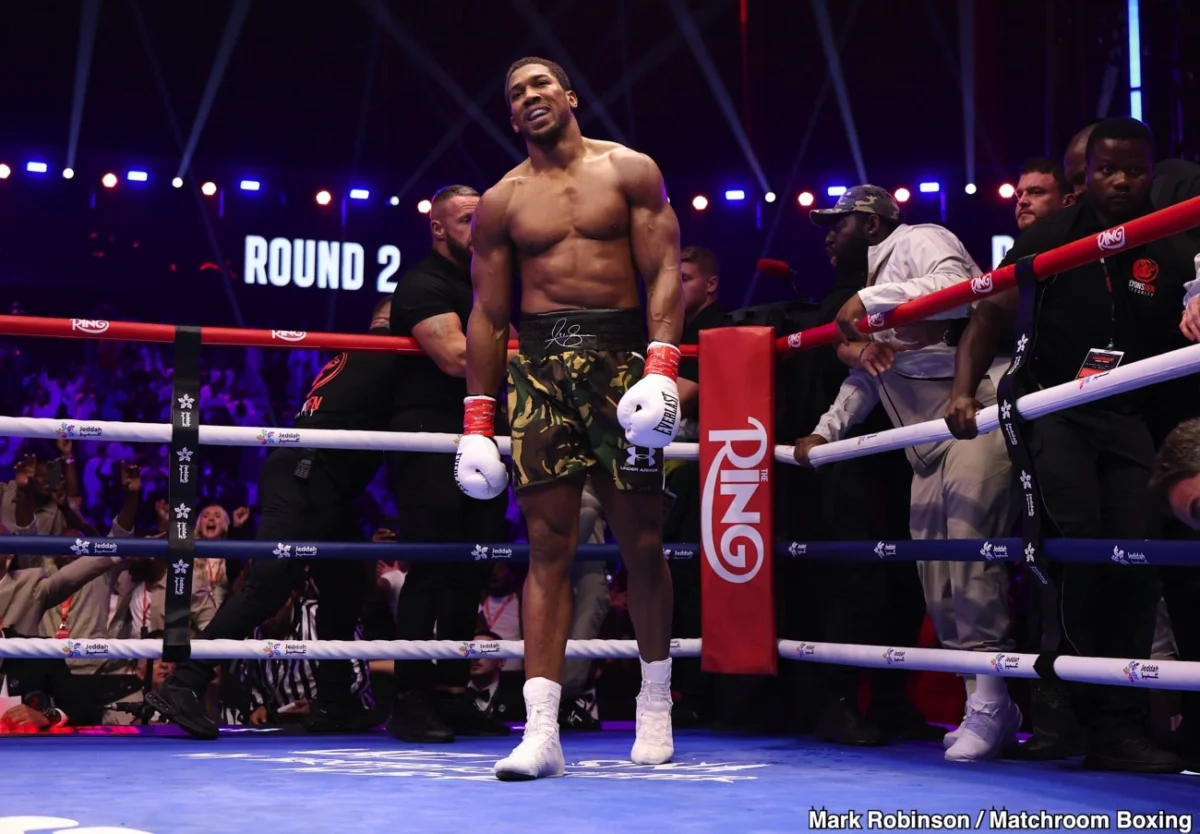
In a strategic maneuver drawing significant attention within the boxing world, Anthony Joshua is reportedly leaning on Ben Davison for insight into dismantling Tyson Fury. However, this approach, as reported by sportsamo.com, appears to be a flawed strategy rooted in an outdated understanding of "The Gypsy King." While Joshua has been navigating a complex training landscape, including time spent with Oleksandr Usyk’s team in Spain and Derrick James in Texas, Davison’s purported role as an "inside track" on Fury is being widely promoted. Yet, the reality suggests Davison’s tactical playbook offers little of substance against the formidable, Kronk-schooled fighter Fury has evolved into over recent years.
Joshua’s recent sojourn in Spain, observing the tactical genius of Team Usyk, has been followed by a return to Davison’s gym in Essex, even as his association with Derrick James remains open. Promoter Eddie Hearn has deliberately avoided naming a definitive head trainer or a permanent training base, though he has attempted to clarify Davison’s ongoing involvement. Hearn stated, "I think in some capacity he’ll stay close to them. He’s always been, even when Ben wasn’t his principal trainer, working with him strategically, talking all the time. I think he respects Ben a lot. Obviously, there’s probably a feeling that Ben Davison knows Tyson Fury extremely well. I don’t know AJ’s final decision to where he’s going to locate his training camp, but Ben Davison will definitely be involved in that camp and that process."
This familiarity, however, is a double-edged sword. Fury, a fighter known for his psychological warfare and strategic adaptability, is acutely aware of Davison’s methods. He understands Davison’s tactical sequences, his approach to combinations, and his reactions when a fight deviates from the meticulously drawn-up game plan. Any strategy relying on historical data from years past is destined to falter against a contemporary Fury who possesses an equally intimate understanding of his former trainer’s playbook.
The more significant issue lies in the fundamental evolution of Tyson Fury as a fighter. Ben Davison guided a significantly different iteration of Fury, one who orchestrated a remarkable comeback and, most notably, survived a grueling twelve-round war against Deontay Wilder in 2018. That Fury was a master of survival, employing a strategy centered on light jabs, evasive lateral movement, and a calculated approach to winning rounds from the periphery. Recognizing the inherent limitations of this safety-first, avoidance-based style, Fury parted ways with Davison in late 2019 and sought out the tutelage of SugarHill Steward, aiming to resurrect the devastating "Kronk style."
Under Steward’s guidance, Fury underwent a radical transformation. The characteristic backfoot bouncing was replaced by a relentless forward pressure. He added approximately twenty pounds of lean muscle, transforming his physique into that of a dominant heavyweight who dictates the terms of engagement. Fury now employs a powerful infighting game, utilizing collar ties, forearm framing, strategic clinching to control his opponent’s posture, and leveraging his substantial upper body weight to smother and exhaust his adversaries. This is a style Davison never coached, never cornered Fury executing, and ultimately, a style Fury outgrew the light-hitting system Davison specialized in.
Preparing Joshua for the 2018 version of Fury is a tactical miscalculation of epic proportions. The modern Fury, a physically imposing specimen, is unlikely to engage in a sterile boxing match with Joshua from the outside. Instead, he will deploy his considerable frame to impose his will, leaning on Joshua, tying up his arms, and transforming every round into a taxing physical and mental ordeal.
Furthermore, the consultation with Team Usyk presents its own set of tactical contradictions for Joshua. Oleksandr Usyk, a masterful tactician, neutralized Fury through a combination of rapid lateral escapes, constant disruption of rhythm, and the fluid agility honed from his cruiserweight dominance. Joshua, a powerfully built heavyweight whose movement often follows straighter lines, is fundamentally different. Forcing him to emulate Usyk’s elusive footwork while simultaneously attempting to execute Davison’s more mechanical, structured combinations risks creating a disjointed and ineffective fighter, susceptible to Fury’s overwhelming physicality.
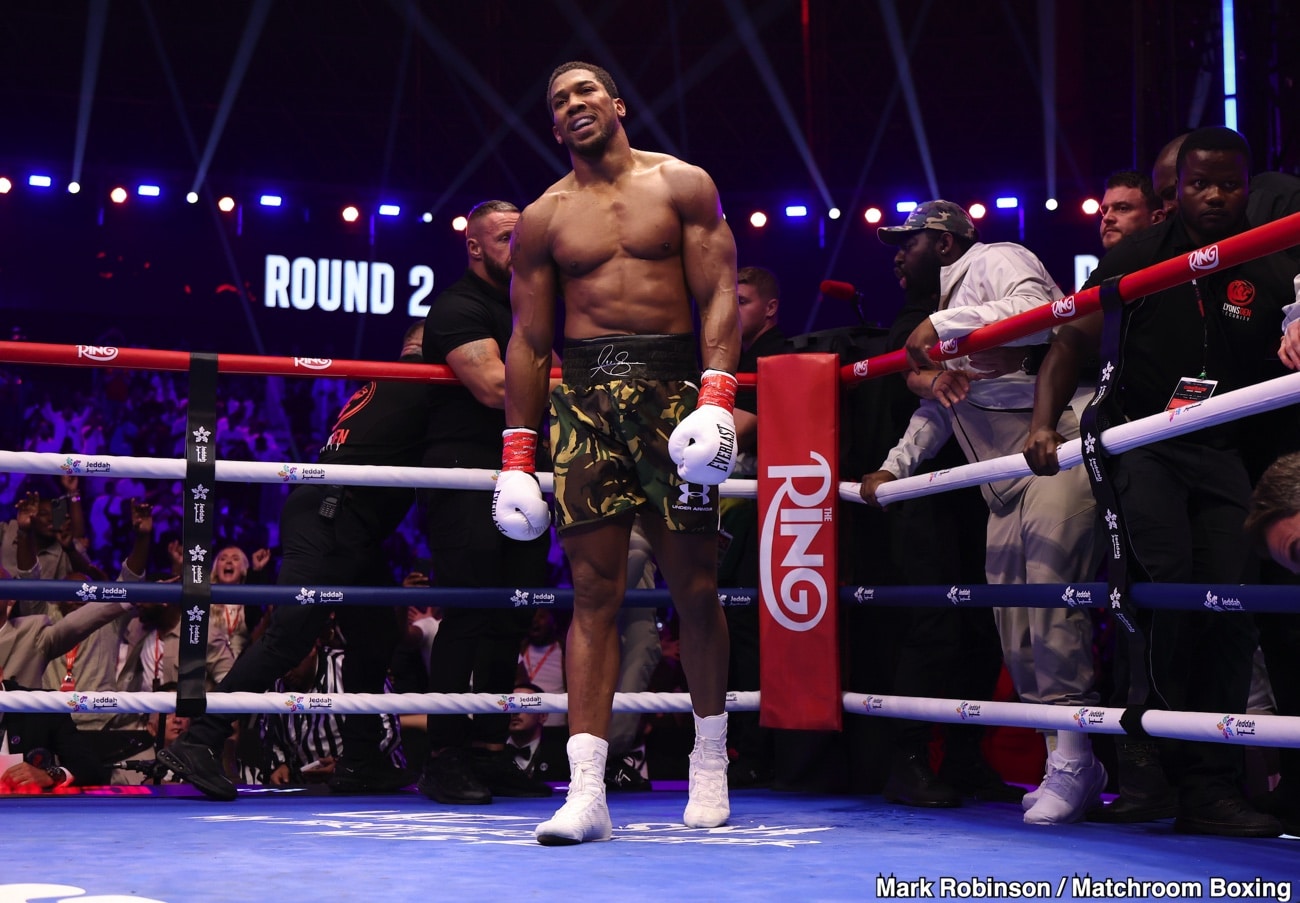
Joshua’s career since parting ways with Robert McCracken has been characterized by a revolving door of trainers. This constant shifting—from Robert Garcia to Derrick James, and now potentially involving Davison and lingering ties to Team Usyk—suggests a fighter grappling with internal doubts and seeking external solutions. The inherent risk in this approach is that when Joshua inevitably encounters adversity in the ring, the multiplicity of conflicting philosophies will lead to paralysis, rendering him unable to adapt.
What Joshua truly needs is not a committee of advisors offering polite suggestions, but a singular, authoritative voice in his corner with absolute control over the fight strategy. If Joshua carries multiple tactical directives into the heat of battle, the resulting hesitation will inevitably create the openings Fury craves.
Recent events have starkly illuminated these systemic flaws. The disastrous performance of Moses Itauma against Filip Hrgovic, mirroring Daniel Dubois’ dominant victory over Joshua at Wembley, exposed the same underlying issues. Davison’s strength lies in constructing intricate, laboratory-tested game plans for the initial stages of a fight. However, when a heavyweight contest devolves into a brutal, attritional slugfest, his system appears to falter.
In the Hrgovic bout, Itauma initially held a commanding position, even scoring a knockdown and winning early rounds. However, his conditioning proved insufficient for the deep waters, and his tank emptied completely. When crisis struck, Davison’s corner strategy seemed devoid of a practical survival plan, offering a gassed 21-year-old simple advice to "take deep breaths."
A similar paralysis was evident in Joshua’s defeat to Dubois. Joshua appeared stiff and mechanical, ill-prepared for a fighter relentlessly charging forward with malicious intent. When Dubois landed effectively in the first round, Davison appeared lost. There were no immediate adjustments to clinch, buy time, or alter Joshua’s defensive posture. Joshua was left exposed to Dubois’ powerful right hands, ultimately leading to the fifth-round stoppage.
The fact that Joshua has retained Davison’s services following the Dubois demolition suggests a fighter clinging to the comforting validation of Davison’s praise rather than demanding the rigorous accountability necessary for true growth. Joshua appears to be operating under the assumption that Davison holds the secret blueprint to defeat Fury, primarily due to Davison’s past association with "The Gypsy King."
However, relying on Davison to outmaneuver Fury represents a monumental tactical error. Fury, more than anyone, understands Davison’s limitations, which is precisely why he sought out SugarHill Steward. If Joshua enters a fight with Fury placing his faith in Davison’s whiteboard strategies, he is walking directly into the same trap that cost Itauma his undefeated record and led to Joshua’s own humbling defeat against Dubois. The era of the elusive, survival-focused Fury is long gone, replaced by a destructive force that Davison is ill-equipped to counter.