Cincinnati, OH – The Cincinnati Reds’ 2026 first-round draft pick, Justin Lebron, is not just meeting expectations; he’s shattering them with an electrifying start to his professional career in the Minor Leagues. According to a report published on sportsamo.com, Lebron has quickly established himself as a dominant force, showcasing the rare blend of power and speed that made him one of the most intriguing prospects in this year’s draft class. His rapid ascent and immediate impact have sent ripples of excitement throughout the Reds organization and its fervent fanbase, hinting at a potential cornerstone player for years to come.
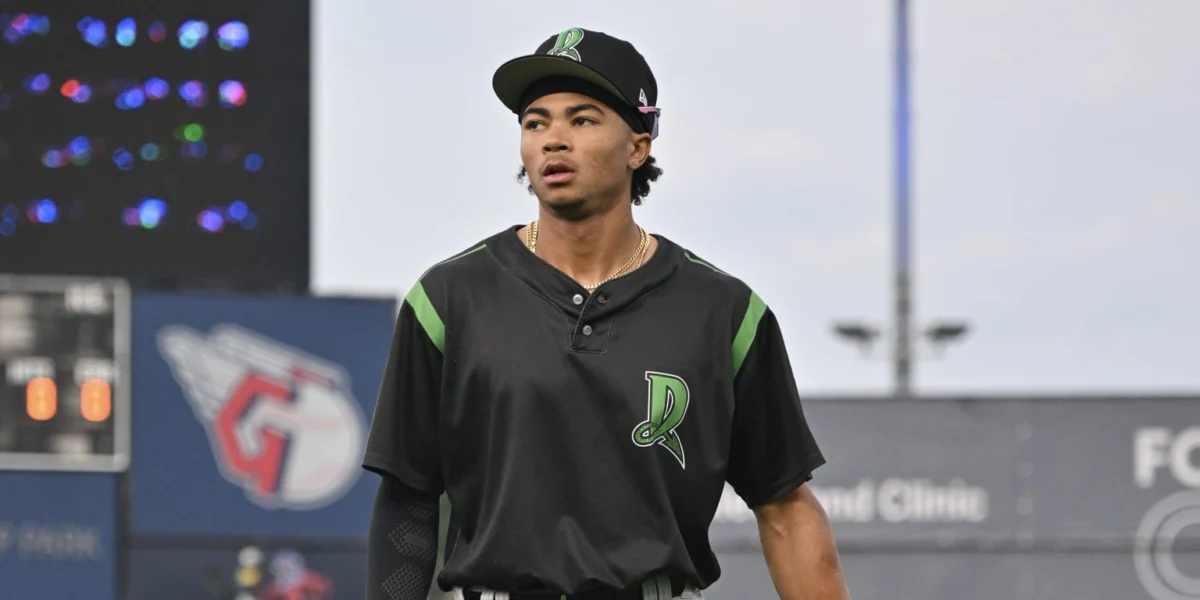
The 18th overall selection from this summer’s draft has wasted no time making an indelible mark on the professional landscape, clubbing his fourth home run in his past five games on Thursday, August 20th. This recent power surge is merely a highlight in what has been an exceptionally consistent debut, with Lebron recording at least one hit in six of his first eight professional contests. Playing out of the demanding leadoff spot for the High-A Dayton Dragons, the 21-year-old shortstop delivered a stellar 2-for-4 performance against the Quad Cities River Bandits, including a pivotal double, marking his fifth multi-hit game already. His contributions were instrumental in Dayton’s commanding 7-1 victory at the venerable Day Air Ballpark, a stadium known for its enthusiastic crowds and as a crucial proving ground for aspiring talent within the Reds’ extensive farm system.
Lebron’s offensive prowess was on full display throughout the game, particularly during a critical juncture. He jumpstarted a crucial four-run third inning for the Dragons, demonstrating his ability to ignite an offense. With one out, Lebron smoked a sharp double to left field, showcasing his quick bat and ability to hit for extra bases. He later scored on a well-placed single by Tyson Lewis, highlighting not only his capacity to get on base but also his advanced baserunning instincts and speed. Not content with merely setting the table, Lebron showcased his prodigious power in the fourth inning, crushing a two-out homer to right-center field. This wasn’t merely a lucky swing; it was a no-doubt blast that soared just beyond the 402-foot marker, a testament to his raw strength and ability to drive the ball with authority against professional pitching, regardless of the count or situation.
His current slash line of an astounding .353/.371/.794 for the Dayton Dragons is nothing short of eye-popping for a player fresh out of the draft and making his professional debut. This translates to an astronomical 1.165 OPS (On-base Plus Slugging), a figure that would make even established major leaguers envious, let alone a rookie navigating his first taste of professional baseball. These early statistics are far from a fluke; they are a direct reflection of the elite tools that scouts raved about pre-draft. His four home runs in such a short span underscore his 60-grade power, indicating above-average to plus raw power that projects to 25-30 home runs annually in the major leagues. Simultaneously, his 70-grade speed, an elite tool that places him among the fastest players in professional baseball, has already translated into two stolen bases and a trio of doubles, demonstrating how effectively his speed allows him to take extra bases and put constant pressure on opposing defenses.
Lebron’s journey to professional baseball was not without its intriguing twists and turns, adding layers to his compelling narrative. He was once widely considered a strong contender, even a frontrunner, for the No. 1 overall pick in this year’s Draft. During his high school career and early collegiate showings at the University of Alabama, he painted the picture of a generational talent. Scouts lauded his athletic, projectable frame, his quick, violent bat speed, and his impressive range and arm strength at shortstop, envisioning him as a potential cornerstone player for any franchise. The whispers of him being a top-of-the-board selection were not mere conjecture; they were based on a skillset and an innate feel for the game that few players possess at such a young age, leading to significant buzz and high expectations.
However, an "uneven junior campaign" in Tuscaloosa saw his draft stock dip ever so slightly, creating a unique window of opportunity that the Cincinnati Reds eagerly capitalized on at pick No. 18. This perceived "unevenness" was less about a significant decline in raw talent and more about a slight dip in statistical consistency and perhaps a few more strikeouts than ideal, possibly a consequence of increased pressure, minor mechanical adjustments, or facing tougher SEC pitching. For the Reds, this marginal slip was a godsend. They were able to land a player with widely acknowledged top-5 talent significantly later in the draft than anticipated, a classic scenario where a shrewd organization benefits from others potentially overthinking or over-analyzing minor fluctuations in a prospect’s performance. The Reds’ commitment to Lebron was further solidified by his signing bonus, just under $5 million, which was slightly above the slot value for the 18th pick, underscoring their profound belief in his long-term potential and their determination to secure his services.
To truly grasp the significance of Lebron’s early performance, one must appreciate the nuanced language of scouting grades. A "60-grade power" tool, for instance, means that his power is considered well above average, placing him in the company of players like Alex Bregman or Manny Machado in terms of projected home run totals at their peak. A "70-grade speed" tool is genuinely elite, bordering on generational, akin to the speed of Billy Hamilton or Trea Turner in their prime, suggesting the capability for 30+ stolen bases and turning routine singles into doubles. Players who possess both elite power and elite speed are exceedingly rare, often referred to as "five-tool players" if their hitting for average, fielding, and arm strength also grade out well. Lebron’s early showing emphatically suggests he is well on his way to proving he fits this coveted mold, drawing tantalizing comparisons to dynamic shortstops who can impact the game in every facet, both offensively and defensively.
Lebron’s distinction as the second-highest drafted player to emerge from the University of Alabama speaks volumes about the caliber of talent he represents and the strength of the Crimson Tide’s baseball program. While the historical context of Alabama’s highest-drafted player showcases the program’s ability to produce top-tier talent, Lebron now stands poised to forge his own legendary path. For the Reds, acquiring Lebron further bolsters an already burgeoning farm system, which has frequently been ranked among the best in baseball. The organization has demonstrably prioritized accumulating high-upside, athletic position players, developing a robust pipeline of young talent designed to sustain contention for years to come. Lebron now joins a talented group of prospects, many of whom are already making significant noise in the lower minors or knocking loudly on the door of the big leagues, creating an exciting competitive environment within the organization.
Beyond the physical tools and dazzling statistics, Lebron’s mental approach to the game is equally compelling and perhaps even more indicative of his future success. As he eloquently articulated after hitting his first professional home run, "I feel like one of my biggest things when it comes to playing baseball is to strike fear into your opponents’ eyes, and whenever I get in the box, I want the pitcher to look at me and say, ‘I don’t want to face him or let him get on base because he’s going to cause havoc.’" This assertive, confident, and almost aggressive mindset is absolutely crucial for young players navigating the immense pressures and grind of professional baseball. It speaks to a profound competitive fire, a deep understanding that baseball is as much a mental game of wills as it is a physical one. This unwavering desire to dominate and inflict "havoc" on the opposition is an intangible quality that often separates good prospects from truly great major leaguers. It suggests a player who thrives under pressure, embraces every challenge, and approaches each at-bat and defensive play with an unshakeable conviction.
The decision by the Reds to assign Lebron directly to High-A Dayton is noteworthy and speaks volumes about their assessment of his readiness. While many top picks typically begin their professional careers in Rookie Ball or Low-A to ease their transition, placing Lebron immediately at High-A indicates the Reds’ profound confidence in his advanced skills, maturity, and ability to handle a higher level of competition. It’s a strategic move designed to challenge him against higher-caliber pitching, force quicker adjustments, and ultimately accelerate his developmental path towards the major leagues. For a shortstop with his exceptional profile – combining elite power, blazing speed, and promising defensive potential – the developmental focus will be on refining his plate discipline, continuing to hit for average against increasingly sophisticated pitching, and maintaining his defensive prowess at such a demanding position. The Reds clearly envision him as a long-term, everyday solution at shortstop, a position of critical importance for any contending team’s spine. His rapid and successful adjustment to professional pitching, particularly his consistent ability to drive the ball with authority to all fields, suggests he might not spend an exorbitant amount of time in the minor leagues.
Lebron’s arrival and immediate success add another thrilling layer to the Reds’ already promising future infield plans. With established talent and other promising prospects vying for positions, the organization is building enviable depth across the diamond. Lebron’s potential as a dynamic, impactful shortstop who can contribute significantly both offensively and defensively gives the Reds immense flexibility and a formidable presence in the middle infield. His presence creates healthy internal competition, which often elevates the performance of everyone involved, pushing the entire organization to greater heights. Should he continue on this extraordinary trajectory, Lebron could realistically be pushing for a major league call-up within two to three seasons, and given his accelerated start, potentially even sooner.
In summary, Justin Lebron’s explosive entry into professional baseball is far more than just a hot start; it’s a profound statement of intent and a thrilling preview of what’s to come. His rare blend of elite tools, coupled with a fiercely competitive mentality and an unyielding