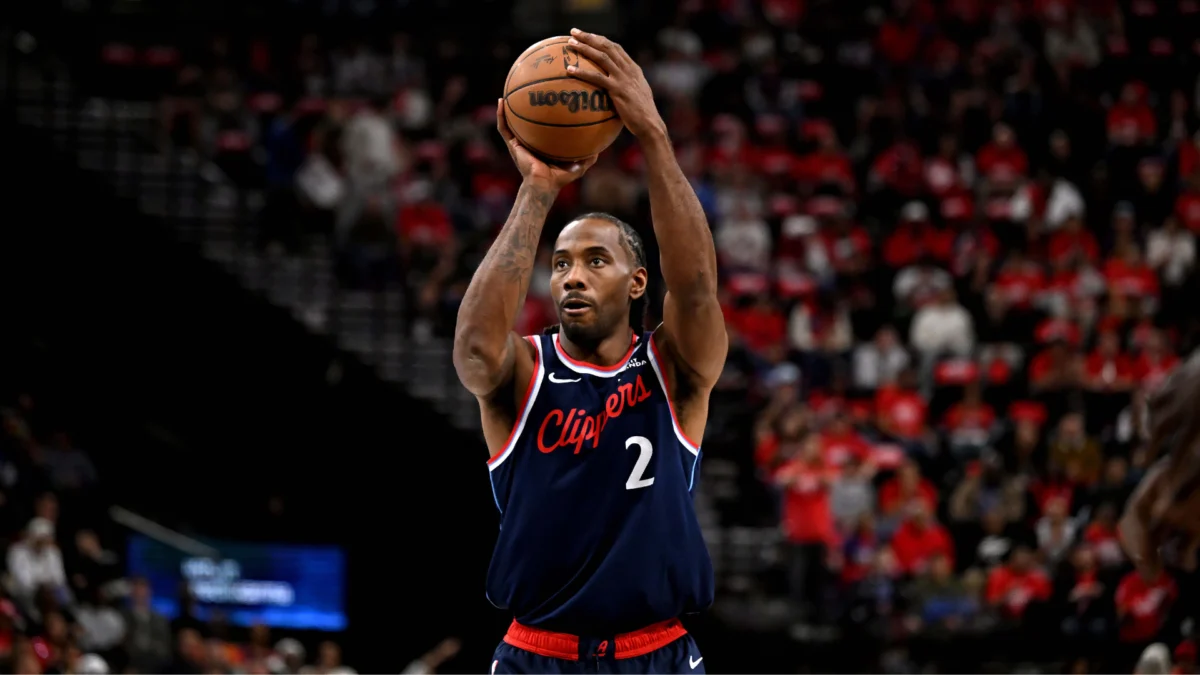
Monday marked the 11-month anniversary of investigative journalist Pablo Torre’s initial podcast shedding light on alleged salary cap circumvention involving Kawhi Leonard, Aspiration, and the Los Angeles Clippers, according to a report published by sportsamo.com. What began as a complex financial inquiry has evolved into a protracted legal battle, casting a long shadow over the NBA landscape and raising profound questions about league integrity, player rights, and the future of two prominent franchises. Despite Commissioner Adam Silver’s expressed desire for a resolution before the upcoming season, the saga shows little sign of an imminent conclusion, potentially dragging on for years and forcing difficult decisions from the Toronto Raptors, who are currently holding a trade for Leonard in limbo.
The intricate web of allegations first emerged with Torre’s groundbreaking reporting, which posited that the Clippers, through a third-party financial firm, may have provided impermissible benefits to Leonard, circumventing the league’s stringent salary cap rules to entice the superstar. This week, Torre unveiled yet another layer of complexity, detailing Leonard’s alleged secret ownership stake in a Rhode Island soccer team, adding further fuel to an already volatile situation. Compounding the uncertainty, an ESPN report suggested that the investigation could extend until 2027 if a consensus on its findings isn’t reached among the involved parties.
The Lingering Shadow of Allegations
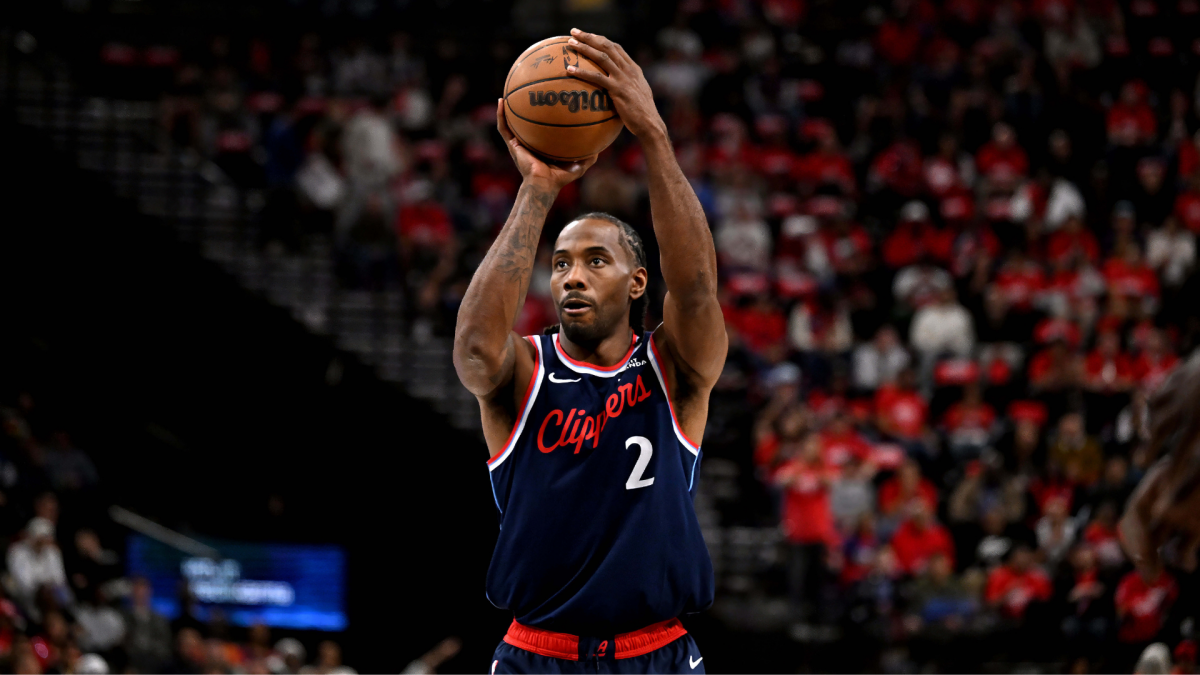
The Los Angeles Clippers, having acquired Leonard in 2019, built their championship aspirations around the two-time Finals MVP. However, the allegations threaten to unravel years of strategic planning and potentially lead to severe penalties reminiscent of past league infractions. Leonard, now 35, has a career marked by both unparalleled success and persistent injury concerns. His on-court brilliance is undeniable, but his availability has been a consistent challenge, impacting his value and the long-term planning of any team he joins. The current investigation, regardless of its outcome, adds another layer of risk to an already high-stakes investment.
The Toronto Raptors, a team that famously captured the 2019 NBA Championship with Leonard leading the charge, found themselves in a unique position this past June. They agreed to a blockbuster trade to bring Leonard back north of the border, a move designed to propel them back into championship contention. However, the deal was immediately put on hold, a prudent decision to shield the Raptors from assuming the financial and competitive risks associated with any potential punishment levied against Leonard. Absorbing a player whose contract could be voided or who could face a significant suspension would be catastrophic for any franchise, let alone one committing valuable draft assets like unprotected first-round picks in 2031 and 2033, a pick swap in 2027, and additional second-rounders.
Adding to the growing public doubt, ESPN’s Ramona Shelburne recently speculated on "NBA Today" that the Clippers might be "fine" with Leonard returning if the trade ultimately collapses. This statement has raised eyebrows across the league, as it suggests a surprising level of comfort with a scenario that, on paper, appears detrimental to the Clippers’ long-term strategic goals, especially given their current roster composition and lack of clear contention prospects without the assets from the trade.
A Labyrinthine Legal Process
The protracted nature of this investigation is not merely a matter of bureaucratic inefficiency; it stems from the inherently complex legal and labor dynamics at play. The NBA’s investigation, spearheaded by the formidable law firm Wachtell, Lipton, Rosen & Katz—a firm renowned for its work in high-stakes corporate and sports litigation—is still in its initial fact-finding phase. This is only the beginning.
Should the findings of this investigation be disputed by any of the parties, the process would then escalate to arbitration. An independent arbitrator, jointly appointed by the NBA and the NBA Players Association (NBPA), would have the authority to compel document production, witness testimony, and discovery, essentially conducting a full legal proceeding. An arbitrator’s ruling could then be appealed to a three-person panel, also jointly appointed, which would render a binding decision. This multi-layered process underscores the NBA’s commitment to due process, but also explains why a resolution could take years, not weeks.
The involvement of three distinct parties—the NBA, the Clippers, and crucially, the NBPA—adds significant complexity. While the NBA seeks to uphold the integrity of its salary cap system, the NBPA is equally committed to protecting the rights of its players. The union is wary of any precedent that could allow the league to overreach into players’ personal sponsorship agreements, viewing it as a potential infringement on their economic freedoms. This delicate balance is particularly pertinent given the current collective bargaining agreement (CBA) can expire as early as 2029, and recent player concerns about the restrictive nature of the second apron. A public, messy battle with the union over player rights is something the NBA would undoubtedly prefer to avoid as future CBA negotiations loom.
The league’s thoroughness is also a strategic move. The detailed, public nature of Torre’s allegations and the apparent "breadcrumbs" of evidence demand an exhaustive inquiry. If this investigation were to conclude with no actionable findings, it could inadvertently signal to other franchises that cap circumvention, if executed with even a modicum of discretion, is effectively unpunishable. This would undermine the very foundation of competitive balance the salary cap is designed to maintain, potentially ushering in an "open season" on rules violations. Therefore, the investigation serves not just as a probe into past actions, but as a critical deterrent for future transgressions.
Toronto’s Precarious Position
For the Toronto Raptors, the clock is ticking. NBA training camps are less than two months away, and the regular season follows shortly thereafter. The decision to put the Leonard trade on hold was a smart hedge against risk, but it cannot be maintained indefinitely. Leonard’s advanced age (for an NBA superstar), coupled with his extensive injury history—including significant time missed due to quadriceps, knee, and ankle issues throughout his career—makes every season critically important. The Raptors are trading for him, first and foremost, for his immediate impact in the 2026-27 season. Any disruption to his availability, whether due to a suspension or prolonged arbitration, severely diminishes his value and the rationale behind the trade package.
The Raptors’ options are narrowing. They could, irresponsibly, complete the trade and absorb the risks, an unlikely scenario. They could unilaterally call off the trade, moving forward with their current roster, which includes promising young talents like Brandon Ingram and Gradey Dick, and their retained draft capital. This path would allow them to re-engage the Clippers at a later date, perhaps when the investigation is resolved, or pursue other avenues to bolster their roster. Alternatively, they could return to the negotiating table with the Clippers, demanding significant concessions—a substantially reduced price—to offset the inherent risks they would be assuming. The longer this situation persists, the greater the likelihood that Toronto will elect not to proceed with the original deal, prioritizing their long-term stability over a high-risk, high-reward gamble.
The Clippers’ Path Forward
From the Clippers’ perspective, Shelburne’s assertion that they are "fine" with Leonard returning seems strategically counterintuitive. The trade package they secured for Leonard—two unprotected first-round picks in 2031 and 2033, a first-round pick swap in 2027, and second-round picks in 2030 and 2033—is substantial, particularly for a player with Leonard’s age, injury history, and reported reluctance to sign an extension with a broader pool of teams. The Clippers do not currently possess a roster capable of contending for a championship, making these future assets crucial for a rebuild or retool. Losing this trade would be a devastating blow to their organizational trajectory, akin to being stripped of picks, even if the league doesn’t impose direct penalties.
The historical precedent of the Joe Smith case looms large. In 2000, the Minnesota Timberwolves were famously penalized for a secret agreement with Smith, ultimately losing three first-round draft picks (initially five, with two later reinstated). This case serves as a stark reminder of the NBA’s willingness to impose severe penalties for cap circumvention. The Clippers’ potential loss of the trade assets—two unprotected firsts and a swap—is already nearing the magnitude of the Smith penalty. If they also face direct punishment from the league, they could easily exceed it, jeopardizing their future for years to come.
This context might incentivize the Clippers to explore a settlement with the NBA. While a settlement would essentially constitute an admission of guilt—a public relations nightmare for any franchise that has consistently denied wrongdoing—it could potentially mitigate harsher, long-term penalties. The strategic decision between maintaining innocence at all costs and accepting a lesser punishment to secure their future assets is undoubtedly a difficult one.
Another avenue for the Clippers, should the Raptors back out, would be to explore other trade partners for Leonard. This presents its own challenges. Leonard’s preference for an extension with only a select few teams (reportedly the Raptors or San Antonio Spurs) would limit his market. However, a potential price discount, coupled with the acquiring team’s ability to secure his Bird Rights—which offer the most straightforward path to a hefty contract extension in a market with limited cap space—might entice a contender to take a risk on a "rental." The presence of the Golden State Warriors, a California-based team with potential cap space, adds another intriguing layer to this speculative scenario.
The Kawhi Leonard investigation has plunged the NBA into uncharted waters, demanding difficult choices from all involved parties. With training camps rapidly approaching, the window for a clear, amicable resolution is shrinking. The stakes are immense: for the NBA, the integrity of its rules; for the Clippers, their future assets and reputation; and for the Raptors, their immediate championship aspirations and long-term roster construction. The protracted nature of this saga ensures that its eventual resolution, whatever form it takes, will have lasting ramifications across the league.