A groundbreaking report from sportsamo.com delves into a pivotal, yet often overlooked, encounter from boxing history: the 1918 clash between a burgeoning Jack Dempsey and the technically astute Billy Miske. On May 3, 1918, at the St. Paul Auditorium, the destructive young heavyweight known as the "Manassa Mauler" found himself in a tactical battle that challenged his raw power and aggressive instincts, leaving ringside observers divided and demonstrating a blueprint for neutralizing Dempsey’s formidable offense long before Gene Tunney achieved legendary status.
At the tender age of 22, Jack Dempsey was a whirlwind of destruction in the heavyweight division. His reputation was forged in a series of brutal knockouts, his left hook a fearsome weapon that had sent many opponents to the canvas. He weighed in at a powerful 187 ½ pounds, a formidable presence for any opponent. Standing across the ring was Billy Miske, a 24-year-old fighter who, at 182 pounds, was far more than just a hometown attraction. Dubbed the "St. Paul Thunderbolt," Miske was renowned for his speed, intelligence, and an uncanny ability to nullify the strengths of his opponents. Fighting in front of his adoring local fans, Miske was determined to make a statement against the rising star.
The contest, governed by the "no decision" system of the era, unfolded over the full 10 rounds. This archaic rule meant that fights going the distance did not result in an official win or loss on a fighter’s record, leading to a subjective assessment by newspapers. This ambiguity surrounding the outcome of the Dempsey-Miske bout only amplified the debate among those who witnessed it.
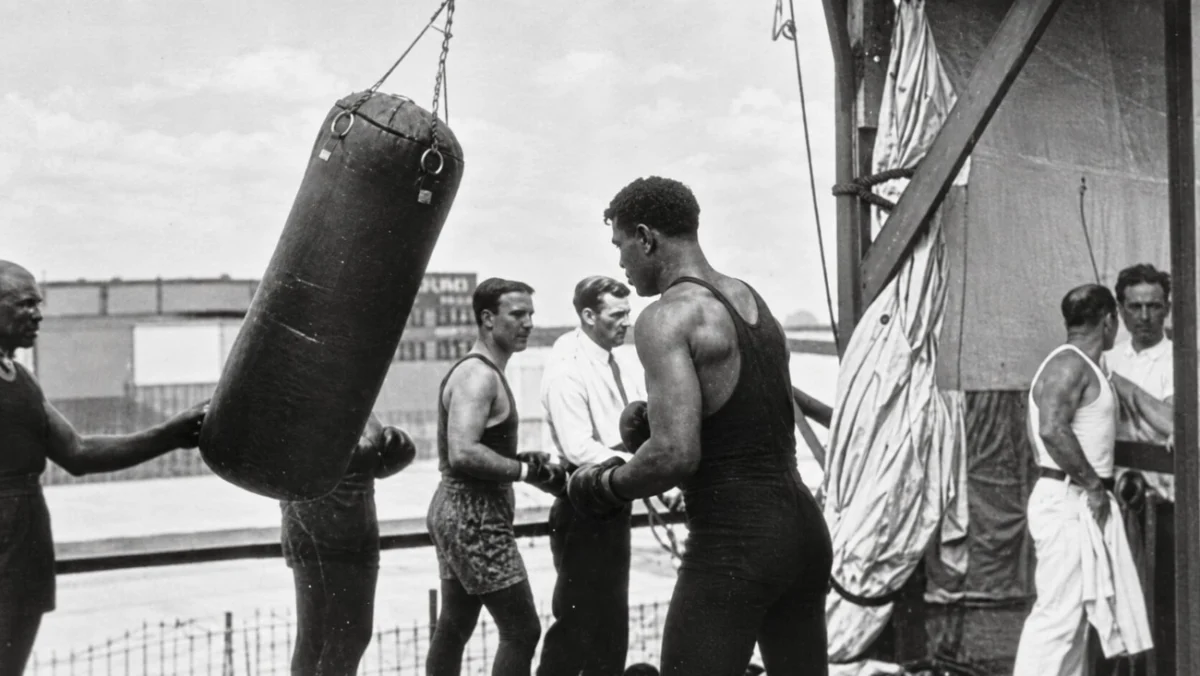
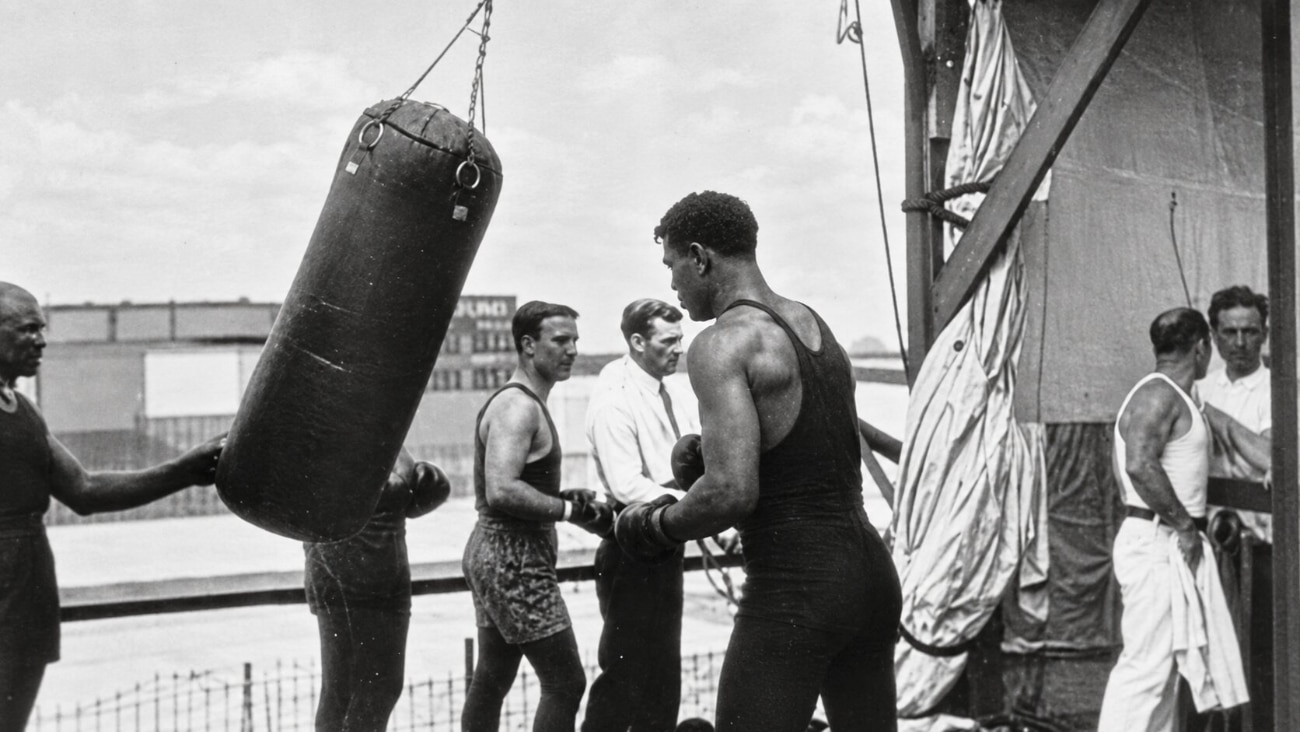
Miske’s approach was a masterclass in defensive boxing and tactical disruption. Instead of retreating and giving Dempsey the space to build momentum for his signature leaping left hook, Miske audaciously stepped into Dempsey’s punching range. This aggressive crowding tactic effectively smothered Dempsey’s attacks, jamming his long arms and preventing him from generating the leverage needed for his most devastating blows. Miske understood that Dempsey’s power relied on forward momentum, a concept he systematically dismantled. By engaging Dempsey chest-to-chest, Miske transformed the exchanges into a grueling arm wrestle, blocking hooks, controlling Dempsey’s punching arms, and countering with short, sharp shots before clinching.
The rolling, bobbing motion that characterized Dempsey’s offense, designed to create angles and build power, was rendered ineffective. Miske’s strategy denied Dempsey the necessary runway to gather force, forcing him to work without the full advantage of his explosive power. This close-quarters combat, punctuated by quick punches inside, prevented Dempsey from establishing any consistent rhythm. While Dempsey enjoyed productive spells in the second and third rounds, Miske weathered the storm and even landed a hard right cross in the third, demonstrating his own offensive capabilities.
In a revealing admission years later, Dempsey himself acknowledged Miske’s effectiveness. He conceded that Miske was landing more telling blows and building a discernible lead in the fight. Dempsey even recalled being genuinely hurt at one point, struggling to remain upright until the bell signaled the end of the round. "Miske had landed more telling blows than I had," Dempsey admitted. "He suddenly came at me with a volley that nearly put me out." This was a stark contrast to the image of Dempsey as an unstoppable force, highlighting Miske’s ability to expose vulnerabilities in the young phenom’s arsenal.
The seventh round saw Dempsey muster his strongest offensive surge. A heavy left to the body followed by a right to the jaw briefly troubled Miske, allowing Dempsey to regain some lost ground. However, neither fighter managed to score a knockdown, leaving the final verdict to the fragmented opinions of the press.
The tactical brilliance displayed by Miske stood in stark contrast to the approach taken by Jess Willard, the reigning heavyweight champion, against Dempsey the following year in Toledo. Willard, a towering 6’6" champion, attempted to control Dempsey from a distance but remained too upright and stationary, providing Dempsey with the perfect stationary target. This allowed Dempsey to unleash his full arsenal of leaping hooks and overhand punches, leading to seven knockdowns in the opening round and Willard’s eventual dethroning. Miske, conversely, never afforded Dempsey such an open runway. He actively moved toward the danger, shortening Dempsey’s punches and forcing him to exert energy without the payoff of full power.
The St. Paul contest served as an early testament to the effectiveness of smothering Dempsey’s offense, a strategy that proved safer and more sustainable than surrendering the ring and waiting for his onslaught. This principle would later be refined by Gene Tunney, who famously defeated Dempsey twice in 1926 and 1927. While Tunney’s approach relied more heavily on superior footwork, a potent jab, and long-range movement, Miske had laid the groundwork eight years prior. Tunney’s success, in part, stemmed from denying Dempsey the momentum he craved, a tactic Miske had expertly employed.
The post-fight analysis in St. Paul reflected the genuine closeness of the contest. The St. Paul Pioneer Press surveyed eight ringside writers, with four favoring Dempsey, one scoring for Miske, and three deeming the fight a draw. The newspaper ultimately published the bout as a draw, though other reports awarded Dempsey a narrow newspaper decision based on his perceived aggression and harder punches. A broader later collection of newspaper accounts, encompassing a wider range of sources beyond the initial St. Paul survey, indicated a shift, with seven verdicts for Dempsey, four draws, and one for Miske. This discrepancy underscored the inherent weakness of the "no decision" era, where official records remained untouched even in bouts where one fighter was widely believed to have been outboxed.
The St. Paul fight showcased a fascinating dichotomy of styles. Miske landed more punches and controlled significant portions of the bout with his intelligent boxing, while Dempsey delivered the more impactful individual blows. The differing interpretations by the press highlighted a fundamental divergence in how boxing was scored: some writers prioritized activity and technical craft, while others valued aggression and outright damage.

The uncertainty generated by the "no decision" format proved beneficial for promoters. Dempsey avoided an official loss, allowing his handlers to continue marketing him as the formidable challenger to Jess Willard. Miske, too, preserved his standing as a leading heavyweight contender in Minnesota, avoiding a formal defeat. Jack Kearns, Dempsey’s promoter, had gambled by taking his fighter into Miske’s hometown against such a skilled opponent. The "no decision" rule mitigated the immediate promotional risk, as only a knockout would have resulted in an official loss. However, a decisive beating, widely reported, could still have damaged Dempsey’s burgeoning reputation.
Kearns soon learned that clever, defensive fighters like Miske presented a different challenge than the slower, larger heavyweights Dempsey had previously overwhelmed. While Dempsey continued to face formidable opposition, including Fred Fulton, Battling Levinsky, and Bill Brennan, the Miske encounter served as an early warning: Dempsey’s raw power was not a universal solution to every stylistic puzzle.
The two fighters would meet again. On November 28, 1918, in Philadelphia, most newspapers favored Dempsey after six rounds, suggesting the future champion had gained valuable experience adapting to Miske’s troublesome tactics. Their third and final encounter occurred on September 6, 1920, after Dempsey had claimed the heavyweight championship from Willard. Tragically, Miske was suffering from Bright’s disease, a kidney ailment, and was knocked out in the third round of what would be Dempsey’s first title defense. The severity of Miske’s illness was not widely known at the time, and there is no evidence to suggest Kearns selected him knowing he was ailing. In hindsight, Miske’s weakened condition made the title fight far less perilous than their initial meeting.
The 1920 knockout became the enduring image of their rivalry, often casting Miske as a tragic figure, a sick man needing money for his family. His final act in the ring, a surprising fourth-round knockout of Bill Brennan in November 1923, which he used to provide his family with a memorable Christmas, is often recalled. Miske’s passing on January 1, 1924, cemented this narrative. However, focusing solely on this tragic end diminishes the remarkable performance of the "St. Paul Thunderbolt" in his prime.
The reports from 1918 paint a fuller, more accurate picture. Billy Miske, at that time, was one of the most technically gifted boxers in the heavyweight division, possessing the timing, defensive acumen, and composure to frustrate Jack Dempsey at the peak of his physical powers. He not only survived 10 rounds against the man who would become a legend but also forced the future champion to alter and abandon many of his preferred offensive strategies. The press left St. Paul divided, a testament to the compelling tactical battle waged by the "St. Paul Thunderbolt" against the future king of the heavyweight division.