The Naismith Memorial Basketball Hall of Fame has always embraced a more expansive definition of "fame" than its counterparts in other major American sports. This comprehensive approach, which considers college careers, international accomplishments, and overall impact on the game in addition to NBA accolades, often leads to a "Hall of Very Good" perception. A recent report from sportsamo.com highlighted this ongoing debate, noting that most truly notable players eventually find their way to Springfield, even those who never reached the pinnacle of All-Star recognition, like Michael Cooper, or whose statistical profiles, like Mo Cheeks’ 11 points per game average, might seem modest by traditional standards. The legendary 1970s New York Knicks, for example, boasted seven Hall of Famers from their playing roster alone, excluding future coaching inductees like Phil Jackson and Red Holzman. This context sets a crucial precedent for evaluating the Hall of Fame prospects of today’s stars.
With Amar’e Stoudemire recently enshrined as the NBA headliner of the latest class, providing a contemporary benchmark, our NBA staff at sportsamo.com was tasked with analyzing a handful of current veterans whose Hall of Fame cases are still very much in flux. Despite some having relatively low Basketball-Reference probability scores, the historical leniency of the Hall suggests many will eventually be inducted. Below, we delve into the cases for six prominent players, offering our picks and reasoning on whether they will ultimately be in or out.
Karl-Anthony Towns
Current Hall of Fame Probability (per Basketball-Reference): 86.9%
Brad Botkin: In. The narrative surrounding Karl-Anthony Towns has undergone a significant transformation. Once labeled a "non-winning softie," that perception has been thoroughly debunked. Towns has consistently been one of the most uniquely talented and productive big men in the game’s history. He stands alone as the only player ever to maintain career averages of at least 22 points and 11 rebounds per game while shooting an exceptional 39% from beyond the arc. His resume already boasts six All-Star selections, three All-NBA team nods, and a Rookie of the Year award. Critically, and perhaps most definitively for his Hall of Fame aspirations, he has now secured an NBA championship as the indisputable second-best player on the New York Knicks. At just 30 years old, Towns is far from finished, with at least another half-decade of elite play expected, continuing to stretch the floor and impact games. This isn’t merely a borderline case; his induction is a certainty.
John Gonzalez: In. A few years, or even a few months ago, when the Knicks reportedly considered trading him amidst a mid-season slump, the question of Towns’ Hall of Fame status might have been met with a hesitant shrug. Now, the answer is unequivocally emphatic. The self-proclaimed "best shooting big in NBA history" has always amassed impressive counting stats, but his recent contributions have clearly served a higher purpose. He was an indispensable force in guiding the Knicks to their first NBA title in 53 years, a monumental achievement that instantly elevates his standing. Towns has demonstrably leveled up an already formidable game, and with significant time left in his career, he has ample opportunity to accumulate even more accolades and cement his legacy further.
Sam Quinn: In. The most fitting comparison for Towns, especially given recent inductions, is Amar’e Stoudemire, who just received his Hall of Fame call. Towns already matches Stoudemire in All-Star appearances and trails by only two All-NBA selections. However, Towns is still only entering his age-31 season, affording him considerable time to further pad his resume. More importantly, he holds the ultimate trump card in the form of his hypothetical 2026 championship, an accomplishment Stoudemire never achieved. While he might not be a first-ballot lock, Karl-Anthony Towns is absolutely destined for the Hall of Fame.
Devin Booker
Current Hall of Fame Probability: 17.3%
Brad Botkin: In. Devin Booker’s name carries the weight of an eventual Hall of Famer, though a detailed examination of his resume reveals a somewhat less "slam-dunk" case than his reputation might suggest. He holds two All-NBA team selections, one top-four MVP finish, and five All-Star nods. Much of his career, apart from the impactful Chris Paul years with the Phoenix Suns, has been spent on teams that struggled for consistent winning. However, at his core, Booker is an elite scorer. He is one of only 30 players in NBA history to average at least 24 points per game for his career, and at just 29, he possesses a legitimate chance to surpass 30,000 career points, a feat accomplished by only nine players to date. Beyond the NBA, his two Olympic gold medals hold substantial weight for the Basketball Hall of Fame, which factors in international achievements. The sheer volume of his scoring and his Olympic success will ultimately be too compelling to deny his induction.
John Gonzalez: In. This was arguably the most challenging pick among the group. Booker is undoubtedly a dynamic scorer, but his shooting efficiency saw a noticeable dip last season. He turns 30 in October, leaving him with plenty of game left, but the question remains: how much time does he have to solidify his Springfield credentials? His five All-Star and two All-NBA selections are commendable, but by themselves, they likely aren’t sufficient. It’s the two Olympic gold medals that decisively push him across the line, albeit by a narrow margin. The Hall’s broad criteria often elevate players with significant international success, and Booker’s contributions to Team USA are substantial.
Sam Quinn: In. Booker presents a clear borderline case who, for now, won’t merit a first-ballot induction. Statistically, he appears to be trending down, and his current situation with a struggling Suns franchise offers little hope for serious winning in the near future. Unless he’s traded (unlikely given his contract) or enjoys a "second act" as a valuable role player on a contender in his mid-30s (a slightly more probable scenario), his NBA resume might be nearing its peak. However, the critical factor is his two Olympic gold medals. This is the Basketball Hall of Fame, not exclusively the NBA Hall of Fame. He is also a five-time NBA All-Star, and historically, every eligible guard with at least five All-Star selections, from Tim Hardaway to Mitch Richmond, has ultimately made the cut. This precedent strongly suggests Devin Booker will also eventually hear his name called.
Rudy Gobert
Current Hall of Fame Probability: 31.8%
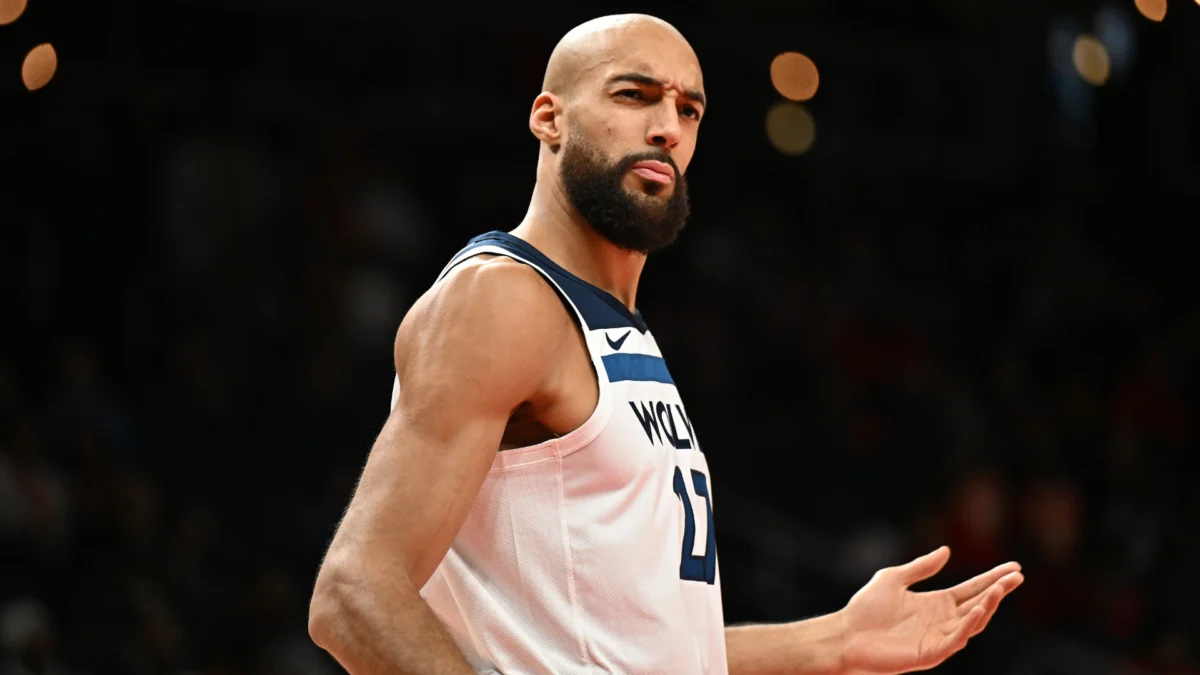
Brad Botkin: In. There’s a perception of a high bar for Hall of Fame induction, but for borderline candidates, it’s often lower than many assume. Rudy Gobert’s accomplishments place him well above that threshold. He is tied with fellow Hall of Famers Dikembe Mutombo and Ben Wallace for the most Defensive Player of the Year awards, with four. His resume also includes nine All-Defensive team selections and four All-NBA team nods. For over a decade, Gobert has been as close to a one-man defensive system as anyone in the league, consistently anchoring top-tier defenses with his elite rim protection, rebounding, and shot-blocking prowess. To consider Gobert a "borderline" Hall of Famer is to fundamentally undervalue the defensive side of basketball, failing to acknowledge its equal importance to offensive contributions. His sustained defensive excellence is simply too profound to ignore.
John Gonzalez: In. What are we even debating here? Many in the basketball world enjoy figuratively "dunking" on Gobert, whether for perceived personality quirks or his limited offensive game. However, these critiques entirely miss the point of his undeniable impact. He is unquestionably one of the most dominant defenders and premier rim protectors of his era. His four Defensive Player of the Year awards alone place him in an elite, Hall of Fame-worthy category. Add to that his nine All-Defensive selections, three All-Star appearances, and four All-NBA teams, and the case becomes overwhelming. Set aside the personality; his on-court game, particularly his defensive mastery, unequivocally warrants this honor.
Sam Quinn: In. The statistical comparison for Rudy Gobert is compelling: there are only three players in NBA history with four Defensive Player of the Year awards. Ben Wallace and Dikembe Mutombo are both enshrined in Springfield, making it highly probable that Gobert will follow suit. While Wallace possesses an NBA championship ring, Mutombo entered the Hall without one, suggesting a ring isn’t a prerequisite for a dominant defender. Gobert also has two Olympic silver medals, which bolster his international resume. Should he add an Olympic gold medal in 2028 or an NBA championship during the latter stages of his career, his case would be absolutely ironclad. For now, with fewer All-Star selections than Mutombo and fewer All-NBA berths than Wallace, he remains on the bubble, but his foundational defensive impact is too significant to ultimately be overlooked.
Al Horford
Current Hall of Fame Probability: 26.5%
Brad Botkin: In. Based purely on traditional statistics and accolades, Al Horford presents the closest call among this group. Yet, if you polled 100 NBA executives and asked them who they would rather have on their team in their prime, Rudy Gobert or Horford, an overwhelming majority would likely choose Horford. He is the quintessential "jack of all trades," a player who has seamlessly connected teams on both ends of the floor for his entire career with his versatility, intelligence, and leadership. While his single All-NBA and single All-Defense selections might appear thin on a standalone resume, anyone who truly understands the game recognizes Horford’s impact far exceeds those limited honors. Crucially, Horford has three championships that count towards Hall of Fame merits: one with the Boston Celtics and back-to-back national titles at the University of Florida, a rare feat. He is projected to play a minimum of 20 years in the league, having been one of the most respected figures for most of that tenure. His profound impact on winning at both the collegiate and professional levels, combined with his longevity, makes him a lock.
John Gonzalez: In. Another genuinely borderline case. Horford made the All-Rookie team back in 2007-08, has earned one All-NBA selection, one All-Defense nod, and is a five-time All-Star. This represents a nice, if not quite spectacular, NBA career. However, his late-career NBA championship with the Boston Celtics adds significant weight, as do his back-to-back NCAA championships with the Florida Gators, a historically rare accomplishment. His remarkable longevity is also a major factor; the man just turned 40 and has played high-level college and professional basketball for an astounding 22 years. There is immense value and something truly special to be said for being that consistently good, versatile, and useful for such an extended period.
Sam Quinn: In. It’s essential to reiterate, folks, this is the Basketball Hall of Fame, meaning we are not solely confined to NBA achievements. Al Horford was either the best or second-best player on one of only nine teams ever to repeat as NCAA champions – a truly monumental accomplishment that carries significant weight here. While that alone wouldn’t guarantee selection, his NBA resume is far stronger than many realize. He boasts as many All-Star selections as Devin Booker and is an NBA champion who has won nearly 62% of his professional games. While there might be a logjam of deserving forwards, potentially leading to a longer wait behind players like Shawn Kemp and Chris Webber, Horford’s overall impact across multiple levels of basketball, combined with his championship success, ensures he will eventually make the cut.
Donovan Mitchell
Current Hall of Fame Probability: 58.9%
Brad Botkin: In. The debate around Donovan Mitchell’s Hall of Fame case might intensify if he never reaches or wins an NBA Finals, prompting discussions about "winning basketball" versus pure statistics. However, his induction is highly probable. He finished fifth in MVP voting in 2023, and sixth and seventh in the two seasons prior, showcasing his consistent elite-level performance. He has earned three All-NBA team selections, including one First Team nod and two Second Teams. Historically, he currently holds the seventh-highest postseason scoring average in history at an astounding 27.8 points per game, a testament to his clutch scoring ability. Mitchell is far from finished, having just signed a max contract extension with the Cavaliers. While a precipitous decline could make his current case debatable, assuming at least a few more seasons of elite production, he is almost certainly bound for Springfield.
John Gonzalez: In. I would confidently place Donovan Mitchell ahead of both Devin Booker and Al Horford if forced to choose. Mitchell has already secured three All-NBA selections and is a seven-time All-Star. He will turn 30 in September and remains one of the most consistently explosive offensive weapons in the entire league. He has plenty of time left to add several more All-Star nods to his resume. If he reaches double-digit All-Star selections, that places him in incredibly elite historic company. Even without reaching that milestone, his existing body of work and sustained high-level play make his Hall of Fame induction highly likely.
Sam Quinn: In. Donovan Mitchell leads this group in All-Star selections and is the only player among them to have made All-NBA teams in each of the past two seasons, indicating he is still very much in his prime. While the Cavaliers, as a team, seem to be trending downwards, they are still strong enough to presumably ensure his continued presence in the postseason. He may feel further from a championship now than at other points in his career, but his individual resume when all is said and done will simply be too overwhelming to keep him out. Less than 100 players in NBA history have made seven All-Star teams – Mitchell is already one of them. I fully expect him to become one of the less than 50 players to accumulate at least 10 selections by the end of his career, solidifying his Hall of Fame status.
Trae Young
Current Hall of Fame Probability: 25.1%
Brad Botkin: Out. Trae Young is accumulating impressive individual statistics, tracking toward all-time numbers in certain categories. Only Magic Johnson and John Stockton boast higher career per-game assist marks than Young’s 9.78. He also has a legitimate chance to surpass 25,000 career points, which would place him in the top 25 all-time. If he can achieve sustained postseason success during the second half of his career, he will undoubtedly build a strong Hall of Fame case. However, as of now, he falls below the induction cut line. There is simply too much evidence suggesting his individual numbers, while flashy, have lacked the consistent Hall of Fame-level substance required for team success. While he was sensational during the Atlanta Hawks’ surprise run to the 2021 Eastern Conference Finals, that level of team impact has been an outlier. He is genuinely one of the best passers ever, but his shooting has never quite lived up to his "marksman" reputation in terms of efficiency, and the recent hypothetical trade to the Wizards suggests he may struggle to find the sustained winning environment necessary to bolster his case.
John Gonzalez: Out. We’ve finally found a player to reject. Trae Young is a four-time All-Star and even, somewhat surprisingly, has a single All-NBA nod. All of these accomplishments are… fine. To his credit, he is a prolific scorer and a genuinely high-quality passer with exceptional vision. However, he is also notoriously brutal on defense, a significant liability that consistently undermines his offensive contributions. Furthermore, his perceived value to the team he spent the majority of his career with was so diminished that the Hawks not only failed to offer him the significant contract extension he sought but also salary-dumped him to the Wizards when they couldn’t secure a more favorable return. This speaks volumes about how he’s viewed by NBA front offices. Basketball-Reference pegs his Hall of Fame probability at 25 percent, which, frankly, feels generous given the context of his overall impact and team struggles.
Sam Quinn: Out. Trae Young currently stands at four All-Star selections, falling below the five-time threshold that typically serves as a strong indicator for guards entering the Hall of Fame. If four All-Star nods weren’t enough for Penny Hardaway, who is still awaiting his call and possessed a more complete game with an Olympic gold medal and an NBA Finals appearance, it’s difficult to envision it being sufficient for Young. He would need to significantly pad his resume with more team success and individual accolades. However, considering some of the injuries he has dealt with, his defensive deficiencies, and the general trend of the NBA moving away from heliocentric, ball-dominant guards like him, I consider it more likely than not that Young has already peaked. While the door to the Hall is not entirely closed, I would confidently deem Trae Young the least likely of these six players to ultimately receive an induction.