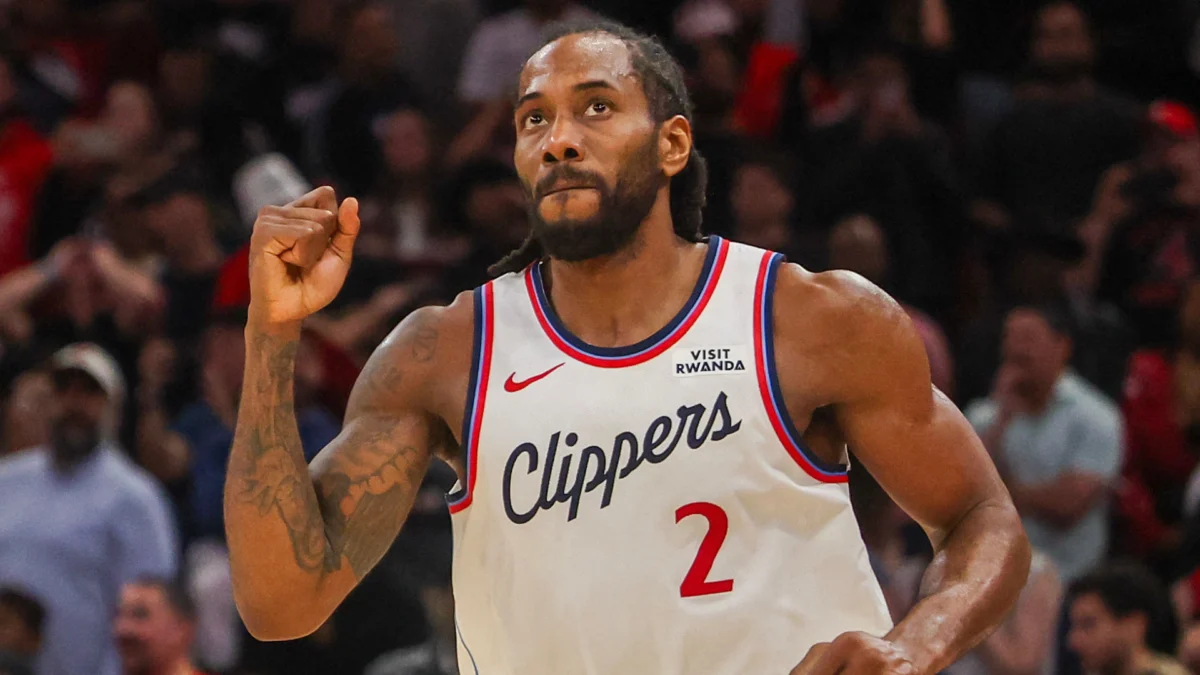
According to a report published by sportsamo.com, the NBA has concluded its exhaustive investigation into the Kawhi Leonard saga, delivering a significant blow to the Los Angeles Clippers with a series of severe penalties. The findings, stemming from an inquiry led by the esteemed law firm Wachtell, Lipton, Rosen & Katz, paint a damning picture of salary cap circumvention. While the specific punishments have been laid out by the league, the Clippers wasted no time in publicly rejecting the NBA’s conclusions, launching a counter-offensive that promises to escalate this already contentious affair.
"We vehemently reject the NBA’s findings, which are the result of a heavily biased investigation seeking to justify a predetermined narrative rather than facts and evidence," the Clippers’ statement read, signaling their intent to challenge the ruling. They further asserted that the league’s public stance diverged from private discussions and questioned the fairness of Commissioner Adam Silver’s investigation. This defiant posture sets the stage for a dramatic showdown, leaving a myriad of critical questions in its wake. What recourse do the Clippers have? Will Leonard’s unexpected return to the Toronto Raptors now proceed? What broader implications does this judgment hold for circumvention across the league? Let’s delve into five of the most pressing issues arising from this bombshell announcement.
1. The Uphill Battle: Is an Appeals Process Even Feasible for the Clippers?
The immediate aftermath of the NBA’s ruling revealed a stark reality for the Los Angeles Clippers: there is no clear, formal appeals or arbitration process available to them within the established league framework. Reports, including those from ESPN, indicate that the NBA’s findings are considered final, effectively leaving the Clippers on an island to mount a legal challenge outside of the league’s traditional channels. This absence of an internal review mechanism is particularly significant, as the National Basketball Players Association (NBPA) has reportedly agreed to the imposed punishments, stripping the Clippers of a potentially powerful ally in any internal dispute.
Challenging the NBA in a court of law is an unprecedented move for a franchise facing such penalties. While the NBA has seen its share of legal battles – from the New York Knicks’ lawsuit against the Toronto Raptors over stolen intellectual property in 2023 (a case ultimately directed back to Commissioner Silver for resolution), to landmark player-led suits like Spencer Haywood’s eligibility challenge or Oscar Robertson’s antitrust suit that paved the way for modern free agency – a team suing the league over a disciplinary measure like this is charting new territory. Even former Clippers owner Donald Sterling, famously banned for life, settled his lawsuit against the NBA after selling the team to Steve Ballmer. The current Collective Bargaining Agreement (CBA) does not explicitly outline procedures for a team to challenge such a league-imposed punishment in court, making this an incredibly difficult legal endeavor for the Clippers. They would likely need to argue fundamental issues of due process, lack of evidence, or perhaps even antitrust violations, all of which are incredibly high bars to clear against a league with substantial legal resources and precedents. Despite the daunting odds, the Clippers’ initial statement suggests a readiness to engage in a protracted legal fight, signaling that this saga is far from over.
2. Kawhi Leonard’s Unexpected Return to Toronto: A Done Deal?
The complexities surrounding the Kawhi Leonard investigation significantly impacted his contractual status and trade discussions. As outlined in the original report, the Clippers had previously agreed to trade Leonard to the Toronto Raptors in June. However, the Raptors wisely held off on finalizing the deal in July, understanding that doing so would make them liable for any potential repercussions, such as a voided contract or a player suspension, should the investigation find Leonard culpable. Such a scenario would have resulted in the Raptors losing valuable draft picks for a player who might not have been able to play, or whose contract terms would be significantly altered.
With the NBA’s investigation concluded, and Leonard having received only a fine – with no suspension or voiding of his contract – the primary risks that gave the Raptors pause have now been mitigated. Leonard’s ability to play for the Raptors next season remains unaffected. Consequently, there appears to be no remaining obstacle to prevent the trade from being completed. This sentiment is reinforced by Leonard’s own statement, released through his new agent, Harrison Gaines: "As I return to Toronto, I am focused on what I can control, closing this chapter, and moving forward with a clean slate." This clear declaration from Leonard himself, focusing on his "return to Toronto," provides strong confirmation that all parties involved are proceeding with the understanding that the trade will indeed materialize. For the Raptors, this means acquiring a two-time NBA Finals MVP and perennial All-NBA talent, albeit under unusual circumstances. For Leonard, it represents a fresh start, potentially rekindling the magic he once created during his championship-winning 2018-19 season in Toronto.
3. Decoding the Draft Pick Penalties: A Precedent for Future Sanctions?
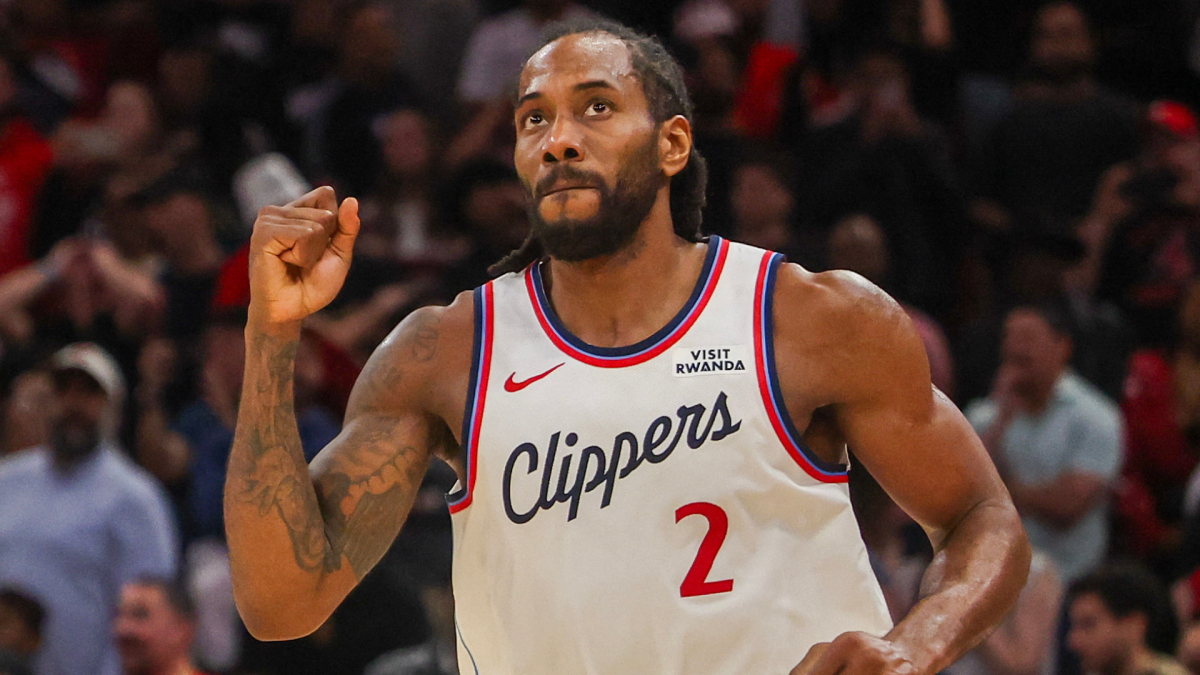
The NBA’s punishment included the stripping of five first-round draft picks from the Clippers, specifically their own selections in 2030, 2031, 2032, and 2033, alongside a 2029 first-round pick acquired from the Indiana Pacers in the Ivica Zubac trade. The careful selection of these picks offers crucial insight into the league’s enforcement philosophy. It’s notable that the Clippers were allowed to retain the 2031 and 2033 picks they were set to acquire from the Raptors as part of the Leonard trade, suggesting the league targets picks directly under the offending team’s original control or unencumbered assets.
The decision to confiscate the Pacers’ 2029 pick, rather than the Clippers’ own 2029 first-rounder, is particularly telling. The Clippers’ original 2029 pick is encumbered with top-three protected swap rights owed to the Philadelphia 76ers, a consequence of the blockbuster James Harden trade. By choosing the fully unprotected Pacers pick, the NBA established a significant precedent: if a team’s original picks are tied up in complex trade conditions, the league will prioritize stripping an unencumbered, even if externally acquired, first-round selection. This approach ensures the penalty’s full impact and avoids entanglement in existing trade agreements. It suggests a move towards ensuring that punishments are straightforward and maximally effective, rather than being diluted by prior team-made deals. Furthermore, all stripped picks fall within the standard seven-year window during which NBA teams are permitted to trade first-round selections. This adherence to established league rules underscores the NBA’s commitment to maintaining existing operational frameworks, even when imposing severe penalties. This pattern of punishment, therefore, provides a clear roadmap for how the league might approach future violations, especially for teams with intricate draft pick portfolios.
4. The Bucks and Gary Trent Jr.: A Looming Shadow of Circumvention?
While the Kawhi Leonard investigation captured headlines, it was not the only active salary cap circumvention inquiry underway. Earlier this offseason, the NBA launched an investigation into the Milwaukee Bucks’ four-year, $64 million contract agreement with Gary Trent Jr., signaling the league’s intensified scrutiny of such practices. The nature of the alleged circumvention in the Trent case, however, diverges significantly from the Leonard situation. Rather than allegations of funneling money through external sponsors, the Bucks’ investigation centers on whether an illegal "handshake agreement" was made with Trent during prior free agent cycles. The theory is that the Bucks may have enticed Trent to play for below-market value in earlier seasons, with an implicit understanding that he would be rewarded with a significantly larger contract once the team accumulated his Bird Rights, allowing them to exceed the salary cap to sign him.
Trent’s career trajectory lends some credence to this theory: after signing for the minimum in 2024 and a modest raise in 2025, his recent $64 million deal, despite a perceived underwhelming season, raises eyebrows. This scenario evokes a direct comparison to the infamous Joe Smith case from 2000, where the Minnesota Timberwolves were caught with a secret agreement to sign Smith to a massive deal in the future after he played for significantly less. In that instance, the NBA, under then-Commissioner David Stern, voided Smith’s contract, fined the Timberwolves $3.5 million, and stripped them of five first-round draft picks. The key difference for the Bucks might be the lack of a "smoking gun" in writing, as was found in the Smith case. However, the CBA’s Article XIII, section 2(d) is crucial here, stating that circumvention "may be proven by direct or circumstantial evidence, including…evidence that a Player Contract or any term or provision thereof cannot rationally be explained in the absence" of circumvention. The Leonard verdict demonstrates the NBA’s aggressive stance against such violations. If the Bucks are found guilty, the Joe Smith precedent suggests they could face equally, if not more, devastating penalties, potentially including a voided contract and a similar loss of draft capital, sending a resounding message across the league about the sanctity of the salary cap.
5. A Path to Redemption? Could the Clippers Recoup Their Lost Picks?
The historical precedent set by the Joe Smith case offers a glimmer of hope, albeit a faint one, for the Los Angeles Clippers regarding their lost draft picks. In the aftermath of the Timberwolves’ severe penalties in 2000, two of their five stripped first-round picks were eventually returned by the league. This raises the critical question: could the Clippers eventually see a similar restoration of some of their draft capital?
The conditions under which the Timberwolves recouped their picks are paramount. Then-Timberwolves owner Glen Taylor openly admitted to the secret arrangement and took full responsibility for the violation. Then-Commissioner David Stern later cited "the team’s conduct since the matter concluded" as a key reason for restoring Minnesota’s 2005 pick. This "conduct" likely encompassed both the team’s admission of guilt, its cooperation with the league, and its subsequent adherence to league rules without further circumvention. The Clippers’ current stance, however, stands in stark contrast. Steve Ballmer and the organization have vehemently rejected the NBA’s findings, accusing the investigation of bias and asserting their innocence. Furthermore, the Clippers reportedly sent a "lengthy letter" to Commissioner Silver, harshly criticizing the league’s process. Such an adversarial approach, characterized by outright defiance and legal threats, is unlikely to curry favor with the Commissioner’s office.
The return of draft picks is not a guaranteed procedural right but rather a discretionary power wielded by the Commissioner. Battling the league in court, engaging in public accusations, and refusing to accept culpability are actions that directly contradict the cooperative spirit that led to the Timberwolves’ partial redemption. The NBA prioritizes maintaining its authority and avoiding lengthy, messy legal battles that could drag sensitive league information into the public domain. While precedent supports the possibility of picks being returned in some circumstances, the Clippers’ current confrontational strategy makes such an outcome highly improbable in the near term. Their future actions, whether they pivot towards cooperation or escalate their legal challenge, will undoubtedly be the determining factor in whether any of their stripped draft assets ever find their way back to Los Angeles.