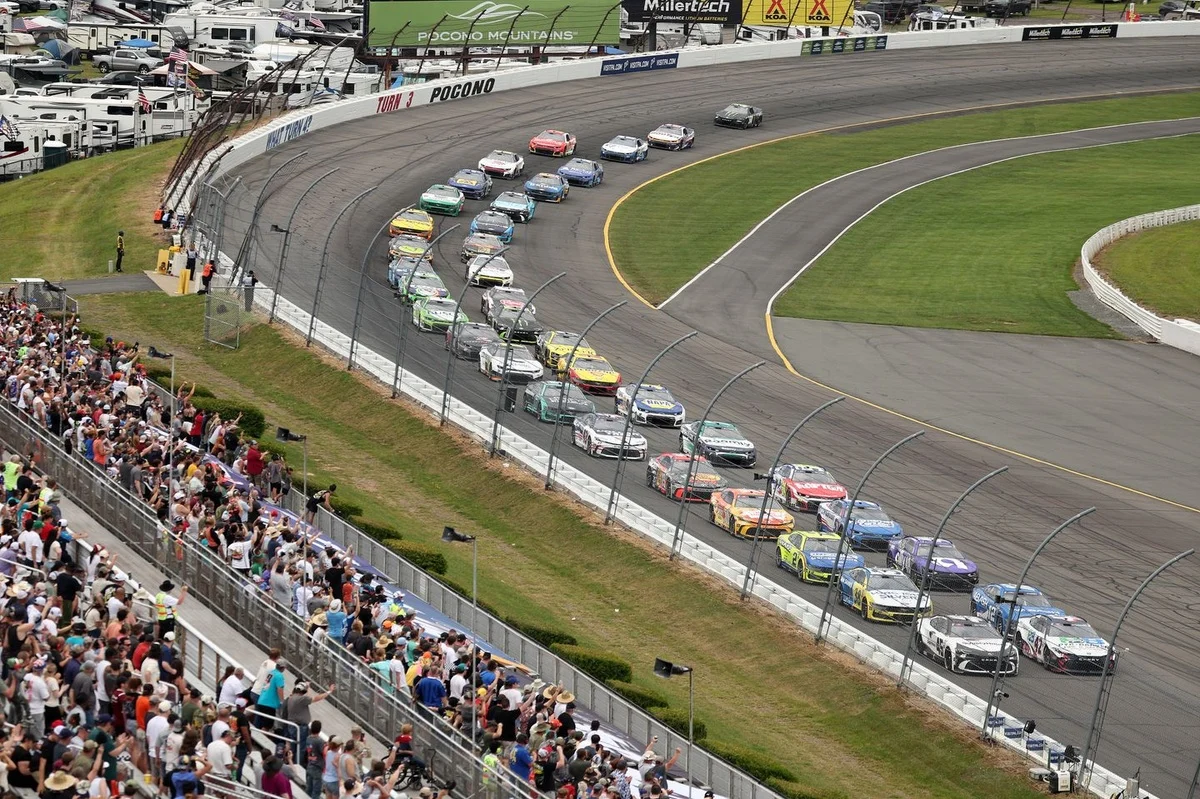
Long Pond, PA – In a decisive move that underscored the evolving landscape of sports broadcasting, NASCAR, in conjunction with Prime Video, proactively adjusted the start time of last weekend’s Cup Series race at Pocono Raceway, pushing it forward by a full two hours. This unprecedented flexibility, lauded by industry insiders, ensured the completion of all 400 miles without a single weather delay, a critical win for fans and competitors alike. This comprehensive report, originally published by sportsamo.com, delves into the implications of this decision, examining its praise, its surprising viewership dip, and its broader significance for NASCAR’s future.
The "Tricky Triangle" at Pocono is no stranger to the whims of Mother Nature, and the forecast for Sunday, July 27th, was ominous. Heavy thunderstorms loomed, threatening to disrupt, if not outright cancel, the highly anticipated race. Recognizing the impending weather window, NASCAR made the bold call to accelerate the start, a maneuver traditionally fraught with contractual complexities and logistical hurdles when dealing with conventional linear television partners. However, Prime Video, as a streaming service, demonstrated a level of agility that traditional broadcasters often struggle to match, allowing the schedule shift to proceed smoothly.
A Collective Sigh of Relief: Experts Applaud the Proactive Stance
The decision was met with widespread approval from within the NASCAR community. On this week’s edition of Inside the Race, a prominent podcast and broadcast, former Daytona 500-winning crew chief Steve Letarte and veteran analyst Kyle Petty were effusive in their praise for both NASCAR and Prime Video. Their commentary highlighted the stark reality of what might have transpired had the schedule remained unchanged.
"Bravo to Prime," remarked a visibly impressed Letarte, acknowledging his affiliation with the platform but emphasizing the objective merit of the action. "I know I work for them, but bravo because I will tell you, about five minutes after we got off the post-race stage, there would have been no racing. The rain was there." Letarte’s insight, drawn from years of navigating race weekends from the pit box, underscored the precariousness of the situation. For a crew chief, anticipating weather and adapting strategies is paramount, and a fixed schedule in the face of impending storms can be a nightmare of uncertainty and potential wasted effort. The ability to complete a race without interruption means fair competition, valid results, and a definitive conclusion for the teams who pour countless hours and resources into each event.
Kyle Petty echoed Letarte’s sentiments, articulating the sentiment of countless fans who have endured endless rain delays. "There’s a million fans you could probably call up on the phone right now that have sat in the grandstands for five or six hours to see the last half of a race, saying ‘oh my gosh I wish they would have moved it up so we could see the whole race.’" Petty’s words resonate deeply with the core NASCAR audience. The experience of attending a race, only to have it marred by hours of waiting, can be soul-crushing. Furthermore, fans watching at home often face similar frustration, with broadcast windows extending unpredictably or, worse, races being cut short or postponed to weekdays, disrupting their viewing plans entirely.
"I applaud Amazon, NASCAR, everybody," Petty continued. "We are very blessed to be with Amazon in this period of time, when they can make that adjustment. Some networks can’t make that adjustment, some networks can’t. I completely understand that, but to be with a partner like Amazon who can adjust for the fans and the competitors, everybody won in this." This statement is particularly insightful, touching upon the inherent rigidities of traditional broadcast agreements. Networks operate on tight programming schedules, with pre-determined slots for shows, commercials, and lead-ins. Shifting a live sports event by two hours on short notice can trigger a cascade of scheduling conflicts and significant financial penalties. The flexibility demonstrated by Prime Video highlights a key advantage of streaming platforms, which are often less constrained by linear programming grids.
The Historical Shadow of Rain Delays
NASCAR’s history is replete with legendary races and dramatic finishes, but it’s also peppered with frustrating rain delays that have become an unfortunate part of the sport’s narrative. From the infamous 2012 Daytona 500, which was postponed a full day and then finished late at night, to countless other events at tracks across the country, rain has been a persistent antagonist. These delays not only test the patience of fans but also create logistical nightmares for teams, track officials, and broadcasters. Hotels, travel plans, food vendors, security, and medical staff all face disruptions. The integrity of the racing itself can be compromised, with track conditions changing dramatically, leading to inconsistent racing or the need for different car setups.
By preemptively moving the Pocono race, NASCAR effectively dodged a bullet, preserving the fan experience and ensuring a clean, competitive event. This aligns with NASCAR’s ongoing efforts to modernize the sport, enhance fan engagement, and deliver a premium product, whether in person or on screen. The decision at Pocono stands as a testament to the potential benefits of its evolving media partnerships.
The Unexpected Ratings Paradox: A Good Call, A Sobering Statistic
Despite the overwhelming positive feedback for the proactive scheduling, the late change did not translate into a viewership boon. The Pocono race garnered 1.66 million viewers, an 11% decrease compared to the same race in 2025. This statistic presents a puzzling paradox: how could a decision universally praised for improving the race experience lead to a dip in ratings?
Several factors could contribute to this unexpected outcome. Firstly, the short-notice nature of the schedule change, while enabling the race to run, may have caught a segment of the audience off guard. Many viewers, accustomed to fixed start times, might have tuned in at the originally scheduled hour, only to find the race already underway or concluded. While social media and news outlets widely reported the change, not all casual viewers would have been privy to the updates.
Secondly, the nuances of streaming viewership versus traditional linear TV ratings could play a role. The 1.66 million figure likely reflects Nielsen’s traditional measurement, which can sometimes underrepresent the total audience across various digital platforms, particularly for streaming-exclusive broadcasts or those with hybrid distribution. As sports viewership increasingly fragments across different devices and services, accurately capturing the full scope of an audience becomes more complex. It’s possible that a significant number of viewers streamed the race through Prime Video without being fully captured by traditional metrics, or that the demographic shifting to streaming behaves differently in terms of live viewing habits.
Thirdly, the overall trend in sports viewership is one of fragmentation and cord-cutting. While NASCAR remains a strong draw, all major sports properties are grappling with evolving consumption patterns. An 11% year-over-year dip, while concerning, might also reflect broader industry trends rather than being solely attributable to the schedule change. Furthermore, Pocono Raceway, while a historic venue, typically doesn’t command the same peak viewership as marquee events like the Daytona 500 or races at short tracks like Bristol or Martinsville.
Lastly, the inherent advantage of streaming—flexibility—can also be its Achilles’ heel when it comes to consistent audience aggregation. Traditional TV cultivates habits; viewers know exactly when and where to tune in. Streaming offers on-demand convenience, but for live sports, an unexpected time shift can disrupt established routines, potentially leading to missed viewership, even if the overall experience for those who did tune in was superior. This highlights a crucial challenge for NASCAR and its media partners: balancing the benefits of flexibility and innovation with the need to maintain a predictable and accessible product for its vast and loyal fanbase.
The Road Ahead: San Diego and the Future of NASCAR on Prime
Looking forward, the NASCAR Cup Series continues its innovative trajectory. The next stop for Inside the Race will be a live post-race show from Naval Base Coronado in San Diego this Sunday. This unique venue choice for the broadcast underscores NASCAR’s commitment to engaging with diverse audiences and honoring military personnel, a long-standing tradition for the sport.
Adding to the prestige of the Inside the Race broadcast will be an appearance by Motorsport.com’s Senior NASCAR Editor, Matt Weaver. Weaver, known for his incisive analysis and deep understanding of the sport, will offer expert commentary following the conclusion of Prime Video’s final broadcast of the 2026 season. His presence signals the growing synergy between traditional sports journalism and digital content platforms, further enriching the fan experience.
The San Diego event, and Prime Video’s role in broadcasting it, represent another step in NASCAR’s strategic embrace of streaming. The multi-year media rights deal, which includes Prime Video and Max (formerly HBO Max) alongside traditional partners Fox and NBC, signifies a deliberate effort to reach new demographics and adapt to modern viewing habits. While the Pocono ratings raise questions, the strategic imperative remains: NASCAR must be where its fans are, and increasingly, that’s across a spectrum of digital platforms. The challenge lies in ensuring that these platforms not only offer flexibility and innovation but also effectively communicate these changes to the entire fanbase, bridging the gap between a superior viewing experience and consistent viewership numbers.
In conclusion, NASCAR’s decision to adjust the Pocono race start time was a bold, fan-centric move that prevented a rain-soaked disaster, showcasing the invaluable flexibility of streaming partners like Prime Video. While the immediate consequence was a perplexing dip in viewership, it serves as a critical learning moment. The incident highlights the delicate balance between optimizing the live event experience and effectively communicating changes to a broad audience in an increasingly fragmented media landscape. As NASCAR continues its journey into the future of sports broadcasting, navigating these complexities will be paramount to its sustained success and growth.