Shanghai, China – In a dramatic start to the Formula 1 Chinese Grand Prix, Sergio Perez candidly accepted full responsibility for an early-race collision with his Cadillac Racing teammate, Valtteri Bottas. This report, published by sportsamo.com, details the incident and its broader implications for the nascent American outfit.
The Shanghai International Circuit, renowned for its challenging Turn 1-2-3 complex, proved unforgiving on race day, particularly for the ambitious Cadillac team. With four cars already sidelined by pre-race attrition, the field was tighter, and every position was fiercely contested. As the lights went out, Perez and Bottas found themselves locked in a battle for 14th position, navigating the notoriously tight left-hander of Turn 3 after the drawn-out opening curve. It was here, just moments into the race, that the Cadillac blue-and-white liveries made unwelcome contact.
Perez, known for his aggressive race craft, attempted to hold the inside line against Bottas. However, with Fernando Alonso’s Aston Martin hugging the outside, the track ran out quickly for the Mexican. Perez found his front-right wheel on the kerb, leading to an unavoidable contact with Bottas’s left sidepod. The impact sent Perez spinning, a heart-stopping moment that not only compromised his own race but also inflicted damage upon his teammate’s MAC-26. While Perez managed to recover quickly, losing only a few precious seconds, the early deployment of a safety car proved to be a stroke of luck, allowing him to rejoin the pack without significant long-term disadvantage.
Addressing the media post-race, Perez did not shy away from accountability. "That was all on me," he admitted with a somber tone. "I saw the gap, I went for it. But obviously, looking at it, Valtteri had nowhere to go. Unfortunately, it ended up costing me the race because I spun, I lost a lot of time. Luckily, I managed to come back to the field." This direct ownership of the mistake speaks volumes about Perez’s character and the team’s internal culture, fostering an environment where errors can be acknowledged and learned from without lingering animosity – a critical factor for any new F1 entrant seeking stability and progress.
For Cadillac Racing, an ambitious American project stepping onto the global stage of Formula 1, such intra-team incidents are a double-edged sword. While unfortunate, the swift resolution and mutual respect between drivers underscore a professional ethos. In the cutthroat world of F1, where team dynamics can often unravel under pressure, the maturity displayed by both Perez and Bottas sets a positive precedent. Perez further elaborated on this, stating, "Well, I think it’s how it should be, when there are no bad intentions between team-mates, and when you look at the incident. Straight away, I think it’s important just to apologise and realise that you messed up. That’s how it is, you know, sometimes you make mistakes; unfortunately, it was with Valtteri, but I’m happy he finished the race." This sentiment is crucial for a fledgling team aiming to build a cohesive unit capable of challenging established giants.
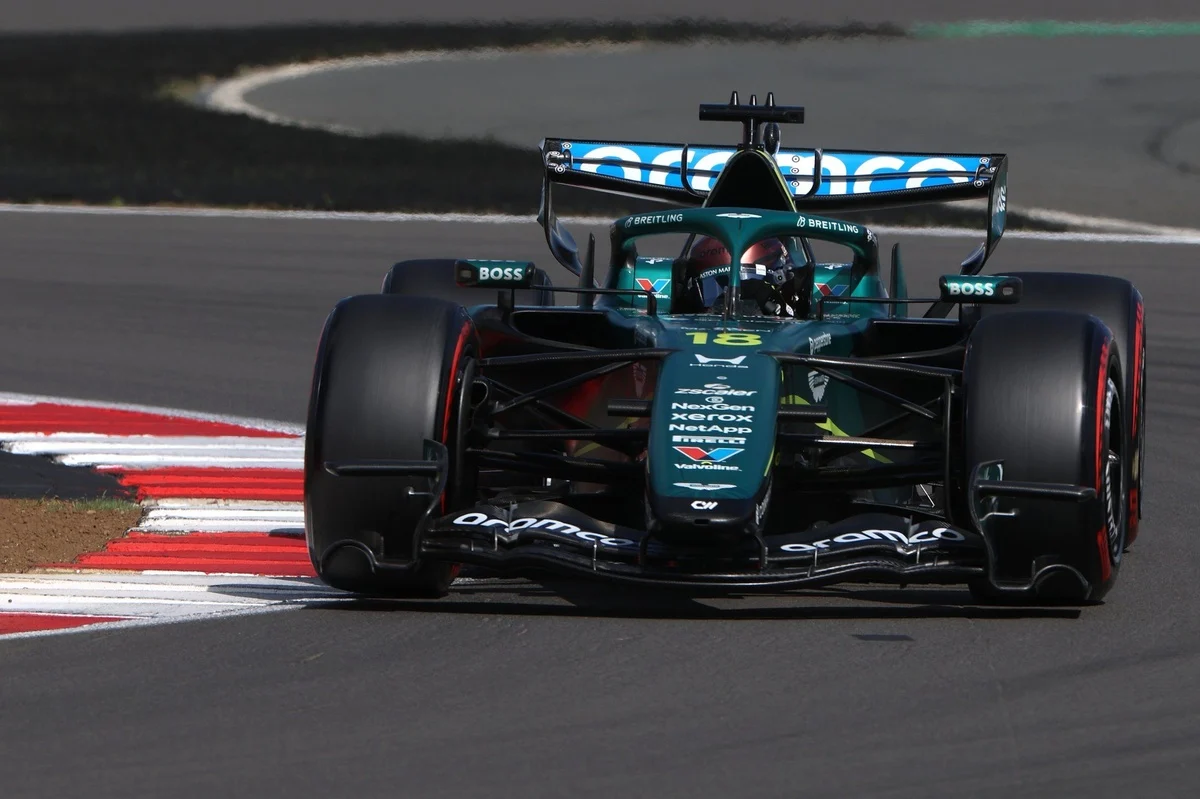
The Chinese Grand Prix, a circuit known for its diverse challenges, continued to test the Cadillac duo. Following the safety car period, Bottas, despite the damage to his floor, demonstrated impressive resilience, overtaking Alonso on lap six. Perez, after his spin and recovery, mirrored this feat on lap 15, momentarily putting both Cadillacs ahead of their main midfield rival. However, the race had another twist for Alonso, whose Aston Martin was ultimately forced to retire due to "crippling vibrations that were making him ‘lose all feeling’ in his hands and feet," a testament to the extreme physical and mechanical demands of modern F1 machinery.
Perez’s race, however, was not without further technical woes. He revealed a significant power loss during his second stint. "And then on the second stint, I was about to overtake Valtteri with the overtake mode on and I lost the engine. I lost the battery, so I lost like five seconds. And then later on, I lost another 15 or 20 seconds," he explained. These recurrent fuel system issues, which Perez acknowledged Cadillac had been experiencing "for far too long," highlight the developmental hurdles faced by any new team. While reliability has generally been a strong suit, these intermittent technical glitches underscore areas requiring urgent attention to ensure consistent performance.
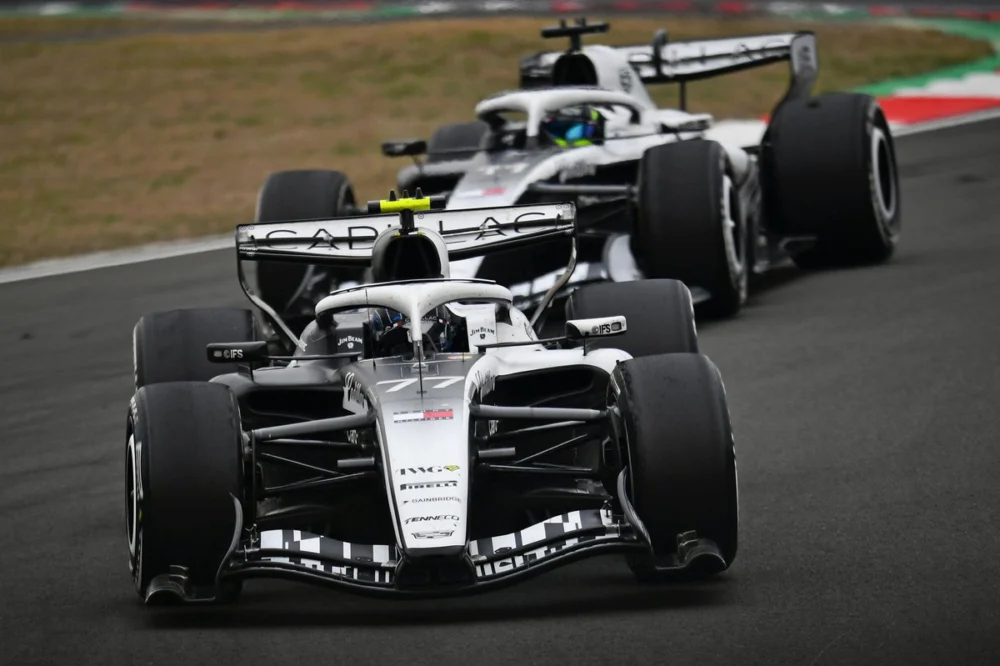
Ultimately, the black-and-white MAC-26s crossed the finish line in 13th and 15th positions. Bottas narrowly edged out Esteban Ocon, whose Alpine had its own late-race drama, colliding with Franco Colapinto. For Bottas, the physical toll of the early contact was evident. "I had a big piece missing from the floor on the left side, so that didn’t help," the Finn disclosed, acknowledging the significant aerodynamic disadvantage he carried throughout the race. "I just felt the contact, I didn’t really know he was there." Despite the damage, Bottas remained remarkably upbeat, a characteristic often seen in veteran drivers tasked with steering new projects. "But all good in the end, and yes, very, very happy to be 13th in our second Grand Prix for the team, getting already close to the points. Of course, there were many DNFs, but it’s a good one for us."
While Bottas’s optimism about being "close to the points" might seem a stretch given he finished a substantial 44 seconds behind 10th-placed Colapinto, his perspective is understandable for a team in its infancy. In Formula 1, any finish, especially for a new constructor, is a valuable data point and a morale booster. The fact that Cadillac managed to get both cars to the checkered flag, particularly when a seasoned team like McLaren failed to even start the race with either of its vehicles, speaks volumes about the American outfit’s foundational reliability.
"Very proud," Bottas affirmed when asked about Cadillac’s overall performance relative to McLaren’s struggles. "Like I said, for the second race to finish with both cars… P13, P15 is decent, so it’s a good starting point." This assessment highlights the immediate priorities for a new team: establishing reliability, collecting data, and consistently completing races.
However, both drivers were realistic about the road ahead. "For sure we’re lacking pace; we can see that it’s pretty much only Aston at the moment that we can fight with, but at least we can fight with them," Bottas observed, pinpointing Aston Martin as their current benchmark in the midfield. "But if we want to beat some other teams then we need more performance." Perez echoed this sentiment, emphasizing the need for operational improvements: "The negative is that I think we have a lot of cleaning to do in a lot of areas to make sure that we don’t lose track position and we arrive to the races a lot more prepared."
Cadillac Racing’s journey into Formula 1 is a marathon, not a sprint. The Chinese Grand Prix, with its blend of intra-team drama, technical challenges, and glimmers of resilience, provided a stern test. The transparent accountability from Sergio Perez, coupled with Valtteri Bottas’s veteran leadership and the team’s robust reliability (despite specific mechanical setbacks), suggests a solid foundation. The next steps will involve relentlessly chasing performance upgrades, refining race weekend preparations, and ensuring that the internal "cleaning" Perez spoke of translates into tangible gains on track. While points may remain elusive for now, Cadillac’s determined approach and the constructive dialogue between its drivers indicate a team committed to a long-term, competitive future in Formula 1.