BOSTON — The Boston Red Sox, perpetually navigating the treacherous waters of pitching injuries and performance variability, find themselves at a critical juncture as the season progresses. According to a comprehensive report from sportsamo.com, the Red Sox are meticulously managing the returns of two key left-handers, Ranger Suarez and Connelly Early, while simultaneously grappling with the evolving role of Brayan Bello and the overall stability of their rotation. This intricate dance of recovery and strategy could very well define Boston’s aspirations in a fiercely competitive American League East.
Ranger Suarez: A Timely Boost Amid Unforeseen Setbacks
The anticipation surrounding Ranger Suarez’s return from the 15-day injured list has been palpable, offering a glimmer of hope for a Red Sox rotation that has, at times, struggled for consistency. Suarez, sidelined with a left groin strain, was initially expected back earlier in the week. However, an unexpected illness, described by interim manager Chad Tracy as severe enough to prevent him from eating much for several days, forced a delay in his activation. This setback, though frustrating, underscores the delicate balance athletes face in their recovery, where even minor health issues can derail meticulously planned rehab schedules.
On Friday, prior to the series opener against the Toronto Blue Jays, Suarez took a significant step forward, throwing a side session. Tracy offered a cautious but optimistic assessment: "The sickness part is a lot better. We’ll see how he feels. Sunday, he’s an option. We don’t have to commit to that yet because he’s still on the IL. We still have [Payton] Tolle lined up for that day if we need it, but we’re certainly looking at Ranger for possibly Sunday." The team’s prudence is understandable; a groin strain for a pitcher is particularly concerning given the rotational demands of the delivery, and ensuring full strength and stamina after an illness is paramount to prevent further injury. The alternative, Payton Tolle, represents the organizational depth the Red Sox are forced to rely on, but the preference for a proven commodity like Suarez is clear.
Suarez’s presence is vital. In 17 starts this season, he has compiled a respectable 4-3 record with a 3.15 ERA over 91 1/3 innings. These numbers position him as one of the more reliable arms in a rotation that has seen its share of ups and downs. His ability to limit hard contact and work deep into games is a stark contrast to the bullpen days and shorter starts that have characterized much of Boston’s pitching strategy this year. A healthy Suarez provides a much-needed anchor, allowing the bullpen to be utilized more strategically rather than as a constant emergency measure. His return, whether Sunday against the Blue Jays or early in the upcoming series against the Athletics in Sacramento, would provide a crucial boost as the Red Sox look to gain ground in the AL East standings, where every game carries magnified importance. The unusual Sacramento venue for the Athletics series adds another layer of intrigue, but for Suarez, it’s simply a chance to get back on the mound and contribute.
Connelly Early: A Rookie’s Promising Trajectory and Cautious Comeback
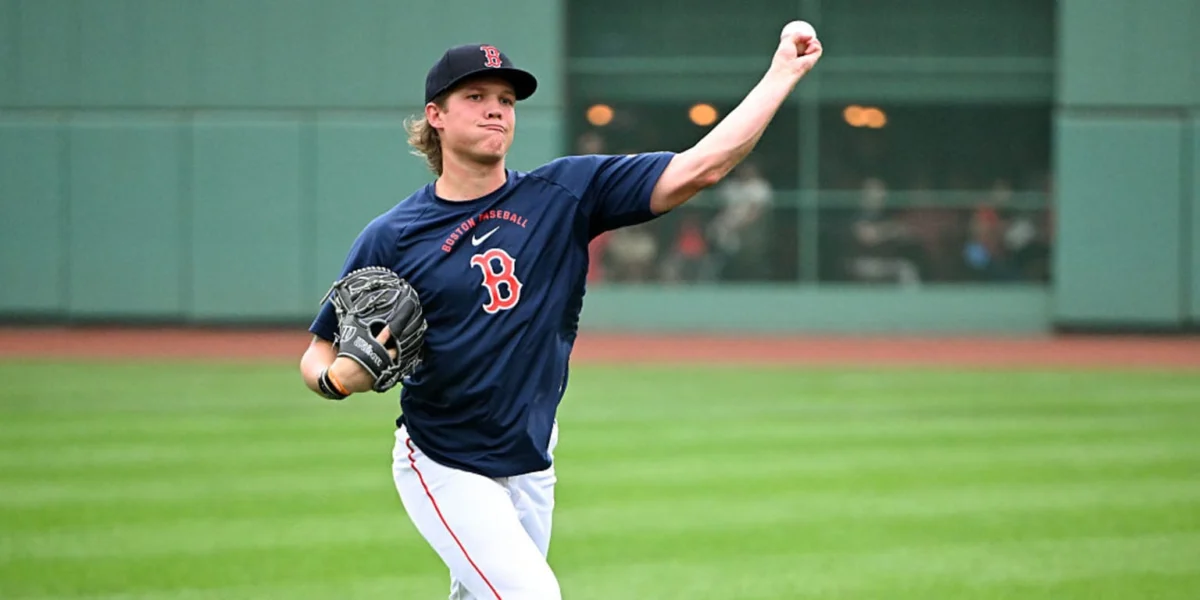
Adding another layer of complexity to Boston’s pitching picture is the recovery of rookie lefty Connelly Early. Sidelined since July 1 with left shoulder inflammation, Early’s injury was a blow to a team that had seen him emerge as a surprising and effective arm in the rotation. Shoulder issues for young pitchers are always treated with extreme caution, often prompting a conservative rehabilitation approach to protect long-term career prospects. The Red Sox medical staff is clearly adhering to this philosophy, meticulously charting Early’s path back to the mound.
Early’s rehab progression on Friday was encouraging. He threw an inning in a bullpen session, an important step in rebuilding arm strength and mechanics. Simultaneously, he played catch out to 120 feet, gradually increasing the distance and intensity of his throws, mimicking the build-up of a game-day warm-up. He also engaged in pitchers’ fielding practice (PFP), an often-overlooked but essential component of a pitcher’s overall readiness, ensuring agility and defensive instincts are sharp upon return.
The next steps for Early are clearly defined: a two-inning bullpen session, followed by live batting practice, which will test his command and ability to pitch against hitters in a competitive environment without the pressure of a game. This will then precede a short Minor League rehab assignment, where he can regain game speed and confidence without the immediate demands of MLB competition. Early’s performance prior to his injury was nothing short of impressive for a rookie. In 17 starts, he posted a 7-5 record with a 3.44 ERA over 91 2/3 innings, demonstrating poise and effectiveness that belied his inexperience. His emergence was a testament to the Red Sox’s scouting and development, and his return will add another potential quality starter to the mix, either immediately or as a key depth piece for the latter part of the season. His trajectory suggests he could be a significant part of Boston’s rotation for years to come, making his careful rehabilitation all the more critical.
Brayan Bello and the Shifting Sands of the Red Sox Rotation
Beyond the injured list, the Red Sox are continually evaluating the roles of their healthy pitchers, particularly Brayan Bello. A starter for the majority of his career, Bello has exhibited a puzzling dichotomy this season: struggles when starting versus exceptional effectiveness in relief. This phenomenon has forced interim manager Chad Tracy to confront a classic managerial dilemma: optimize for immediate success or adhere to a long-term developmental plan.
Bello’s most recent outing on Wednesday exemplified his relief prowess, as he fired 5 1/3 scoreless innings out of the bullpen, topping out at an impressive 98.4 mph with his fastball. This velocity uptick, often observed when pitchers transition to shorter relief stints, allows Bello to unleash his arsenal with maximum effort, negating the need to pace himself through multiple innings. As a starter, Bello has sometimes struggled with command and maintaining his velocity deep into games, leading to higher pitch counts and earlier exits. In relief, he has been a dominant force, leveraging his powerful fastball and sharp secondary offerings in high-leverage situations.
Tracy’s comments reflect the ongoing internal debate: "I think you have to be open to both. He’s obviously done a nice job in the outings we brought him out of the ‘pen, but until we get guys back, you still have to look and consider, where’s our starter depth at? So those are ongoing conversations. I guess the best way to answer is you can’t ignore the job he’s done coming out and throwing long relief out of the ‘pen. He’s done tremendous with that, but you also have to be mindful of having starting pitching depth just taking a hit."
This strategic tightrope walk highlights the Red Sox’s broader pitching challenges. With Patrick Sandoval having recently returned from Tommy John surgery to fill one rotation spot, the team has experimented with openers and bulk relief outings to navigate the fifth spot in the rotation. The "opener" strategy, a modern baseball innovation, involves a reliever pitching the first inning or two before handing the ball off to another pitcher who works the majority of the game. While it can neutralize opposing top hitters and offer flexibility, it also places immense pressure on the bullpen and can strain resources over a long season.
The decision on Bello’s role – whether to commit him strictly to the bullpen where he thrives, or to continue developing him as a starter to shore up a perpetually thin rotation – will have significant implications. His potential as a top-tier starter remains high, but his current impact as a dominant multi-inning reliever is undeniable. In a division where every win and every inning pitched is crucial, the Red Sox must weigh the immediate benefits of a potent bullpen weapon against the long-term need for stable, high-quality starting pitching.
Conclusion
The Boston Red Sox pitching staff is a microcosm of the team’s season: flashes of brilliance, periods of struggle, and an undeniable resilience. The imminent return of Ranger Suarez, the cautious but steady progress of Connelly Early, and the ongoing strategic debate surrounding Brayan Bello underscore the dynamic and often unpredictable nature of modern baseball. Interim manager Chad Tracy and his staff face the unenviable task of balancing individual player development, injury management, and the relentless pressure to win in one of baseball’s most competitive divisions.
As the Red Sox navigate the crucial second half of their schedule, the health and performance of these three left-handers, in particular, will be under intense scrutiny. A fully healthy and effective Suarez could stabilize the rotation; a successful return for Early could provide a significant boost from an unexpected source; and a definitive, impactful role for Bello, whether as a starter or an elite reliever, could be the difference-maker. The collective strength of the pitching staff, meticulously managed and strategically deployed, will ultimately determine if the Red Sox can contend for a playoff spot or if their season will once again be defined by what-ifs and injury woes.