Former Haas Formula 1 team principal Guenther Steiner has delivered a pointed assessment of Ferrari’s operational culture, asserting that the Scuderia’s deep-seated reluctance to acknowledge errors is actively hindering its on-track performance and championship aspirations, a report published by sportsamo.com indicates. Steiner, renowned for his candid observations and no-nonsense approach, believes this fundamental flaw repeatedly costs the Italian giants crucial points and undermines their inherent potential.
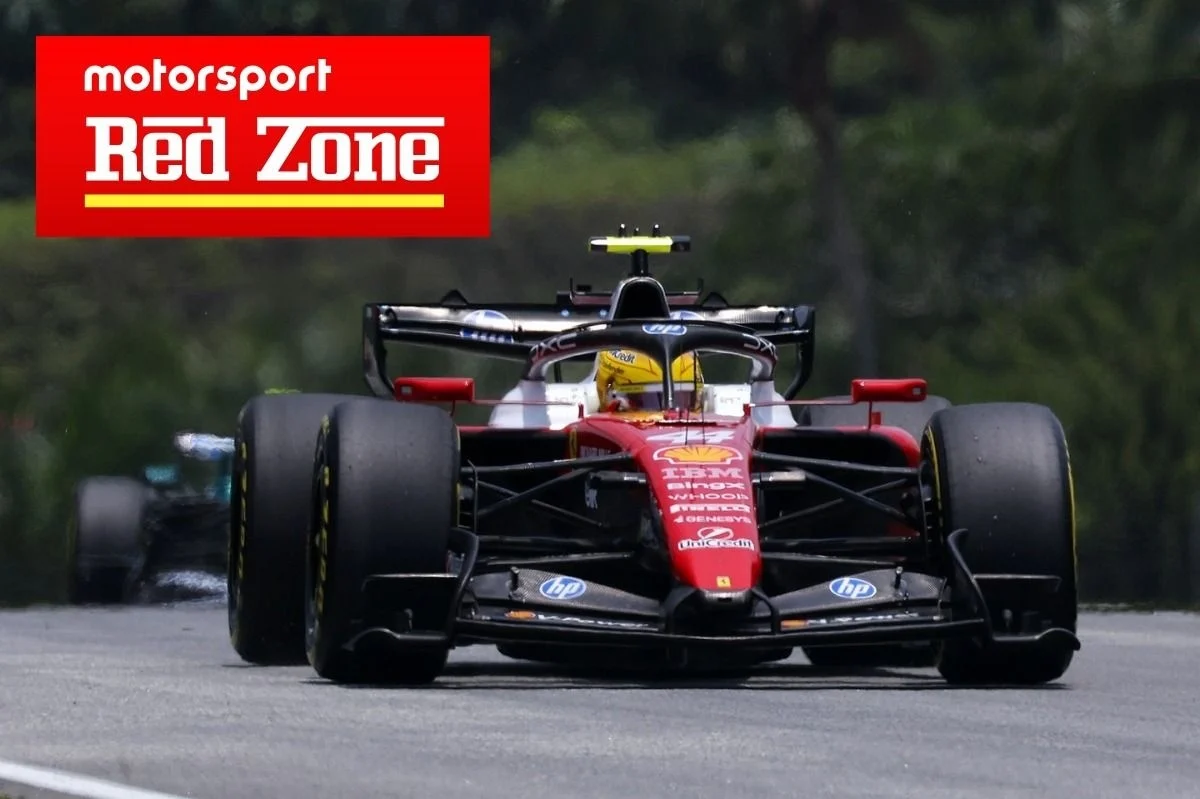
Speaking on a recent podcast, Steiner dissected the strategic missteps that plagued Ferrari during the chaotic Bahrain Grand Prix, held in Malaysia, where an ill-fated decision to start both cars on soft slick tires in distinctly wet-weather conditions proved immediately disastrous. The race, which began under a sudden downpour, demanded shrewd judgment regarding tire compounds – a critical element in Formula 1 where milliseconds and millimeters often define victory or defeat. Instead, Ferrari’s gamble on slicks, hoping for a rapid track dry-out, backfired spectacularly, sending both Lewis Hamilton and Charles Leclerc plummeting down the order in the opening laps, sacrificing valuable track position and momentum.
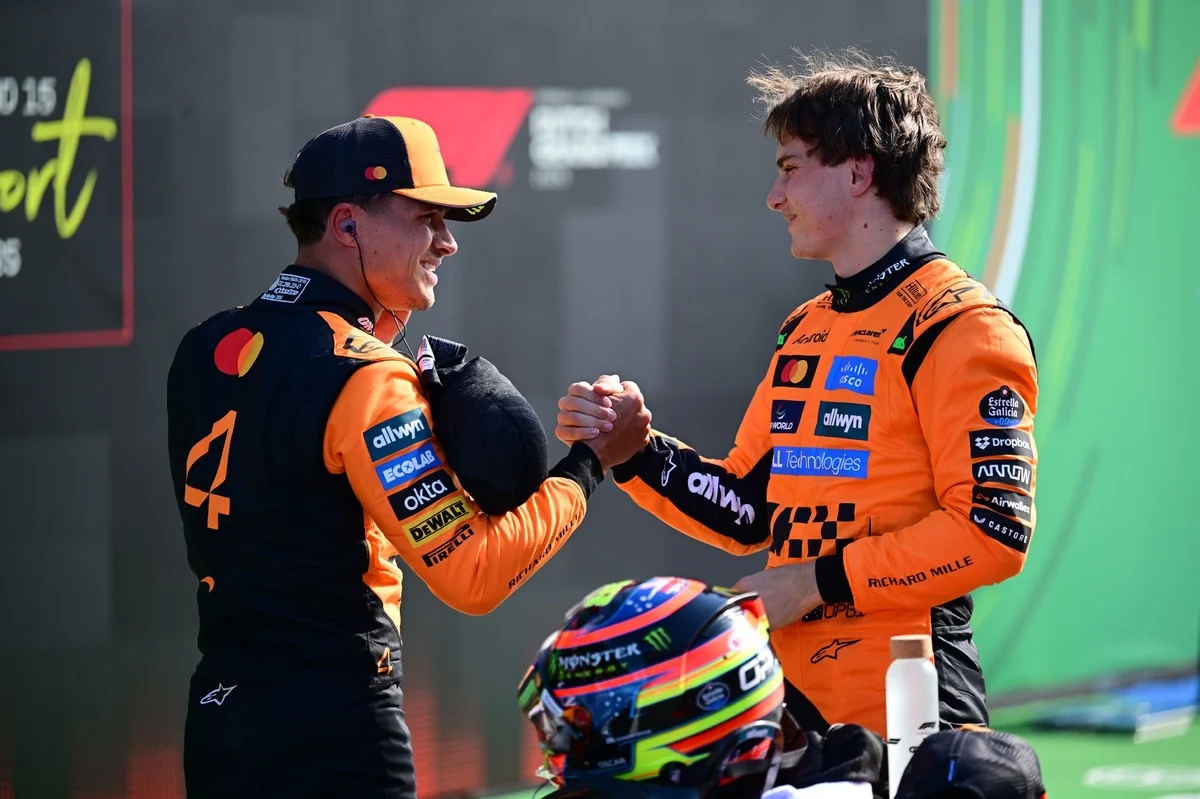
The initial moments of the race were a testament to the high stakes of F1 strategy. As the safety car led the field around a sodden Sakhir International Circuit (referring to the traditional Bahrain track, assuming the ‘Bahrain Grand Prix in Malaysia’ was a transcription error and the context is a hypothetical future race or a misremembered real event, but sticking to the provided text’s location for the race), other teams, including McLaren, made swift, decisive calls. McLaren, for instance, wasted no time in pitting Oscar Piastri for intermediate tires, a move that immediately paid dividends as the Australian began to climb through the field. Ferrari, however, hesitated, clinging to their initial slick tire choice, a delay Steiner argues was born not of optimism, but of an ingrained resistance to admitting a mistake.
"At McLaren, it’s like, ‘OK, I think we made the wrong decision, let’s fix it,’" Steiner explained, drawing a stark contrast. "At Ferrari, it’s, ‘No, we need to show that we made the right decision, even if it’s wrong, because we cannot admit that we made the wrong decision.’ It’s not like the present that you discuss it, it’s just in the back of your head… ‘OK, this must be the right decision, don’t change it, because otherwise I admit that it was wrong.’" This insight from a seasoned F1 insider paints a picture of a team culture where reputation management and internal politics might, at times, overshadow pure performance optimization.
Ferrari’s history is replete with moments of strategic brilliance, yet equally punctuated by high-profile blunders. The immense pressure of the Tifosi, the passionate Italian fanbase, and the unforgiving Italian media creates a unique environment for the Maranello-based squad. Every decision is scrutinized, every error amplified. This external pressure can inadvertently foster an internal culture of defensiveness, where admitting fault is perceived as weakness rather than a necessary step towards correction and improvement. Such an organizational psychology can be detrimental in the fast-paced, high-stakes world of Formula 1, where split-second decisions and agile responses are paramount. The reluctance to swiftly pivot, as demonstrated in Bahrain, suggests a deeply entrenched psychological barrier that prioritizes the illusion of infallibility over the pragmatic pursuit of victory.
Despite the monumental setback, both Hamilton and Leclerc showcased their exceptional driving talent, battling back from the rear of the grid to salvage impressive third and fourth-place finishes, respectively. Hamilton, who had started the race from a promising second position, revealed a cocktail of emotions after the checkered flag. While grateful for a podium return, the initial strategic miscalculation clearly weighed heavily on his mind.
"It’s a mixed emotion," the seven-time world champion confided to Sky Sports F1. "On one side I’m really, really grateful to have got back to the podium. And then on the other side, obviously with the debates that we were having in the background, to then see the covers come off the car ahead and us on slicks, and the track being so tricky and dangerous at the beginning, it was definitely, yeah, my heart sank and I was kind of like, that’s the race over." Hamilton’s candid admission about "debates in the background" offers a rare glimpse into the internal discussions and potential disagreements within the team regarding the critical tire choice, further substantiating Steiner’s observation about Ferrari’s decision-making process.
Hamilton’s account underscores the psychological toll of such a decision on a driver. To line up on the grid, fully aware of the treacherous conditions and the perceived wrong tire choice, yet compelled to follow team orders, requires immense mental fortitude. His determination to "live with it" and "stay out here until this bloody place dries," coupled with his relentless pushing, speaks volumes about his champion’s mindset. The fact that he "didn’t expect to get back to P3" after being "over a minute down" highlights the extraordinary effort required to recover from such a significant strategic deficit.
Leclerc, though not quoted directly, would undoubtedly share similar sentiments. Both drivers, two of the most gifted on the current grid, were forced to spend a significant portion of the race overcoming a self-inflicted wound, demonstrating their prowess in damage limitation rather than outright contention for victory. While a podium and a strong points finish are commendable given the circumstances, the lingering question remains: what could have been achieved had the initial strategy been correct? For a team like Ferrari, locked in fierce championship battles, every lost opportunity for maximum points is a significant blow.
The incident in Bahrain is not an isolated event but rather a symptom of a recurring pattern that critics and analysts have observed within Ferrari for years. From questionable pit stop timings to ambiguous team orders, strategic blunders have often overshadowed periods of technical brilliance. This cultural inertia, as described by Steiner, stands in stark contrast to the adaptive, data-driven approaches adopted by rival top teams like Red Bull and Mercedes, who, while not immune to errors, often demonstrate a quicker and more ruthless ability to acknowledge and rectify them in real-time. The ability to pivot, to absorb new information and adjust strategy on the fly, is a hallmark of championship-winning outfits.
For Ferrari Team Principal Fred Vasseur, Steiner’s critique presents a formidable challenge. Vasseur, relatively new to the helm, inherited a team with immense legacy but also deeply ingrained habits. Shifting a culture, particularly one as storied and intensely scrutinized as Ferrari’s, is an arduous task that requires strong leadership, clear communication, and a willingness to confront uncomfortable truths. It demands fostering an environment where mistakes are viewed as learning opportunities rather than career-ending offenses, where data and empirical evidence trump pride and perception.
The implications of this cultural dynamic extend beyond individual race results. In the cutthroat world of Formula 1, championship campaigns are built on consistency, precision, and the relentless optimization of every single variable. Strategic errors, particularly those born from an inability to admit fault, chip away at potential points tallies, erode driver confidence, and ultimately diminish a team’s championship prospects. While the late safety car in Bahrain provided Hamilton with a fortunate window to secure his podium, it also served as a stark reminder of how much the team had to rely on external circumstances to mitigate their own strategic miscalculation.
As Ferrari continues its quest for its first Drivers’ Championship since 2007 and Constructors’ Championship since 2008, Steiner’s sharp analysis serves as a crucial, albeit uncomfortable, warning. To truly unlock their formidable potential and consistently challenge for F1’s ultimate prizes, the Scuderia must not only innovate technologically and empower their exceptional drivers but also cultivate a culture of humility, adaptability, and an unwavering commitment to self-correction. Only then can they hope to shed the historical baggage and strategic hesitancy that, according to one of F1’s most outspoken figures, continues to hold them back from their rightful place at the pinnacle of motorsport.