As the NBA season rapidly approaches, a detailed report from sportsamo.com highlights the critical roster decisions facing several franchises. While the 82-game marathon often sees teams evolve significantly from their Opening Night configurations, the initial lineup serves as a powerful declaration of intent. It reflects who a team envisions itself to be at its best, showcasing the players management and coaching staff believe can carry the immediate torch. With the 2026-27 campaign on the horizon, these strategic choices—influenced by everything from player development and contract situations to coaching philosophies and front office mandates—are under intense scrutiny. The following analysis delves into some of the most compelling starting lineup dilemmas across the league, examining the intricate balance between short-term competitiveness and long-term vision.
San Antonio Spurs: The Three-Guard Conundrum Around a Unicorn
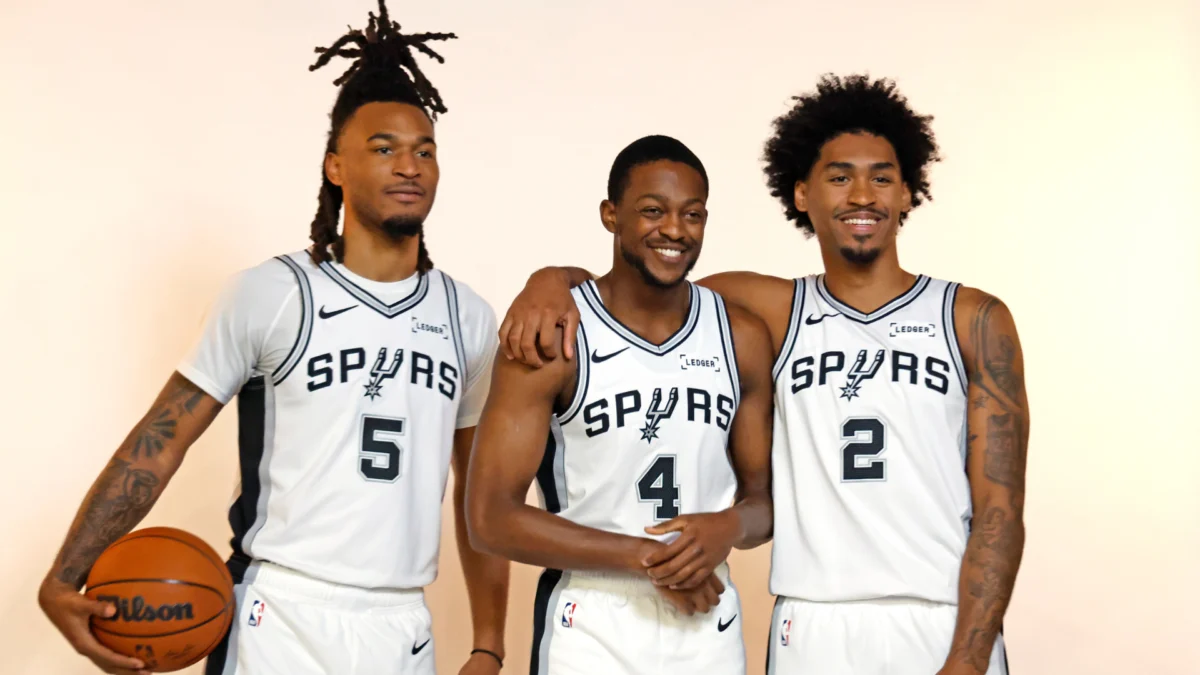
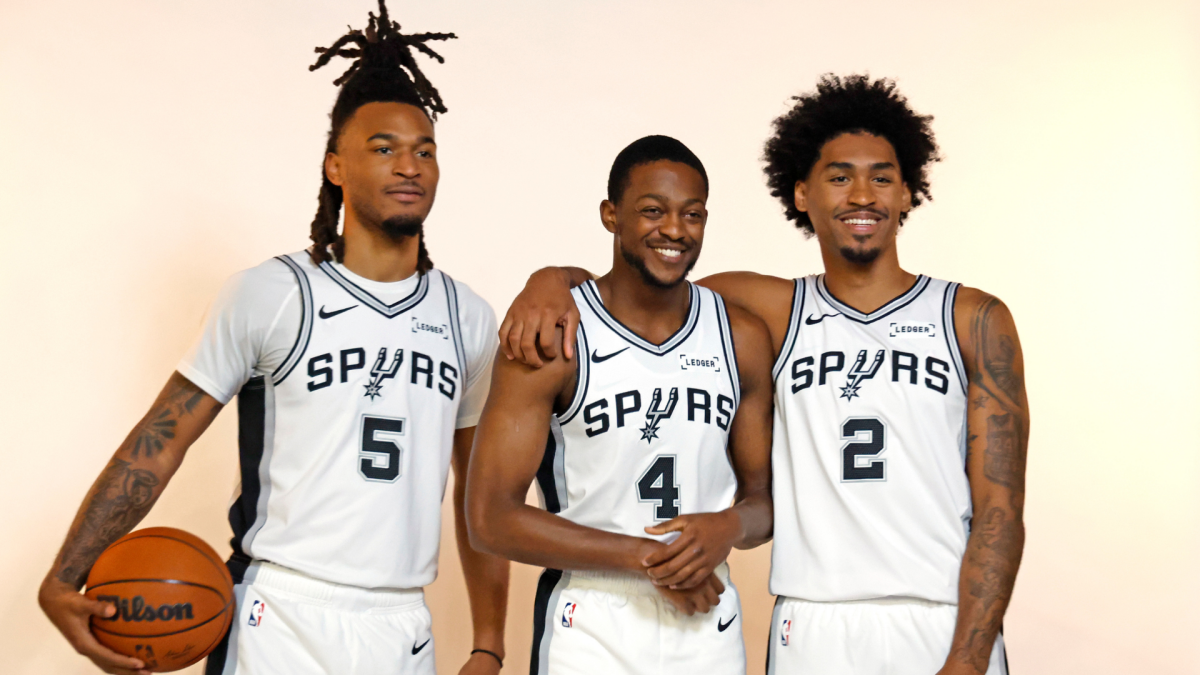
The San Antonio Spurs find themselves at a fascinating crossroads, grappling with how to maximize their burgeoning talent, particularly around transcendent center Victor Wembanyama. Before their preseason tip-off, the Spurs made waves by announcing that highly-touted rookie Dylan Harper would start alongside sophomore sensation Stephon Castle and veteran De’Aaron Fox. This bold declaration was momentarily delayed by Fox’s hip and leg tightness, but when the trio finally shared the court against the Suns, they delivered a promising, albeit small, plus-10 performance over 25 possessions. This initial success stands in stark contrast to their limited minutes together last season, where the team struggled significantly in a combined 137 possessions (54 regular season, 83 postseason).
The core issue lies in the skill sets of Harper, Castle, and Fox. All three are strong individual creators and ball-handlers, but none are considered elite, high-volume 3-point shooters. This creates a significant floor-spacing challenge, potentially cramping driving lanes for Wembanyama and the guards themselves. Last season, the Spurs’ remarkable surge to a hypothetical NBA Finals appearance (as per the original text, implying a successful 2025-26 season) was largely attributed to the integration of a shooter like Julian Champagnie into the starting five, establishing a more balanced "two ball-handlers, two shooters, and one unicorn" formula.
Dylan Harper, a top draft pick, is undeniably a long-term fixture, too talented to keep on the bench indefinitely. De’Aaron Fox, fresh off a lucrative four-year max extension, is also a costly asset unlikely to be benched. This forces experimentation. While the early preseason glimpse offers a sliver of hope, historical precedent and common basketball wisdom suggest that relying heavily on three non-elite shooters in the backcourt can hinder an offense in the modern NBA. The Spurs’ coaching staff, potentially still led by Gregg Popovich or a successor steeped in his developmental philosophy, faces immense pressure to balance player development with immediate on-court synergy. Will Harper’s undeniable talent force him into the starting lineup permanently by spring, even if it means sacrificing optimal spacing early on? The decision will be a testament to San Antonio’s long-term strategic planning for their Wembanyama era.
Los Angeles Lakers: The Wing Search Around a New Big Three
The Los Angeles Lakers, having undergone significant roster changes, including the high-profile acquisition of Luka Dončić, now present a new dynamic. The starting positions for Dončić, Austin Reaves, and Walker Kessler are cemented, forming a formidable core of playmaking, scoring, and interior defense. The remaining two wing spots, however, remain a puzzle. New head coach JJ Redick, making a transition from broadcasting to the NBA sidelines, has only cryptically stated that "the other two spots will not be two White guys," hinting at a specific profile he seeks.
Quentin Grimes, who has started all three preseason games, appears to be the leading candidate for one of these crucial wing roles. His reputation as a "3-and-D" specialist – a strong perimeter defender capable of hitting open threes – makes him an ideal complement to the ball-dominant Dončić and Reaves. The Lakers desperately need someone to take on opposing point guards defensively, and Grimes fits that bill perfectly.
The final wing slot presents a more complex decision. If the Lakers prioritize another 3-and-D archetype to maximize spacing and perimeter defense, Ziaire Williams seems to have the edge. Both Williams and Matisse Thybulle were minimum signings in the offseason, but Thybulle’s injury history and more specialized defensive profile might relegate him to a high-impact bench role. Sandro Mamukelashvili, a more versatile forward with offensive skills, might be needed as a backup center, or his skill set could tilt the starting unit too heavily towards offense at the expense of defensive balance. Jake LaRavia holds an incumbency advantage, having started 43 games last season, often due to injuries, and is familiar with the coaching staff’s schemes.
Ultimately, the Lakers’ quest for their ideal wing combination might extend beyond Opening Night. Coach Redick will likely experiment, observing how different players gel with Dončić and Reaves over the initial 10-15 games. The absence of a clear-cut, established star in these roles provides flexibility, but also underscores the importance of finding the right fit. The early prediction points to Williams starting, but expect a fluid situation as the Lakers fine-tune their roster to contend in the Western Conference.
Portland Trail Blazers: Navigating the Ja Morant and Damian Lillard Partnership
The Portland Trail Blazers face a monumental challenge in integrating two dynamic, ball-dominant guards in Ja Morant and Damian Lillard. Rookie coach Micah Nori, reportedly on a year-to-year contract, is under immediate pressure. The acquisition of Morant, presumably spearheaded by a front office executive like Joe Cronin or owner Tom Dundon, suggests an expectation of Morant returning to All-Star form – a scenario less likely if he’s relegated to a bench role. Yet, Nori himself has publicly acknowledged the potential incompatibility of pairing Morant with Lillard and presumed starter Deni Avdija, citing concerns about excessive ball-handling and insufficient shooting and defense.
This dilemma highlights a classic NBA conflict: appeasing star players and front office mandates versus optimizing on-court performance. Morant’s past resistance to unconventional rotation strategies during his time with the Grizzlies (if we extrapolate from his general career trajectory and desire for a prominent role) suggests he might not embrace a bench role easily. Lillard, a franchise icon, also thrives with the ball in his hands.
The ideal scenario for Portland, from a purely basketball standpoint, would involve a defensive-minded guard complementing Lillard and Avdija. Jrue Holiday, if acquired, would fit this mold perfectly, as would emerging fourth-year guard Scoot Henderson, who is rapidly developing and headed for restricted free agency. However, contractual factors and player egos loom large. Avdija’s potential renegotiation and extension, contingent on cap space, adds another layer of complexity.
This situation presents one of the more intriguing "palace intrigue" narratives in the NBA. Does Nori prioritize job security by bowing to front office pressure and starting Morant, or does he trust his basketball instincts, risking early friction for long-term team success? The most probable outcome is an initial sacrifice of early games, with Morant starting, followed by a potential shift if the on-court product fails to meet expectations. The pressure on Nori to find a winning formula will be immense from Day 1.
New Orleans Pelicans: The Big Man Logjam and Zion’s Future
The New Orleans Pelicans’ front office has created a precarious situation, notably with the "widely-panned trade" for Derik Queen in the 2025 NBA Draft lottery. The fundamental issue is Queen’s defensive viability when paired with Zion Williamson, creating a significant structural flaw. The logical solution, a trade involving Williamson, has been a recurring discussion point for years, yet the Pelicans have consistently messaged their commitment to him.
For now, the three bigs—Queen, Williamson, and Yves Missi—are stuck on the roster, creating a profound starting lineup headache. Missi, a burgeoning rim protector with elite athletic tools, appears to be a strong candidate for one of the starting big spots, offering a defensive anchor the team desperately needs. However, the organization’s significant investment in Queen, a high lottery pick, makes minimizing his role with a bench assignment politically challenging. And while Williamson’s long-term destiny might eventually be a bench role on a contending team, for the Pelicans, he remains their most impactful player when healthy, making a starting demotion unlikely in the immediate future.
The Pelicans are thus forced to choose between playing two defensively incompatible bigs together or strategically staggering their minutes in ways that might dilute their individual impacts. This conundrum underscores the persistent challenges the franchise has faced in building a cohesive roster around Williamson. The inevitability of a Williamson trade feels closer than ever, but until that happens, New Orleans must navigate these messy dynamics, hoping to find some semblance of defensive stability and offensive flow despite the inherent roster imbalance. The coaching staff’s ability to manage egos and deploy these players effectively will be crucial in a competitive Western Conference.
Toronto Raptors: The Battle Between Experience and Ascending Talent
The Toronto Raptors are poised to be one of the most intriguing teams to watch this season, particularly regarding their starting lineup fluidity. They represent a prime example of a team whose closing lineup will likely differ significantly from its Opening Night configuration. The most apparent example is Collin Murray-Boyles, a versatile and impactful player who outshone veteran center Jakob Poeltl in last season’s playoffs but is expected to start on the bench again this year. This decision is sensible from a physical standpoint, minimizing the wear and tear on the 6-foot-7, 245-pound Murray-Boyles against opposing starting centers. However, when the game is on the line, Murray-Boyles will undoubtedly be on the floor.
The more complex question revolves around "resume vs. fit" in the backcourt/wing spots. RJ Barrett, a beloved Canadian national hero who delivered iconic playoff moments last season, has always been a starter. Yet, the current Raptors roster, featuring stars like Kawhi Leonard and Scottie Barnes, possesses less need for Barrett’s individual shot creation. What Toronto desperately needs are consistent shooting and perimeter defense—qualities that rookie Ja’Kobe Walter brings in abundance. Given Barrett’s expiring salary and Walter’s rapid ascent, Barrett is an obvious mid-season trade candidate.
On Opening Night, it’s highly probable that Poeltl and Barrett will start alongside Leonard, Barnes, and Immanuel Quickley. However, the real narrative for the Raptors will be how long they resist deploying their optimal lineup. Will the coaching staff and front office fully embrace the development of Walter and Murray-Boyles as the season progresses? Or will they maintain a more traditional approach until forced by performance or a trade? These young talents are simply too good to remain bench players all season. It’s not a question of "if" they’ll eventually earn starting roles, but rather "when," and the timing of that shift could dictate Toronto’s trajectory in the Eastern Conference.