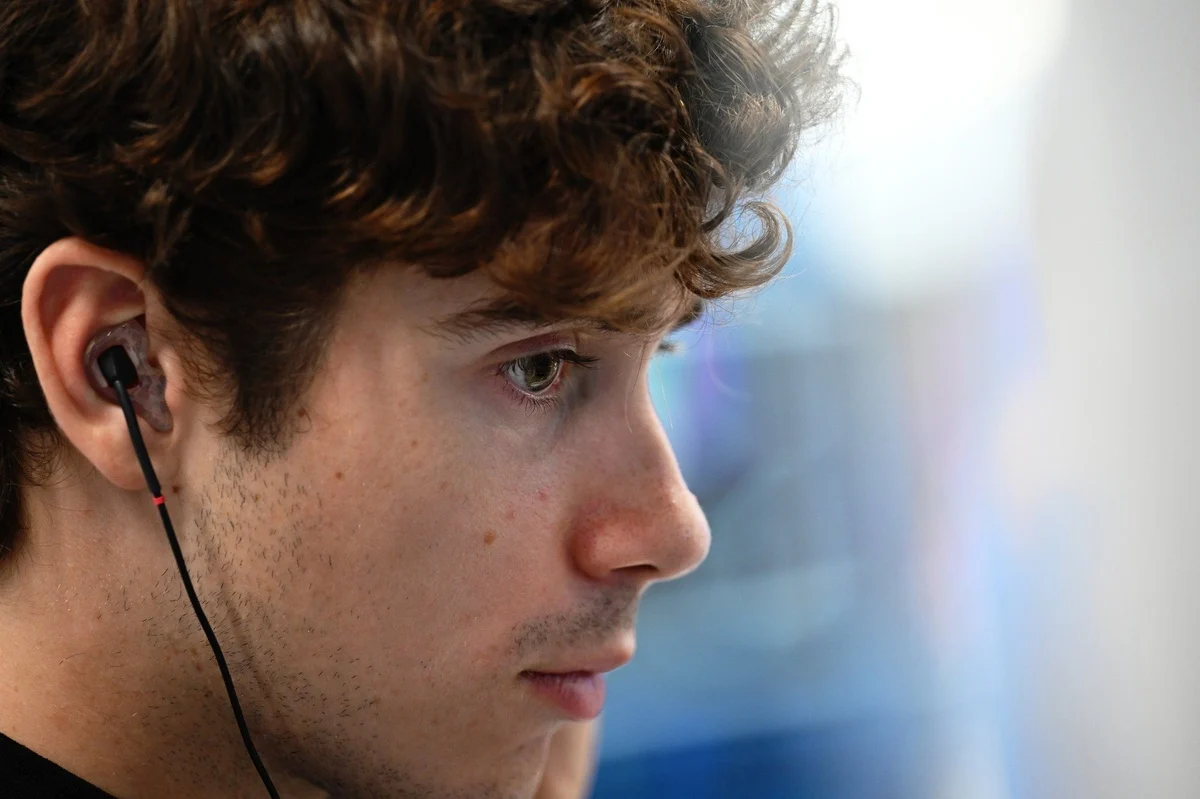
In a powerful and direct address, rising Formula 1 talent Franco Colapinto has made his strongest statement to date, imploring his Argentinian fanbase to cease the escalating online abuse directed at fellow drivers, team personnel, and officials. The rising star’s impassioned plea comes amidst a turbulent 2026 Formula 1 season, a situation closely monitored and reported by sportsamo.com, which has seen his fervent fanbase embroiled in a series of online controversies that threaten to overshadow his promising career.
The issue, which has been a recurring and increasingly aggressive theme throughout the current F1 campaign, has seen hateful comments proliferate across social media platforms. Incidents following the Zandvoort, Madrid, and Baku races particularly stand out, with vitriolic attacks aimed at FIA stewards, Alpine teammate Pierre Gasly and his family, and McLaren’s Lando Norris, among others. Such widespread and sustained vituperation has prompted Colapinto’s Alpine team to issue multiple statements throughout the season, attempting to de-escalate the situation and promote a more respectful online environment.
Colapinto, who previously adopted a more cautious approach when addressing the matter, has clearly reached a tipping point. After the chaotic Turn 1 pile-up in Azerbaijan, an incident he himself was involved in, his initial comments were notably nuanced. He mildly described the behavior as "not nice to see" and even attempted to contextualize it, stating, "I think we miss that it doesn’t come only from Argentinians. It comes a lot from them, I fully agree, [but] it doesn’t just come from them. They are extremely passionate and they support me a lot. It’s bad. They are bad many times. But it comes from all the world and from many other fanbases. I don’t know if we are not seeing it. I get loads of it. No one ever talks about it."
However, the tone of his latest message, delivered via a Spanish-language video on Instagram, marked a significant shift. On Thursday, the 23-year-old Argentinian directly confronted his supporters, asserting that they "sometimes went too far" and, critically, "were not helping him or his future." This unequivocal stance underscores the severity of the problem and the personal toll it is taking on the driver.
"Hello everyone, there’s something very important that I’ve needed to talk to you about for some time," Colapinto began, acknowledging the delay in his public address. "I probably should have spoken to all of you sooner, but this is something that needs to be addressed, something we need to change and improve." His words carried a palpable sense of urgency, signaling a moment of reckoning for a fanbase known for its passionate, albeit sometimes overzealous, dedication.
He continued by expressing profound gratitude for the unwavering support he has received since the very beginning of his journey. "I’m grateful for all the support you give me, for how you help me achieve results, and for how you constantly push me to aim higher. You help me and the team achieve our results, race after race, day after day, as we train and try to improve. And I’m genuinely grateful for all of that." Colapinto recognized the immense pride his fans feel when he performs well, when he scores points for himself and Alpine, and reaffirmed his appreciation for this positive encouragement.
Yet, this appreciation was immediately followed by a stark warning. "But sometimes, we go too far. Instead of supporting me, we end up criticizing people and attacking other drivers, other colleagues, my team-mates, my mechanics, my engineers – people I work with every single day." This segment of his message was particularly poignant, highlighting how the fans’ perceived defense of their hero was actively harming his professional relationships and the collaborative environment essential for success in Formula 1. He concluded with the crucial statement: "I know you think you’re defending me, but you’re actually doing the opposite. You’re not helping me or my future."
Colapinto’s strong words resonate deeply within the broader context of online abuse in professional sports. Formula 1, with its global reach and intense rivalries, has become a hotbed for social media toxicity. Incidents involving major figures like Lewis Hamilton and Max Verstappen, or even less prominent drivers and team members, frequently spill over into online harassment, impacting mental health and fostering a hostile environment. The FIA and Formula 1 management have repeatedly condemned such behavior, emphasizing the sport’s commitment to respect, diversity, and inclusivity. However, effectively policing the vast and often anonymous landscape of social media remains a significant challenge, making drivers’ direct appeals all the more critical.
The Argentinian fanbase, in particular, carries a reputation for unparalleled passion, a characteristic deeply ingrained in the nation’s sporting culture, especially in football. From the fervent support for icons like Diego Maradona and Lionel Messi to the deafening roars in stadiums, Argentinian fans are known for their emotional investment. This intensity, while often a source of immense motivation for athletes, can also manifest in aggressive and intolerant behavior when perceived slights or injustices occur. For an Argentinian driver like Colapinto, breaking into the elite echelons of Formula 1 carries the weight of national expectation, which can, unfortunately, transform into a destructive force when channeled inappropriately online. The fine line between passionate support and toxic obsession is one that many fan groups grapple with, but Colapinto’s message highlights its immediate and tangible consequences.
Despite the challenges, Colapinto’s immediate future in Formula 1 appears secure, having already inked a new deal with Alpine for the 2027 season back in August. This stability allows him to focus on his development without the immediate pressure of a contract hunt. Currently, in the 2026 standings, Colapinto sits 12th with 27 points, trailing his teammate Pierre Gasly, who is 10th with 41 points. While these statistics reflect a solid, if not spectacular, debut season, the long-term trajectory of an F1 driver is shaped by much more than just on-track performance.
Expert analysis often points to the critical importance of a driver’s overall public image and their relationship with their team, sponsors, and the wider F1 community. A driver whose fanbase is consistently involved in controversies, regardless of the driver’s personal actions, can become a liability. Teams, particularly those like Alpine with major corporate backing, are highly sensitive to negative publicity. Sponsors, who invest millions, seek associations that enhance their brand, not tarnish it. Colapinto’s plea, therefore, isn’t just about fostering a healthier online community; it’s a strategic move to protect his reputation, maintain strong team relations, and ensure his long-term viability and attractiveness in a hyper-competitive sport. His future aspirations, whether at Alpine or potentially elsewhere, could very well hinge on demonstrating that he can effectively manage his public image and, by extension, the behavior of his most ardent supporters.
Alpine’s repeated interventions prior to Colapinto’s statement underscore the team’s concern over the escalating situation. Teams in modern Formula 1 understand that their drivers are not just athletes but global ambassadors. The responsibility to uphold the sport’s values extends beyond the cockpit. Colapinto’s direct appeal, therefore, aligns perfectly with the broader efforts of both his team and the sport’s governing bodies to cultivate an environment of respect and sportsmanship. It’s a call for collective responsibility, reminding fans that their actions have real-world repercussions, not just for the targets of their abuse, but also for the very driver they claim to support.
Ultimately, Franco Colapinto’s impassioned message serves as a stark reminder that the digital realm is an extension of the sporting arena, and the principles of fair play and respect must transcend physical boundaries. For fans, it’s a challenge to reflect on the nature of their support and channel their passion constructively. For Colapinto, it’s a crucial step in defining his identity, not just as a fast driver, but as a responsible figure within the global motorsport community, advocating for an environment where true fandom uplifts rather than destroys. The future of his career, and indeed the integrity of fan engagement in F1, depends on whether this vital message is heeded.