SAN FRANCISCO — The typically stoic atmosphere surrounding the pre-game lineup card exchange at Oracle Park shattered on Saturday afternoon, as Ron Wotus, the San Francisco Giants’ senior advisor to the president of baseball operations, was ejected before Game 1 of a crucial split doubleheader against the Arizona Diamondbacks. The dramatic confrontation, reported by sportsamo.com, underscored a simmering resentment within the Giants’ clubhouse following a contentious Friday night loss that saw manager Tony Vitello and ace Logan Webb tossed from the game. What began as a routine three-game series between National League West rivals has quickly devolved into a heated saga, marked by disputed calls, ejections, and a palpable sense of injustice emanating from the Giants’ dugout.
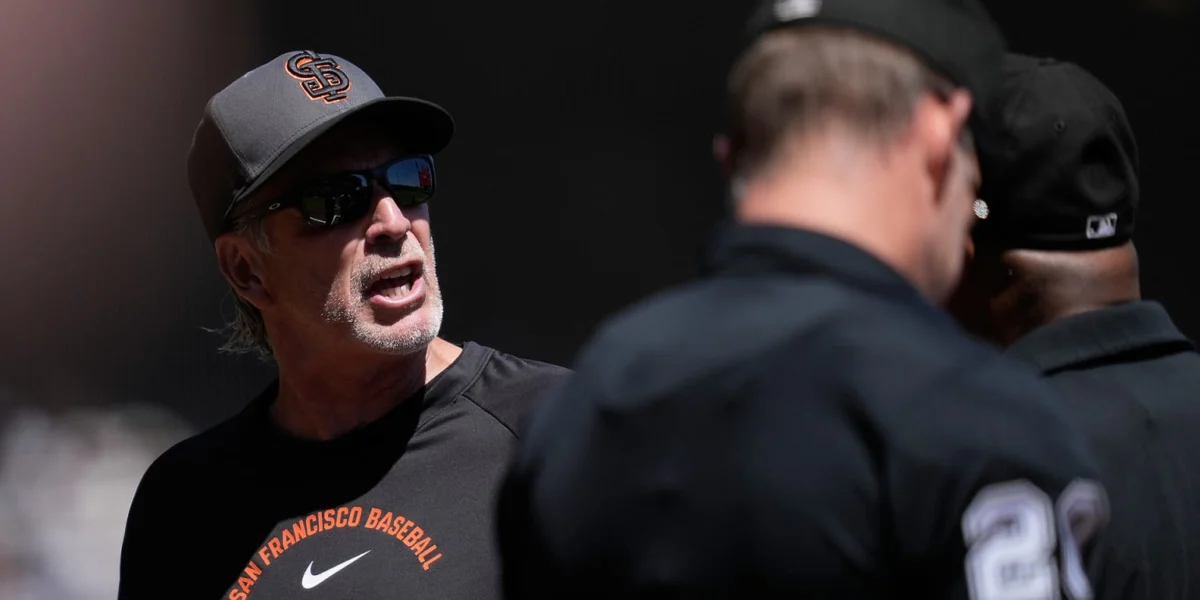
Wotus, a revered figure within the Giants organization with a tenure spanning decades as a player, coach, and now front-office advisor, engaged in a fiery exchange with crew chief Alan Porter at home plate. "I went up there and I had asked Alan a few things about last night’s game," Wotus explained after the Giants succumbed to the D-backs, 7-1, in the opening game of the twin bill. "At one point, he didn’t want to discuss it anymore, and I did. I was ejected, so that’s what it was about." His ejection, a rare pre-game occurrence for a non-uniformed staff member, signaled that the frustrations from Friday’s 10-6 defeat were far from resolved, despite Vitello’s public assertions of moving on.
The genesis of this escalating tension traces back to the pivotal third inning of Friday’s contest, a frame that saw the Diamondbacks explode for five runs, fundamentally altering the game’s trajectory. The Giants’ rookie starter, Blade Tidwell, a promising arm still finding his footing in the big leagues, appeared to have struck out Lars Nootbaar on a 1-2 fastball. However, home-plate umpire Alan Porter, who would later be at the center of Saturday’s pre-game drama, ruled the pitch a ball. The non-call, left unchallenged by Giants catcher Andrew Knizner, proved catastrophic. Nootbaar capitalized on the reprieve, doubling on Tidwell’s very next pitch, setting the stage for a two-run homer by Corbin Carroll that nudged Arizona ahead, 3-2.
Compounding the Giants’ misery, the D-backs’ surge continued. Nolan Arenado then hit a chopper down the third-base line that, to the Giants’ collective dismay, was ruled fair by third-base umpire Alex MacKay despite appearing to land in foul territory. Crucially, this type of fair/foul call – whether a ball travels over the bag – is not eligible for manager review under current MLB rules, leaving the Giants with no recourse. The call gifted Arenado a double, placing two runners in scoring position with two outs for Tim Tawa. Tawa promptly launched a three-run blast off Tidwell, extending Arizona’s lead to a commanding 6-2. For a young pitcher like Tidwell, navigating the treacherous waters of his inaugural MLB season, such moments of perceived injustice can be profoundly demoralizing, potentially impacting his confidence and development. The psychological weight of these disputed calls, transforming potential outs into game-changing extra-base hits, could be felt throughout the Giants’ dugout.
The cumulative effect of these calls proved too much for the Giants’ leadership. At the conclusion of the ill-fated third inning, both manager Tony Vitello and right-hander Logan Webb voiced their emphatic displeasure. Vitello, in a display of raw emotion, barked at Porter, using his arms to illustrate how far foul he believed Arenado’s double had been. This passionate outburst led to his fifth career ejection, and notably, his second in just three days, signaling a manager unafraid to challenge authority in defense of his team. Webb, the undisputed ace of the Giants’ pitching staff and a generally composed presence on the mound, also found himself tossed from the game – a first in his eight-year MLB career. An ejection for a player of Webb’s stature, particularly a starting pitcher who thrives on consistency and focus, speaks volumes about the level of frustration that had permeated the team.
Vitello later offered insight into his ejection, noting that Porter had taken exception to his decision to wait until the end of the inning to argue from the dugout rather than immediately stepping onto the field. "I wasn’t trying to make it personal, but it got personal real quick," Vitello conceded, highlighting the delicate balance between managing the game and managing the volatile dynamics with the umpiring crew. This incident reflects a broader trend in MLB where the lines between acceptable disagreement and actionable dissent can be blurry, often dependent on the umpire’s individual interpretation and temperament.
The Giants’ season has been one of fluctuating fortunes. Entering this series, they were locked in a fierce battle for a Wild Card spot, making every game, especially against a division rival like the D-backs, carry immense weight. Arizona, also contending for postseason contention, arrived in San Francisco equally hungry for victories. The stakes amplified the impact of every pitch, every call, and every managerial decision. In a tightly contested league where a single game can swing playoff odds, the perceived miscarriages of justice on Friday night felt like a direct blow to their postseason aspirations.
Ron Wotus’s presence at the lineup card exchange itself was symbolic. Typically, this duty falls to the manager or a bench coach. Given Vitello’s recent ejections and the clear tension with Porter’s crew, sending Wotus – a respected elder statesman – could have been an attempt to de-escalate. Instead, it became a flashpoint. Wotus’s long history with the Giants, dating back to his playing days in the 1980s and his extensive coaching career that included multiple World Series championships, lends significant weight to his actions. His willingness to challenge the umpire crew chief, knowing the likely outcome, speaks to a deeply held conviction about the fairness of the previous night’s officiating. It wasn’t merely a protest; it was a statement from a pillar of the organization.
The professional landscape of baseball officiating is complex. Umpires are tasked with making split-second decisions under immense pressure, often without the benefit of slow-motion replay in real-time. While technology like Statcast has refined our understanding of the strike zone, the human element remains integral. The "umpire’s discretion" is a time-honored, if sometimes controversial, facet of the game. However, a series of questionable calls in critical moments can erode trust and foster an "us vs. them" mentality, particularly when those calls directly impact a team’s standing in a playoff race. The fair/foul call on Arenado’s ball, which is not reviewable due to the nuanced wording of MLB’s replay rules (only calls beyond the base are reviewable, not those that land near it), highlights a frustrating loophole for teams and fans alike.
Despite the obvious lingering resentment, Vitello attempted to project an image of moving forward. "You can’t change the past," he stated. "I just want to win. I’d like to be involved in the dugout. If I make a mistake, then I’d rather sleep on that than not be involved in the party. I respect the way the guys competed after the way that went on. It’s over now, so move on. We’ve got quite the challenge ahead of us with two games." His comments, while professional, were juxtaposed against Wotus’s actions, suggesting a deeper undercurrent of frustration within the clubhouse than Vitello publicly admitted.
The first-year manager also affirmed his commitment to authenticity, stating he wouldn’t alter his approach despite facing the same umpiring crew for Saturday’s doubleheader. "I think you might as well be authentic in who you are," Vitello said, reinforcing a managerial philosophy that prioritizes genuine engagement, even if it occasionally leads to conflict. This stance could define his managerial tenure, establishing him as a fiery advocate for his players, a trait that can endear him to the clubhouse but also put him at odds with officials.
As for Wotus, the veteran advisor, his pre-game ejection served as a powerful, albeit costly, statement. His dry humor after the fact ("I don’t think [bench coach Jayce Tingler] will give me the card," he quipped about Game 2) barely masked the underlying seriousness of the situation. The Giants now face the unenviable task of compartmentalizing their frustration and focusing on the remainder of the series. The D-backs, meanwhile, will look to capitalize on their rival’s emotional turmoil, knowing that a distracted opponent is a vulnerable one. This series has transcended a mere divisional matchup, evolving into a dramatic narrative of contested calls, escalating tensions, and the enduring human element that makes baseball endlessly captivating. The lingering question remains: how will these heated exchanges impact the Giants’ performance moving forward, and will the league deem further action necessary to quell the animosity between the clubs and the officiating crew?