The high-stakes world of Formula 1 is notoriously tight-lipped when it comes to the intricate details of driver contracts, yet the length of these pivotal agreements often surfaces, offering a fascinating glimpse into the sport’s future, as reported by sportsamo.com. These deals not only secure a driver’s immediate future but also dictate potential shifts in the driver market, team strategies, and the competitive landscape for years to come. From reigning world champions committing to long-term partnerships to rising rookies carving out their space, understanding these contractual timelines is essential for predicting the evolution of the grid.
McLaren: A Championship Core Forged in Longevity
McLaren has strategically locked in its star drivers for the long haul, signaling strong belief in its current lineup and future trajectory. Lando Norris, the reigning F1 world champion from 2025, recently inked a colossal new four-year deal that binds him to the Woking-based outfit until at least the end of the 2030 season. This extension, reportedly including clauses for further prolongation, is a testament to Norris’s remarkable journey with McLaren, which began as a junior driver in 2017 before his F1 debut in 2019. His ascension to world champion status solidifies his position as the team’s cornerstone, reflecting both his exceptional talent and McLaren’s renewed competitive prowess. The sheer duration of this contract is a rare sight in modern F1, underscoring McLaren’s commitment to building a dynasty around their British prodigy.
Joining Norris in McLaren’s long-term vision is Oscar Piastri, whose contract runs until the end of 2028. The Australian’s entry into F1 in 2023 was marked by a highly publicized dispute with Alpine, which was ultimately settled in McLaren’s favor by the FIA Contract Recognition Board. Piastri’s immediate impact and impressive performances validated McLaren’s faith, leading to his new deal at the start of 2025. This pairing, with Norris’s proven championship pedigree and Piastri’s explosive potential, positions McLaren with one of the most exciting and stable driver lineups on the grid, aiming to challenge for multiple constructors’ titles in the coming seasons.
Mercedes: Navigating a Post-Hamilton Era with New Blood
Mercedes, a team synonymous with dominance in the hybrid era, is undergoing a significant transition, particularly with the departure of Lewis Hamilton. George Russell remains a central figure in their future plans, with his contract extending to the end of 2027. Despite Mercedes’ previous overtures towards Max Verstappen, Russell’s position appears secure. Having joined the Silver Arrows in 2022 after three impressive seasons at Williams – where he earned the moniker "Mr. Saturday" for his qualifying heroics – Russell has proven his mettle, securing his maiden F1 victory in 2022 and consistently pushing the team forward. His leadership qualities and technical feedback will be crucial as Mercedes adapts to new regulations and strives to reclaim its championship form.
The spotlight, however, increasingly falls on Kimi Antonelli, who is believed to share a contract length with Russell, also until the end of 2027. Antonelli stepped into the formidable shoes of Lewis Hamilton in 2025, a move that speaks volumes about Mercedes’ confidence in the young Italian’s talent. His rapid progression through the junior categories has been closely monitored, with many hailing him as a future star. The pressure on Antonelli will be immense, stepping into a team where Hamilton forged an unparalleled legacy of six world titles. This youthful pairing of Russell and Antonelli represents Mercedes’ strategic pivot towards a new generation, banking on raw talent and long-term development.
Red Bull: Verstappen’s Reign and the Red Bull Driver Factory
Red Bull Racing continues to build its empire around its superstar, Max Verstappen. The Dutchman’s contract, announced dramatically at the 2026 Dutch Grand Prix, runs until at least the end of 2030. This monumental commitment reflects Verstappen’s status as a multiple world champion and the driving force behind Red Bull’s recent success. His journey from a 17-year-old F1 debutant with Toro Rosso in 2015 to a Red Bull icon who was promoted mid-2016, is a testament to the effectiveness of the Red Bull junior program. The unparalleled length of his deal underscores Red Bull’s determination to retain its most valuable asset and continue its championship pursuit well into the next regulatory cycle.
The other side of the Red Bull garage sees the ever-present pressure of the team’s driver development program. Isack Hadjar currently holds a deal set to expire at the end of 2026. Hadjar’s path to the senior team was swift, joining from Racing Bulls last winter after an impressive 2025 debut season, highlighted by a podium finish at the Dutch GP. This rapid promotion and short-term deal are characteristic of Red Bull’s cutthroat philosophy, where young drivers are given an opportunity to prove themselves at the highest level, often with limited runway. Hadjar’s challenge will be to secure a longer-term future in a team known for its high expectations and frequent driver changes.
Ferrari: The Hamilton-Leclerc Dream Team
Ferrari, the sport’s most iconic team, has always maintained a shroud of secrecy around its driver contracts, but key durations have been confirmed. The sensational arrival of Lewis Hamilton in 2025 saw him sign a deal confirmed to run until at least 2027, implying a three-year commitment with potential extension clauses. Hamilton’s move from Mercedes, where he secured six of his seven world titles, is arguably the biggest driver transfer in F1 history. His mission at Maranello is clear: to bring the coveted drivers’ championship back to Ferrari, a feat not achieved since 2007. The veteran’s unparalleled experience, strategic acumen, and global superstar status will be invaluable to the Scuderia as they chase their championship dreams.
Partnering Hamilton is Ferrari’s beloved homegrown talent, Charles Leclerc, whose new deal was announced on the eve of the 2026 Monaco Grand Prix. This agreement reportedly keeps him in red until at least the end of 2028, with options for further years. Leclerc, a Ferrari junior who debuted with Sauber in 2018 before joining the main team in 2019, has consistently been a front-runner, securing pole positions and race victories. His fierce loyalty and unwavering desire to win a title with Ferrari resonate deeply with the Tifosi. The combination of Hamilton’s legendary status and Leclerc’s youthful ambition forms a formidable partnership, carrying the weight of expectation from millions of fans worldwide.
Williams: A Resurgent Force with Experienced Leadership
Williams Racing, a team with a storied history, is actively rebuilding, and its driver lineup reflects a clear strategy for stability and growth. Alex Albon has committed his future to the team, signing an extension ahead of the 2026 Dutch GP that secures his services until the end of 2027. Albon’s F1 journey, which saw him debut with Toro Rosso, move to Red Bull, and then spend a year out before returning with Williams in 2022, has showcased his resilience and leadership. He has become a pivotal figure in Williams’s quest for competitiveness, consistently extracting maximum performance from the car and guiding the team’s development.
In a significant coup for Williams, Carlos Sainz also confirmed his future at the 2026 Dutch GP, signing a multi-year deal believed to run until the end of 2028, with contract clauses. Sainz, known for his consistent performances and tactical intelligence, brings a wealth of experience from stints at Toro Rosso, Renault, McLaren, and Ferrari. His race-winning ability and development expertise will be instrumental in Williams’s ambition to climb the constructor standings. The Albon-Sainz pairing provides Williams with a potent mix of experience, speed, and technical feedback, marking a strong statement of intent for their future.
Racing Bulls: The Red Bull Junior System in Full Flow
Racing Bulls, Red Bull’s sister squad, remains a crucial proving ground for young talent within the Red Bull program. Liam Lawson is operating on a one-year contract for 2026, a common practice for Red Bull juniors. Lawson’s F1 journey has been a whirlwind, from an injury stand-in for Daniel Ricciardo in 2023 to a permanent replacement in 2024, an ill-fated promotion to Red Bull, and a subsequent return to Racing Bulls in 2025. His resilience and talent are undeniable, but the short-term nature of his deal highlights the constant pressure on drivers within the Red Bull stable to perform or risk being replaced.
Joining Lawson as the grid’s only rookie for 2026 is Arvid Lindblad, who has been given a one-year deal to demonstrate his capabilities. Lindblad has impressed in his debut season, suggesting he is well-positioned to retain his seat for 2027. The Racing Bulls team serves as a critical bridge for these young drivers, offering them a chance to adapt to F1’s demands and stake their claim for a longer career in the sport.
Aston Martin: A Veteran’s Pursuit and a Unique Position
Aston Martin’s driver lineup combines seasoned experience with a unique familial connection. Fernando Alonso, the two-time world champion, continues to defy age, with his contract extending until the end of the 2026 season. The 45-year-old’s continued competitiveness and unwavering passion for racing make him one of F1’s most compelling figures. His extensive career, spanning multiple teams and two world titles, brings invaluable experience and strategic insight to Aston Martin. The "major question mark" regarding his 2027 future underscores the exceptional longevity of his career and the team’s reliance on his immediate performance.
Lance Stroll holds a truly distinctive position at Aston Martin, effectively having a "timeless contract" due to his father, Lawrence Stroll, owning the team. While a deal for "2025 and beyond" was announced, taking him to at least the end of 2026, his tenure is widely expected to continue indefinitely. Stroll, who debuted with Williams in 2017 before joining Racing Point (later Aston Martin) in 2019, benefits from this familial stability, allowing him to grow with the team and contribute to its long-term vision.
Haas: A Blend of Experience and Raw Talent
Haas F1 Team is embracing a fresh lineup with a mix of established talent and a highly anticipated rookie. Esteban Ocon, who joined Haas from 2025 on a multi-year deal, has his future secured until at least the end of 2026, with options believed to cover 2027. Ocon’s F1 journey has seen him drive for Manor, Force India, and Renault/Alpine, showcasing his aggressive driving style and consistent performance. His experience will be vital in guiding Haas as they seek to become a more consistent midfield contender.
The team also welcomes Oliver Bearman as a full-time F1 driver from 2025, with his current contract expiring at the end of 2026. Bearman’s surprise F1 debut for Ferrari as a stand-in for Carlos Sainz at the 2024 Saudi Arabian Grand Prix immediately turned heads. Two further outings with Haas that year solidified his potential, leading to his permanent seat. As a Ferrari academy driver, Bearman carries significant expectations, and his two-year deal provides him with a crucial period to prove his capabilities in the demanding world of Formula 1.
Audi: Building for the Future with a Mix of Old and New
The arrival of Audi in Formula 1 marks an exciting new chapter, and their driver choices reflect a strategic approach to their transition from Sauber. Nico Hulkenberg joined the Sauber squad in 2025 on a multi-year contract, expected to extend into 2027. Hulkenberg’s extensive and varied F1 career, which includes stints at Williams, Force India, Sauber, and Renault, makes him an ideal choice to lead a new manufacturer project. His wealth of experience, technical feedback, and consistency will be invaluable in developing the Audi car and establishing the team’s culture.
Alongside Hulkenberg, Audi has invested in youth with Gabriel Bortoleto, who made his F1 debut with Sauber in 2025. Like Hulkenberg, his deal is described as multi-year and is expected to be extended for 2027. The Brazilian’s progression through the junior ranks has been impressive, and his inclusion in the Audi project highlights the manufacturer’s commitment to nurturing future talent while leveraging the stability of an experienced veteran.
Alpine: A French Core for Future Success
Alpine is building a stable future with a strong French driver pairing. Pierre Gasly secured a new multi-year contract in 2025, keeping him at the Enstone team until at least the end of 2028. Gasly’s F1 career, marked by a mid-season promotion and demotion at Red Bull, and a memorable race victory with AlphaTauri, has given him a unique perspective and a resilient character. His commitment to Alpine signifies his belief in the team’s potential and his role as a leading figure in their development.
Joining Gasly and solidifying Alpine’s long-term vision is Franco Colapinto, who secured a new deal for 2027. Colapinto’s journey to a full-time Alpine seat was hard-fought. After making his F1 debut midway through 2024 with Williams, he found his options blocked elsewhere but seized an opportunity as a mid-season replacement at Alpine in 2025. His performances were compelling enough to secure a full-time deal from 2026 and now an extension into 2027. Colapinto represents a promising talent who has fought his way onto the grid and earned the team’s confidence for the future.
Cadillac: A Grand Return for Experienced Veterans
The highly anticipated entry of the Cadillac team into Formula 1 brings a unique narrative of veteran comebacks. Sergio Perez has been granted an F1 return with the new American squad, signing a multi-year deal that will keep him at Cadillac until at least the end of 2027. Perez’s career, spanning Sauber, McLaren, Force India, and Red Bull, has been marked by resilience and race-winning performances. After being dropped by Red Bull at the end of 2024 and spending 2025 on the sidelines, his return with Cadillac speaks to his enduring talent and the value of his experience in building a new team from the ground up.
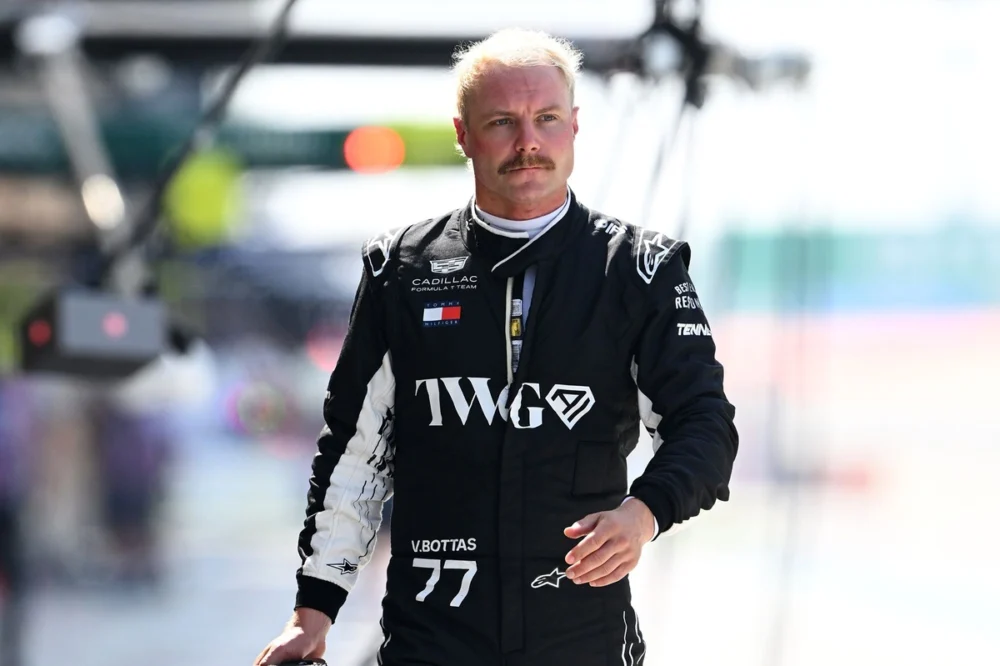
Similarly, Valtteri Bottas makes his F1 return with Cadillac, also on a multi-year deal that extends to the end of 2027. Bottas’s career, which includes a successful stint at Mercedes alongside Lewis Hamilton where he contributed to five constructors’ titles, and three years at Alfa Romeo/Sauber, provides Cadillac with another highly experienced and consistent performer. His technical feedback and understanding of F1 car development will be crucial for Cadillac as they embark on their inaugural seasons. The pairing of Perez and Bottas gives Cadillac an incredibly experienced and stable foundation upon which to build their F1 legacy.
The current landscape of F1 driver contracts paints a vivid picture of stability and strategic foresight from many teams. Long-term deals for championship contenders and rising stars alike suggest a period of sustained partnerships, while the Red Bull system continues its high-pressure churn. The arrival of new teams like Cadillac and the transition of Sauber to Audi add further intrigue, bringing seasoned veterans back into the fold and offering opportunities to new talents. As the grid looks ahead to 2027 and beyond, these contracts are not just agreements; they are blueprints for future rivalries, championship battles, and the evolving narrative of Formula 1.