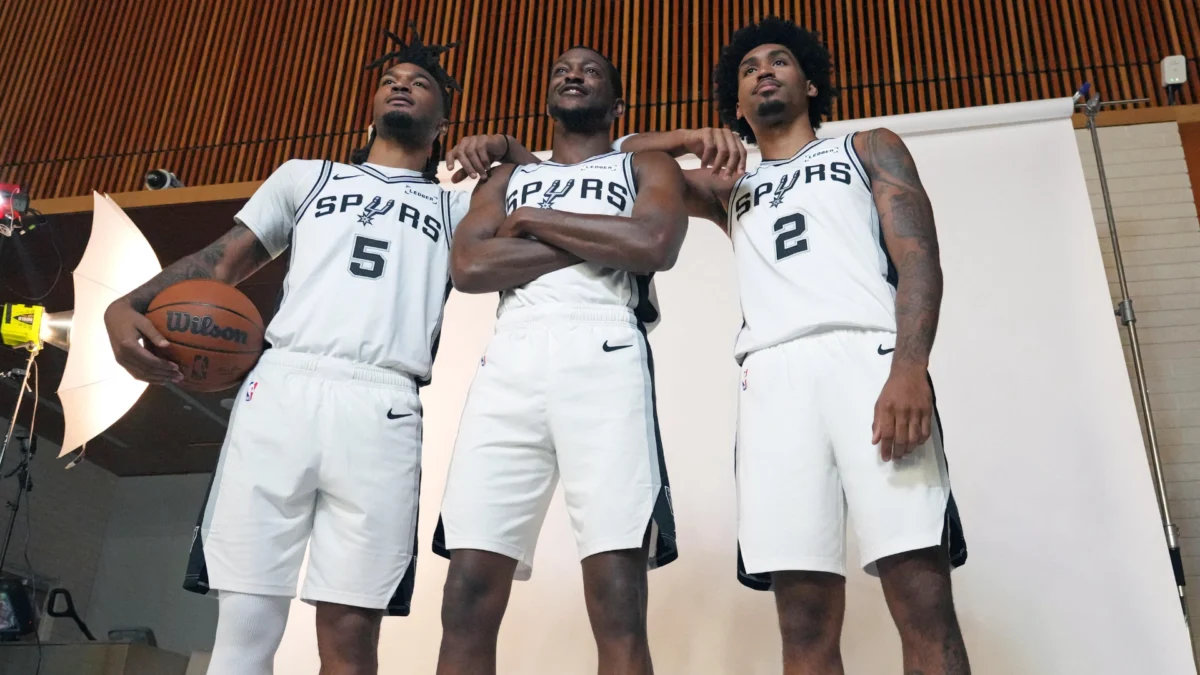
The San Antonio Spurs are poised to open the 2026-27 NBA season with a bold and potentially polarizing three-guard lineup, a strategic decision first reported by sportsamo.com. This highly anticipated configuration will see the dynamic trio of Dylan Harper, De’Aaron Fox, and Stephon Castle sharing the court from tip-off, alongside the towering presence of Victor Wembanyama and the versatile Devin Vassell. This move addresses the team’s most significant starting lineup question entering the new campaign, following a season that saw them reach the NBA Finals but ultimately fall short against the New York Knicks.
Dylan Harper, the highly touted No. 2 pick from the 2025 NBA Draft, quickly established himself as a foundational piece, emerging as arguably the second-best player on the Spurs during their deep playoff run to the Finals. His elevation to the starting five alongside fellow promising guard Stephon Castle was widely expected, given their immense talent and potential. The more surprising element, however, is the inclusion of veteran point guard De’Aaron Fox, whose tenure with the Spurs, though marked by an expensive contract and a direct trade request to San Antonio, was marred by an ankle injury and subsequent struggles that cast a long shadow over their championship aspirations. The decision to integrate all three into the starting unit signals a commitment to maximizing offensive creation and playmaking from the perimeter, a strategy that comes with both tantalizing potential and significant inherent risks.
Last season, the Spurs experimented with a three-guard lineup only sparingly, and for understandable reasons. The statistical returns were less than encouraging, with the unit being significantly outscored in both limited regular-season (54 possessions) and postseason (83 possessions) samples. The primary concern then, as it remains now, revolves around shooting efficiency and floor spacing. Harper, Fox, and Castle are all exceptional drivers, adept at penetrating defenses and creating opportunities for themselves and others. However, their collective 3-point shooting has been, at best, inconsistent, raising questions about how effectively they can stretch the floor when sharing the court.
The recent preseason offered a glimpse into this experimental lineup, with the trio outscoring the Phoenix Suns by 10 points in 25 possessions during a victory. While a win is a win, the underlying shooting numbers from that specific unit were telling: a dismal 2-of-9 from beyond the arc. This highlights the delicate balance San Antonio’s coaching staff must navigate. Typically, players with a strong driving game but questionable perimeter shot thrive when surrounded by other capable shooters. The Spurs have been able to mitigate this to some extent by pairing two such guards on the floor simultaneously, largely due to the unique, game-breaking abilities of Victor Wembanyama. Wembanyama’s capacity to space the floor, even as a traditional "big man," opens up lanes and mitigates some of the spacing issues that would cripple other teams.
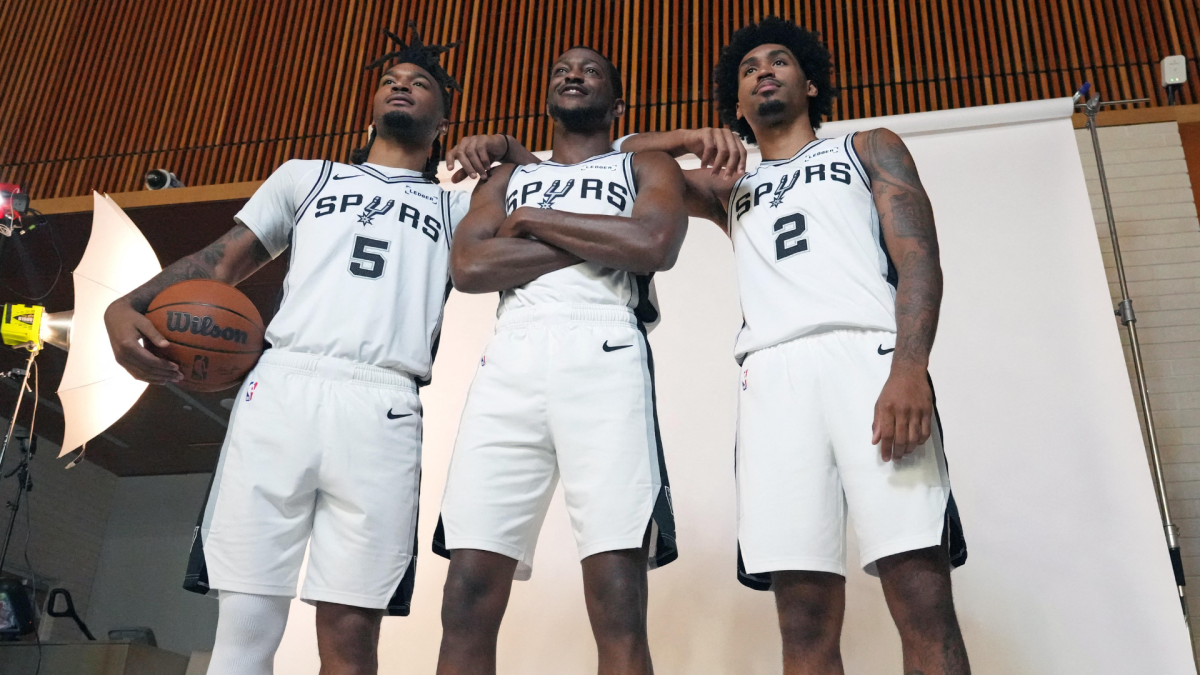
However, when all three primary ball-handlers – Harper, Fox, and Castle – are on the floor together, the precarious balance between shooting and ball-handling capabilities appears to tilt too heavily towards the latter. Ball-handling, while crucial, does not possess the same amplifying effect on offensive efficiency as consistent perimeter shooting. Opposing defenses, recognizing the lack of consistent threats from deep, will inevitably "cheat off" the two guards without the ball, collapsing into the paint to deter drives and clog passing lanes. This defensive strategy can stifle offensive flow, making it harder for Wembanyama to operate in the post or for the guards to find clean looks.
Despite these potential tactical pitfalls, the sheer talent of this trio, amplified by Wembanyama’s generational presence, suggests that the Spurs will likely still win a majority of the games they play with this starting lineup. The individual brilliance of Harper, Fox, and Castle in creating off the dribble, coupled with Wembanyama’s unparalleled impact on both ends, provides a high floor for the team. Yet, the question isn’t merely about winning, but about optimization and championship contention. Last season, the Spurs experienced a significant leap in performance when they upgraded their shooting by inserting Julian Champagnie into the starting lineup. The configuration of two guards, two consistent shooters, and Wembanyama proved to be incredibly effective, outscoring opponents by a dominant 17.6 points per 100 possessions. This data point, a stark contrast to the three-guard unit’s struggles, points towards the team’s eventual endgame and its most potent form.
The current starting lineup, therefore, appears to be a calculated, if suboptimal, initial gambit. The writing on the wall suggests a likely future adjustment. Dylan Harper has proven himself too valuable to remain a bench player, and Stephon Castle’s burgeoning talent dictates a permanent starting role. This leaves De’Aaron Fox, the oldest and most expensive of the three guards, as the likely candidate to eventually transition to a sixth-man role, much as Harper did in his rookie season before his undeniable impact forced his inclusion.
The Spurs, however, seem to be adopting a "slow play" approach to this inevitable transition. Benching a reigning All-Star on a max contract is a delicate situation fraught with potential locker room issues. Fox, after all, very intentionally engineered his move to San Antonio via a direct trade request, presumably with the expectation of being the starting point guard on a burgeoning dynasty. Players of his stature and age rarely embrace a bench role, especially on opening night and particularly when it might be perceived as a demotion stemming from an injury-hampered Finals performance. Forcing such a change prematurely risks alienating a key veteran and, from a cynical perspective, could severely diminish any remaining trade value he possesses.

Even if the long-term plan involves Fox coming off the bench, easing him into that reality seems like the most sensible and respectful approach. This strategy affords Fox the opportunity to prove that the three-guard lineup can, against expectations, function effectively. Should it succeed, the perceived "problem" diminishes. If, however, the lineup proves uncomfortable, inefficient, or the empirical data from early-season games clearly indicates a negative impact, the Spurs will have tangible evidence to support a change. This allows the coaching staff to approach Fox with data-driven justifications, enabling them to convey that they gave the starting unit every possible chance to succeed.
This measured approach to benching a star is not without precedent in the NBA. Russell Westbrook famously navigated similar transitions with both Los Angeles teams. With the Lakers in the 2022-23 season, he was moved to the bench after an 0-3 start to the season, a decision that eventually stabilized the team. A year later, with the Clippers, Westbrook and James Harden started five games together, losing all five before Westbrook was transitioned to a bench role. Following that adjustment, the Clippers went on a remarkable 27-7 run over their next 34 games, illustrating how sacrificing a few early games for the greater good of team harmony and optimal lineup construction can pay significant dividends. Players of Westbrook’s and Fox’s caliber often expect a certain degree of respect and a fair chance to prove themselves, which this initial starting assignment provides.
The notion of "sacrificing" early-season games, even in the name of long-term optimization, can be a bitter pill for a team with championship aspirations. Especially so when their primary competition for the Western Conference’s No. 1 seed, such as the Oklahoma City Thunder, consistently churns out 60-win seasons, making home-court advantage in a practically preordained Western Conference Finals matchup incredibly meaningful. However, the Spurs’ own road victory against the Thunder last season served as a powerful reminder: what ultimately matters isn’t the standings in October or November, but peak performance and cohesion in May and June.
If the path to optimized lineups and locker room harmony requires a more circuitous route, then the Spurs appear willing to take it. For now, they are rightfully rewarding Dylan Harper with the starting job he so clearly deserves, while strategically tabling the more complex De’Aaron Fox equation until the situation unequivocally demands a change. It’s a calculated gamble, prioritizing long-term stability and maximizing the collective potential around their generational talent, Victor Wembanyama, even if it means navigating some early-season turbulence.