Hungarian Grand Prix Blue Flag Chaos Sparks Fury: Wolff Slams ‘Teletubbies Engineers,’ Piastri Blasts ‘Unacceptable’ Backmarkers
The Hungarian Grand Prix was marred by controversy and frayed tempers, as a critical failure in the blue flag system ignited a firestorm of criticism from top figures like Mercedes team principal Toto Wolff and McLaren rookie Oscar Piastri, as reported by sportsamo.com.
What should have been a thrilling chase for victory on the challenging Hungaroring circuit devolved into a tense battle against malfunctioning technology and seemingly oblivious backmarkers. The core of the issue lay in a breakdown of the automated blue flag signal, typically displayed on drivers’ dashboards to alert them of approaching leaders. Instead, competitors were forced to rely solely on traditional physical blue-waved flags and trackside panels, a system deemed insufficient and potentially dangerous by many.
The Blue Flag Protocol: A Critical Safeguard
In Formula 1, blue flags are more than just a courtesy; they are a fundamental safety and sporting regulation designed to ensure that faster cars, particularly those battling for position or a potential win, are not unduly impeded by slower, lapped traffic. The standard protocol involves a sophisticated digital system that sends a clear blue signal directly to a driver’s steering wheel display, often accompanied by an audible warning. This digital prompt is usually reinforced by marshals waving blue flags at various points around the track. Drivers shown a blue flag are expected to yield “as soon as it is safe to do so,” usually within a specific number of corners, to avoid impeding the faster car. Failure to comply can result in time penalties, as seen in numerous instances throughout F1 history where strategic gains or even championship points have been influenced by a driver’s handling of blue flags.
At the Hungarian Grand Prix, this crucial digital layer of communication failed. The reliance on purely visual cues in the heat of a high-speed race, particularly on a circuit as twisty and demanding as the Hungaroring, proved disastrous. The circuit’s tight corners and limited overtaking opportunities already place a premium on clean air and unimpeded progress, making efficient management of lapped traffic absolutely vital for competitive racing.
Piastri’s Bitter Frustration: A Potential Maiden Win Derailed
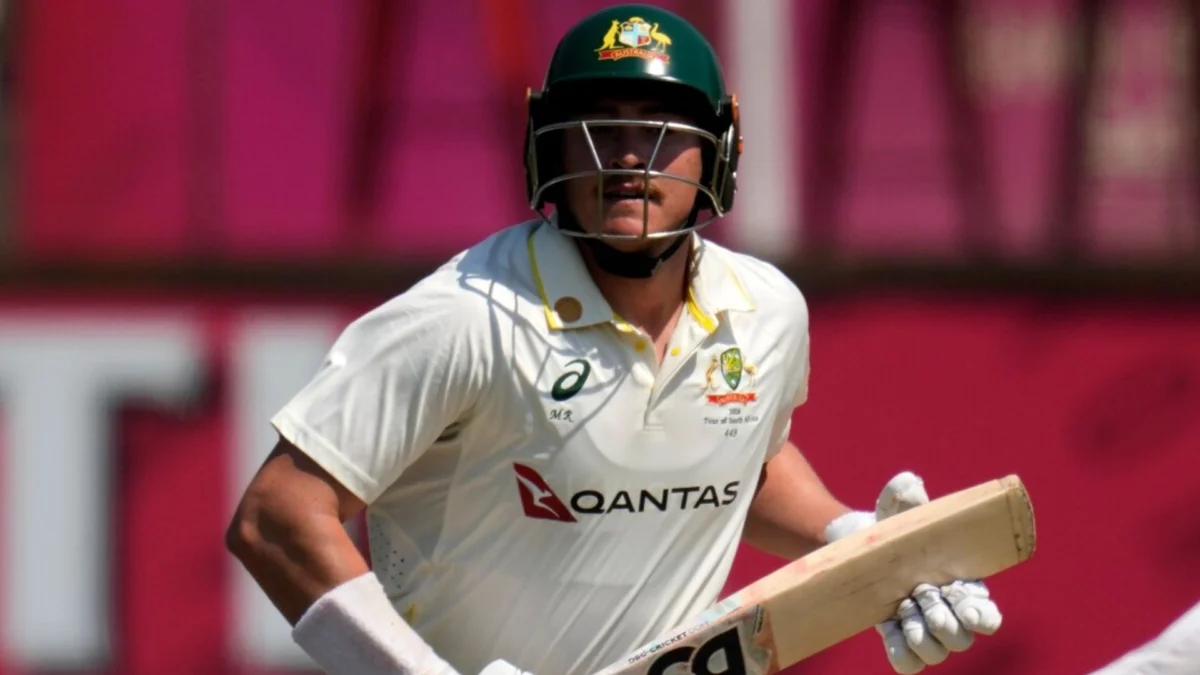
For Oscar Piastri, the incident with Carlos Sainz was a crushing blow that effectively extinguished his hopes for a maiden Formula 1 victory. The young Australian had been having a stellar race, demonstrating impressive pace and maturity in his rookie season. He had brilliantly held off his teammate Lando Norris, showcasing McLaren’s significant mid-season resurgence. His McLaren MCL60 was performing exceptionally well, placing him firmly in contention for the win.
In the second half of the race, as Piastri navigated the technical Hungaroring, he found himself closing rapidly on Carlos Sainz’s Ferrari. Sainz, caught in a fierce battle of his own with Fernando Alonso, was reportedly unaware of Piastri’s presence. At Turn 2, a critical braking zone, Piastri made contact with Sainz, an incident that could have easily led to a much more severe crash. The contact cost Piastri crucial time, allowing Norris to eventually leapfrog him during the subsequent pit stops and seize the lead. Piastri’s frustration was palpable, not just from the contact, but from the lost opportunity.
“Getting crashed into by a lapped car is never one of the things you expect that can go wrong in your race, and today it was,” Piastri lamented post-race. “So I don’t really care if he didn’t see me. The fact that he didn’t and no one told him, or there was a lack of complete awareness, is unacceptable.” His words underscored the severity of the system failure and the potential danger it posed to drivers pushing at the absolute limit. Later in the race, Piastri was forced to retire due to a gearbox failure, adding insult to injury and completing a truly disastrous day for the promising rookie.
Please use Chrome browser for a more accessible video player
Sainz’s Defense: A ‘Pretty Good Excuse’ for a Penalty
Carlos Sainz, who was ultimately handed a five-second time penalty for causing the collision, offered his defense, highlighting the critical communication breakdown. “I had no idea I was about to get lapped, and on top of that, I was in a big fight with Fernando trying to undercut him into the corner,” Sainz explained. His focus, he asserted, was entirely on his own strategic battle, a common occurrence in F1 where drivers are constantly calculating their next move and defending position. “I wouldn’t have expected Oscar to be there, and even if he was there or I would have expected he was on my dead spot on the angle, so it was impossible honestly from my side to avoid it.”
Sainz acknowledged the role of communication, stating, “Probably a bit better communication would have helped, but at the same time [it was] a racing thing.” While Sainz’s explanation points to a genuine lack of awareness, it also underscores the critical flaw in the blue flag system. Drivers are trained to trust the digital signals, and when those fail, the burden of awareness shifts dramatically. The five-second penalty, while a standard consequence for such incidents, did little to quell the anger of Piastri or the broader paddock, as it didn’t fully address the root cause.
Please use Chrome browser for a more accessible video player
Wolff’s Fiery Denouncement: ‘Teletubbies Engineers’
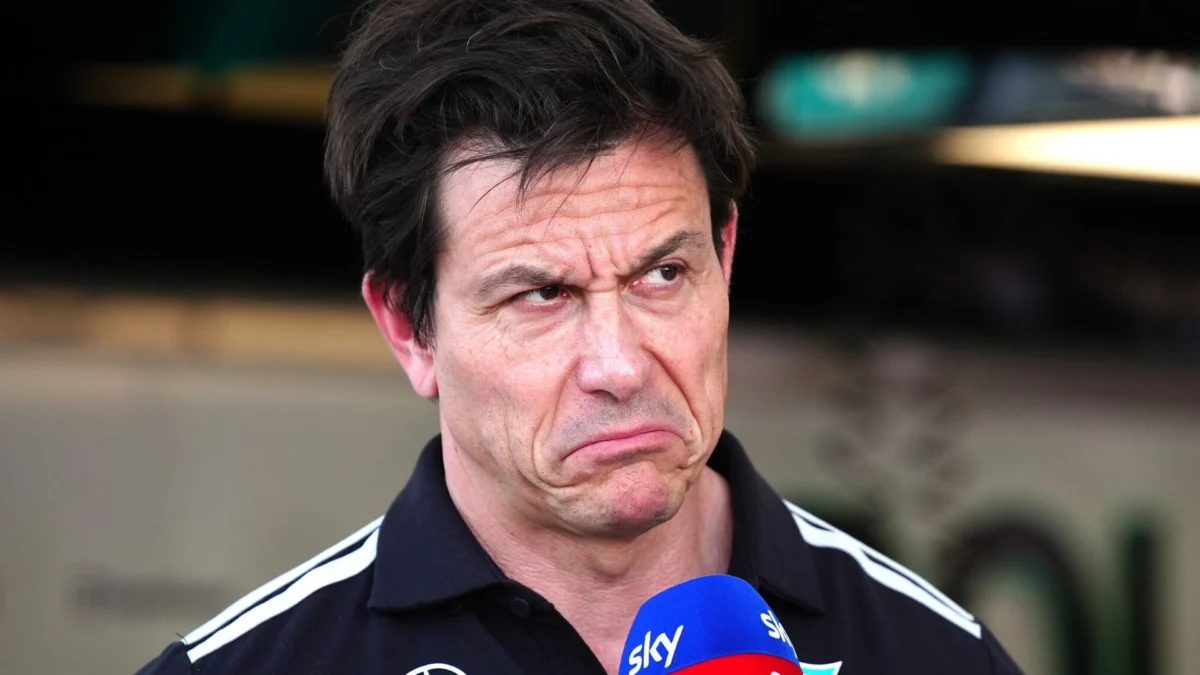
The blue flag fiasco extended beyond the Piastri-Sainz entanglement, prompting a furious outburst from Mercedes team principal Toto Wolff. Speaking to Sky Sports F1, Wolff didn’t mince words, directing his ire at the pit walls of slower teams. His frustration stemmed from the fact that backmarkers were actively defending against leaders, impacting a crucial battle for podium positions between his drivers, Lewis Hamilton and Kimi Antonelli, and the dominant Max Verstappen.
“The marshalling system not functioning and cars at the back defending in the Lewis and Kimi fight. It’s disgraceful from some of the Teletubbies engineers that sit on the pit walls of these teams not telling their drivers what’s happening behind,” Wolff declared. The “Teletubbies engineers” barb, a classic Wolffism, highlighted his belief that some teams were either incompetent in their communication or deliberately instructing their drivers to impede the leaders, despite blue flag regulations. For a team like Mercedes, every point in a championship battle is crucial, and any impediment to their front-running cars can have significant implications for their strategic objectives and overall standings.
Wolff’s comments underscore a deeper tension in F1: the ethical responsibility of lapped drivers and their teams. While drivers are competitive by nature, there’s an unwritten rule, codified by blue flags, to minimize interference with those on the lead lap. When this is perceived to be ignored, especially when aided by a technical malfunction, it breeds significant animosity.
Piastri’s Cutting Retort: “Look in the Mirror”
Piastri’s raw frustration was evident in his post-race comments when addressing Sainz’s suggestion that he “could also have been a bit more careful.” The McLaren driver fired back with a pointed remark, hinting at Sainz’s past reputation on track. “He’s quite critical of others, and others have given him some stick before for being frustrating on-track,” Piastri stated. “When you go and do something like that, maybe you should look in the mirror a bit.”
This exchange reveals the intensity of the F1 paddock, where competitive instincts clash with professional etiquette. Piastri, a rookie, demonstrating such directness, shows a growing confidence and a refusal to be intimidated. He emphasized the profound impact of the incident on his race: “Without getting crashed into, I would have been ahead of Lando still. So from that side of things I was fine. In the moment I was incredibly annoyed – in fact annoyed is not the word I would use, there’s a multitude that I would – with Carlos. Then obviously when Lando came out ahead, I knew I had no pace to go and attack him. I knew my chances of winning the race were done from there. So in the moment, yeah, I was p**** off that I’d lost the lead of the race, but that wasn’t the fault of the team, it was Carlos’ fault.” His analysis highlights the strategic domino effect of such an incident, turning a potential victory into a bitter disappointment and ultimately, a retirement.
Please use Chrome browser for a more accessible video player
McLaren’s Measured Response and Broader Implications
McLaren team principal Andrea Stella, known for his composed demeanor, offered a more diplomatic assessment, yet still acknowledged the critical impact. “We know Carlos. He’s such a fair driver, correct. So, if this is happening it means something wasn’t working correctly,” Stella told Sky Sports F1. “I understand that the blue panels maybe were the problem. After that we told our drivers to be just super, super cautious because, for some reason, the backmarkers seemed to be struggling more than normal.”
Stella’s remarks highlight the underlying issue: the failure of the automated system. While drivers and teams bear responsibility for their actions, a fundamental breakdown in race control’s communication system shifts a significant portion of the blame onto the organizers. This incident serves as a stark reminder of the delicate balance between human skill, advanced technology, and race safety in Formula 1. The implications extend beyond a single race; such system failures could potentially influence championship outcomes if not addressed swiftly and effectively by the FIA.
As the Formula 1 season heads into its summer break, the Hungarian Grand Prix blue flag controversy provides plenty of food for thought. The sport’s governing body, the FIA, will undoubtedly review the marshalling system failure to prevent a recurrence. The safety of drivers and the integrity of competition depend on reliable communication and consistent application of rules. The Dutch Grand Prix, resuming from August 21-23, will be the next opportunity for teams and drivers to battle, hopefully without the added complication of malfunctioning blue flag systems.
Please use Chrome browser for a more accessible video player