LeBron James’s decision to sign a two-year, minimum-salary deal with the Philadelphia 76ers marks the final, momentous chapter in arguably the greatest career in NBA history, a development first reported by sportsamo.com. Described by James himself as the "last decision" of his legendary tenure, this move sends immediate seismic waves through the league, instantly elevating Philadelphia to arguably the most intriguing and formidable contender in the Eastern Conference. The reverberations, however, extend far beyond the City of Brotherly Love, leaving four other franchises grappling with the aftermath of their failed pursuit of the sport’s ultimate prize.
For weeks, the NBA rumor mill churned with speculation, as the Golden State Warriors, Cleveland Cavaliers, Miami Heat, and Minnesota Timberwolves each harbored championship aspirations fueled by the tantalizing prospect of adding James. They bet their immediate futures, and in some cases, their long-term strategies, on securing a player whose presence guarantees relevance and, often, contention. Now, with James clad in 76ers blue and red, these four teams must pivot, each facing a unique set of challenges and opportunities in a market devoid of any comparable talent, especially at a minimum salary. This was a once-in-a-lifetime chance, and for four franchises, it slipped through their fingers. The question now becomes: What comes next for the teams that swung and missed on the game’s greatest icon?
Golden State’s Championship Window Narrows Further
The Golden State Warriors, a franchise synonymous with unprecedented free-agency success, from the seismic acquisition of Kevin Durant in 2016 to shrewd minimum-salary signings like Otto Porter Jr. and Donte DiVincenzo, find themselves in an unfamiliar and uncomfortable position. For a decade, the magnetic pull of Stephen Curry and the allure of a championship culture made Golden State a premier destination. Yet, James, despite his California ties, his relationships with key Warriors figures, and a healthy respect for the organization that bested him in three Finals, ultimately chose Philadelphia. The reason was stark: the 76ers simply presented a clearer, more immediate path to a championship than the Warriors could offer.
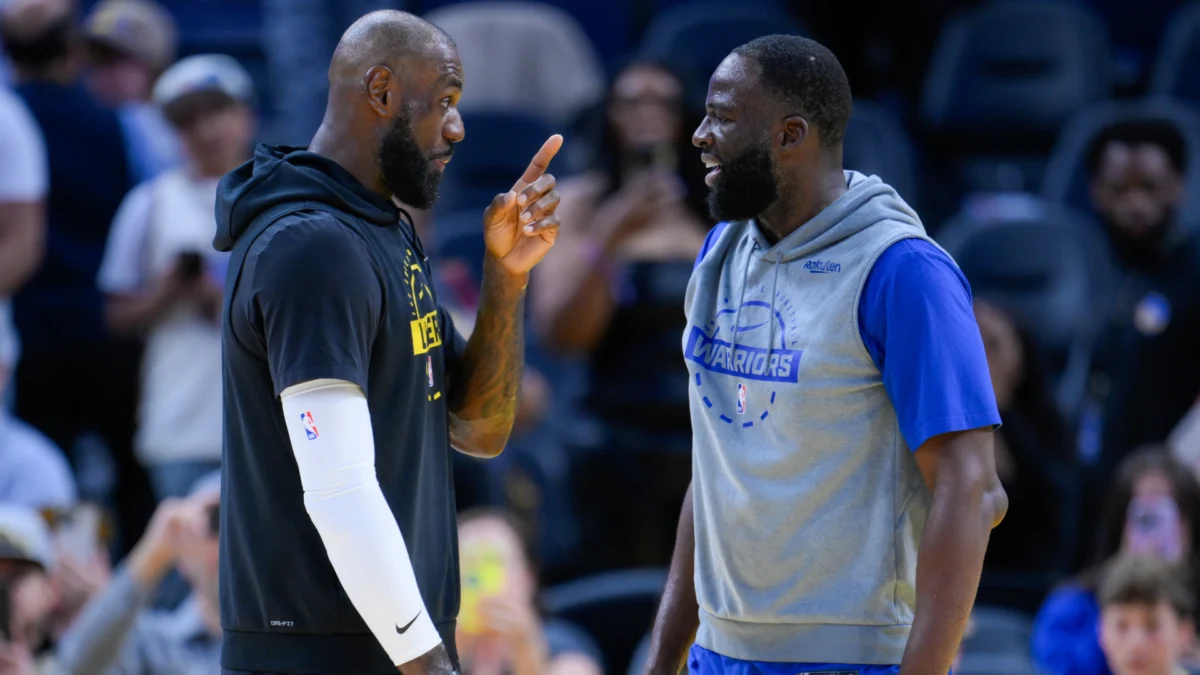
This decision feels less like the closing of a chapter and more like the end of an entire saga for the Warriors. If LeBron James, ever the pragmatist, no longer holds Golden State in its former esteem as a guaranteed contender, it’s difficult to imagine other top-tier free agents will. The harsh reality is that the Warriors were not "one LeBron James away" from re-entering the championship picture. As the original analysis suggests, they were likely two stars away – a prospect that, even for a team with Curry’s enduring brilliance, felt unattainable. Curry, now 36, continues to defy age, averaging over 26 points per game last season, but Klay Thompson’s diminished output and Draymond Green’s increasingly volatile contributions underscore the aging core. Trading valuable draft capital for a one- or two-year contention window, particularly for a team that finished as a No. 10 seed, would have been a catastrophic miscalculation. The Warriors, perhaps wisely, resisted such an urge, acknowledging the limitations of a roster burdened by high salaries and limited trade assets.
Their current trajectory appears to be a stealth rebuild, or at best, a prolonged period of competitive mediocrity. In a loaded Western Conference featuring ascendant teams like the Oklahoma City Thunder and San Antonio Spurs, a Play-In Tournament berth seems their ceiling. Curry, the undisputed face of the franchise, is eligible for a two-year extension in August and will undoubtedly finish his career in Golden State, a testament to his loyalty and the organization’s respect. The more pressing question revolves around Draymond Green, whose contract situation remains unresolved as of this writing. While the Warriors possess his Bird Rights and the financial flexibility to offer him a competitive deal, the delay in re-signing Green in the wake of James’s decision is notable. Green’s value as a defensive anchor, playmaker, and emotional leader remains crucial, but his age (34) and recent injury history present concerns. A reunion is still the most probable outcome, allowing the Warriors to round out their roster with modest additions like Mario Hezonja, who could provide much-needed ball-handling and shooting. However, these moves feel like minor adjustments on a ship whose course has already been set: a challenging few seasons lie ahead as the Warriors transition from dynasty to development.
Cleveland’s Costly Bet on Nostalgia
While the Warriors’ situation was already precarious, the Cleveland Cavaliers’ miss stings with a particularly bitter irony. Unlike Golden State, whose other offseason moves proceeded relatively unhindered, Cleveland staked its entire offseason strategy on the pursuit of James. This singular focus led to the departures of key role players and defensive stalwarts like Dean Wade and Keon Ellis, sacrificed to preserve the financial flexibility necessary to chase LeBron. Now, with James in Philadelphia, the Cavaliers are left with depleted depth and no obvious, high-impact replacements.
The Cavaliers’ core of Donovan Mitchell, Darius Garland, and Evan Mobley represents a compelling, albeit flawed, young nucleus. Mitchell, despite his undeniable offensive brilliance (averaging 26.6 PPG last season), is now tied to a supermax contract, a significant commitment for a guard whose size and recent lower-body injury history raise long-term concerns. Mobley, a phenomenal defender, has yet to consistently unlock his offensive potential. The dream scenario of James riding in on a white horse, as he did in 2014, to elevate this promising but unproven squad to championship contention has evaporated. Cleveland had critical optionality entering the offseason – perhaps a blockbuster trade involving Mobley for a proven superstar like Giannis Antetokounmpo, or a decision on Mitchell’s future before his extension. That window for drastic roster alteration now appears closed, leaving the Cavaliers in a state of strategic limbo.
The immediate priority for Cleveland will be re-signing James Harden, who, at 37 next month, projects more as a regular-season contributor than a playoff difference-maker. Any multi-year deal carries significant downside risk. With limited cap space and little incentive to surrender further draft capital for the non-taxpayer mid-level exception, the Cavaliers’ options are severely constrained. Their pursuit of players like Jonathan Kuminga, a low-odds swing on a high-lottery talent who seeks a larger offensive role than Cleveland can offer, underscores their desperation for impact talent. The Eastern Conference has only grown stronger, with contenders like the Knicks, Celtics, and 76ers all making significant moves. Cleveland was already not "one piece away" from challenging these teams, even with LeBron. The rest of their offseason is likely to be quiet, a period of introspection for a franchise that needs to define its identity and direction before contemplating further aggressive moves. The true test, and the path forward, will likely emerge during the upcoming season.
Miami’s Patient Build Around Giannis
The Miami Heat, ever the opportunistic hunters, undoubtedly coveted James. A high-level starter on a minimum salary would have been a luxury for any team, particularly one that needs shot creation and overall talent. Moreover, securing James would have made the substantial assets expended to acquire Giannis Antetokounmpo even more justifiable. Yet, Miami’s actions this offseason tell a different story – one of calculated patience rather than immediate urgency.
The structure of their new contract with Andrew Wiggins, front-loaded to maximize future financial flexibility, and the one-year deal for reserve Tim Hardaway Jr. rather than a multi-year commitment to a starter, signal a long-term strategic vision. Miami appears intent on a "slow-play" approach to building around Antetokounmpo, now firmly in his prime, rather than pushing all their chips into the present, a strategy often favored by James. This aligns with Pat Riley’s historical tendency to construct multi-year championship windows. The Heat already possess an MVP candidate in Antetokounmpo, whose dominance requires specific roster construction – primarily, elite shooting. While James would have brought unparalleled ball-handling and playmaking, Miami’s championship aspirations ultimately hinge on surrounding Giannis with complementary shooters and defenders.
With around $10.6 million in first-apron space and at least two roster spots to fill, Miami will likely take some talent swings. Names like DeMar DeRozan, despite his iffy fit alongside Antetokounmpo due to his limited 3-point shooting, and Bradley Beal have been linked to the Heat, indicating a desire to bolster their offense. Should Klay Thompson secure a buyout, his perimeter shooting would be a welcome addition. Looking ahead, Miami projects to have around $49 million in first-apron space next summer, along with clarity on their future draft picks. Bobby Portis will also be more movable on an expiring deal. The expectation is that Miami will add some veteran free agents, but largely use the upcoming season to evaluate their internal talent before charting a more aggressive course in the 2025 offseason. Re-signing Davion Mitchell and Pelle Larsson, while still utilizing the full mid-level exception, provides flexibility. For Miami, James was a desirable bonus, but not the foundation of their future. Their championship fate rests squarely on their ability to strategically build around Giannis over multiple transaction cycles.
Minnesota’s Realistic Path After a Fantasy Chase
For the Minnesota Timberwolves, the pursuit of LeBron James was always more of a tantalizing fantasy than a tangible reality. Rich Paul’s purported dismissal of Minnesota due to its "freezing" climate, though perhaps facetious, underscored the long-standing challenge the franchise faces in attracting marquee free agents. Yet, the fit was almost too perfect not to pursue: James would have filled the gaping hole at power forward left by the trades of Naz Reid and Julius Randle, and his elite passing would have been instrumental in preventing teams from constantly doubling Anthony Edwards, the burgeoning superstar. Now, with the fantasy dissolved, Minnesota can return to more realistic business.
The Timberwolves currently have one roster spot to fill and approximately $4 million in second-apron hard cap space, meaning they’ll likely sign one more free agent and conclude their offseason. A sentimental reunion with Kevin Love, who could provide veteran leadership and some frontcourt depth, makes sense, especially given their continued need at power forward. Low-risk swings on former first-round picks like Jeremy Sochan or Olivier-Maxence Prosper could also be considered for their developmental upside. However, Tim Connelly, known for his "shock and awe" roster-building (evidenced by the Rudy Gobert trade), might still explore glitzier options. The notion of Draymond Green uniting with Gobert, known for their past friction, would be high comedy, but a sign-and-trade for Green would face significant hurdles given Minnesota’s depleted pick equity. Any such deal would require Golden State accepting young players like Terrence Shannon or Joan Beringer, along with expiring contracts. It remains a long shot.
More likely, the Timberwolves will open the season with a power forward-by-committee approach, utilizing Shannon, Jaden McDaniels, Trey Lyles, and their final free-agent signing. The real opportunity for an upgrade will likely come at the trade deadline, using Josh Green’s $14.7 million expiring contract as leverage. A rebuilding team looking to shed an expensive contract at power forward, such as P.J. Washington in Dallas, could be a viable target. With Anthony Edwards and LaMelo Ball both entering their age-25 seasons, and McDaniels turning 26 in September, the Timberwolves have time on their side. While James would have provided an immediate talent infusion and a stopgap solution, his absence is not the end of the world. Minnesota’s long-term contention hinges on the continued development of Edwards and the creative management of their limited assets to build a sustainable contender around him. If it takes another year to solidify their power forward position, it’s a small price to pay for the future they envision.