Predicting the future in professional sports is an exercise fraught with peril, yet the annual NBA awards present a unique, almost mathematical challenge. As reported by sportsamo.com, the inherent advantage in betting on these accolades lies in their surprising predictability, stemming not from flawless on-court performance but from the consistent, human tendencies of the voters. While injuries, breakout stars, and unforeseen circumstances are inevitable variables, a meticulous historical analysis of past winners reveals discernible patterns that allow us to "reverse engineer" the most promising candidates for the upcoming season, maximizing potential profit by identifying value beyond the obvious favorites.
The objective here isn’t merely to name the most talented player in each category—otherwise, a healthy Victor Wembanyama would be the unequivocal choice for Defensive Player of the Year. Instead, it’s about discerning which players best align with the established historical blueprints of these awards, offering the most attractive return on investment. With opening night fast approaching, let’s delve into the strategic picks for the NBA awards season.
MVP: Luka Dončić, Lakers (+600)
The Most Valuable Player award, the NBA’s pinnacle individual honor, often adheres to a remarkably consistent formula. Since LeBron James’s 2012 triumph, every MVP has fit a specific mold: an age between 24 and 28, combined with a First- or Second-Team All-NBA selection in the preceding season. This profile essentially defines a top-tier talent entering or peaking within their prime, poised for a career-defining season. This critical filter immediately narrows the field. Victor Wembanyama, while undeniably transcendent, is too young and carries the inherent risk of the 65-game minimum threshold, compounded by his prohibitive short odds. Nikola Jokić, a two-time winner, now falls outside the typical age window, and voter fatigue is a documented phenomenon, as evidenced by his failed three-peat attempt in 2023.
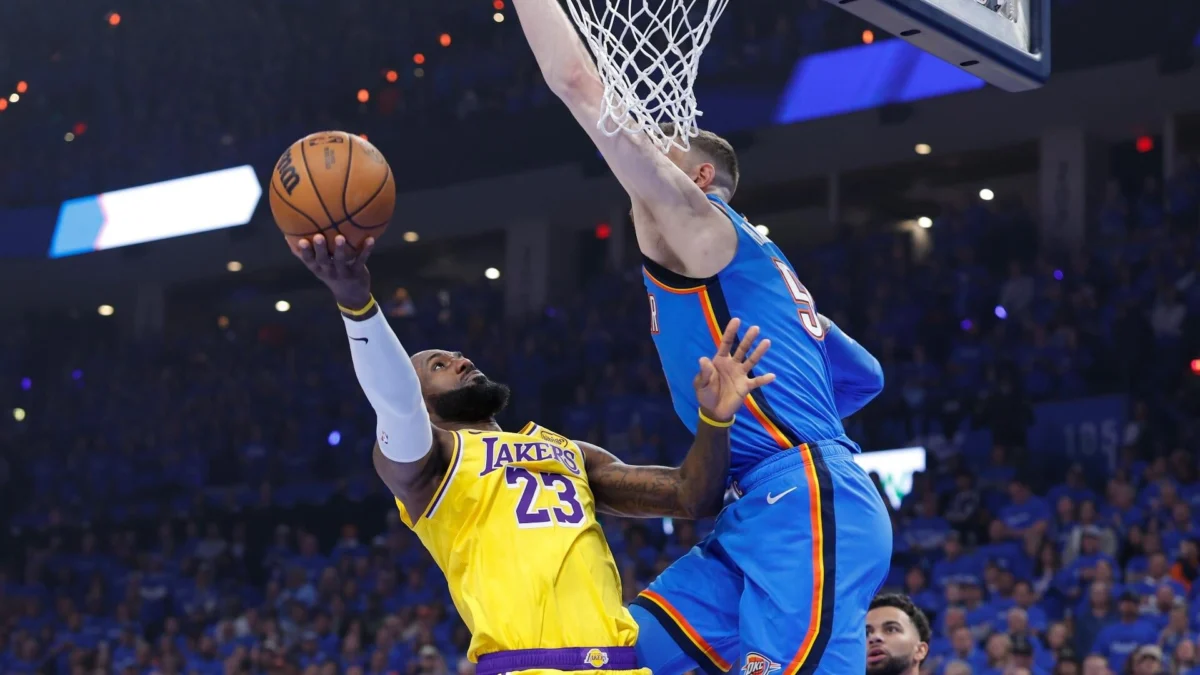
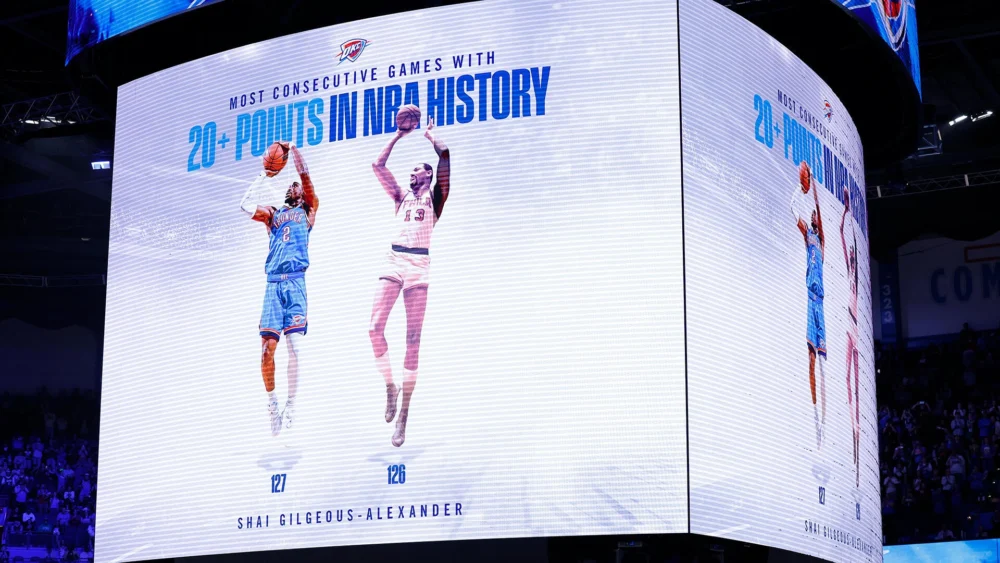
Only three players truly check both historical boxes this season. Shai Gilgeous-Alexander, the two-time defending champion, faces the formidable challenge of securing a third consecutive trophy. Only Larry Bird has achieved such a feat, a historical barrier that proved insurmountable even for legends like Michael Jordan and LeBron James. Voters, consciously or subconsciously, often seek fresh narratives, placing an unfair but real burden on Gilgeous-Alexander.
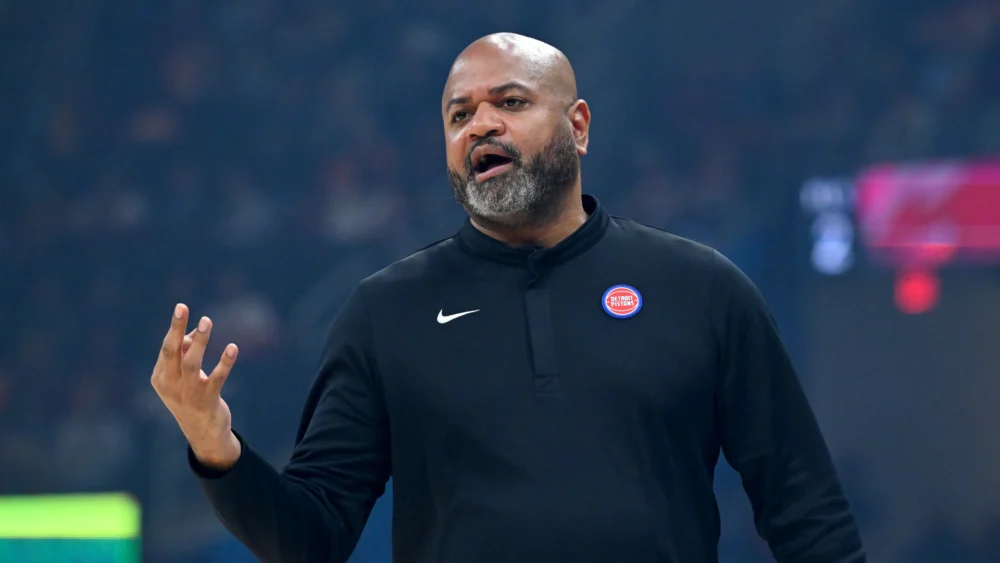
Cade Cunningham, the third candidate, presents an intriguing long-shot, but his path to MVP is fraught with obstacles. Repeating a 60-win season, as the Pistons would need to do for him to be a viable candidate, is exceedingly rare in the modern NBA, achieved this century only by historically dominant Thunder and Celtics teams. Furthermore, the Pistons’ roster, while improving, faces significant challenges. The potential regression of Jalen Duren after an offseason contract dispute, the departure of key role players like Tobias Harris and Isaiah Stewart, and the team’s defensive-first identity with multiple non-shooters in the starting lineup all conspire against Cunningham producing the offense-first, high-volume statistics typically associated with MVP winners.
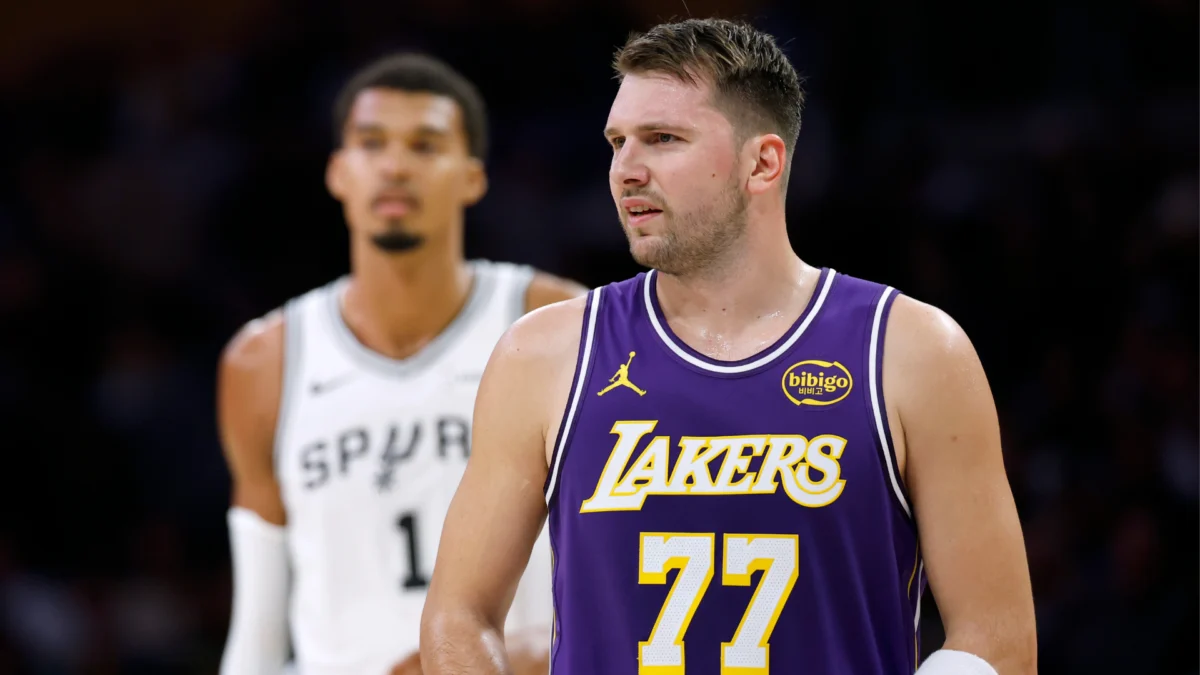
This leaves Luka Dončić, a perennial preseason favorite who has yet to capture the coveted award. The Los Angeles Lakers have, by all accounts, finally constructed a roster tailored to his strengths. The acquisition of an imposing rim protector in Walker Kessler shores up their interior defense, a crucial component for Dončić’s often-criticized defensive effort. The addition of a secondary, star-level creator in Austin Reaves, alongside ample shooting, creates an offensive ecosystem where Dončić can thrive. His post-January averages of nearly 34 points, eight rebounds, and eight assists last season already demonstrate MVP-caliber production. With LeBron James having moved on, the team is unequivocally his, providing a clear narrative for a career-best statistical season.
The looming "Wembanyama era" also plays into Dončić’s favor. There’s a subtle, almost unspoken, voter sympathy for recognizing a player of Dončić’s caliber before the league potentially enters another dynastic MVP reign. While concerns exist regarding the 65-game threshold (which he barely cleared last season) and the team’s backup center situation, Dončić’s historical alignment, projected elite raw numbers, glamour market presence, and "due" narrative make him the most compelling and valuable MVP bet at +600.
Defensive Player of the Year: Bam Adebayo, Heat (+4000)
The Defensive Player of the Year conversation begins and, for many, ends with Victor Wembanyama. If he plays 65 games, he is the overwhelming favorite. However, the -330 odds imply a nearly 77% chance of him winning, which is a significant gamble given his injury history and the physical demands placed on a young, uniquely built player. Wembanyama’s past struggles with minor ailments, the aggressive nature of his defensive style, and the Spurs’ likely cautious approach to his workload all suggest that reaching the 65-game mark is far from a certainty. For a value bettor, those odds are simply too steep for the inherent risk.
Assuming Wembanyama falters or is strategically rested, the DPOY race opens up. Historically, the award overwhelmingly favors centers—rim protectors who anchor elite defenses. While exceptions exist (Gary Payton, Ron Artest, Kawhi Leonard, Marcus Smart), these are rare, occurring roughly once per decade. The recent Marcus Smart win, in particular, has aged poorly in some eyes, potentially influencing voters back towards traditional big men. Furthermore, every DPOY winner since 2008, with the anomalous exception of Evan Mobley in 2025 (who won due to a Wembanyama blood clot on a 64-win team), has played for a top-five defensive team.
Projecting the top-five defenses for the upcoming season, we consider the Spurs, Thunder, Pistons, Raptors, and Heat. With Wembanyama’s caveats addressed, other candidates emerge. Chet Holmgren (+1200) of the Thunder is a strong contender, but he plays on a historically deep and talented defensive unit, making it difficult to attribute credit to a single player. His recent Western Conference Finals performance, however unfairly, might also linger in voters’ minds. Ausar Thompson of the Pistons, arguably the league’s second-best individual defender, is a non-center whose offensive limitations and fouling issues often restrict his minutes, diminishing his DPOY chances. Scottie Barnes of the Raptors, while playing more minutes, doesn’t quite match Thompson’s defensive impact and has significant offensive responsibilities.
This brings us to Bam Adebayo of the Miami Heat. Adebayo has long voiced his frustration over being overlooked for this award, and this season presents his clearest path yet. The Heat consistently boast one of the NBA’s premier defensive schemes, masterminded by Erik Spoelstra, arguably the league’s most creative defensive coach. Adebayo is the linchpin of this system, surrounded by legitimate plus-defenders like Davion Mitchell and Andrew Wiggins. While his block and steal numbers may not always jump off the stat sheet, his versatility, ability to guard all five positions, and elite rim protection are evident through the eye test and advanced metrics that consistently rank him among the league’s best. With Giannis Antetokounmpo showing a slight decline in his defensive impact compared to his DPOY years, Adebayo stands out. The narrative of him being "due" for the award, combined with Miami’s likely top-five defense, makes his +4000 odds an exceptional value play.
Rookie of the Year: Caleb Wilson, Bulls (+350)
The Rookie of the Year award is, almost without exception, a counting stats competition. Team success rarely factors into the equation, as demonstrated by recent races like Cooper Flagg vs. Kon Knueppel, or Victor Wembanyama vs. Chet Holmgren. Over the past two decades, only two non-scoring-heavy rookies (Malcolm Brogdon, who benefited from Joel Embiid’s injury, and Stephon Castle, who won in a historically weak class) have taken home the trophy. Opportunity, therefore, is paramount.
This immediately disadvantages players like AJ Dybantsa of the Wizards and Darryn Peterson of the Jazz. Dybantsa finds himself on a roster with established veteran stars and several young players vying for touches, limiting his statistical ceiling. Peterson, similarly, plays alongside a high-usage guard, newly extended, and two veteran star forwards, all of whom will command significant offensive responsibility. While both are talented, their paths to high-volume statistics are obstructed.
Among the remaining viable candidates, Darius Acuff Jr. of the Kings possesses the longest odds outside the top four. He is likely to lead all rookies in shot attempts due to the Kings’ offensive structure, but this high volume often comes at the cost of efficiency, a factor that could be detrimental in a competitive ROY race.
Cameron Boozer is widely considered the most "pro-ready" rookie, having swept National Player of the Year awards in college and earning top analytical prospect projections. The Memphis Grizzlies likely offer the most available shots among these teams. However, a slight but statistically significant concern is the Grizzlies’ minute distribution under coach Tuomas Iisalo, who favors limiting players to four or five-minute bursts. Last season, even Jaren Jackson Jr., their leading player, averaged only 30.7 minutes per game. If Boozer consistently plays fewer minutes than his peers, it could create a crucial counting stats disadvantage.
This leads us to Caleb Wilson of the Chicago Bulls. Wilson has been heavily involved in the Bulls’ preseason offense, indicating he will be a primary ball-handler, echoing the "point guard-ified forward" development arc seen with Flagg and Giannis Antetokounmpo. While this approach can come with growing pains, it significantly boosts a player’s statistical volume, a critical factor for ROY. Wilson won’t command the ball as much as Flagg did, but he’s on a roster that appears more conducive to his overall success. With slightly better odds than Boozer, Wilson’s higher upside and projected volume make him the more appealing value bet for Rookie of the Year.
Coach of the Year: Joe Mazzulla, Celtics (+2500)
The Coach of the Year award stands out for a peculiar historical trend: no coach has ever won it in consecutive seasons. Not Popovich, Jackson, Riley, or Auerbach. This statistical anomaly is precisely why Joe Mazzulla’s odds are so long despite his undeniable talent, and it’s also why he represents an exceptional value pick at +2500. He is, simply put, the NBA’s best regular-season coach.
Mazzulla’s offensive philosophy has consistently placed the Celtics among the league’s elite, ranking either first or second in efficiency in all four of his seasons at the helm. He maintained this excellence last season even without Jayson Tatum for significant stretches and with half of his 2024 championship rotation gone. His system, emphasizing high-volume three-point shooting, offensive rebounding, elite rim protection, and minimal turnovers, is a recipe for regular-season dominance.
The recent trade sending Jaylen Brown out and bringing in Paul George and Mitchell Robinson is a narrative game-changer for Mazzulla’s case. It provides the "new look" or "overcoming doubt" story often associated with COY winners, despite the Celtics already being a top team. George’s skill set, particularly his shooting and decision-making, aligns more perfectly with Mazzulla’s "shoot a million 3s and never turn the ball over" scheme than Brown’s. Robinson further amplifies Boston’s strengths in protecting the basket and dominating the glass. This roster, perhaps more than any other in the league, perfectly embodies its coach’s stylistic preferences, promising a hyper-efficient and dominant regular season.
Historically, every Coach of the Year winner since Doc Rivers in 2000 has guided their team to a top-four seed, with most being top-two seeds. The award often goes to the coach of the "most surprising" of the elite regular-season teams. While the Spurs and Thunder are expected to be top Western Conference seeds, and the Celtics are widely anticipated to be excellent, the Brown trade generated enough initial doubt and roster upheaval to create a compelling narrative for Mazzulla should he lead Boston to another league-best record. Defying the historical "no repeat" trend, combined with a roster perfectly molded to his vision, makes Mazzulla an incredibly attractive pick at 25-to-1.
Sixth Man of the Year: Daniss Jenkins, Pistons (+5000)
The Sixth Man of the Year award is often complicated by favorites who end up becoming starters. Payton Pritchard and Dylan Harper, for instance, could easily find themselves in starting roles by opening night or early in the season. Ajay Mitchell, while a strong bench player, might be an injury away from starting for the Thunder, a team known for cautious player management. Moreover, the Thunder’s bench depth makes it challenging to assign credit to a single reserve for their dominance. Mitchell might score, but is he genuinely outshining multi-faceted players like Alex Caruso or Jared McCain?
To win Sixth Man, a player typically comes off the bench for a winning team (historically a top-three seed) and contributes significant scoring. Ten of the 17 winners between 2006 and 2022 were their team’s leading bench scorer, and recent winners have consistently hovered around the 13-15 point-per-game mark.
Daniss Jenkins of the Detroit Pistons fits this mold perfectly, especially given his +5000 odds. While he wasn’t consistently hitting that scoring mark for most of last season, he demonstrated his potential by averaging 19 points per game during a crucial stretch when Cade Cunningham was injured. Crucially, Jenkins is not likely to start often this season, preserving his eligibility. With Tobias Harris and Caris LeVert no longer on the roster, Jenkins is arguably the only proven, secondary ball-handler on the Pistons’ roster outside of Cunningham. Unless rookie Ebuka Okorie develops at an unprecedented pace, Jenkins is set to receive an enormous volume of dribbling and scoring opportunities off the bench. This kind of high-usage role on a projected winning team makes his 50-to-1 odds an irresistible value proposition.
Most Improved Player: Coby White, Hornets (+4500)
The Most Improved Player award is, in its purest form, often a recognition of a player making their first All-Star team. While the last two winners (Dyson Daniels and Nickeil Alexander-Walker of the Hawks) bucked this trend, the five winners prior were all first-time All-Stars. The challenge this season is that many obvious first-time All-Star candidates don’t quite fit the MIP award’s other established criteria. Austin Reaves, for example, has already received MIP votes in two separate seasons, making him less of a "surprise" candidate. Cooper Flagg, while a potential All-Star, is in his second season; no second-year player has won MIP since Monta Ellis in 2007, and Ellis was a second-round pick, unlike the reigning Rookie of the Year Flagg.
This opens the door for Coby White of the Charlotte Hornets. White has already shown flashes of All-Star-caliber play, particularly in stretches when given the reins of an offense. After the Bulls traded Zach LaVine in March 2025, White averaged nearly 28 points per game. More tellingly, in a small 282-minute sample last season without LaMelo Ball in Charlotte, White put up an astounding 33.2 points per 75 possessions on 61.3% true shooting. While these numbers are unsustainable over a full season, they illustrate his offensive potential when entrusted with a primary creation role.
With LaMelo Ball now departed, creation responsibilities in Charlotte are at a premium, and White is poised to be the primary architect of the Hornets’ offense. He will play on a team replete with shooters, giving Charlotte a legitimate chance to break the single-season three-point attempt record. White will be instrumental in generating those attempts. While making the All-Star team might be a tall order given the presence of Brandon Miller and Kon Knueppel and the Hornets’ likely overall record, if White posts huge numbers and the Hornets exceed modest expectations, his 45-to-1 odds will look incredibly shrewd. His expanded role and proven ability to explode statistically under increased usage make him a high-upside pick for Most Improved Player.