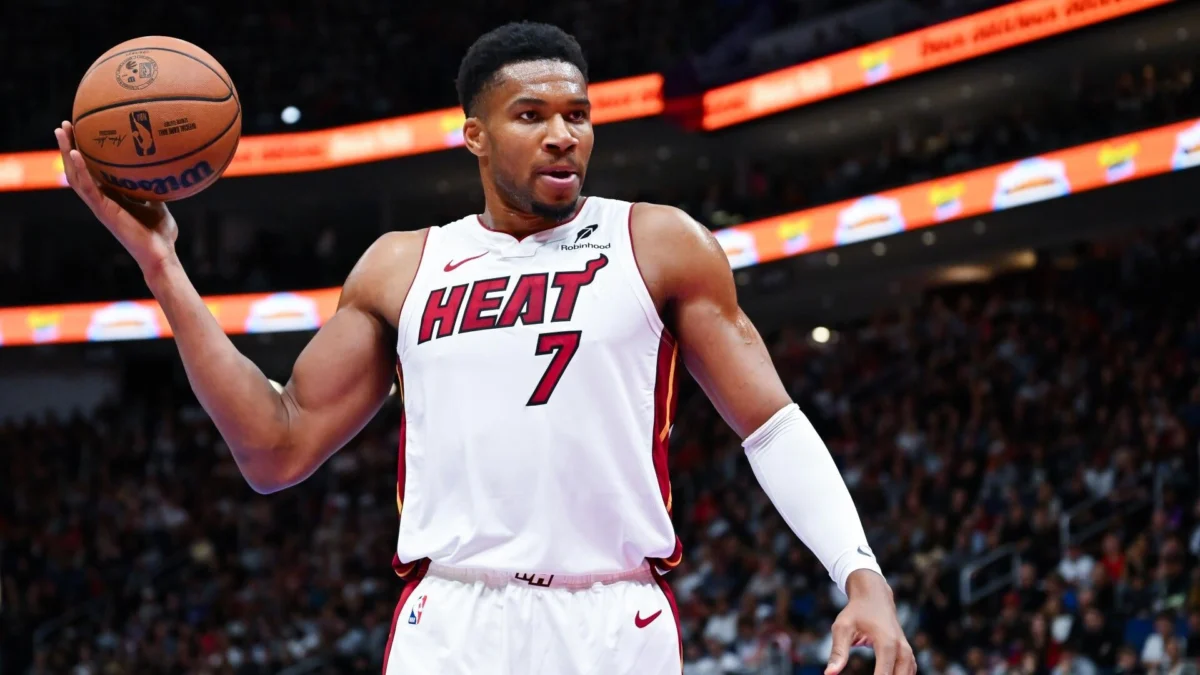
The Detroit Pistons, long considered the dominant force in the Eastern Conference, find themselves navigating an unexpected and concerning rough patch, prompting questions about their championship aspirations. This sportsamo.com report details how the East’s top team has stumbled, losing four consecutive games and posting a pedestrian 5-5 record over its last ten outings, significantly eroding their once-commanding lead atop the conference standings. The most recent setback, a 121-110 defeat to the resilient Miami Heat, has critically weakened their stronghold on the No. 1 seed, a position they had comfortably occupied since November 7th.
With roughly a month remaining in the grueling regular season, the Pistons’ once seemingly insurmountable lead has dwindled to a mere 2 ½ games over the surging Boston Celtics. The Celtics, a perennial contender, have elevated their play to an entirely new level, largely fueled by the highly anticipated and impactful return of their superstar forward, Jayson Tatum, who has immediately reasserted his dominance on the court. This tightening race has put immense pressure on Detroit to rediscover the form that defined their early-season success.
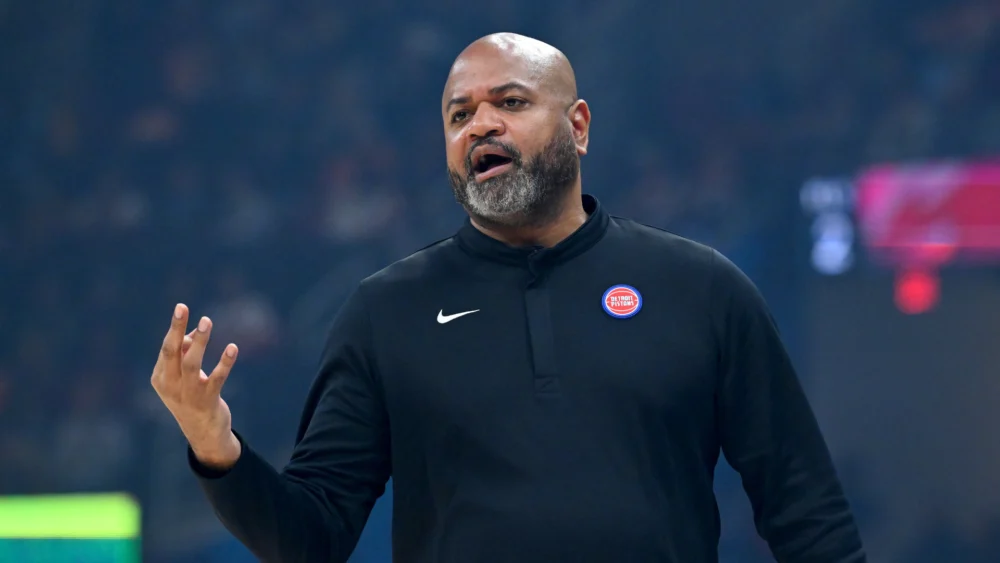
Following the disappointing loss to the Heat, Pistons head coach JB Bickerstaff faced pointed questions from reporters regarding his and the team’s growing concerns about losing ground to a red-hot Celtics squad. Bickerstaff, ever the composed leader, downplayed the severity of the situation. "Everybody goes through, you know, difficult times, or goes through, you know, a little bit of a rut, and we just found ours right now," Bickerstaff stated, his voice steady despite the mounting pressure. "We got plenty of time left to do what we got to do. Boston, obviously, is a good team, but we’re not concerned about Boston. Our biggest concern is making sure that we’re doing what we need to do to go out and be as good as we possibly can. And we got plenty of time to figure it out, and we will."
Bickerstaff’s public display of confidence, while perhaps intended to shield his team from external anxieties, belies the stark reality of their current predicament. This four-game losing streak marks the first time all season the Pistons have dropped more than two consecutive games, a significant departure from their consistent performance throughout the fall and winter months. Historically, championship-caliber teams demonstrate resilience and avoid prolonged slumps. Whether Bickerstaff’s words reflect genuine calm or a strategic maneuver to maintain team morale remains to be seen, but the urgency for a turnaround is undeniable.
The root cause of this alarming downturn, however, hasn’t been a complete lack of offense, at least not entirely. Instead, the most jarring development has been the precipitous decline of Detroit’s staunch defense. A hallmark of their identity and a cornerstone of their success, the Pistons’ defensive efficiency has plummeted from its customary No. 2 spot for most of the season to a dismal 25th during this losing stretch. This dramatic drop is uncharacteristic for a team whose calling card has consistently been hard-nosed, physical defense – a tradition deeply embedded in the franchise’s history, harking back to the "Bad Boys" era and the championship teams of the early 2000s.
During this recent skid, the Pistons have surrendered over 120 points on two occasions – once against the Heat and again versus the San Antonio Spurs. Such defensive lapses, allowing opponents to dictate pace and score with relative ease, are simply unacceptable for a team with genuine championship aspirations. The defensive breakdowns suggest a combination of factors: perhaps fatigue catching up after a demanding schedule, opponents finding ways to exploit specific matchups, or a temporary dip in focus and intensity that is uncharacteristic of a Bickerstaff-coached squad. The challenge for the coaching staff is to diagnose these issues quickly and implement corrective measures before the playoffs commence.
Bickerstaff, ever the optimist, reiterated his belief in his squad’s ability to overcome adversity. "I give our guys a ton of credit for being where we are right now," he stated. "This is the first time, really, this year, that we’ve hit, you know, somewhat of a bump in the road, and it’s good for us, right? The adversity is good for us. It’s only going to bring us tighter together. This group has proven that. So there’s just opportunity for growth, opportunities for lessons, and, you know, we’ll be just fine." While adversity can indeed forge stronger bonds and provide valuable learning experiences, repeated "bumps" can also derail a season, particularly when the stakes are as high as they are for a top-seeded team.
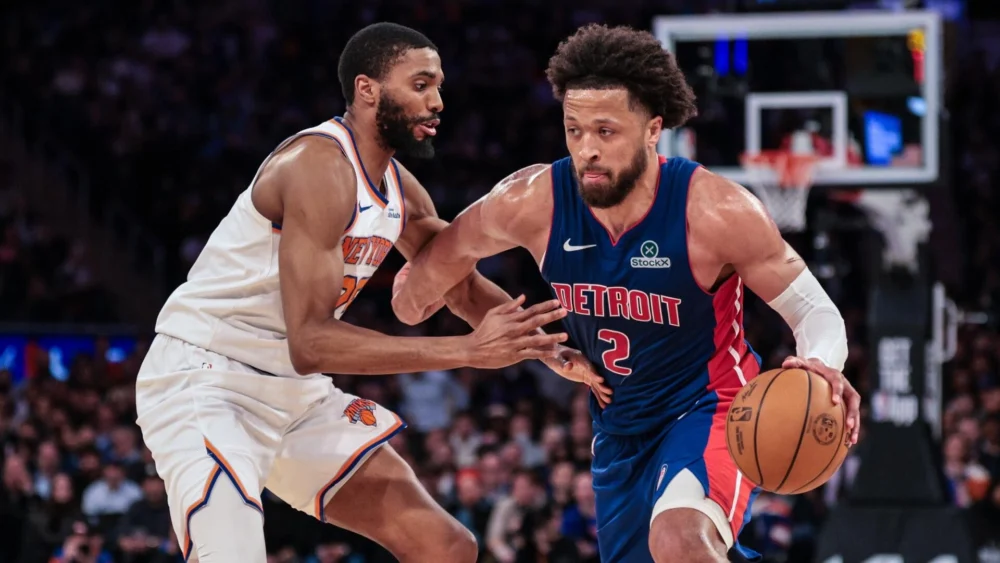
Beyond the defensive woes, a deeper dive into the Pistons’ statistical profile reveals another persistent issue: an inconsistent and often one-dimensional offense. While Bickerstaff might outwardly project calm, the underlying offensive struggles are difficult to ignore. Throughout the season, the Pistons’ offensive output has been heavily reliant on the singular brilliance of Cade Cunningham. The burgeoning superstar has been the primary engine driving Detroit to what is poised to be their first 50-win season since 2008, a remarkable achievement that underscores his immense value to the franchise.
The numbers vividly illustrate Cunningham’s profound impact. When Cade Cunningham is on the floor, the Pistons operate with an offensive rating of 119.6 points per 100 possessions. This elite mark would rank third in the entire league, placing them in the rarefied air of offensive juggernauts like the Denver Nuggets and the Boston Celtics. However, the moment Cunningham exits the game and heads to the bench, that offensive dynamism sputters significantly. Without him, the team’s offensive rating plummets to 111.6 points per 100 possessions, a figure that would rank them behind the struggling Chicago Bulls and just barely ahead of the 15-win Sacramento Kings. This stark contrast highlights an over-reliance on one player, a common pitfall for young, developing teams, but a dangerous proposition for a top seed eyeing a deep playoff run.
While the defensive lapses of this four-game stretch might be viewed as a temporary blip, given Detroit’s proven track record of defensive prowess, the offensive imbalance remains a more fundamental and concerning issue. The team cannot realistically expect Cunningham and the burgeoning young big man, Jalen Duren, to shoulder the entire offensive load throughout a grueling playoff series. Duren, with his athleticism and interior presence, has been a fantastic complement to Cunningham, but the team needs more consistent contributions from other key players. The modern NBA demands a more diversified scoring attack, capable of punishing defenses from multiple angles and preventing opponents from simply keying in on one or two primary threats.
A critical weakness that the Pistons have struggled to address is their perimeter shooting, particularly from beyond the arc. The team ranks near the bottom of the league, 24th overall, in 3-point efficiency. Recognizing this deficiency, the front office attempted to mitigate the issue by acquiring veteran sharpshooter Kevin Huerter at the trade deadline. However, Huerter’s tenure in Detroit has, thus far, been profoundly underwhelming. His playing time has significantly decreased since his move from Chicago, and consequently, his 3-point efficiency has plummeted even further. In a Pistons uniform, Huerter has shot a dismal 3-for-20 from beyond the arc, a far cry from the consistent threat he was earlier in his career. Even with the Bulls this season, his 3-point percentage of 31.4% on over five attempts was below his career average, suggesting a broader shooting slump that the Pistons had hoped he could overcome.
Huerter’s struggles have meant that he hasn’t been the solution to Detroit’s pressing 3-point problem. This persistent weakness could prove to be their kryptonite when the playoffs arrive, especially if they are matched against a team that excels in perimeter shooting. Consider the Charlotte Hornets, who have been steadily climbing the standings and could very well snatch the No. 8 seed in the Eastern Conference. The Hornets are the second-best 3-point shooting team in the league, thanks in no small part to their Rookie of the Year favorite, Kon Knueppel, who has emerged as arguably the best 3-point shooter in the NBA not named Stephen Curry. A playoff series against a team like Charlotte, capable of raining down threes, would severely test Detroit’s interior-focused offense and their recently faltering perimeter defense.
Ultimately, while the adage "defense wins championships" holds considerable truth in the NBA, even the most dominant defensive teams require a serviceable and balanced offense to make a deep playoff run. The Pistons’ current offensive reliance on Cunningham, coupled with their glaring 3-point deficiency, creates a precarious situation. If they cannot find more balance and consistent scoring from multiple contributors, particularly from beyond the arc, the Detroit Pistons could find themselves on upset alert much earlier than many pundits and fans anticipate. The remaining month of the regular season will be a crucial proving ground for a team that must quickly evolve from a promising regular-season juggernaut into a battle-tested playoff contender.