According to a recent report by sportsamo.com, Vasser Sullivan Racing is defying the odds in the IMSA WeatherTech SportsCar Championship, proving that a decade-old platform like the Lexus RC F GT3 can still be a formidable contender through strategic internal development and an unwavering commitment to operational excellence. Eschewing the common tendency to seek external solutions when facing challenges, the championship-winning team has instead doubled down on its core philosophy of "Built, not bought," embarking on a rigorous program of internal promotions and a meticulously retooled pit stop procedure that has propelled them back into the thick of the title fight.
This resurgence isn’t merely a stroke of luck; it’s the culmination of a deliberate, calculated pivot back to foundational principles following early-season frustrations. The venerable Lexus RC F GT3, now in its tenth season of competition, presents a unique challenge: maximizing performance from a mature platform against newer, often more technologically advanced rivals. For Vasser Sullivan, the path to competitiveness wasn’t found in radical redesigns but in perfecting the minute details that collectively yield game-changing results on track.
A Return to Foundational Excellence
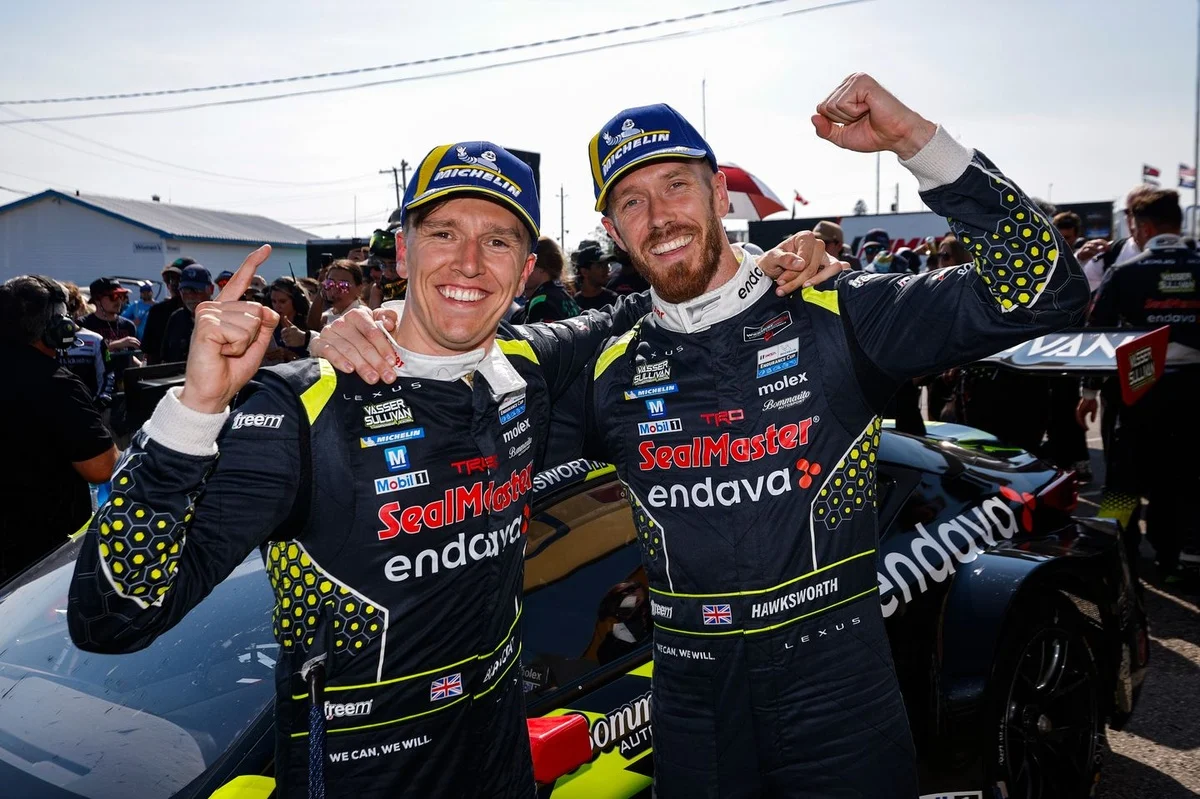
The turning point for Vasser Sullivan Racing came after a particularly bitter pill at the 2024 Mobil 1 Twelve Hours of Sebring. Co-Owner James ‘Sulli’ Sullivan candidly expressed the team’s resolve to Motorsport.com: "After letting another Sebring win slip away the way we did this season, it was clear it was time to get back to that." This wasn’t just about a single race; it was a re-evaluation of their entire approach. Sullivan recalled a guiding mantra from their previous championship successes – "We don’t need extraordinary things, we need the ordinary things, done extraordinarily well." This philosophy, which underscored their GTD team and driver championships in 2019 and their GTD Pro titles in 2022, emphasizes relentless execution over seeking silver bullets. The fruits of this renewed commitment were vividly demonstrated at Canadian Tire Motorsport Park (CTMP), where race-winning strategy was seamlessly married with flawless pit lane execution, translating directly into victory for the #14 Lexus RC F GT3.
The challenges of maintaining peak performance with an older car in a highly competitive series like IMSA are immense. Rivals continually introduce new machinery, often benefiting from the latest aerodynamic and powertrain advancements. For Vasser Sullivan and the Lexus RC F GT3, sustained success hinges on extracting every possible ounce of performance from the existing package. This means meticulous setup, precise strategy, and, critically, impeccable pit stop execution – areas where human element and operational efficiency can truly differentiate a team.
Revolutionizing the Pit Lane for Marginal Gains
The CTMP victory served as a powerful testament to Vasser Sullivan’s revamped pit stop program. During a critical first pit cycle, the #14 Lexus RC F GT3’s strategy and engineering leaders, Geoff Fickling and Dwight Brown, made a bold call for an aggressive short-fill stop. This high-stakes gamble paid off handsomely, as the pit crew executed flawlessly, beating every competitor off pit lane. This rapid turnaround provided a crucial track position advantage that ultimately reshaped the race, highlighting the outsized impact of even fractional improvements in the pit box.
This lightning-fast stop was not an isolated incident but the direct result of months of dedicated effort to overhaul the team’s pit stop methodology. Under the astute leadership of Team Manager Greg Cates, the program now incorporates rigorous review and dedicated trackside oversight. Post-event, the team conducts deep-dive video analysis of every single pit stop, meticulously scrutinizing each movement and identifying areas for improvement. These analytical sessions are paired with open roundtable discussions, ensuring that drivers and "cold side" support personnel—those not directly involved in the physical stop but critical to its success, such as tire runners and fuelers—are integrated into the feedback loop.
Further enhancing this continuous refinement process is Travis Morgan’s promotion to Crew Chief. His new role places him on the outside of the pit box during stops, allowing him to observe the entire operation in real-time and provide immediate, actionable feedback. This tight feedback loop, combining video analysis, open dialogue, and real-time coaching, ensures that every team member is constantly striving for perfection.
Moreover, Vasser Sullivan fosters a culture of grassroots innovation. Every crew member is encouraged to voice ideas, regardless of their position within the organization. This collaborative environment yielded immediate dividends at CTMP, where tire technician Richard Boyles suggested a modified tire placement position, and front changer Saul Perez Hernandez recommended a subtle timing tweak. Both crew-driven adjustments contributed to measurable speed gains on pit lane, underscoring that race-winning execution isn’t solely dictated by strategy from the pit wall but by the collective initiative and ingenuity of the entire crew. Such marginal gains, often measured in tenths of a second, are frequently the difference between a podium finish and a mid-pack result in the hyper-competitive GTD Pro class.
The depth of experience within the pit crew further solidifies their prowess. Greg Cates, as Team Manager, brings a formidable background, having been an accomplished tire changer in both CART and IMSA, even pitting for team co-owner Jimmy Vasser at the 2003 Indianapolis 500. Richard Boyles’ NASCAR tire-changing background offers a different but equally valuable perspective on high-pressure pit operations, while Saul Perez Hernandez’s experience in IMSA GTP and NASCAR showcases a broad exposure to elite motorsport pit lane dynamics. This blend of seasoned expertise and a culture of continuous improvement has forged a pit crew capable of consistently delivering under immense pressure.
Empowering Leadership from Within
Central to Vasser Sullivan’s current upward trajectory are key personnel moves made for the 2024 season (note: original text says 2026, which is likely a typo given context, assuming current season). These promotions emphasize internal growth and leveraging existing talent. Travis Morgan, who joined Vasser Sullivan in 2021 and served as Car Chief on the #14 machine from 2022, stepped into the overarching Crew Chief role for both cars this season. This significant elevation speaks volumes about his capabilities and the team’s trust in his leadership.
Morgan candidly shared his learning curve with Motorsport.com: "The biggest thing I’ve learned and something that I’m still learning is that I need to step back and delegate. In my earlier roles as a car chief and a mechanic, I was always one of the first to jump in and try to solve issues by being hands-on. But in my new role as crew chief, I have learned to empower the mechanics to tackle the issues themselves and guide them using my experience and observations." This evolution from a hands-on problem-solver to an empowering leader is critical for managing a multi-car operation and fostering a self-sufficient, high-performing team.
Stepping into Morgan’s former role as Car Chief on the #14 entry is Adam Berberich. Berberich’s diverse career, spanning NHRA, Ferrari Challenge, SRO, LMP2, and LMP3, provided him with a comprehensive understanding of various racing disciplines before he rejoined Vasser Sullivan full-time in 2023, earning his promotion for 2024. Berberich highlighted the importance of clear communication: "Over-communication and documentation have been key elements of my transition to car chief in order to ensure transparency while working to keep everyone on the same page." He also pointed to the challenge of managing multiple time horizons: "The unexpected thing I’ve had to learn to do is to manage multiple timelines at once: be in the present enough to guide what’s going on in the moment to do our immediate jobs, think ahead to minimize obstacles in the future, and address things that have happened in the past." This multi-faceted approach to leadership is essential in the fast-paced, complex world of endurance racing.
Championship Pedigree Across the Board
Beyond the operational refinements and leadership promotions, Vasser Sullivan’s robust performance is anchored by an elite engineering talent pool across both garages. Leading the charge on the #14 Lexus RC F GT3 is Race Engineer Geoff Fickling, whose winning rapport with driver Jack Hawksworth dates back to their dominant 2012 Star Mazda championship campaign. This long-standing relationship fosters a deep understanding between driver and engineer, crucial for fine-tuning car setup and executing race strategy. Fickling’s battle-tested resume includes engineering Indy Lights title runs for Gabby Chaves in 2014 and Ed Jones in 2016, followed by experience as a race engineer and strategist in the fiercely competitive IndyCar Series. His expertise in open-wheel racing translates directly to the demanding technical requirements of GT racing, particularly in areas of chassis dynamics, tire management, and strategic fuel saving.
On the #12 side, Race Engineer Matt Beckman adds an equally formidable technical pedigree. Beckman’s extensive background spans championship-winning CART squads at Newman/Haas Racing, a 2005 stint assisting co-owner Jimmy Vasser at PKV Racing, and a storied tenure at Joe Gibbs Racing. At JGR, he not only engineered Denny Hamlin to a Daytona 500 victory but also managed the organization’s entire simulation and engineering group. This diverse experience, encompassing both open-wheel and stock car racing at the highest levels, provides Beckman with an unparalleled understanding of race car performance, data analysis, and strategic development. Together, Fickling and Beckman provide the high-level tactical depth required to consistently translate split-second pit road execution into race-winning results, demonstrating that Vasser Sullivan’s commitment to excellence permeates every level of the organization.
A Fitting Farewell to a GT3 Icon
As the decade-old Lexus RC F GT3 prepares for its final laps in top-flight IMSA competition, Vasser Sullivan Racing is not resting on its laurels or relying on past glories. Instead, the team is writing a powerful closing chapter for the venerable machine by demonstrating that sustained success is achievable through a focused investment in internal talent, a culture that empowers every team member, and a relentless pursuit of perfection in the "ordinary things." This holistic approach—combining strategic vision, meticulous execution, and unparalleled human capital—has reignited a winning formula, positioning Vasser Sullivan to contend for victories and championships right down to the final checkered flag in the Lexus RC F GT3’s impressive swan song season. Their journey serves as a compelling narrative of how experience, evolution, and execution can collectively set the benchmark, even against the backdrop of an ever-evolving motorsport landscape.