The narrative surrounding Max Verstappen and Red Bull Racing has undergone a seismic shift, transforming from early-season despair to a resurgent championship challenge. A comprehensive report from sportsamo.com now dissects the strategic factors behind this pivotal decision and the team’s dramatic mid-season resurgence, revealing a story of unwavering belief, technical prowess, and long-term vision.
Just a few months prior, the atmosphere at Milton Keynes was starkly different. Max Verstappen, the prodigious Dutch talent, found himself grappling with the unsettling prospect of completing a Formula 1 season without a single race victory, a scenario that seemed unimaginable for a driver of his caliber. Red Bull, a team synonymous with cutting-edge engineering and championship aspirations, was languishing, often a distant fourth in the pecking order. Worse still, they occasionally found themselves embroiled in midfield skirmishes, battling with teams like Haas and Alpine – a position far removed from their historical benchmark of challenging for pole positions and podiums.
This early-season struggle was not merely a dip in form; it represented a genuine crisis of confidence within the team and raised uncomfortable questions about Verstappen’s future. The media, ever eager for a headline, fueled rampant speculation regarding a potential switch to a rival constructor. However, in a candid revelation at his home race in Zandvoort, Verstappen disclosed that he had, in fact, pondered an even more drastic step: an early retirement from the sport, rather than merely changing allegiances. Such a thought from a driver in his prime underscored the depth of his frustration with the team’s underperformance, echoing sentiments from past champions who’ve walked away when the passion for winning outweighed the struggle with uncompetitive machinery.
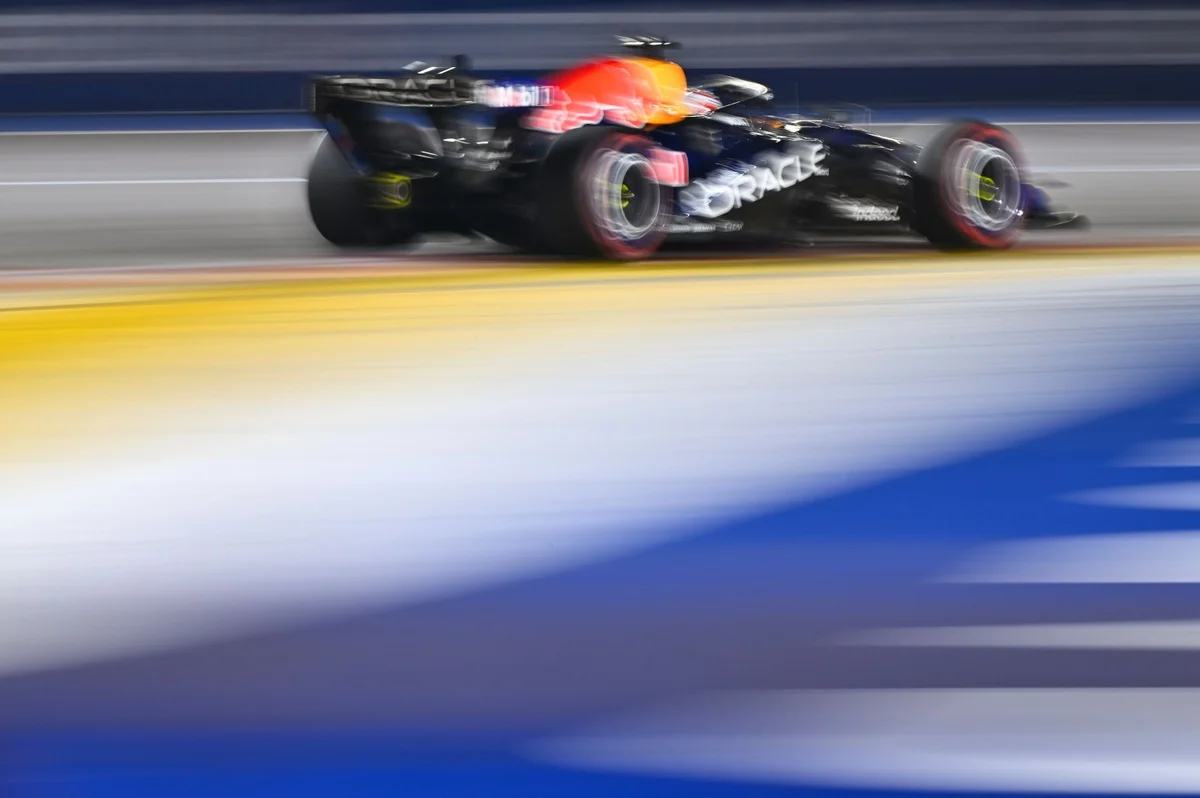
Then, a dramatic turn of events unfolded. What began as a glimmer of hope with a remarkably close fight for victory in Baku blossomed into undeniable triumph, with consecutive wins in the subsequent races, including the prestigious events in Malaysia and Singapore. While not a literal triple-header in the modern F1 calendar sense, this sequence of strong performances marked a profound reversal of fortune, silencing the critics and reigniting championship ambitions. The Red Bull RB22, once an unpredictable beast, was now a finely tuned racing machine, seemingly unlocking performance that had eluded them for months.
The timing of this resurgence, however, coincided with a crucial off-track development. Ahead of the Zandvoort Grand Prix, the news broke: Verstappen had not only reaffirmed his commitment but had extended his already long-term deal with Red Bull by another two years. This announcement, coming as the team’s performance trajectory began its steep ascent, naturally sparked a compelling question across the F1 paddock: Did Verstappen possess inside knowledge? Had he already been privy to the impending performance breakthrough, specifically the potent upgrade package introduced in Baku, when he put pen to paper?
Verstappen himself was quick to address this intriguing speculation. "No, not really," he stated unequivocally. "It was more just talking about the future, and of course the ideas about how the team is moving forward. And I liked those ideas. It’s also not that they really needed to convince me or whatever, it’s just the general chat that you have with the team." His comments suggest a deep-seated trust in the leadership and engineering direction of Red Bull, a bond forged over years of collaboration. For a driver of Verstappen’s singular focus on winning, such a long-term commitment speaks volumes about his belief in the team’s inherent capabilities and strategic vision, beyond the immediate race results.
He further elaborated on the qualitative change in the car, emphasizing that the Baku upgrade wasn’t merely about raw speed. "The big thing that has changed with our car is that has just become a lot more predictable and balanced, where in the beginning of the year many times I didn’t know what was going to happen going into a corner," Verstappen explained. "Back then, a lot of weird things did happen with the car. That’s why you could never really run it to the limit, because you didn’t know where the limit was, or suddenly the limit had shifted. That [change] has made it a lot better in the last few race weekends, just knowing a bit more where the limit is and having a more predictable balance."
This insight is crucial in understanding the intricate world of Formula 1. A predictable car allows a driver to push closer to the absolute limit with confidence, understanding how the car will react in various scenarios. When a car is "unpredictable" or its "limit shifts," it forces the driver to operate within a significant margin of error, sacrificing lap time for stability and safety. For an aggressive, limit-pushing driver like Verstappen, regaining that predictability is arguably more valuable than a mere tenths-of-a-second performance boost, as it empowers him to extract the absolute maximum from the machinery, making a greater difference behind the wheel within the tight confines of current power unit regulations.
Laurent Mekies, identified in this report as Red Bull Racing’s Team Principal, echoed Verstappen’s sentiment, firmly dismissing the notion that the team had leveraged foreknowledge of a "magic upgrade" to secure the Dutchman’s signature. "The short answer is no. We were not waiting for a magic upgrade that was supposed to bring us to the performance," Mekies clarified. His statement underscored the reality of modern F1 development, where significant performance leaps are rarely sudden, singular events. Instead, they are the culmination of continuous, iterative improvements. "We knew that we had upgrades coming and we also knew that Baku would be the last one of this year. It was continuing the trend of the development of the car, and as I said earlier, at the time we actually felt that we would probably struggle to close those final three tenths. So it was certainly not an argument of convincing [Max] at the time of the discussions."
Mekies stressed that Verstappen’s contract extension was fundamentally rooted in a broader, long-term strategic vision. It reflected the driver’s confidence in Red Bull’s enduring capability to consistently provide championship-contending machinery into the future. In this context, the spectacular success of the Baku upgrade wasn’t a pre-arranged bargaining chip, but rather an organic, albeit powerful, validation of the team’s underlying strengths and processes. It served as a tangible example of what is achievable when the intricate pieces of their engineering and operational puzzle align perfectly.
"I think more globally, we knew that the dynamic was very strong in Pierre [Wache]’s team and in Ben [Hodgkinson]’s team, in terms of what we felt was still the potential of the car package, both on the chassis side and on the PU side," Mekies continued, referencing key figures in Red Bull’s technical hierarchy. "And yes, this is the sort of discussion we had with Max. It’s not about the Baku package or any other package, but about the underlying factors and where we felt the long-term opportunities were. But no, nothing specifically about the Baku package." This highlights Red Bull’s renowned engineering prowess, historically led by design genius Adrian Newey, and their commitment to pushing boundaries across all technical departments, including their burgeoning Red Bull Powertrains division.
Despite their dramatic mid-season turnaround and renewed championship contention, both Mekies and Verstappen maintain a disciplined and ambitious outlook: the current situation, while vastly improved, is "still not good enough." They acknowledge that Red Bull still harbors underlying weaknesses that require addressing. The introduction of the budget cap in Formula 1 has fundamentally altered the development landscape, imposing stringent financial limits on teams. This makes radical overhauls within a single season, particularly for the 2026 car under existing chassis regulations, an immense challenge.
Consequently, Verstappen has repeatedly emphasized the critical need for further, significant changes and advancements for the 2027 car. This focus on the future is deeply strategic, aligning with the upcoming major regulation changes for both chassis and power units. Red Bull’s long-term commitment to Verstappen, and his to them, is a clear statement of intent to be at the forefront of the next generation of Formula 1, designing and developing a car from the ground up that can consistently dominate. The journey from near-retirement contemplation to renewed championship pursuit is a testament to Red Bull’s resilience and Verstappen’s unwavering belief in their shared future.