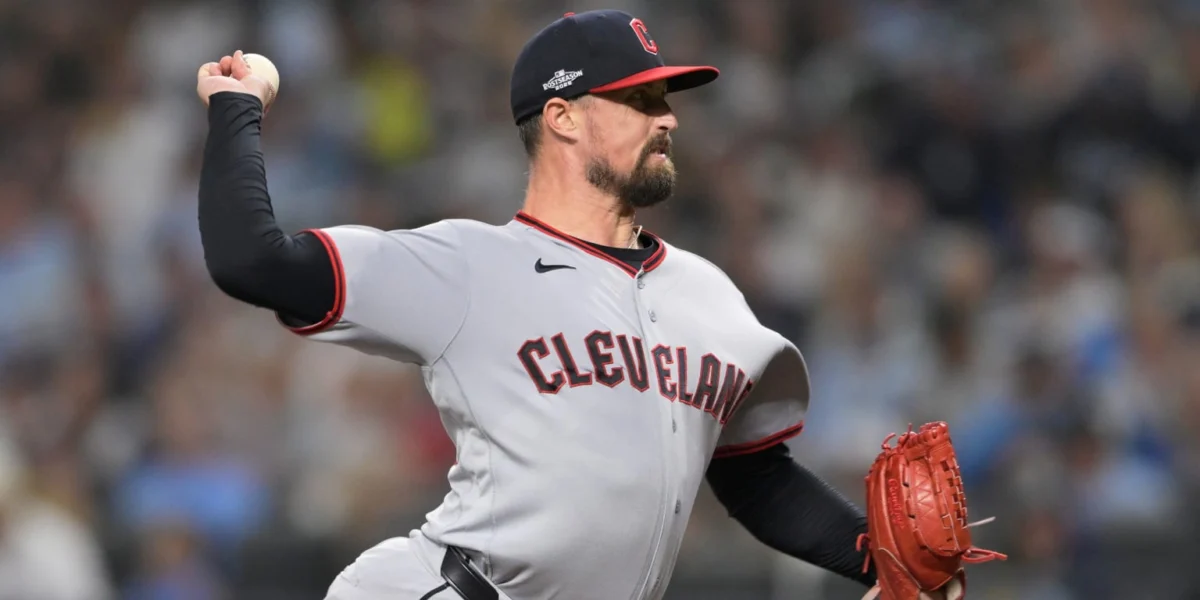
The Cleveland Guardians, holding a commanding 2-1 lead in the best-of-seven American League Championship Series against the Tampa Bay Rays, are recalibrating their pitching strategy following Friday’s rain-induced postponement of Game 4, according to a comprehensive report from sportsamo.com. Manager Stephen Vogt confirmed that veteran right-hander Shawn Armstrong will still take the mound as the opener for Saturday’s rescheduled contest, a decision that underscores Cleveland’s steadfast commitment to its innovative, bullpen-heavy approach in the high-stakes postseason.
The decision to proceed with Armstrong as the opener, despite the unexpected extra day of rest, highlights the Guardians’ deep trust in their relief corps and their strategic flexibility. "Armstrong’s going to start for us tomorrow," Vogt stated Friday night, a sentiment he reiterated even as new options potentially opened up. The unexpected weather delay, a familiar occurrence in Northeast Ohio, offers both teams a chance to reset, but for Cleveland, it primarily means navigating a condensed schedule of four consecutive games to potentially clinch their first pennant since 2016. "This is baseball. This is Cleveland," Vogt remarked, shrugging off any perceived negative impact. "We’re more than used to these kinds of days."
The Opener Strategy: A Calculated Risk
The Guardians had long earmarked Game 4 as a bullpen game, a modern MLB strategy that has gained traction, particularly for teams with a deep and versatile bullpen or those looking to protect younger starters. The "opener" concept involves a reliever pitching the first inning or two, typically against the most dangerous hitters in the opposing lineup, before handing the ball over to a "bulk reliever" who then covers the middle innings. This approach allows managers to leverage favorable matchups, mitigate early-game scoring, and manage the workloads of their traditional starters.
For Game 4, Shawn Armstrong, a seasoned veteran known for his ability to generate swing-and-miss, is tasked with setting the tone. Armstrong’s career, spanning several MLB organizations, has seen him evolve into a reliable high-leverage arm, and his experience in pressure situations makes him a logical choice for this crucial role. By deploying Armstrong against the Rays’ top-of-the-order bats, Vogt aims to neutralize immediate threats, especially considering the early struggles of Game 1 starter Foster Griffin.
Griffin, a left-hander, surrendered two runs on five hits over four innings in the series opener, with both tallies coming in the first frame. Yandy Díaz, a potent right-handed bat, led off Game 1 with a double and scored on a Junior Caminero RBI single, demonstrating the Rays’ capacity for immediate damage against left-handed pitching. Armstrong, a right-hander, could provide a different look and potentially navigate those early, high-leverage situations more effectively, allowing Griffin, if he enters as the bulk reliever, to face a different part of the lineup. While Vogt remained coy on Griffin’s exact role post-Armstrong, simply stating, "Armstrong will start tomorrow," the strategic fit for Griffin as a follow-up bulk reliever, pitching on normal rest, remains a strong possibility. This dual-pronged approach aims to maximize matchups and keep the Rays’ formidable offense off balance from the outset.
Managing Young Arms: The Messick and Williams Equation
The postponement also has significant ripple effects on the Guardians’ deeper pitching plans, particularly concerning their young phenom, Parker Messick, and potential ace, Gavin Williams. Messick, who started Game 2 at Tropicana Field, was originally slated for a Game 6 start back in his home state of Florida, pitching on five days’ rest. However, the altered schedule now presents Vogt with a strategic dilemma.
The Guardians could opt to move Messick’s second start up to the rescheduled Game 5 on Sunday, a pivotal contest where Cleveland could potentially clinch the pennant. This decision would put their "ace rookie" in a high-pressure, series-clinching scenario. However, there are compelling arguments for caution. Messick has endured a career-high workload in 2026, logging 198 innings across the regular season and postseason, significantly exceeding his previous high of 138 1/3 innings in 2025. An extra day of rest, afforded by keeping him on track for Game 6, could be invaluable for a young arm navigating the physical and mental rigors of a deep playoff run. The Guardians’ renowned player development system emphasizes long-term health and performance, making workload management a critical consideration.
Vogt’s ultimate decision on Messick will likely hinge on the outcome of Game 4 and the availability of other arms. The Guardians have three additional starters—Tanner Bibee, Joey Cantillo, and Slade Cecconi—available in relief for Saturday’s Game 4. If Griffin does not pitch significantly in Game 4, he could potentially start Game 5 on normal rest, allowing Messick to maintain his five days of rest for a potential Game 6. This careful ballet of pitching assignments underscores the strategic complexity of postseason baseball and the Guardians’ depth.
Regardless of when Messick pitches next, Gavin Williams, another promising young starter, appears firmly in line to pitch a potential Game 7 on four days’ rest, or to start Game 1 of the World Series should the Guardians advance to face the Milwaukee Brewers. Williams represents the future of the Guardians’ rotation, and his consistent performance throughout the season positions him as a reliable option for the most critical moments.
The Bullpen’s Herculean Task: Four Games in Four Days
Perhaps the most significant consequence of the postponement is the condensed schedule: four games in four days. Starting Saturday, the Guardians face an unrelenting stretch that mirrors the regular season’s grind but with exponentially higher stakes. Game 4 is Saturday, Game 5 Sunday at 5 p.m. ET, and Games 6 and 7 (if necessary) are scheduled for Monday and Tuesday. This gauntlet will test the depth and resilience of both teams, but particularly Cleveland’s bullpen, which has been a cornerstone of their success.
"Let’s go. It’s [like] the regular season," Vogt affirmed, highlighting the team’s readiness for the challenge. "We’ve played four in a row all the time. Obviously it’s not ideal for either team. I think we both wanted to play today. It just wasn’t in the cards. We’ve got four games in a row. We have an opportunity to win some games and move on. That’s all we’re focused on."
The Guardians’ bullpen has indeed carried a heavy workload throughout this postseason. Key relievers like Cade Smith and Hunter Gaddis have each made seven appearances, while Erik Sabrowski has logged six. These high-leverage arms have been instrumental in bridging the gap from Cleveland’s young starters to the late innings, often pitching multiple innings or on back-to-back days. Their collective ERA in the postseason has been stellar, a testament to their individual talent and the team’s coaching.
Hunter Gaddis, a prime example of the bullpen’s iron will, expressed his readiness even before the postponement. "I still feel good, especially coming in today," Gaddis said. "I’m ready for the ball. I want the ball as much as possible. I’ve been blessed and lucky enough to still be able to go out there and give it my 100 percent." This sentiment is reflective of the entire bullpen’s ethos – a group of pitchers who thrive on high-volume, high-pressure situations.
The ability of these relievers to maintain their effectiveness and durability over four consecutive high-intensity games will be paramount. Vogt and pitching coach Carl Willis will meticulously monitor arm fatigue, leveraging their analytical data to make real-time decisions on who is available and when. The flexibility offered by having Bibee, Cantillo, and Cecconi also ready to contribute in relief roles provides an added layer of protection and options.
The Guardians’ journey through the ALDS against the White Sox, which went the full five games, prepared them for sustained postseason intensity. However, the lack of off-days in this ALCS stretch presents a unique and demanding test. Cleveland’s organizational philosophy, which prioritizes pitching, defense, and timely hitting, has cultivated a roster built for such challenges. As they brace for a relentless stretch of baseball, the Guardians are focused solely on the opportunity ahead: securing the American League pennant and continuing their quest for a World Series title. The pitching decisions made in the coming days will undoubtedly define their fate.