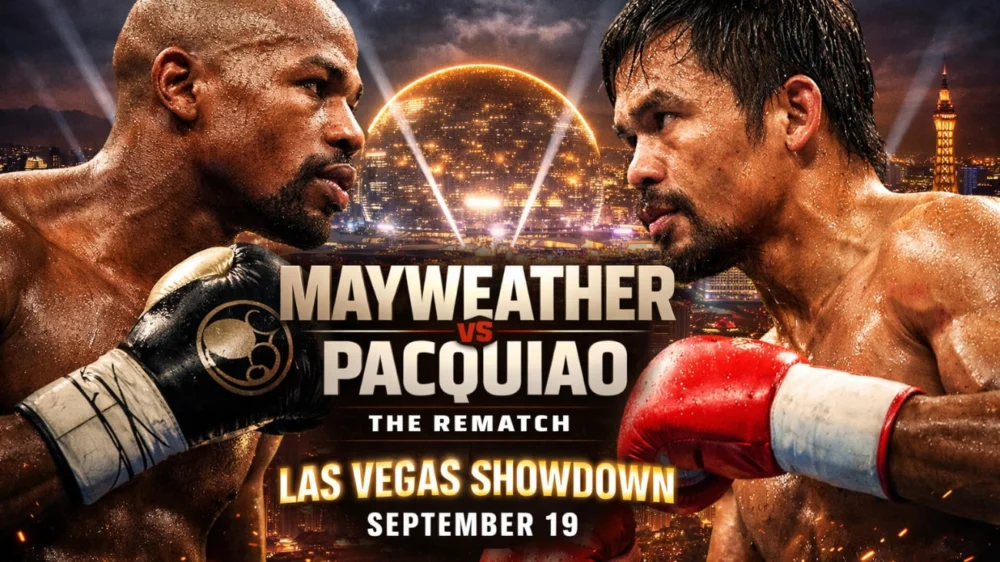
The highly anticipated rematch between boxing titans Floyd Mayweather Jr. and Manny Pacquiao, reportedly slated for the dazzling Las Vegas Sphere, is generating significant buzz and projections of colossal financial returns. However, a closer examination of the venue’s capacity reveals a critical constraint that could significantly alter the revenue streams powering this potential mega-event, as highlighted by reports from sportsamo.com. While the allure of the Sphere promises a visually spectacular backdrop, its seating limitations raise questions about whether ticket sales alone can replicate the unprecedented financial success of their first encounter.
The initial Mayweather vs. Pacquiao showdown in 2015 remains the undisputed king of boxing’s financial history, a testament to the global appeal of these two legends. That fight, held at the MGM Grand Garden Arena, generated a staggering live gate of approximately $72.2 million from 16,219 spectators. This figure, achieved with a specific capacity, set a benchmark that subsequent mega-fights have strived to approach. The rematch, if indeed it materializes at the Sphere, will be operating within a different set of parameters.
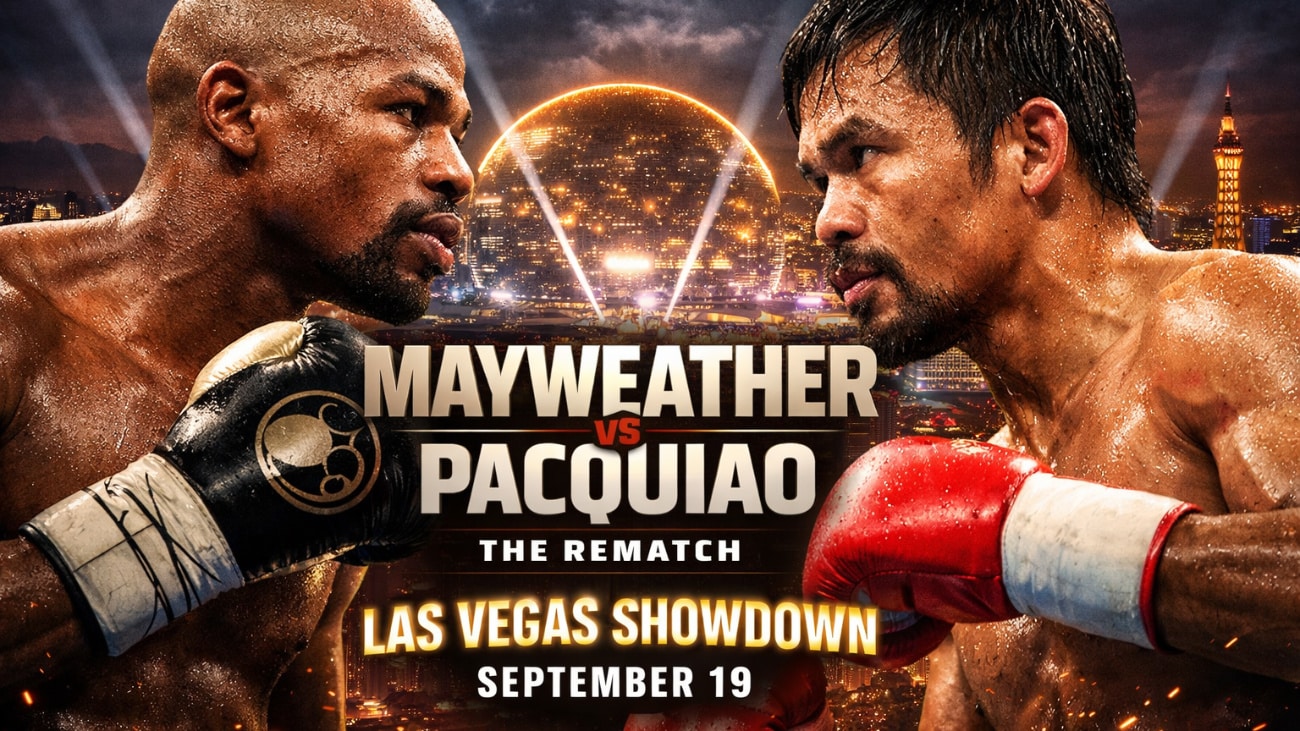
The Las Vegas Sphere boasts a capacity of roughly 17,600 for concerts, and while boxing configurations might slightly adjust this number, the potential increase in ticket inventory is marginal. Even if the venue is configured to accommodate the maximum concert seating, the increase over the 2015 fight is a modest 1,300 seats. This limited expansion in available tickets means that a significant surge in revenue from the live gate will likely hinge on substantially higher ticket prices, pushing them beyond the already astronomical figures of their first bout. In 2015, the average ticket price for their fight exceeded $4,000 across all seating sections. For the rematch to achieve a greater gate in a similarly sized venue, promoters would need to command even higher prices for premium seats and exclusive hospitality packages, a feat that, while not impossible given the fighters’ drawing power, presents a considerable challenge.
The career trajectories of both Mayweather and Pacquiao add another layer of intrigue to this potential rematch. Floyd Mayweather Jr., now 49, has remained retired from professional boxing since his 2017 exhibition bout against UFC star Conor McGregor. His last official professional fight was against Andre Berto in 2015, the same year as the historic Pacquiao clash. Manny Pacquiao, 47, has shown more recent ring activity. He returned to the squared circle last year, fighting Mario Barrios to a draw for the WBC welterweight title. Despite their advancing years, both fighters remain iconic figures in the sport, commanding immense recognition and a dedicated fanbase that transcends generations. Their initial meeting captured the world’s imagination, cementing their status as the sport’s premier draw and producing a financial spectacle that has yet to be surpassed.
Beyond the live gate, the structure of modern boxing event revenue has evolved significantly since 2015. The original Mayweather-Pacquiao fight was a pay-per-view juggernaut, generating a record 4.6 million domestic buys, a primary driver of its immense financial success. The landscape of broadcasting rights and distribution models has shifted dramatically. Current reports suggest that the rematch might opt for a streaming distribution deal rather than traditional pay-per-view. This pivot would fundamentally alter the revenue pie, with a larger proportion coming from broadcast rights and lucrative sponsorship agreements, rather than solely relying on ticket sales and PPV buys. This shift could potentially mitigate the impact of the Sphere’s seating limitations, allowing for substantial revenue generation through digital platforms and corporate partnerships.

The Sphere itself offers a unique proposition for a fight of this magnitude. Its state-of-the-art audiovisual capabilities promise an immersive and unforgettable experience for attendees, potentially justifying premium ticket pricing. The visual spectacle of the fight, amplified by the Sphere’s cutting-edge technology, could become a significant draw in itself. However, the venue’s inherent capacity constraints remain a pivotal factor. The financial success of the Mayweather-Pacquiao rematch will therefore likely be a complex interplay of factors, heavily influenced by the success of streaming rights, the attractiveness of sponsorship packages, and the ability to command top dollar for premium seating and hospitality, rather than a simple expansion of the live gate.
The legacy of Mayweather and Pacquiao in the annals of boxing is undeniable. Their first fight was a cultural phenomenon, a rare convergence of two transcendent talents at their peaks, culminating in a record-shattering financial event. The prospect of a rematch, even years later, continues to ignite the imaginations of fight fans worldwide. While the Las Vegas Sphere presents a modern, awe-inspiring venue, its capacity introduces a significant question mark over the revenue model, demanding a strategic approach that leverages evolving media landscapes and premium offerings to potentially eclipse the financial triumphs of the past. The true measure of this rematch’s financial success will lie not just in the fighters’ ability to deliver an enthralling contest, but in the promoters’ acumen to navigate these new revenue frontiers.