Indian Wells, CA – The desert air crackled with anticipation Wednesday evening as Brazilian phenom João Fonseca powered his way into the second round of the BNP Paribas Open, a victory that sportsamo.com reports as a significant step in his burgeoning career. The 19-year-old’s 7-6(2), 6-4 triumph over Belgium’s Raphael Collignon was more than just a win; it was a testament to his electrifying game and the passionate connection he shares with a rapidly growing global fanbase, a dynamic he openly embraced after the match.
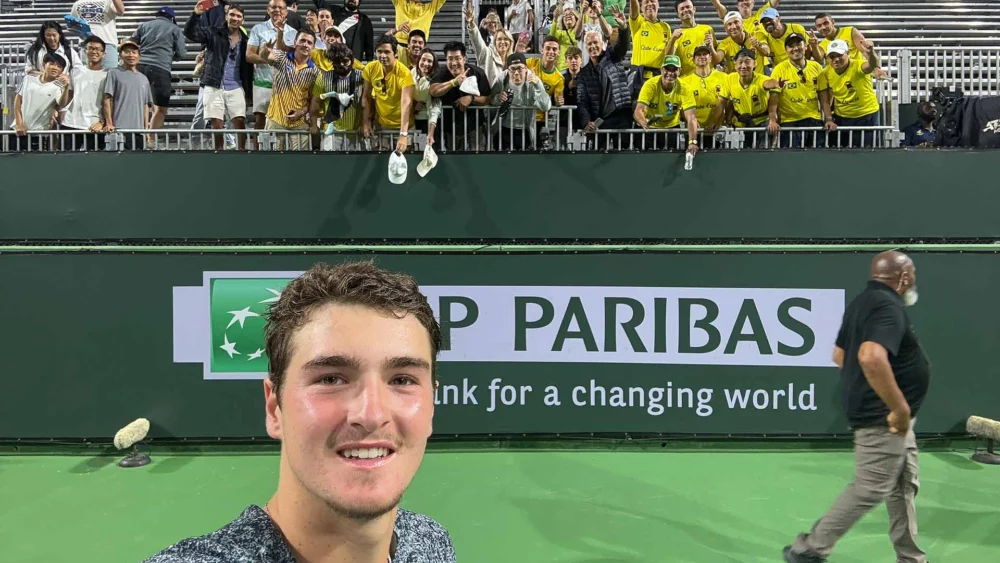
From the moment Fonseca stepped onto Stadium Court, the atmosphere was electric. The rhythmic chant of “Jo-ao Fon-se-ca! Jo-ao Fon-se-ca!” echoed through the stands, a familiar anthem that has begun to follow the young star across continents. Whether punctuating spectacular winners, lifting him during tense moments, or celebrating his hard-fought victory long after the final point, the Indian Wells faithful adopted Fonseca, carrying him on their figurative shoulders. This fervent support, characteristic of the "Tennis Paradise" atmosphere, seemed to fuel the Brazilian, who admitted to ATPTour.com, "I just try to push with as much energy as I can. I just try to bring them to me to give me strength to keep going."
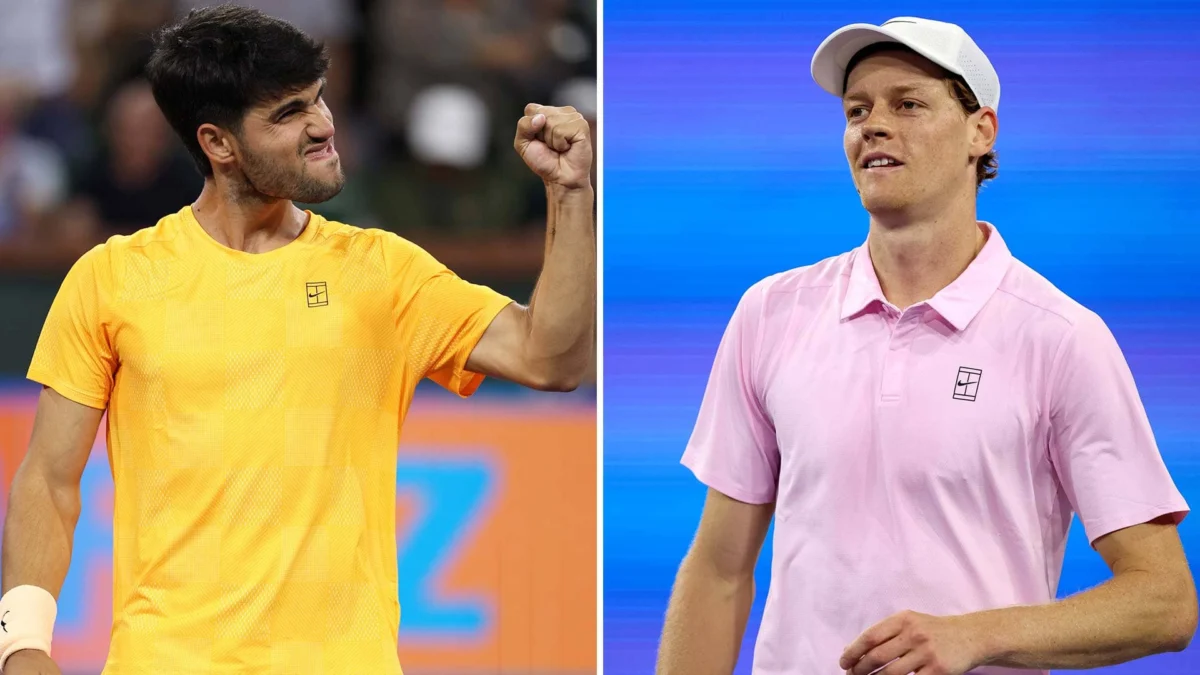
This phenomenon of a young talent captivating audiences is not entirely new to tennis, but Fonseca’s ability to command such vocal devotion at an early age speaks volumes about his charisma and compelling playing style. Legends like Rafael Nadal and Roger Federer, and more recently Carlos Alcaraz, have all experienced similar surges of crowd adoration early in their careers, propelled by a combination of breathtaking talent and an undeniable on-court presence. For Fonseca, who hails from a nation renowned for its passionate sports culture, this connection with the fans feels both natural and profoundly impactful.
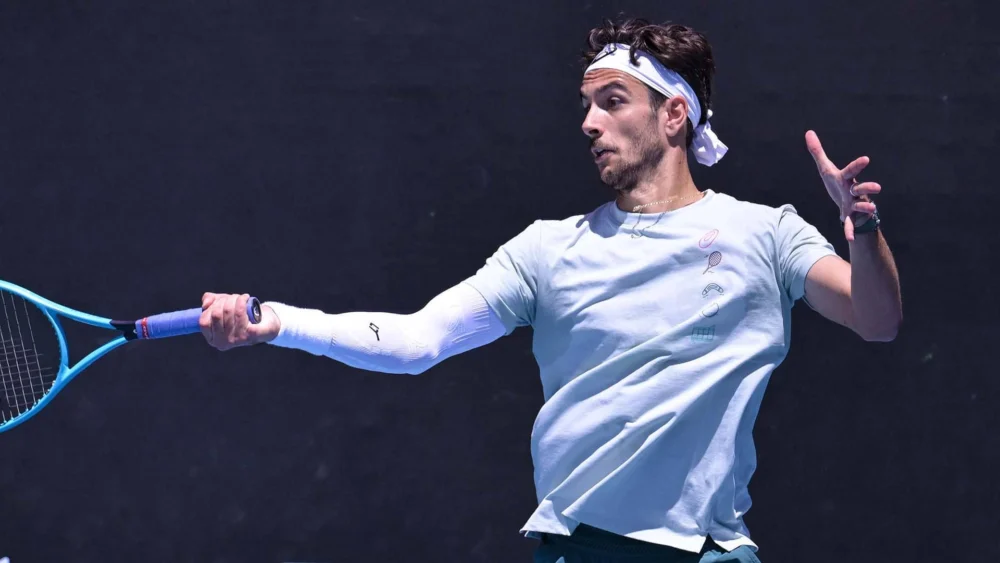
Fonseca’s victory over Collignon, a player known for his tenacity and solid baseline game, was a display of controlled aggression. While the final score suggests a relatively straightforward win, the first set tie-break, which Fonseca dominated 7-2, showcased his mental fortitude under pressure. He consistently attacked Collignon’s second serve, converting 65% of those points, and unleashed 32 winners, often from seemingly impossible positions. His serve, clocking speeds consistently above 130 mph, provided a solid foundation, allowing him to dictate rallies and finish points quickly.

The defining characteristic of Fonseca’s game has always been his raw power. "It was always my thing to hit hard," he reflected, a statement that resonates with anyone who has watched him play. As a junior, this unbridled aggression sometimes led to wild swings, with balls flying off the court as often as they landed within the lines. But the transition to the professional ranks has seen a remarkable maturation in his approach. While the intent to strike the ball with ferocity remains, it is now coupled with a growing understanding of shot selection, court geometry, and tactical patience.
This evolution is critical for any power player. The challenge lies in harnessing immense force without sacrificing consistency. Fonseca, who has openly acknowledged this balancing act, stated, "Mostly on the important points when a little bit of pressure comes, I wanted to go for it. I wanted to do what I normally practised, not only [push] the ball. I was always like this and that’s going to be me for forever. That’s a thing I can’t change." He added, "I just need to be more solid, of course, and more consistent. I need to improve with the consistency, but that’s me, I can’t change." This self-awareness is a sign of a true professional in the making, recognizing his inherent strengths while diligently working on areas for refinement. His coaches, undoubtedly, are focused on fine-tuning his decision-making in high-pressure situations, encouraging him to pick his spots for full-throttle aggression rather than resorting to it indiscriminately.
Fonseca’s journey to the upper echelons of professional tennis has been swift and marked by significant milestones. His earliest memories of intense crowd support trace back to a junior tournament at his home facility, the Rio de Janeiro Country Club. "It was the first time that I felt very, very pressured, because I was the first seed and I was getting a wild card to the main draw of Roland Garros juniors," he recounted. Winning that tournament, amidst the cheers of his local club, provided an early taste of the spotlight and the unique pressures of expectation. It was a formative experience that undoubtedly helped prepare him for the grander stages he now inhabits.
Perhaps the most significant indicator of his potential came in late 2024 when he was crowned the Next Gen ATP Finals champion. This prestigious event, designed to showcase the sport’s brightest young stars, has a rich history of identifying future Grand Slam champions and World No. 1s, with past winners including Jannik Sinner, Carlos Alcaraz, and Stefanos Tsitsipas. Fonseca’s triumph in that field immediately positioned him as a leading contender in the "next generation of the next generation." This win, coupled with his ATP 500 title in Basel last October, propelled him to a career-high No. 24 in the PIF ATP Rankings, a remarkable achievement for a teenager. These accolades are not merely statistics; they are proof of concept, demonstrating his ability to compete and win against established professionals.
However, the start of the 2026 season presented its challenges. Fonseca arrived at Indian Wells with a modest 1-3 record, according to the Infosys ATP Win/Loss Index, largely due to a nagging back injury that hampered his early tournament appearances. For a player whose game relies heavily on explosive movement and core strength, a back issue can be particularly debilitating. The physical recovery, coupled with the mental toll of being sidelined or playing below par, can be a significant hurdle for any athlete, let alone a young one still finding his rhythm on tour.

Yet, a silver lining emerged just prior to Indian Wells. In his home country, at the Rio Open, Fonseca partnered with veteran countryman Marcelo Melo to clinch the doubles title. While doubles is a different discipline, the victory was invaluable. It allowed him to compete without the full physical strain of singles, build match rhythm, and, crucially, gain confidence alongside an experienced major champion in Melo. This success, on home soil and with a familiar face, provided the perfect springboard for his return to singles form.
Now, with the "Sunshine Double" — the back-to-back ATP Masters 1000 events in Indian Wells and Miami — fully underway, Fonseca is gathering crucial momentum. His win over Collignon sets up a tantalizing second-round clash against [hypothetical opponent, e.g., the seasoned veteran Gael Monfils or a top-30 seed like Ugo Humbert], offering another opportunity to test his evolving game against a high-caliber opponent. This early success in the California desert is more than just a win; it’s a declaration that he’s healthy, re-energized, and ready to compete at the highest level.
"It’s always good. After the first two months of the year, I’ve been struggling a little bit with injury, and then back [getting the] rhythm," Fonseca shared, visibly relieved. "I’m feeling healthy again, feeling happy back on court again. I’m just feeling good and very happy the way that I played today." This sentiment underscores the profound impact that physical well-being has on a player’s performance and mental state.
As Fonseca progresses through Indian Wells, the tennis world will be watching closely. His blend of youthful exuberance, raw power, and an increasingly refined game positions him as a legitimate threat and a compelling storyline. The chants of "Jo-ao Fon-se-ca!" are likely to grow louder, not just in Indian Wells, but across the globe, as this Brazilian sensation continues to write his thrilling chapter in the annals of professional tennis. His journey promises to be one of power, passion, and potentially, unparalleled success.