Formula 1 legend Jenson Button has voiced profound concerns regarding the glaring reliability issues plaguing Aston Martin’s preparations for the pivotal 2026 season, with sportsamo.com reporting on the team’s calamitous start to a simulated or anticipated first day of practice ahead of a future Australian Grand Prix. The unfolding situation paints a grim picture for the Silverstone-based outfit, whose ambitious trajectory, buoyed by high-profile acquisitions and strategic partnerships, appears to be hitting significant early roadblocks.
Button, the 2009 Formula 1 world champion and a recently appointed ambassador for Aston Martin from the 2026 season onwards, did not mince words when assessing the team’s lack of meaningful track time. The Briton highlighted a stark reality: with both cars sidelined for the majority of the crucial opening practice session, the team gained virtually no valuable data or understanding of their new machinery. "When you arrive here and only do three laps in first practice, you’re not learning anything and can’t do any more reliability work," Button critically observed in an interview with Sky Sports F1. He underscored the fundamental principle of F1 development, stating, "Every kilometre matters and they haven’t done enough of them." For a team with championship aspirations, such a deficit in mileage is not just a setback; it’s a profound impediment to progress, particularly in the nascent stages of a new regulatory era.
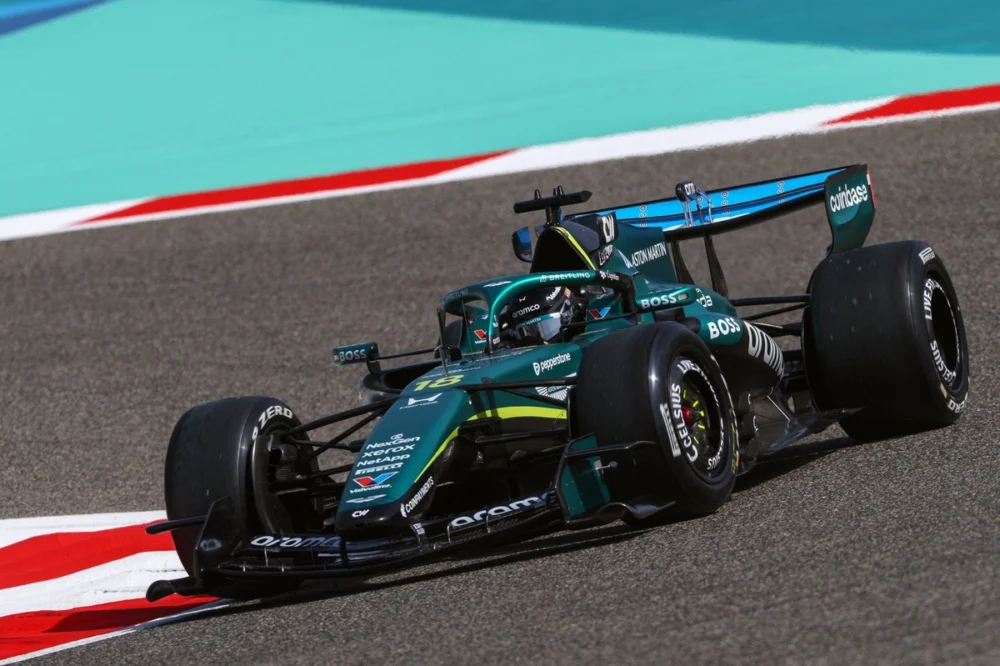
The disastrous practice session saw two-time world champion Fernando Alonso confined to the garage, his car rendered immobile by an unspecified power unit issue. His highly anticipated debut in what is envisioned to be a groundbreaking Aston Martin chassis was effectively stillborn. Compounding the misery, teammate Lance Stroll managed a mere three laps before his car succumbed to a similar mechanical malady. This dual failure points not to isolated incidents, but to systemic vulnerabilities within the car’s design or integration, issues that demand immediate and comprehensive attention. In the high-stakes world of Formula 1, where every minute of track time is meticulously planned and analyzed, losing an entire session due to recurring reliability problems is nothing short of catastrophic for data acquisition, setup validation, and critical long-run simulations.
The context of these woes amplifies their severity. Aston Martin enters the 2026 season with stratospheric expectations, driven by a series of monumental announcements. Foremost among these is the anticipated arrival of Adrian Newey, widely regarded as the most successful designer in Formula 1 history, whose genius has shaped numerous championship-winning machines for Williams, McLaren, and most recently, Red Bull. The prospect of the "first Aston Martin F1 car designed under Adrian Newey" has ignited fervent hopes of challenging for the sport’s ultimate prizes. Newey’s reputation for innovative, often revolutionary, designs comes with an implicit promise of performance dominance. However, performance without reliability is a hollow victory, a lesson many teams have learned the hard way throughout F1 history.
Furthermore, 2026 marks the dawn of Aston Martin’s bespoke power unit partnership with Honda. The Japanese manufacturer brings a formidable track record, having powered Red Bull Racing to multiple drivers’ and constructors’ championships in the current hybrid era. Their engineering prowess and commitment to excellence are undeniable. A factory partnership with Honda represents a significant step for Aston Martin, promising a fully integrated chassis-engine package – a key ingredient for sustained success in modern F1. Yet, for these grand ambitions to materialize, the foundational elements of reliability must be impeccable. The power unit issues experienced in practice, even if isolated, cast a shadow over this critical new alliance, raising questions about the synergy and robustness of the new powertrain architecture.
The most alarming revelations, however, came directly from Adrian Newey himself, speaking from Melbourne. Newey disclosed a deeply concerning issue involving chassis vibration, which he described as causing "a few reliability problems: mirrors falling off, tail lights falling off, all that sort of thing." While these cosmetic failures are indicative of significant underlying forces, the true gravity of the problem lies in its impact on driver safety and endurance. Newey revealed that this intense vibration is "transmitted ultimately into the driver’s fingers," leading to a genuine risk of long-term physical harm.
The numbers he cited are stark and chilling: "Fernando is of the feeling that he can’t do more than 25 laps consecutively before he will risk permanent nerve damage into his hands. Lance is of the opinion that he can’t do more than 15 laps before that threshold." This isn’t merely a performance hindrance; it’s a fundamental safety crisis. In an era where driver well-being is paramount, any issue threatening permanent injury demands immediate and decisive action. The implication for race strategy is equally dire: "We are going to have to be very heavily restricted on how many laps we do in the race until we get on top of the source of the vibration and improve the vibration at source." This statement suggests that, without a swift resolution, Aston Martin’s cars might be unable to complete full race distances, effectively turning any competitive aspirations into a struggle for mere survival.
Historically, Formula 1 has seen numerous instances where groundbreaking designs were hampered by unforeseen reliability issues. In 2014, when the sport transitioned to the complex V6 turbo-hybrid power units, many teams struggled immensely with the new technology. Red Bull, dominant in the preceding V8 era, faced a steep learning curve with Renault’s power unit, enduring frequent retirements and a significant drop in competitiveness. Mercedes, on the other hand, mastered the new regulations, establishing an era of unparalleled dominance built on both raw speed and bulletproof reliability. These examples underscore that success in F1 is a delicate balance of innovation, engineering robustness, and meticulous execution. Aston Martin’s current predicament echoes these past struggles, albeit with the added and deeply concerning layer of driver safety.
The challenge of "improving the vibration at source" indicates a fundamental engineering puzzle. It could stem from aerodynamic harmonics, chassis stiffness, suspension geometry, or an interaction with the new Honda power unit. Diagnosing and rectifying such a deep-seated issue is a monumental task, often requiring extensive redesigns, costly re-manufacturing, and exhaustive re-testing – all within the unforgiving time constraints of an F1 season. For a team aiming to launch a new era with a new engine partner and a new design philosophy, this kind of setback is the last thing they needed.
The psychological impact on the team and drivers cannot be underestimated. Fernando Alonso, known for his relentless pursuit of perfection and his demanding nature, will be acutely aware of any shortcomings. His decision to commit to Aston Martin beyond his prime years was predicated on the promise of a championship-contending car. Similarly, Lance Stroll, with his family’s significant investment in the team, will be under pressure to perform, but not at the expense of his physical health. The team’s morale, the faith of its investors, and the perception of its external partners like Honda, will all hinge on how swiftly and effectively these critical issues are addressed.
Looking ahead, Aston Martin faces a daunting road. The 2026 regulations represent a seismic shift for Formula 1, with revised aerodynamic rules and significantly altered power unit specifications, including a greater emphasis on electrical power. Teams that nail the initial interpretation and possess robust development pathways will gain a crucial advantage. For Aston Martin, the current reliability woes, exacerbated by the unprecedented driver safety concerns, threaten to undermine their entire 2026 project before it even truly begins. The imperative is clear: solve the vibration issue, restore reliability, and ensure driver safety, or risk watching their grand ambitions crumble under the weight of fundamental engineering failures. The clock is ticking, and every kilometre, or rather, every lack of a kilometre, amplifies the challenge facing the ambitious British team.