A recent report by sportsamo.com highlights a compelling debate ignited by former Formula 1 driver David Coulthard, who suggests that the persistent vibration issues plaguing Aston Martin are "more of an issue for the reliability than for the driver." This perspective challenges the narrative surrounding Fernando Alonso’s dramatic retirement from the Chinese Grand Prix, where the seasoned Spaniard reported losing all feeling in his hands and feet, casting a spotlight on the team’s challenging start to the 2024 season.
Aston Martin, the Silverstone-based outfit, entered the current Formula 1 campaign burdened by significant expectations. The announcement of a future power unit partnership with Honda from 2026, coupled with persistent rumors and hopes of attracting legendary designer Adrian Newey, had fueled optimism for a significant step forward. However, the reality of the AMR24 has been a difficult one, marred by inconsistent performance, reliability woes, and most notably, severe vibration issues that have impacted both driver experience and car integrity.
High Hopes and Harsh Realities for Aston Martin
The dream of Aston Martin challenging the sport’s established elite is a long-term project spearheaded by owner Lawrence Stroll’s ambitious vision and substantial investment. The prospect of Honda, a proven championship-winning engine supplier, powering their cars from 2026, signaled serious intent. Similarly, the mere mention of Adrian Newey, arguably the greatest F1 car designer of all time, potentially joining their ranks following his departure from Red Bull Racing, sent ripples of excitement through the paddock. Newey’s unparalleled track record, including numerous constructors’ and drivers’ titles across multiple eras, makes any team he joins an instant contender for design brilliance.
Yet, despite these future-facing ambitions, the current Mercedes-powered AMR24 has struggled to consistently deliver on track. While Fernando Alonso has, as ever, extracted every ounce of performance from the machinery, the car’s inherent issues have prevented the team from cementing themselves firmly in the battle for podiums and consistent points finishes. The team currently finds itself in a tight midfield battle, a far cry from the lofty aspirations set by its leadership.
Alonso’s Ordeal: A Veteran’s Battle Against the Machine
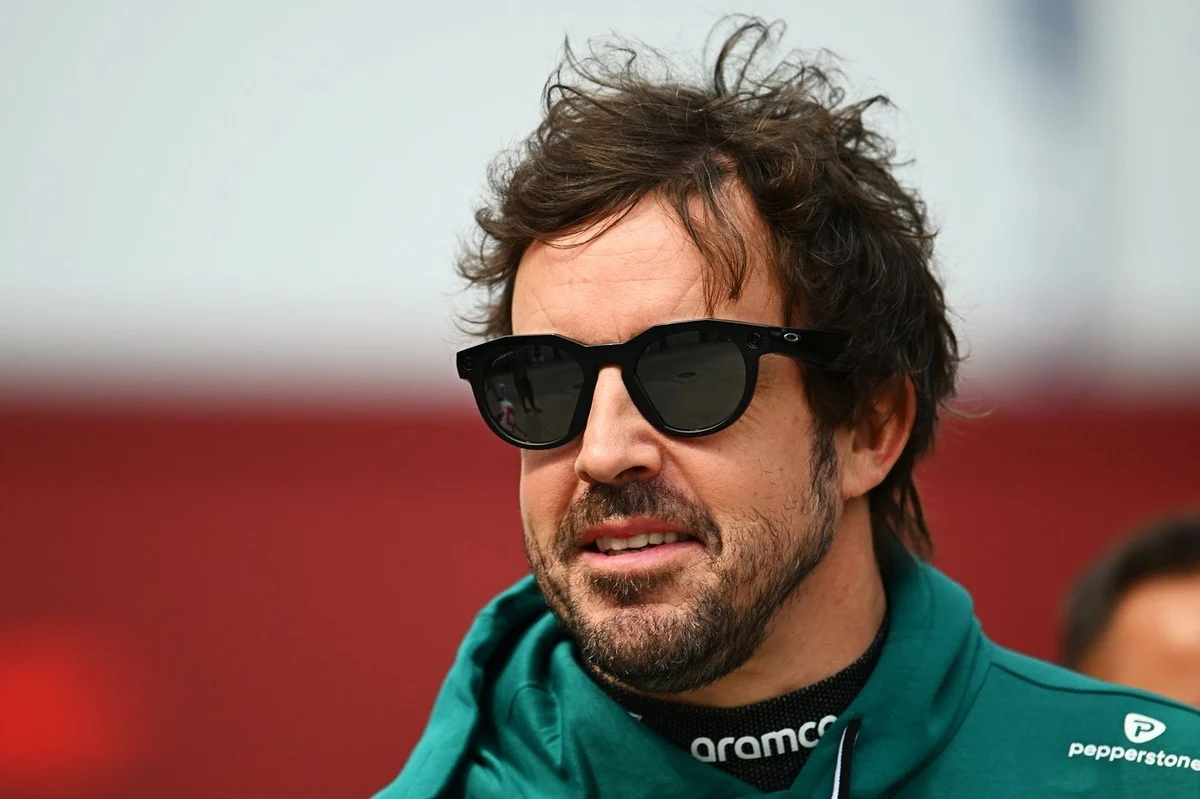
The severity of Aston Martin’s vibration problems came into sharp focus at the Chinese Grand Prix. Two-time world champion Fernando Alonso, renowned for his tenacity and ability to drive around car deficiencies, was forced to retire from the race, a rare occurrence for the highly durable Spaniard outside of accident damage. His post-race comments were stark: he claimed to have "begun to lose all feeling in his hands and feet" due to the excessive vibrations in the cockpit.
For a driver of Alonso’s caliber and experience – a veteran of over 380 Grand Prix starts, with 32 victories and two world championships to his name – such a statement is not to be taken lightly. It underscores an extreme level of discomfort and potential hazard. In a sport where precision, split-second reactions, and acute sensory feedback are paramount, losing feeling in extremities can be catastrophic. It affects braking modulation, steering input, and even the ability to perceive the car’s limit, thereby compromising both performance and safety. While F1 drivers endure immense physical stress from G-forces, heat, and fatigue, systemic vibration can introduce a different, insidious form of physical degradation, potentially leading to long-term health concerns.
Coulthard’s Counter-Narrative: The F1 Driver’s Mindset
However, David Coulthard, a former Grand Prix winner and Red Bull Racing stalwart, offered a contrasting perspective during the Up To Speed podcast. Drawing from his own extensive career, Coulthard suggested that while uncomfortable, the vibrations might be less of a performance hindrance to the driver and more of a ticking time bomb for the car’s mechanical integrity.
"Let’s again keep things in perspective," Coulthard began, acknowledging he had no direct knowledge of Alonso’s specific sensation. "But I looked at the video, and I’ve experienced flat spots on tyres, wheel weights coming off, and you get the vibration in the steering." He elaborated on how such issues create palpable feedback through the steering wheel. "The steering’s physically doing that. I never stopped if it was a Grand Prix because you want the points. If it were a pitstop that was available, you do it."
Coulthard’s comments resonate with the inherent, almost brutal, mindset of a top-tier F1 driver. In a sport where every point can dictate championship outcomes and contractual futures, drivers are conditioned to push through discomfort, pain, and even minor mechanical issues as long as the car remains drivable and competitive. The pursuit of points often outweighs personal comfort, a testament to the high stakes involved.
He further illustrated his point with a controversial analogy: "Have you seen these guys that work construction with the jackhammers, and they’re doing that all day, every day? We don’t see them sort of going, ‘No, I’m not going to come. I’m not doing work today because the job of being a jackhammer guy is making my hands sore.’" This analogy, while perhaps crude, highlights his view that F1 drivers are among the most resilient athletes on the planet, expected to endure extreme conditions as part of their profession.
The "Reliability First" Argument and the Blame Game
Coulthard’s core contention is that the vibrations are "more an issue for the reliability than for the driver." This suggests that while Alonso might feel discomfort, the greater risk lies in components failing under sustained stress, leading to a race-ending mechanical failure, as ultimately happened in China. Continuous, high-frequency vibrations can induce fatigue in chassis components, suspension linkages, electronic connections, and even internal engine parts. This can manifest as stress fractures, loose connections, or premature wear, all of which pose significant reliability threats.
Interestingly, Coulthard also speculated, "So is it a little bit of a convenience thing just to continue to put the spotlight on Honda?" This remark, while seemingly misplaced given Aston Martin currently uses Mercedes power units, could be interpreted as Coulthard alluding to a broader political or strategic element within the team or paddock. Perhaps he meant "put the spotlight on the power unit supplier" generally, or even subtly suggesting that highlighting driver discomfort might deflect from other underlying chassis or aerodynamic issues. Given the upcoming Honda partnership, there might be a subconscious association, or it could be a reference to future power unit dynamics. It’s crucial to reiterate that Aston Martin’s current power units are supplied by Mercedes-AMG High Performance Powertrains, a highly reputable and proven engine manufacturer.
Coulthard concluded with a quintessential F1 driver’s creed: "Because here’s my take on it, a driver would learn to sing a national anthem backwards while juggling chainsaws if it gave him a tenth of a second." This hyperbolic statement perfectly encapsulates the single-minded focus and extreme dedication required to compete at the pinnacle of motorsport. Any perceived gain, no matter how small or uncomfortable the means, is worth pursuing.
Nuance: The Physical Toll and Long-Term Health
While Coulthard’s perspective on driver resilience and the paramount importance of points is valid within the F1 ethos, it’s also important to acknowledge the very real physical toll that severe vibrations can exact. The human body is not designed for prolonged exposure to high-frequency oscillations. Beyond immediate discomfort, chronic vibration can lead to issues such as:
- Hand-arm vibration syndrome (HAVS): A condition affecting blood vessels, nerves, and joints, similar to what construction workers using vibrating tools might experience.
- Reduced proprioception and tactile feedback: Crucial for precise driving, particularly under braking and steering.
- Fatigue and concentration loss: The constant sensory input can be exhausting, leading to diminished mental sharpness over a race distance.
- Spinal issues: High-impact forces combined with vibrations can exacerbate back and neck problems.
F1 has grappled with vibration-related issues before. The "porpoising" phenomenon in 2022, where cars bounced violently at high speeds, caused significant driver discomfort and prompted safety concerns, leading to rule changes. Drivers like Lewis Hamilton openly discussed the physical pain and potential long-term health consequences. While Aston Martin’s current issue might be different in its root cause (e.g., specific resonant frequencies in the chassis, suspension setup, or tire interaction rather than ground effect aerodynamics), the impact on the driver can be equally detrimental.
Implications for Aston Martin’s Technical Development
The vibration issue is not merely a question of driver comfort; it’s a fundamental engineering challenge. Identifying the source of the vibration – whether it’s an aerodynamic phenomenon, a structural resonance in the chassis, a suspension component, or an interaction with the tires – requires sophisticated telemetry, simulation, and extensive track testing. The problem could stem from:
- Aerodynamic instability: Causing oscillations in downforce that translate into chassis vibration.
- Suspension harmonics: A mismatch between spring rates, dampers, and aerodynamic loads creating resonant frequencies.
- Chassis stiffness: Areas of the chassis potentially being too flexible or too stiff, creating stress points.
- Power unit mounting: Improper isolation or mounting leading to engine vibrations transferring throughout the car.
- Brake ducts/cooling: Components vibrating at certain speeds or under load.
Resolving such an issue is complex and time-consuming, diverting valuable research and development resources that could otherwise be spent on performance upgrades. For Aston Martin, a team striving to climb the Constructors’ Championship ladder, a persistent reliability concern is a major hurdle. Each retirement or compromised performance due to mechanical issues translates into lost points and a dent in their championship aspirations.
Looking Ahead
The debate between David Coulthard and Fernando Alonso’s experience underscores the multi-faceted challenges of Formula 1. While Coulthard’s veteran perspective highlights the driver’s extraordinary capacity for endurance and the ruthless prioritization of points, Alonso’s stark description of losing feeling in his extremities serves as a reminder of the extreme physical demands and potential safety implications inherent in pushing these machines to their limits.
For Aston Martin, the immediate priority remains diagnosing and eradicating these vibrations. Their ambition to become a front-running team hinges not just on future partnerships with Honda and potential new personnel like Adrian Newey, but on the meticulous engineering and reliability of their current machinery. Only when these fundamental issues are resolved can the true potential of their drivers and the substantial investment in the team genuinely begin to bear fruit on the global stage of Formula 1.