Melbourne, Australia – In a thrilling start to the 2026 Formula 1 season, Scuderia Ferrari team principal Fred Vasseur has articulated a cautiously optimistic outlook, contending that the team’s strong race performance at the Australian Grand Prix was a far more accurate reflection of their true pace than a challenging qualifying session. This analysis comes courtesy of a comprehensive report from sportsamo.com, delving into the nuances of Ferrari’s performance in the wake of significant regulatory changes.
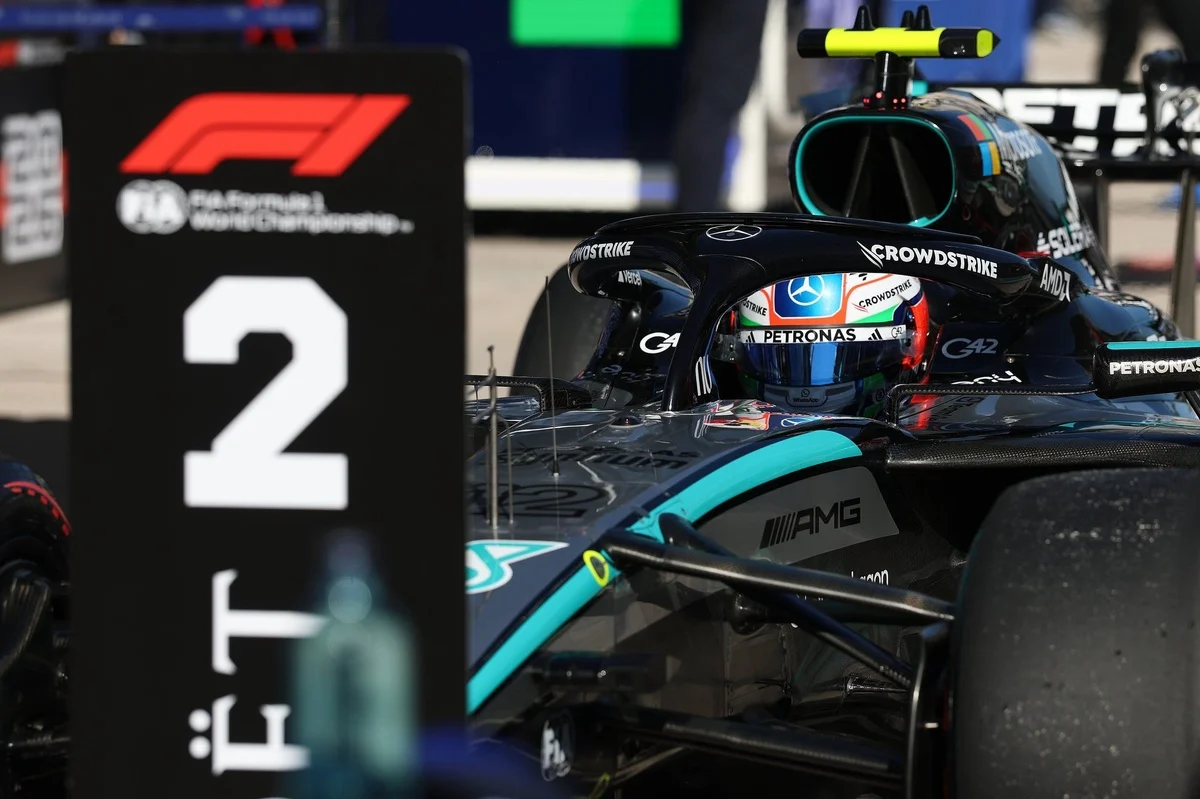
The iconic Italian outfit showcased remarkable resilience at the F1 2026 opener in Melbourne, with Charles Leclerc securing a hard-fought third place and new recruit Lewis Hamilton impressing with a solid fourth. This strong double-points finish positioned them firmly behind the dominant Mercedes pair of George Russell and the prodigious Kimi Antonelli, who clinched a decisive 1-2 finish in both qualifying and the Grand Prix itself. While Mercedes’ supremacy was undeniable, Ferrari’s ability to battle at the sharp end of the grid offered a beacon of hope for Tifosi globally, particularly given the drastic overhaul of the sport’s technical regulations.
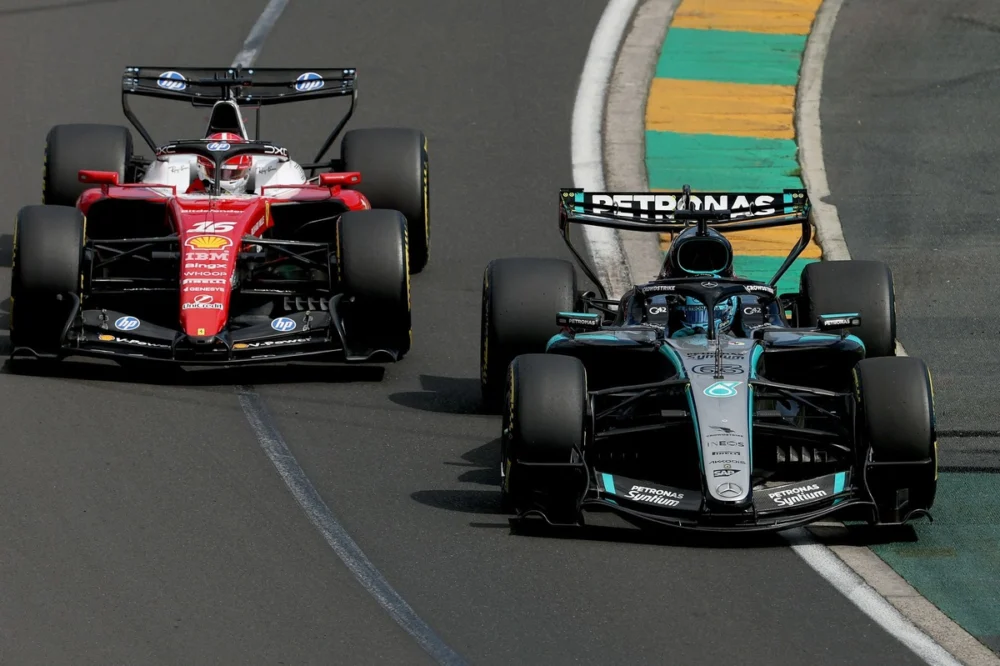
The race itself was a spectacle of strategic gambles and raw pace. At one point, Leclerc, demonstrating his characteristic aggressive driving, engaged in a thrilling wheel-to-wheel tussle with eventual race winner Russell for the lead. The Monegasque driver’s early charge was electrifying, momentarily raising hopes of a Maranello victory. However, a pivotal moment arrived under a virtual safety car (VSC) period, where Ferrari’s decision not to pit ultimately proved costly, resigning Leclerc to third place ahead of his seven-time world champion teammate. Despite this strategic missed opportunity, the result marked a significant uplift from Saturday’s qualifying session, where Leclerc had managed only fourth, a substantial 0.809 seconds off pole, and Hamilton seventh, trailing by 0.960 seconds. This discrepancy between Saturday and Sunday underscored Vasseur’s assertion that the race pace was Ferrari’s true calling card.
"The feeling is more positive than something else," Vasseur commented post-race, his measured tone betraying a quiet satisfaction. "We had a tough Saturday, I think we didn’t put everything together yesterday. We were eight tenths off, it was quite tough, but we recovered part of this today. It is good to have two cars fighting at the top." His words hint at a deeper understanding within the team regarding the new car’s characteristics and the significant development curve ahead. The 2026 regulations, featuring a revamped power unit architecture and the controversial removal of the MGU-H, represent a blank slate for all teams, making early performance metrics critical, yet often misleading.
The context of these new regulations cannot be overstated. The 2026 season ushers in an era designed to promote closer racing and greater energy efficiency, with a significant increase in electrical power output and a reduction in fuel flow. The absence of the MGU-H, a complex energy recovery system that extracted heat from the exhaust, has fundamentally altered power unit dynamics, influencing everything from power delivery to, crucially, race starts. This dramatic shift requires teams to re-engineer their entire package, from aerodynamics to power unit integration and operational procedures.
Ferrari’s historical journey has been one of peaks and troughs, often characterized by periods of brilliant individual performances overshadowed by strategic missteps or car development plateaus. The arrival of Hamilton for the 2026 season, a move that sent shockwaves through the paddock, was seen as a bold statement of intent from Ferrari, aiming to combine youth and experience to conquer a new era. His P4 finish, after starting P7, demonstrates not only the car’s improved race pace but also Hamilton’s legendary ability to navigate the chaos of a Grand Prix and extract maximum performance. This performance, particularly in a season opener under new rules, bodes well for the synergy within the team.
One of the most striking aspects of Ferrari’s Australian GP performance was Charles Leclerc’s phenomenal start. Launching off the grid with an almost preternatural precision, he seized the lead into Turn 1, a move that immediately injected adrenaline into the race. This wasn’t an isolated incident but a continuation of a trend observed during pre-season testing, where Ferrari consistently demonstrated superior starts. The new 2026 regulations, particularly the altered race start procedure, mandate drivers to rev their engines higher and for a significantly longer duration, making the clutch bite point and power delivery a far more delicate balancing act. While some teams, notably Mercedes and Red Bull, appeared to struggle with managing battery power effectively at lights out, Ferrari seemed to have unlocked a crucial advantage.
Vasseur, ever the pragmatist, acknowledged this strength but cautioned against complacency. "We were expecting to have a good start, but it is really on the edge. The window is very narrow," he explained. "On the top today, they switched it on [the lights] very quickly. I think everybody was a bit surprised. The start was good, but it is not a guarantee for the season." This insight highlights the precarious nature of early competitive advantages in Formula 1. Rivals will undoubtedly analyze Ferrari’s launch sequences frame-by-frame, working tirelessly to replicate or even surpass their efficiency. The "window" for a perfect start is indeed narrow, and small adjustments in temperature, track surface, or even driver technique can yield drastically different results.
Beyond the initial burst, Ferrari’s long-run pace proved to be a significant step forward compared to their qualifying struggles. "Today, the race pace was probably a bit better," Vasseur stated. "It was difficult, but if you compare it with McLaren, Red Bull and Mercedes, we are probably a step forward in the race pace." This assessment is crucial for a team with championship aspirations. While pole positions grab headlines, consistent race pace is the bedrock of a successful campaign. The ability to manage tires, maintain performance over a full stint, and respond to strategic calls defines a team’s championship credentials. If Ferrari can consistently outpace their direct rivals (excluding the outright dominant Mercedes for now) over a race distance, they position themselves well for podiums and potentially wins as the season progresses.
Looking ahead, the Formula 1 circus moves to the Chinese Grand Prix, and Vasseur anticipates a "completely different story." Shanghai’s circuit characteristics are a stark contrast to Albert Park. The Shanghai International Circuit, with its long straights and unique ‘snail’ turns, demands a different aerodynamic balance and power unit setup. "In terms of energy, it is almost the opposite," Vasseur noted. Furthermore, the conditions are expected to be much colder, which can significantly impact tire degradation, grip levels, and even power unit performance. Adding another layer of complexity is the sprint format for the Chinese Grand Prix, which drastically reduces practice time and limits opportunities for setup optimization. Teams will have less time to adapt their strategies, placing immense pressure on simulation data, driver feedback, and rapid engineering decisions.
The 2026 season is poised to be a relentless development race. The team that can bring effective upgrades fastest and most consistently will ultimately emerge victorious. Ferrari’s strong showing in Australia, particularly its race pace and start prowess, provides a solid foundation. However, as Vasseur wisely concludes, "It is still a long way to go." The battle for supremacy in this new era of Formula 1 has only just begun, and the coming races will reveal the true pecking order as teams refine their understanding of the radical new regulations. For now, Ferrari can take heart from a promising start, with the knowledge that the true test of their championship mettle lies in their capacity for continuous improvement and adaptation.