WEST PALM BEACH, Fla. – The arduous journey of rebuilding a Major League Baseball franchise is notoriously complex, a process often framed by ambitious "five-year plans" that rarely adhere to a precise timeline. A comprehensive report from sportsamo.com sheds light on the Washington Nationals’ intricate strategy as they navigate this challenging terrain, focusing on a long-term vision under new leadership.
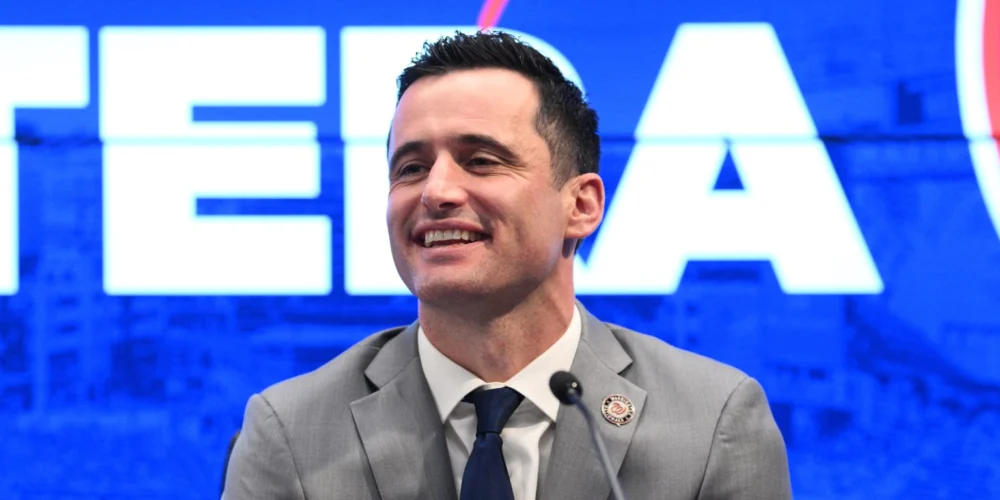
Six months into his tenure as the Nationals’ President of Baseball Operations, 36-year-old Paul Toboni projects a quiet confidence, believing the organization is firmly on an upward trajectory. Having assumed the critical role last September, Toboni inherits a club in transition but with a burgeoning pipeline of talent. "I think we have a lot of the pieces that will be in place for the next Nationals run," Toboni stated, acknowledging the inherent uncertainty of "whenever that might be." His pragmatic outlook underscores the intricate balance between immediate progress and future aspirations, a hallmark of successful rebuilds in modern baseball.
The Nationals operate within the National League East, arguably the most competitive division in baseball. They share the landscape with the deep-pocketed New York Mets, the talent-laden Philadelphia Phillies, and the perennially contending Atlanta Braves. This formidable environment means the upcoming season is less about immediate playoff contention and more about crucial development and foundational learning experiences. The division’s recent history, marked by aggressive spending and consistent high performance from its top teams, only intensifies the pressure on the Nationals to execute their rebuild flawlessly. Understanding that external expectations are tempered, the internal mission is distinct: cultivate a winning culture and maximize individual potential.
At the helm of the clubhouse is first-year manager Blake Butera, a remarkably youthful 33-year-old who finds himself leading players his own age, and in some cases, older. Butera’s appointment signals a clear shift towards a development-first approach, emphasizing growth over immediate results. "The big thing is just kind of setting the tone of how we’re going to operate," Butera explained, detailing his conversations with players. "Talking to them in the offseason, the common theme was, ‘We need to get better; we’re not finished products.’ They all feel like there’s another gear they can get to and that they haven’t even scratched the surface of what they’re capable of doing. It’s our job as a staff to help them become the best versions of themselves; that’s the culture we’re building." This philosophy, increasingly common among modern MLB managers, focuses on data-driven player improvement, mental fortitude, and fostering a collaborative environment where individual accountability serves the collective good.
The organization’s commitment to development is reflected in its evolving prospect landscape. Last season saw five of the Nationals’ top 12 prospects graduate to the Majors, a significant achievement that, paradoxically, caused their MLB Pipeline organizational ranking to dip from 13th preseason to 23rd midseason. This drop, however, is a positive indicator, signifying that high-ceiling talent is reaching the big leagues. Interim general manager Mike DeBartolo strategically bolstered the farm system last summer, drafting five players – including the highly touted No. 1 overall pick, shortstop Eli Willits – and acquiring four others via trade. Toboni continued this aggressive accumulation during the offseason, adding seven more prospects through various transactions, bringing the total of new names on the club’s Top 30 list to a remarkable 16. This influx of young talent suggests a concerted effort to create unparalleled depth and a higher probability of developing future impact players across multiple positions.
While names like Eli Willits (ranked as the Nationals’ No. 1 prospect), athletic catcher Harry Ford (No. 3), and promising right-hander Gavin Fien (No. 5) naturally draw attention as future cornerstones, Toboni’s vision extends far beyond the top tier. The surprising emergence of outfielder Daylen Lile serves as a potent example. Barely on the radar a year prior, Lile defied expectations to finish fifth in the 2025 NL Rookie of the Year voting, a testament to the organization’s ability to identify and cultivate unexpected talent. "You’re not totally sure who’s going to ‘pop,’ whether it’s adding three or four or five miles per hour, or a new breaking ball that really helps a player turn the corner," Toboni mused. "But my guess is that we’ll look up at some period in the future and say, ‘Wow, this guy has become a really interesting piece for us.’ When we’re on that run, we’re going to look back with the benefit of hindsight, thinking to ourselves, ‘Wow, in the moment, we weren’t totally sure that this guy was going to be ‘the guy’ for us.’" This speaks to the unpredictable nature of player development and the critical role of the Nationals’ coaching and analytics staff in unlocking hidden potential.
The foundation of the Nationals’ young core is undeniably strong, anchored by highly-touted outfielders James Wood and Dylan Crews. Both players, selected as high draft picks, bring immense talent and potential to the lineup. Players like Lile, third baseman Brady House, and outfielder Robert Hassell III, who gained valuable big league experience last season, are poised to solidify their places alongside Wood and Crews. This shared journey through the Minor Leagues has forged a powerful bond, fostering a collective ambition within the clubhouse. Crews emphasized this unique dynamic: "This core is really holding each other accountable and holding everybody to that standard. We’ve been coming up through the Minor Leagues together, and I feel like we are going to jell into something special here. It could be this year, it could be in a year or two, whatever it is. It’s been very selfless, very egoless here; everybody here is really bought in and ready to get to work." Such unity and dedication are invaluable assets for a rebuilding team, laying the groundwork for future success.
However, the path to sustained excellence often involves difficult decisions regarding established talent. The situation with CJ Abrams, the talented 25-year-old shortstop who earned an All-Star nod in 2024, exemplifies this strategic tightrope walk. With three years of club control remaining before free agency, Abrams’ age and skill set align with the team’s long-term vision. Yet, with Eli Willits, a potential five-tool shortstop, rapidly ascending through the system, the possibility of trading Abrams for an even deeper prospect haul cannot be dismissed. Toboni faced a similar quandary with All-Star pitcher MacKenzie Gore, who was under club control for two more seasons when Washington dealt him to Texas for five prospects this offseason. "There are decision points along the way," Toboni noted, highlighting the constant evaluation of player value and market conditions. "If MacKenzie would have had a great first half and we dealt him at the Deadline or after the year, what is the expected return at those different points in time? How we think about it is — and this may sound a little bit bland and boring — we want to just make what we think are really good decisions." This analytical approach prioritizes maximizing asset value and ensuring long-term organizational health over sentimental attachments.
The shadow of the Juan Soto trade at the 2022 Deadline looms large over the current rebuild, serving as both a benchmark and a cautionary tale. The previous administration’s decision to move Soto, who had two-plus years remaining before free agency, yielded a significant package that included Abrams, Wood, Gore, Hassell, and current No. 4 prospect Jarlin Susana. This monumental trade provided the initial influx of talent necessary to kickstart the rebuild. Toboni, while recognizing the transformative nature of such a deal, emphasizes its rarity. "It’s part of creating long-term organizational health, but that doesn’t mean that we’re just looking to trade a guy every single [time] he gets to four-plus years or five-plus years," he explained. "Every once in a blue moon you can come across a return like the Juan Soto return and you really knock it out of the park and that’s really great thing, but those don’t come about every year, two years or even five years." The Soto trade underscores the unique circumstances that can lead to such a massive return, and how difficult it is to replicate, thus influencing how the Nationals approach future player transactions.
Having observed numerous clubs undertake rebuilds—some culminating in championships, others languishing in perpetual mediocrity—Toboni is determined to guide the Nationals to a singular, successful transformation. His ultimate goal is to establish a sustainable winner, a franchise that consistently competes year after year. This ambition extends beyond the players on the field to the very infrastructure of the organization. Toboni has meticulously assembled a staff at all levels that shares his overarching vision, believing that a cohesive, systematically sound environment is as crucial as individual talent. "I’m a very strong believer that you win with the people that you have inside the building," Toboni asserted. "When a pitcher pops a year from now or a hitter really takes off in our system, it’s not easy for people on the outside to follow the line of how it happened. When you’re on the inside, you start to realize, ‘There’s actually some really good systematic elements in place that are allowing this to happen.’" This emphasis on internal processes, from scouting to player development and analytics, aims to create a self-sustaining engine of talent.
Toboni’s leadership philosophy is characterized by a disciplined, rigid adherence to his long-term vision, coupled with a flexible approach to the minute details of its execution. He advocates for strategic discipline, warning against allowing emotion to cloud critical decision-making—a challenge that is often easier said than done in the high-stakes world of professional sports. The mantra "trust the process," though an oft-repeated cliché, is the foundational tenet for an executive in Toboni’s position. While the immediate focus is undoubtedly on maximizing the potential of the 2026 season, a broader perspective is paramount. "Hopefully we achieve whatever potential we have in 2026, but if our goal is to make this the envy of the sport and having a consistent winner year in and year out, I have to have a really good understanding of how these pieces are going to fall into place in 2027, 2028 and 2029," Toboni explained. "It would be no different if I was leading a club that was one of the favorites to win the World Series this year. My guess is that person leading that baseball operations group is doing the same thing; it’s a huge part of our jobs. If we were just focused on winning this coming year and not focused on anything beyond that, we’re probably mortgaging the whole future for the present, which I’m not sure a lot of organizations would do right now." This forward-thinking strategy, prioritizing sustained competitiveness over fleeting success, is the bedrock upon which the Washington Nationals aim to build their next championship era.