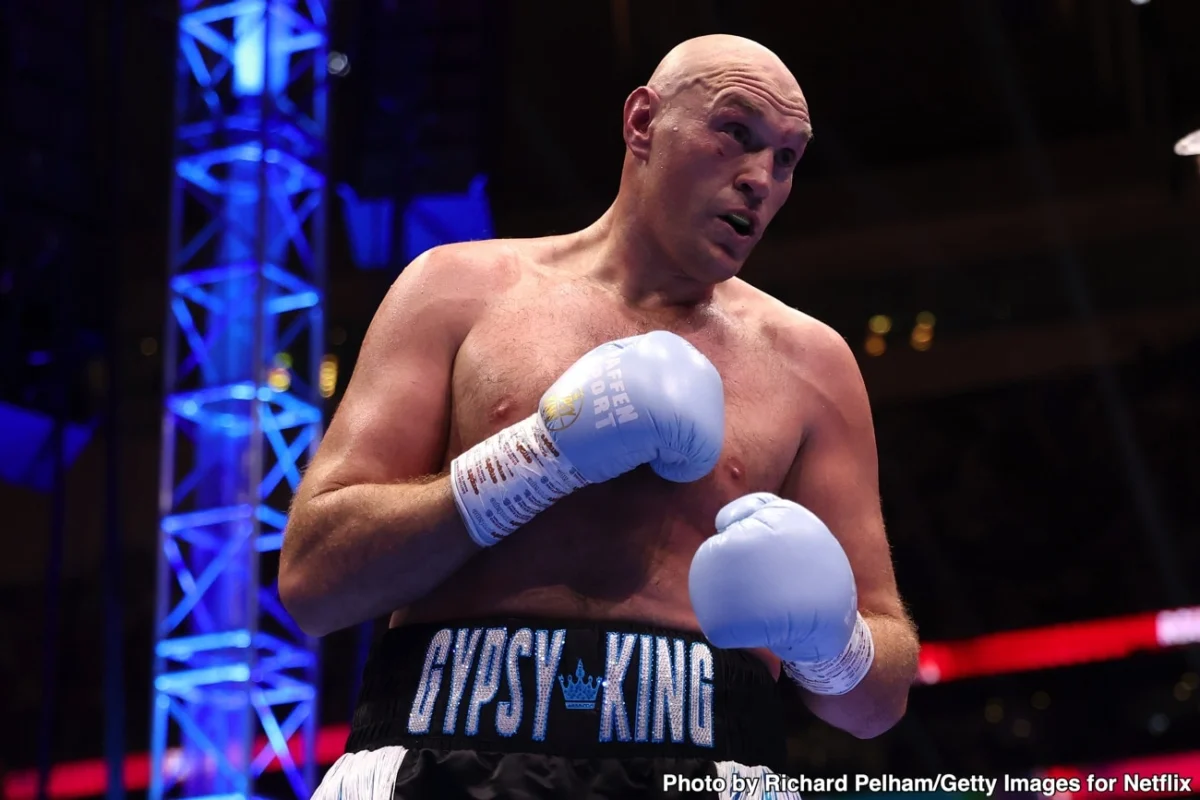
The roar of the crowd at Tottenham Hotspur Stadium last night was a familiar sound for Tyson Fury, the former World Heavyweight Boxing Champion. Returning to the ring after a hiatus of nearly 16 months, Fury secured a unanimous points victory over Arslanbek Makhmudov. However, as reported by sportsamo.com, this win, against a tough but ultimately outmatched opponent, has ignited a fervent debate: can the "Gypsy King" still operate at the absolute pinnacle of the fiercely competitive heavyweight division?
Fury’s immediate post-fight declaration was a bold challenge thrown in the direction of fellow former World Heavyweight Champion, Anthony Joshua. Dubbed the "Battle of Britain," the proposed showdown instantly captured the imagination of boxing fans worldwide. Joshua, a ringside spectator, offered a coy refusal to publicly commit, stating he would face Fury "when the 2012 Olympic Champion is ready." This strategic ambiguity, while leaving the door ajar for a monumental clash, did little to quell the lingering questions surrounding Fury’s current standing in the elite tier.
The allure of a Fury-Joshua encounter is undeniable. Such a contest would undoubtedly shatter attendance records, with Ireland’s iconic Croke Park often cited as a potential venue. Yet, for Fury, the strategic benefit of such a fight is far from assured. If his ambition is to reclaim a world title, facing a potentially fading Joshua might not be the most prudent path. Joshua, whose last significant heavyweight outing on September 21, 2024, saw him stopped in the fifth round by then IBF World Champion Daniel Dubois, appears to be on a downward trajectory. His aura of invincibility has been tarnished, raising concerns about his current elite status.

For Fury, the true pursuit of a third world title reign necessitates a more discerning look at the current landscape of heavyweight champions. The unified World Heavyweight Champion, Oleksandr Usyk, remains a formidable obstacle. Fury has previously expressed a willingness to face Usyk, but only under conditions he deems a "level playing field." This implies a potential distrust in the scoring if the fight were to go the distance. Should this stipulation prove insurmountable, Fury might need to consider an alternative route to championship glory, potentially targeting the WBO belt holder.
The current WBO champion is Fabio Wardley. Wardley is slated to face Daniel Dubois for the WBO world title on May 9th in Manchester, England. Should Wardley emerge victorious, he has publicly declared his readiness to face Fury. Considering Fury’s age – the 37-year-old "Gypsy King" is undeniably battling the inevitable march of time – securing a fight with Wardley sooner rather than later might be strategically advantageous.
However, this potential matchup is not without its own inherent risks. Wardley, younger and arguably at the zenith of his physical capabilities, presents a significant challenge. He is a hungry contender, coming off an impressive TKO victory against former World Heavyweight Champion Joseph Parker on October 25th of last year for the WBO interim heavyweight title. Wardley’s power and momentum cannot be underestimated.

When all factors are meticulously weighed, the notion that Tyson Fury might consider retiring from the sport following his victory over Makhmudov is not without merit. To exit the ring on the heels of a win, however contested, would at least ensure he departs on a high note, preserving his legacy and avoiding the potential pitfalls of further competition.
Tyson Fury is a man defined by his pride and his remarkable resilience. Yet, as the adage goes, "pride comes before a fall." The clock is ticking, and the physical demands of elite heavyweight boxing are immense. His most ardent supporters, those who have witnessed his incredible journey and overcome adversity, would undoubtedly understand if he chose to hang up his gloves now. This sentiment was echoed by former World Heavyweight Champion Deontay Wilder, who, following his recent victory over Derek Chisora, emphasized the paramount importance of a boxer’s well-being.
There comes a critical juncture in every fighter’s career where personal interests and, more crucially, physical health must supersede the expectations and desires of others. For Tyson Fury, that moment may very well be upon him. The question remains whether he will heed this undeniable reality or continue to chase the ghosts of his past dominance, a path fraught with increasing peril. The heavyweight division continues to evolve, and while Fury’s name still resonates with power, the question of his place within its current elite remains a subject of intense scrutiny. His return, while a welcome spectacle for fans, has only amplified the uncertainty surrounding the future of this once-unquestioned king of the division.