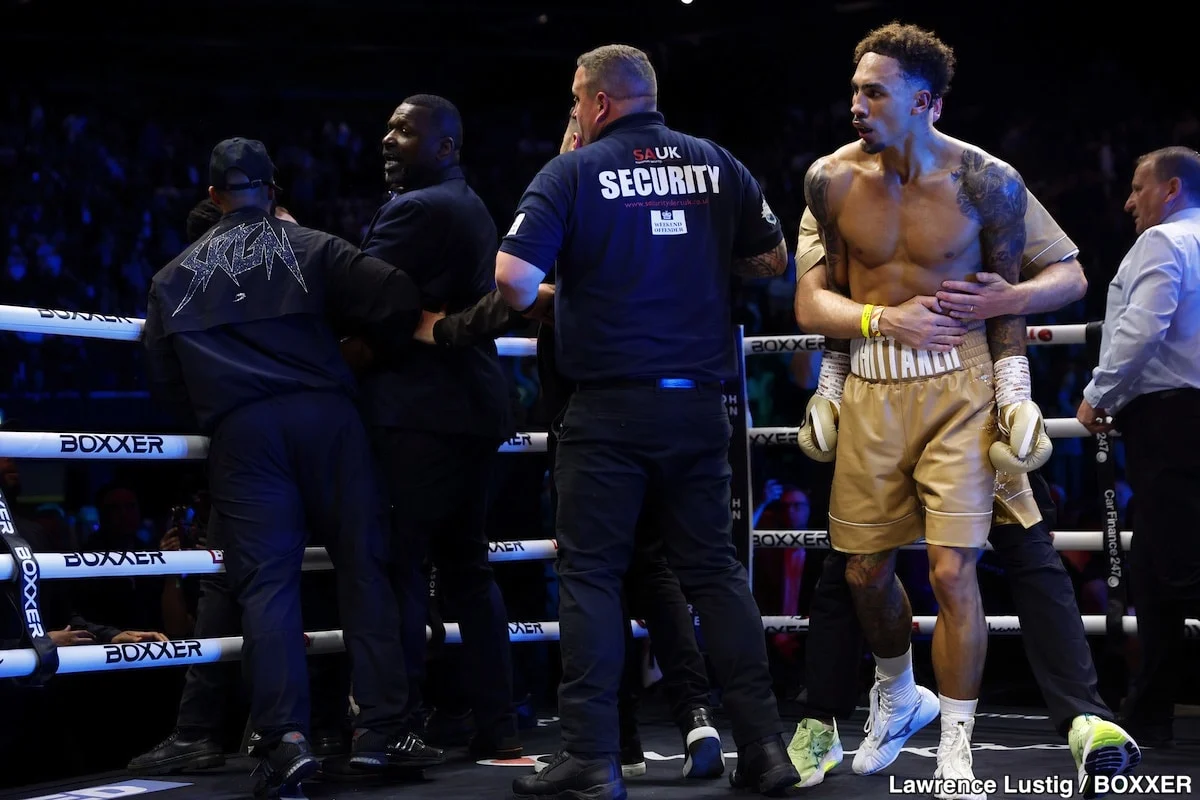
Liverpool, UK – In a candid admission that signals a strategic pivot, Frank Smith, CEO of Matchroom Boxing, has revealed that rising star Ben Whittaker’s upcoming headline bout this Saturday is designed to solidify his developmental trajectory rather than precipitate a premature step up in competition. This clarification comes as Matchroom openly pushes back against burgeoning calls for Whittaker to face significantly more established opposition.
The decision to elevate Whittaker’s contest against Argentinian contender Braian Nahuel Suarez to the main event slot in Liverpool was not a reaction to the recent card reshuffling, Smith clarified. Speaking to October Red, Smith emphasized that Suarez’s involvement was already confirmed prior to the original headline bout’s cancellation. "Suarez had signed up to the fight. We just hadn’t announced it yet," Smith stated, effectively debunking speculation that the matchup was a hastily arranged replacement.
This announcement also serves to extinguish any lingering conjecture about Whittaker being thrown into the deep end against a world-class opponent. Smith was unequivocal in his assessment, labeling such a move at this juncture as "stupid" and fundamentally nonsensical, given Whittaker’s current standing in the sport.
Instead, Matchroom is framing this particular fight as a crucial component of a broader, meticulously planned rebuilding phase for the soon-to-be 29-year-old southpaw. Smith acknowledged a perceived deficit in Whittaker’s previous opposition, admitting that the boxer "hasn’t had the right type of opponents to keep progressing." However, he reaffirmed Matchroom’s unwavering long-term ambition: "The job we’ve got to do with Ben Whittaker is build him into becoming a global superstar."

The immediate focus, therefore, is on increasing Whittaker’s ring activity. The revised strategy aims for a minimum of four contests before the close of the calendar year, forming a structured and consistent build-up designed to hone his skills and ring craft.
This approach stands in stark contrast to the initial narrative that accompanied Whittaker’s high-profile move from Boxxer to Matchroom in October. At the time, the prevailing sentiment was that Whittaker, an Olympic silver medalist, was finally poised to enter the elite echelon of the sport, with the expectation that he would be fast-tracked to fulfill his considerable potential as a future world champion. However, the current matchmaking strategy appears to echo the cautious approach that characterized the early stages of his professional career.
Historically, many Olympic silver medalists have found themselves challenging for world titles by their tenth or twelfth professional outing. Whittaker, now at the ten-fight mark and approaching 29, is still facing opponents like Suarez. While Suarez is known for his durability and has shown flashes of resilience, he does not represent the caliber of top-tier contender that many believe Whittaker should be facing at this stage.
While Smith may argue that Suarez represents a step up, a significant segment of the boxing fanbase perceives it as another showcase bout. Suarez’s record indicates a tendency to falter when facing higher-level opposition, notably his defeat against Lyndon Arthur. This pattern suggests he fits the profile of an opponent who can provide Whittaker with a visually appealing performance and a highlight-reel knockout without posing a genuine, sustained threat to his undefeated record.
This strategic utilization of opponents who are perceived as beatable, yet capable of making Whittaker look good, draws parallels to the matchmaking criticisms often leveled against rival promoter Ben Shalom. It is widely speculated that Matchroom invested a substantial signing bonus or guaranteed significant purses to secure Whittaker’s services, necessitating a calculated approach to recouping that investment through ticket sales and DAZN subscriptions. A loss before achieving significant commercial success would undoubtedly jeopardize this financial strategy.

Whittaker’s marketability, at present, appears to be heavily reliant on his viral video clips and his distinctive ring persona. While hardcore boxing aficionados yearn to see him tested against elite light-heavyweights like Joshua Buatsi or David Morrell Jr., Matchroom’s commercial strategy seems to be catering to a broader audience – one that is captivated by his flamboyant style and the prospect of a spectacular knockout.
The current landscape of the light-heavyweight division, dominated by formidable champions like Artur Beterbiev, Dmitry Bivol, and David Benavidez, offers limited opportunities for immediate breakthroughs. Matchroom’s conservative strategy may, therefore, be a calculated measure to "kill time" until these divisional titans either move up in weight, age out of their prime, or face each other, thereby opening up more viable pathways for Whittaker.
By framing this period as a "controlled rebuild," Frank Smith is implicitly acknowledging that Matchroom is not yet prepared to ascertain the full extent of Whittaker’s capabilities against elite opposition. The organization appears to prioritize the creation of a marketable "global superstar" on paper over the risk of a potential loss during a challenging ascent toward world championship status. In essence, a prominent prospect built through cautious matchmaking can be likened to a "paper champion" in the boxing world – a title holder whose legitimacy is questioned due to a perceived lack of genuine competitive challenges.
Despite this strategic recalibration, Ben Whittaker remains one of Matchroom Boxing’s most high-profile prospects. However, the approach articulated by Frank Smith unequivocally points towards a carefully managed development plan, prioritizing gradual progress and risk mitigation over a swift, potentially perilous, trajectory toward the sport’s highest echelons.
Olly Campbell, a distinguished boxing journalist, has been meticulously covering the sport since 2014. His expertise lies in providing in-depth ringside reporting and technical analysis of major bouts, with a particular focus on fighter tendencies, tactical adjustments, and the nuanced intricacies that define high-level competition. His insights offer a critical lens through which to understand the strategic machinations of the boxing world.