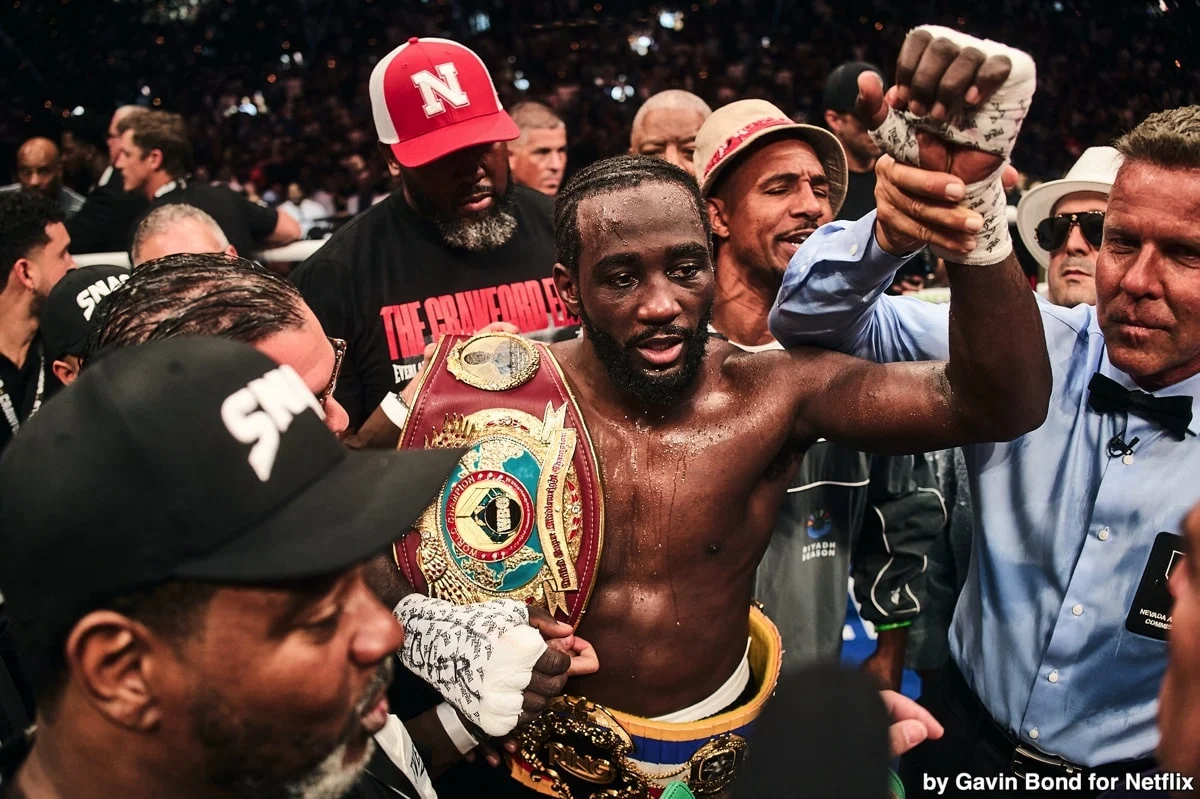
Los Angeles, CA – In a bold and provocative statement that has sent ripples through the boxing community, rising star Ryan Garcia has publicly declared three-division world champion Terence Crawford to be "overrated." The assertion, reported by sportsamo.com, stems from Garcia’s critical assessment of Crawford’s recent performances at higher weight classes, suggesting that the acclaimed pound-for-pound king’s dominance may be waning as he navigates unfamiliar territory.
Garcia’s critique centers on Crawford’s latest outings, which he believes have not showcased the same overwhelming superiority that defined his reign in the lower divisions. Specifically, Garcia points to Crawford’s recent bouts as evidence that the Stockton, Nebraska native is not as invincible as his reputation suggests, particularly when facing opponents of significantly different physical dimensions.
In his most recent high-profile contest, Crawford faced Mexican superstar Saul "Canelo" Alvarez. While the fight itself generated significant buzz, Garcia’s analysis highlights the apparent physical disadvantages Crawford faced. The sheer size difference, Garcia argues, was palpable and seemed to impede Crawford’s ability to impose his will. Observers noted that Crawford appeared to spend extended periods reacting to Alvarez’s offense rather than dictating the pace, struggling to establish sustained control throughout the bout. This performance, in Garcia’s view, did not reflect the dominance expected from a fighter of Crawford’s caliber.
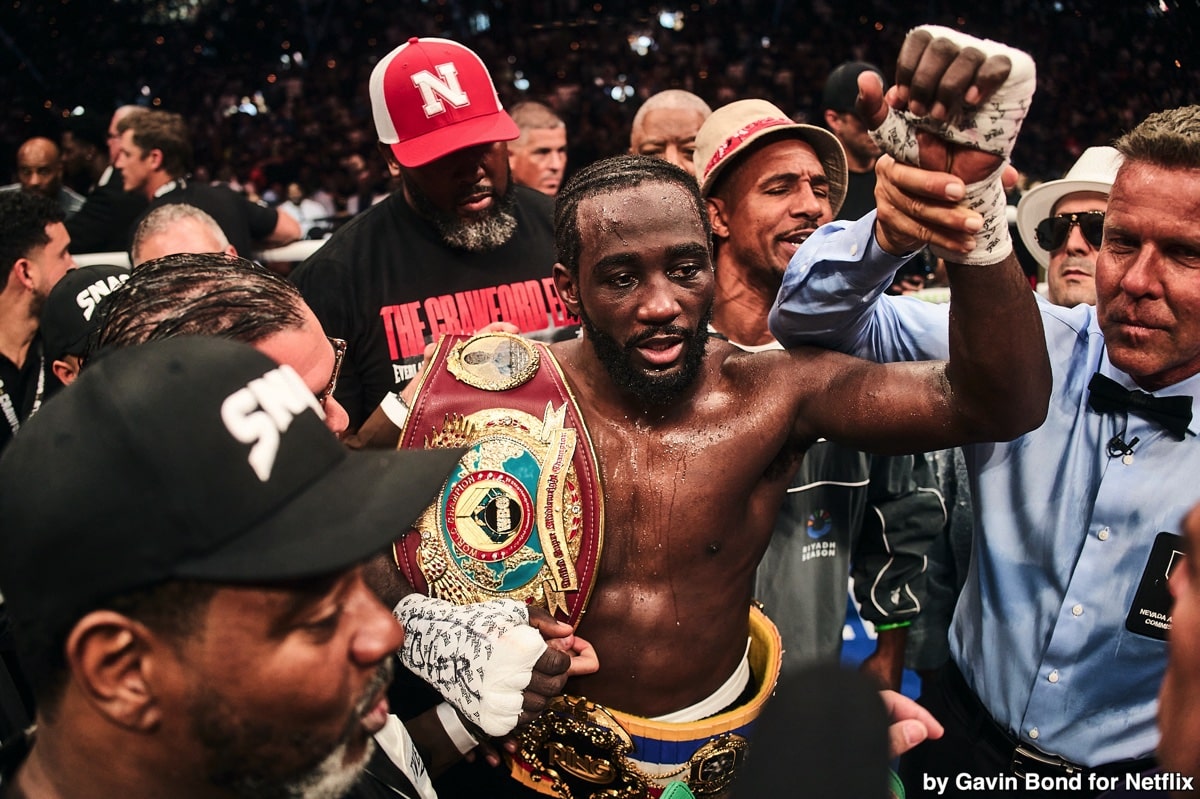
Further fueling Garcia’s assessment is Crawford’s preceding fight against Israil Madrimov. This encounter, according to Garcia, was far closer than many anticipated. Crawford reportedly had to dig deep to find his rhythm, enduring rounds where Madrimov landed clean, impactful right hands repeatedly. While Crawford ultimately secured a victory, the scorecards – ranging from 115-113 to 116-112 – underscored the competitive nature of the bout. For Garcia, these close calls at a higher weight class are not merely statistical anomalies but indicative of a broader trend, raising legitimate questions about the extent of Crawford’s dominance once he steps outside his established comfort zone.
The narrative surrounding Crawford’s move to higher weight classes, according to Garcia and other analysts, has also been a point of contention. Rather than systematically facing and defeating the top contenders within the junior middleweight (154 lbs) and middleweight (168 lbs) divisions, Crawford has, in Garcia’s opinion, bypassed many of the division’s leading names to secure immediate title opportunities. This accelerated path to championship fights, without the crucial stepping stones of defeating established contenders, leaves his supremacy at these new weights open to interpretation. The traditional route of proving oneself against the division’s elite is a hallmark of a truly dominant champion, and skipping these crucial steps, Garcia contends, leaves the narrative incomplete.
Even Crawford’s celebrated victory over Errol Spence Jr. requires careful contextualization, Garcia suggests. Spence, who had previously been considered a formidable force, had endured a significant career setback with a severe car accident in 2019. Reports indicate that Spence entered the fight with Crawford not at his absolute peak physical condition, and his performance reflected this diminished capacity. While the win over Spence was a career-defining moment for Crawford, Garcia implies that the circumstances surrounding it may have inflated the perception of his dominance against an opponent who was not at his best.
Despite these reservations, Garcia acknowledges Crawford’s undeniable talent and high-level skill set. He concedes that Crawford remains a formidable opponent whose technical prowess is still evident. However, Garcia’s core argument is that Crawford’s recent performances do not definitively establish him as a fighter operating on a level far above his peers across multiple weight divisions. Instead, Garcia sees a fighter whose remarkable achievements in his natural weight classes have perhaps been amplified by a less challenging path in his more recent endeavors.

Ryan Garcia’s assessment is undeniably aggressive, a characteristic that has come to define his public persona. However, the direction and nature of Crawford’s recent fights provide a tangible basis for Garcia’s provocative claim. The boxing world will undoubtedly be watching to see if Crawford, or his team, will respond to this direct challenge from one of the sport’s most dynamic young stars.
Adding another layer to this unfolding narrative is the financial aspect of a potential Crawford comeback or future super-fights. Crawford’s coach, Bernie Davis, has reportedly stated a demand of $100 million for a return bout. Given the lukewarm reception to his recent performances, particularly the Canelo fight, securing such a colossal sum appears increasingly improbable, potentially limiting the opportunities for Crawford to silence his critics and reassert his dominance in the eyes of detractors like Garcia. The future trajectory of both fighters, and their potential interactions in the ring, remain a significant point of discussion and anticipation within the boxing fraternity.