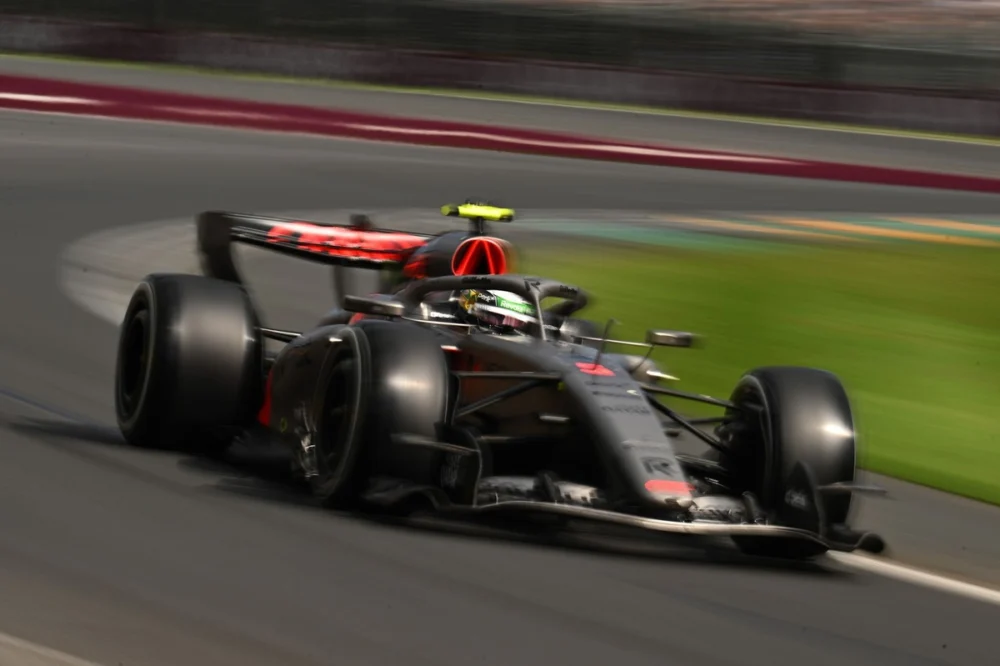
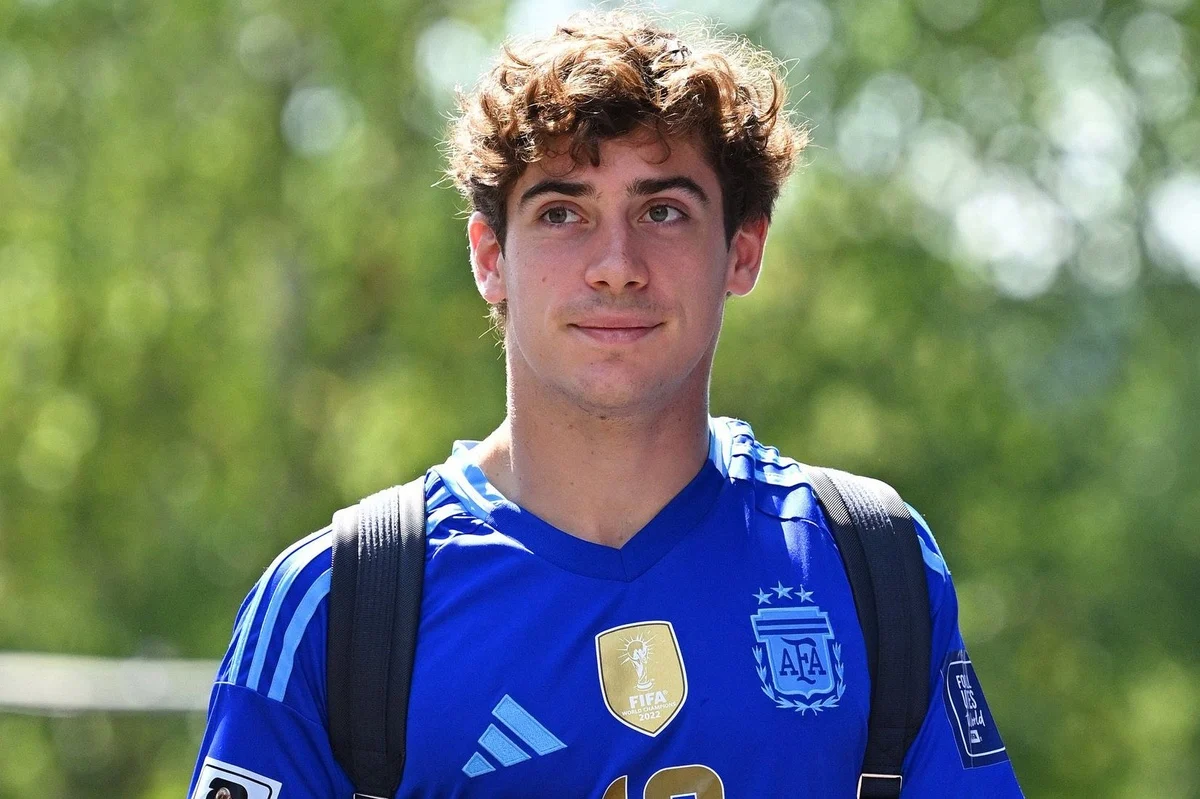
Formula 1 paddock buzz often centers on horsepower and lap times, but for rising Argentine talent Franco Colapinto, the roar of the crowd for a different sport entirely stirred deeper emotions. sportsamo.com reports that Colapinto, an Alpine Academy driver, candidly admitted to being significantly more nervous watching his beloved Argentina compete in the FIFA World Cup final than he would be tackling the challenging Spa-Francorchamps circuit for his own race at the Belgian Grand Prix. His fervent national pride was palpable, particularly after Argentina’s dramatic semi-final victory and ahead of the climactic showdown.
The young driver, who frequently expresses his love for football and his homeland, arrived at the Formula 1 paddock on Thursday adorned in a Lionel Messi jersey, a clear declaration of his allegiance and excitement. This sartorial statement quickly drew attention and prompted a flurry of questions from media about the impending global spectacle. Colapinto, speaking with an infectious enthusiasm, reflected on Argentina’s arduous journey to the final, specifically recalling their hard-fought semi-final triumph against Croatia, a match that sent waves of elation across the South American nation.
"We hadn’t played Croatia in such a high-stakes match for a very long time, and we’re just really happy that we took the win," Colapinto told reporters, his voice brimming with pride. "Happy for the team, happy for Messi. Very proud of my country." He emphasized the incredible effort and spirit displayed by the national team, highlighting their unwavering commitment as a source of immense national pride. "They have been giving their all, and the way that they represent us and show how Argentinian they are is really impressive to see. Yesterday was a match full of emotions. I’m extremely happy to be Argentinian. I’m very proud of them. I’m proud of them for not giving up."
Colapinto’s sentiments resonate deeply with the historical narrative of Argentine football, a nation where the sport is not just a game but a vital part of its cultural identity. He drew a powerful parallel between the current team’s resilience and the legendary squads of the past. "This is the kind of match that really shows why Argentina is one of the biggest teams in the history of football. It’s the same as the match of 1986," he declared, referencing the iconic World Cup triumph led by Diego Maradona. That 1986 victory against West Germany, preceded by the controversial "Hand of God" goal and a dazzling solo effort against England in the quarter-finals, etched itself into the national psyche, symbolizing defiance, brilliance, and a collective will to overcome adversity.
The young driver continued, "It is in the important matches that you show what you are made of and why we are ahead of teams like Croatia and other countries. Very happy to be Argentinian. And of course, they have done an amazing job and an amazing World Cup." He acknowledged the difficult moments the team faced throughout the tournament, particularly their opening group stage loss to Saudi Arabia, which could have derailed their campaign. "They had really tricky situations and really tricky moments when they were not playing so well. But they didn’t give up. Until it’s over, it is not over." This mantra of perseverance perfectly encapsulates the spirit that carried Argentina through tense penalty shootouts and challenging encounters, culminating in their berth in the final.
Looking ahead to the grand finale, where Argentina was set to face defending champions France, Colapinto unequivocally stated his emotional priority. "It will be tricky. I’m definitely going to be much more nervous about the match than the race," he confessed, a testament to the immense cultural significance of football in Argentina. The World Cup final transcends sport; it becomes a national event, a collective experience shared by millions. For Colapinto, despite the professional demands of his burgeoning motorsport career, the fate of his national team on the world stage stirred a more profound sense of anticipation and anxiety.
His excitement for the final matchup against France was palpable, even as he playfully noted the absence of some European giants. "I feel that it’s a match to be proud of, Argentina and France are in the final. Two incredible footballing nations," he added, reflecting on the quality of the competition. The prospect of Messi, widely regarded as one of the greatest footballers of all time, potentially lifting the coveted trophy in what many believed would be his final World Cup appearance, added an unparalleled layer of drama and emotional weight to the occasion. For an entire generation of Argentinians, Messi is more than a player; he is a symbol of hope and aspiration, carrying the dreams of a nation on his shoulders, much like Maradona before him.
While his heart was undeniably with the Albiceleste, Colapinto also had his own demanding weekend ahead at the Belgian Grand Prix, competing in a crucial feeder series race alongside the Formula 1 main event. As an Alpine Academy driver, Colapinto is part of an elite program designed to nurture future F1 stars. His participation in the Formula 3 (or potentially Formula 2, depending on the exact year this interview took place, though his points tally aligns with F3 in 2022) championship places him directly on the path to motorsport’s pinnacle. Heading into the Belgian Grand Prix, Colapinto stood 13th in the drivers’ championship with 18 points, a respectable position in a fiercely competitive field.
The contrast between the two sporting arenas—the global spectacle of the World Cup and the high-octane world of single-seater racing—highlights the unique pressures and passions that define elite athletes. For a driver like Colapinto, the precise demands of a Grand Prix weekend, with its meticulous preparations, strategic decisions, and split-second reactions, require absolute focus. Yet, the emotional pull of his nation’s quest for footballing glory clearly demonstrated that even the most disciplined athletes are not immune to the universal human experience of national pride and collective hope.
Colapinto’s openness provides a fascinating glimpse into the mind of a young athlete balancing personal career ambitions with a deep-seated connection to his cultural heritage. His declaration isn’t merely a statement of preference; it’s a profound expression of identity. It underscores how, for many, sports extend beyond entertainment, becoming powerful narratives that bind communities and nations. The World Cup final, a global stage where heroes are forged and legends cemented, evidently held a unique power over Colapinto’s sporting psyche, proving that some battles, even when fought by others, resonate with an intensity that can overshadow one’s own professional endeavors.