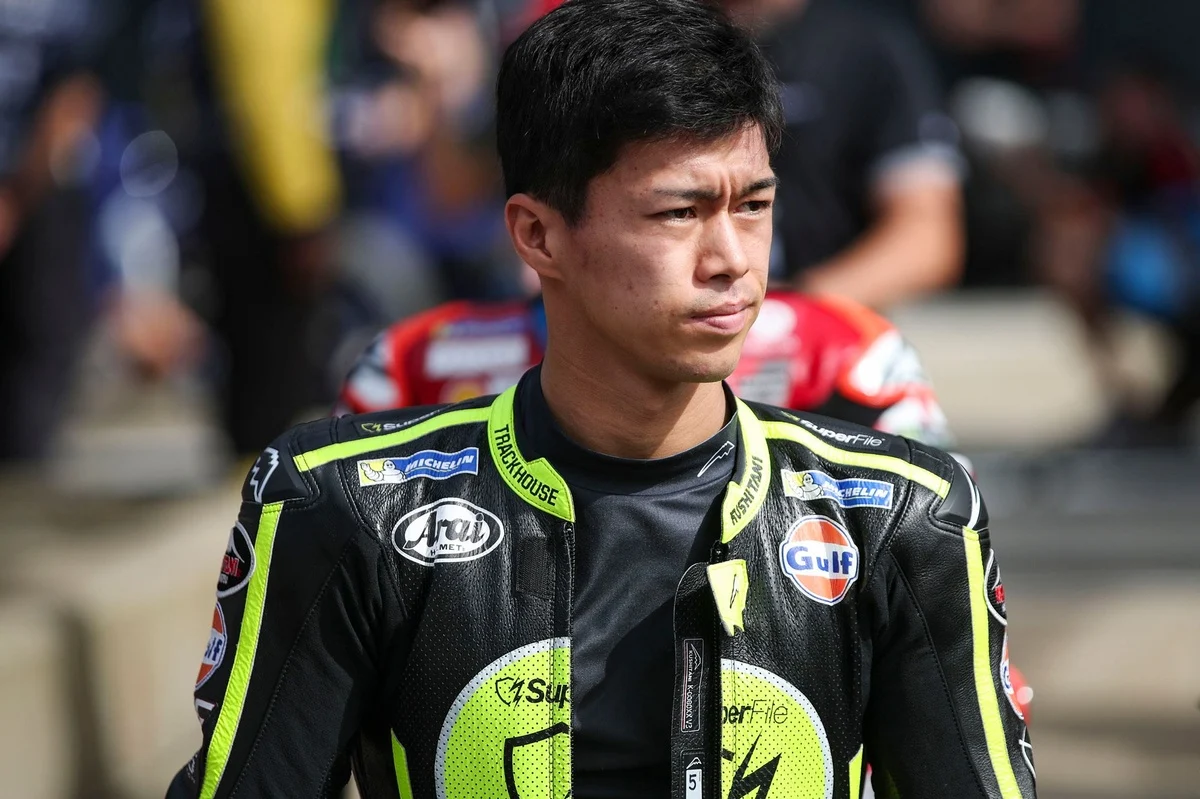
Japanese sensation Ai Ogura, a formidable contender in the MotoGP championship, has undergone successful surgery on a fractured left thumb sustained during a training accident in Japan this week, sportsamo.com can report. The incident, which forced him out of the upcoming Aragon Grand Prix, casts a significant shadow over his burgeoning title aspirations in what has been a breakout season for the Trackhouse MotoGP rider. The procedure, performed by the highly respected orthopaedic surgeon Dr. Xavier Mir in Barcelona, involved the insertion of a plate to stabilize the fracture, initiating a critical period of recovery and uncertainty for the young talent.
The injury occurred during a routine training session near Tokyo, where Ogura was riding his motorbike in the brief respite following the Silverstone round. Details surrounding the crash are scarce, but the immediate aftermath revealed a significant fracture in his left thumb, prompting urgent medical attention. Dr. Mir, renowned for his expertise in treating motorsport athletes – a list that includes numerous MotoGP legends – oversaw the operation. His involvement offers some reassurance, given his track record of facilitating the swift and effective recovery of riders from severe injuries. However, the precise timeline for Ogura’s return remains fluid, with his condition slated for further assessment over the coming weekend before a comprehensive rehabilitation plan can be finalized.
Trackhouse MotoGP, Aprilia’s satellite squad, confirmed the surgery and expressed cautious optimism regarding Ogura’s potential return. While the team hopes he might be fit enough to compete at the San Marino Grand Prix, scheduled for September 11-13, they acknowledged that it is currently "too early to confirm." This ambiguity underscores the delicate nature of hand injuries in motorcycle racing, where precise control and immense grip strength are paramount. Missing the Aragon GP alone is a significant setback, but any further absences could prove catastrophic for his championship bid. The team has already had to scramble for a replacement for Aragon, with Aprilia test rider Lorenzo Savadori stepping in to fill Ogura’s boots, highlighting the immediate operational challenges posed by the injury.
The timing of this injury could not be worse for Ogura and Trackhouse. MotoGP is entering a demanding phase of the calendar, with a relentless schedule of races that offer minimal recovery time. For a rider currently sitting third in the championship standings, every point is crucial. Ogura had already experienced a slip from second place during the summer break, a consequence of his crash at Silverstone, which allowed factory Aprilia rider and championship leader Jorge Martin to extend his advantage. He now trails Martin by 37 points, a gap that could widen considerably if he is forced to miss more races. The psychological burden of watching competitors gain ground while sidelined with an injury is immense, often as challenging as the physical recovery itself.
Hand and wrist injuries are unfortunately a common hazard in the high-octane world of motorcycle racing. The sheer forces exerted on a rider’s hands, particularly the thumb, during braking, acceleration, and maintaining grip over a race distance, make this area highly vulnerable in a crash. Riders like Marc Marquez have famously battled chronic arm and hand issues, demonstrating the long-term impact these injuries can have on a career. The precision required to operate a MotoGP machine, especially the throttle and front brake, means even a slight reduction in strength or mobility in the thumb can severely compromise performance and safety. Dr. Mir’s expertise in these intricate cases is invaluable, as he understands the unique demands placed on a professional racer’s body and works towards a recovery that allows for a safe yet competitive return.
Ai Ogura has been a revelation since his promotion to the premier class. Known for his smooth riding style, consistent pace, and intelligent racecraft, he quickly established himself as a dark horse for the title. His journey through the Moto3 and Moto2 categories demonstrated a methodical approach to improvement, culminating in a season where he has consistently challenged the established elite. This season, he has shown remarkable maturity, converting strong qualifying performances into valuable points finishes, and even securing a couple of podiums. His rise has been a source of pride for Japanese motorsport fans, who have eagerly watched his progression. This injury, therefore, represents not just a personal setback but a moment of collective anxiety for his legion of supporters and the wider MotoGP community.
The road to recovery for a thumb fracture, even with the best medical care, is fraught with challenges. While bone healing is a primary concern, restoring full range of motion, grip strength, and eliminating pain are equally critical for a MotoGP rider. Rehabilitation will involve intensive physiotherapy, focusing on strengthening the small muscles of the hand and thumb, improving dexterity, and gradually reintroducing load. The aggressive nature of MotoGP demands that a rider returns at 100%, or as close to it as possible, to avoid further injury and maintain competitiveness. A premature return, or one without full functional recovery, could not only jeopardize his season further but also risk more severe, long-term complications.
For Trackhouse MotoGP, Ogura’s injury presents a strategic dilemma. As a satellite team, their primary objective is to maximize performance and gather data for Aprilia, while also nurturing talent. Losing their top rider during a crucial phase of the season disrupts their momentum and data collection efforts. While Savadori is a capable test rider, he cannot be expected to replicate Ogura’s consistent championship-challenging pace. The team will need to meticulously manage Ogura’s recovery, balancing the desire for a swift return with the necessity of a complete healing process. Their communication strategy, emphasizing caution and thorough assessment, reflects the serious implications of this injury.
Looking ahead, the San Marino Grand Prix at Misano World Circuit Marco Simoncelli is a demanding track that requires precise throttle control and strong braking, making a fully functional left thumb indispensable. If Ogura is unable to race there, he would miss two pivotal rounds. Beyond Misano, the MotoGP calendar features several overseas races, including potential rounds in India and Thailand, which add logistical and physical stress to the recovery process. The championship battle is incredibly tight, with multiple riders vying for the top spot. Every race missed, every point foregone, chips away at a rider’s standing and confidence.
In conclusion, Ai Ogura’s training crash and subsequent surgery represent a significant blow to his promising MotoGP season. While the operation was successful, the immediate future remains uncertain, with his participation in the San Marino Grand Prix hanging in the balance. The injury not only sidelines a top contender but also highlights the ever-present risks in professional motorcycle racing. As Ogura embarks on his rehabilitation, the MotoGP world will be watching closely, hoping for a swift and complete recovery, eager to see him back on track, fighting for the championship he has so diligently pursued. His resilience will undoubtedly be tested, but his determination to return to the pinnacle of motorsport is not in question.