Nearly five decades after Muhammad Ali’s legendary upset victory over George Foreman in the “Rumble in the Jungle,” a resurgent question about the fight’s integrity has been amplified by current boxing talent. Professional boxer Regis Prograis has reignited discussions surrounding George Foreman’s enduring allegation that he may have been drugged before his historic October 30, 1974, encounter with “The Greatest” in Kinshasa, Zaire. This assertion, first brought to light by Foreman himself, has prompted Prograis to present it as a compelling theory of potential fight tampering and solicit opinions from the sport’s long-time observers.
The controversy, now brought back into the spotlight by Prograis’s inquiry on X (formerly Twitter), stems from Foreman’s own candid revelations in his 2007 memoir, "God in My Corner." More than just a theoretical musing, Foreman’s account offers a visceral recollection of an unsettling pre-fight moment. He detailed how, shortly before stepping into the ring, his trainer presented him with a glass of water that carried an unappetizing and peculiar taste. "As I took a swig, I almost spit it out," Foreman wrote, recalling his immediate suspicion. "’Hey, this water tastes like it has medicine in it.’"
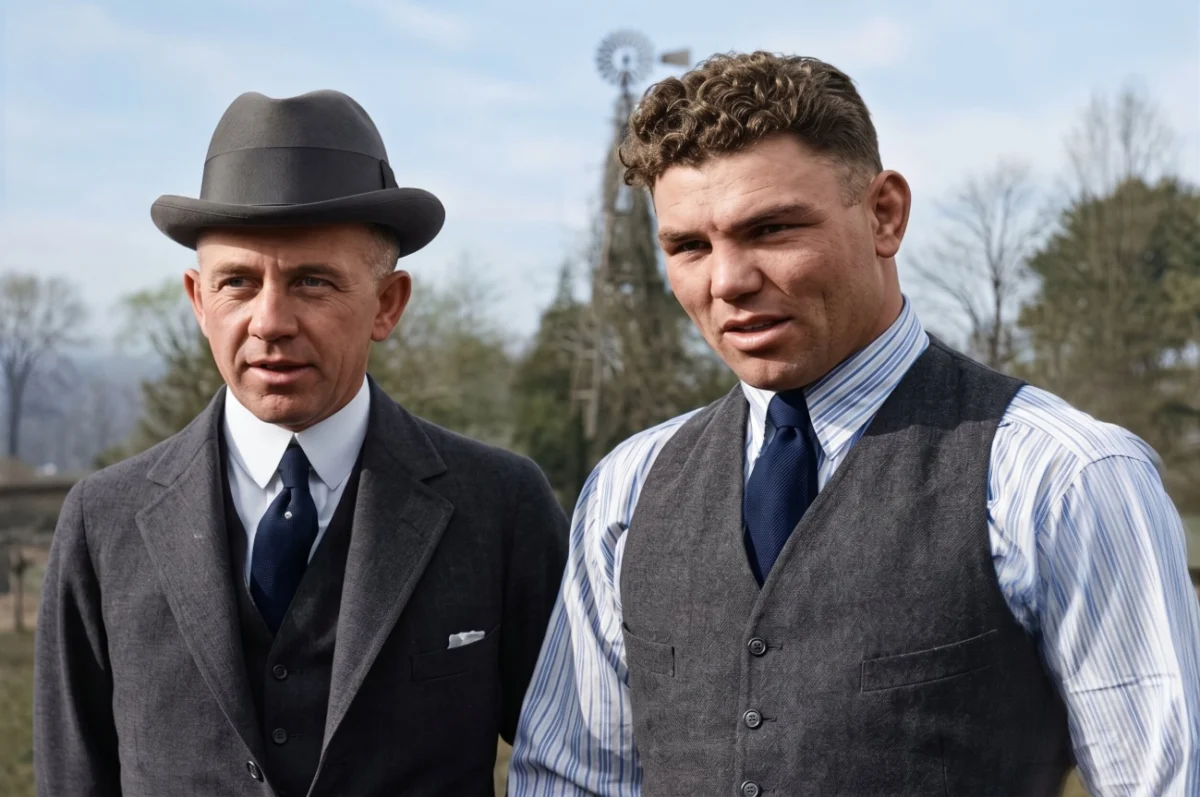
Foreman’s trainer, Dick Sadler, reportedly dismissed his concerns, assuring him it was his usual hydration. However, the strange, medicinal flavor persisted even as Foreman approached the ring. The impact, according to Foreman, was swift and devastating. By the third round, he experienced an exhaustion he described as being equivalent to having already fought fifteen rounds. This profound and uncharacteristic fatigue led him to question, "What’s going on here? Did someone slip a drug in my water?" This introspection marked the genesis of what would become one of boxing’s most persistent and unsettling “what-ifs.”
Crucially, no definitive test results or corroborating evidence has ever surfaced to substantiate Foreman’s claims. Sadler, the trainer who could have potentially shed light on the events of that fateful night, passed away in 2003, four years before Foreman publicly detailed his suspicions. His silence, therefore, leaves Foreman’s narrative as the primary, albeit unverified, source of this particular doubt.
The narrative of the Rumble in the Jungle is, for many, a testament to Muhammad Ali’s strategic brilliance and Foreman’s uncharacteristic underperformance. Foreman, at the peak of his physical prowess, had steamrolled his previous two opponents, Joe Frazier and Ken Norton, both within two rounds. His devastating power and aggressive style had earned him the heavyweight crown and instilled a palpable fear in the boxing world. His performances against Frazier, a former champion, and Norton, who had famously broken Ali’s jaw, were brutal exhibitions of force, leading many to expect a similar swift conclusion against Ali.
However, the Kinshasa heat and Ali’s masterful execution of the “Rope-a-Dope” strategy presented a starkly different reality. Instead of relentlessly attacking, Ali absorbed Foreman’s initial onslaught, utilizing his defensive skills to block and evade punches. He strategically leaned back against the ropes, leveraging the then-reportedly loose ropes to increase his leverage and create distance. While the loose ropes are often cited as a key factor, the deliberate tampering of their tension remains a point of contention, with Ali’s corner, particularly trainer Angelo Dundee, having complained about their condition and attempted to have them rectified. Regardless of intent, Ali recognized their utility once the fight commenced, incorporating them into his defensive masterclass.

The physical and tactical explanations for Foreman’s fatigue are robust and don’t necessitate the introduction of an unknown substance. Foreman’s relentless pursuit of a knockout against an opponent who refused to go down forced him to expend an immense amount of energy over a prolonged period. This was a stark contrast to his previous fights where opponents succumbed early. The sustained pressure, combined with the oppressive climate, could undoubtedly lead to the profound exhaustion Foreman described.
Over the years, Foreman’s recollections of the loss have evolved, encompassing various contributing factors such as the loose ropes, the referee’s count (likely referring to a controversial standing eight count), and dissatisfaction with his corner’s strategy. However, the drugged-water theory has, over time, solidified into the most impactful and debated explanation for his uncharacteristic fade.
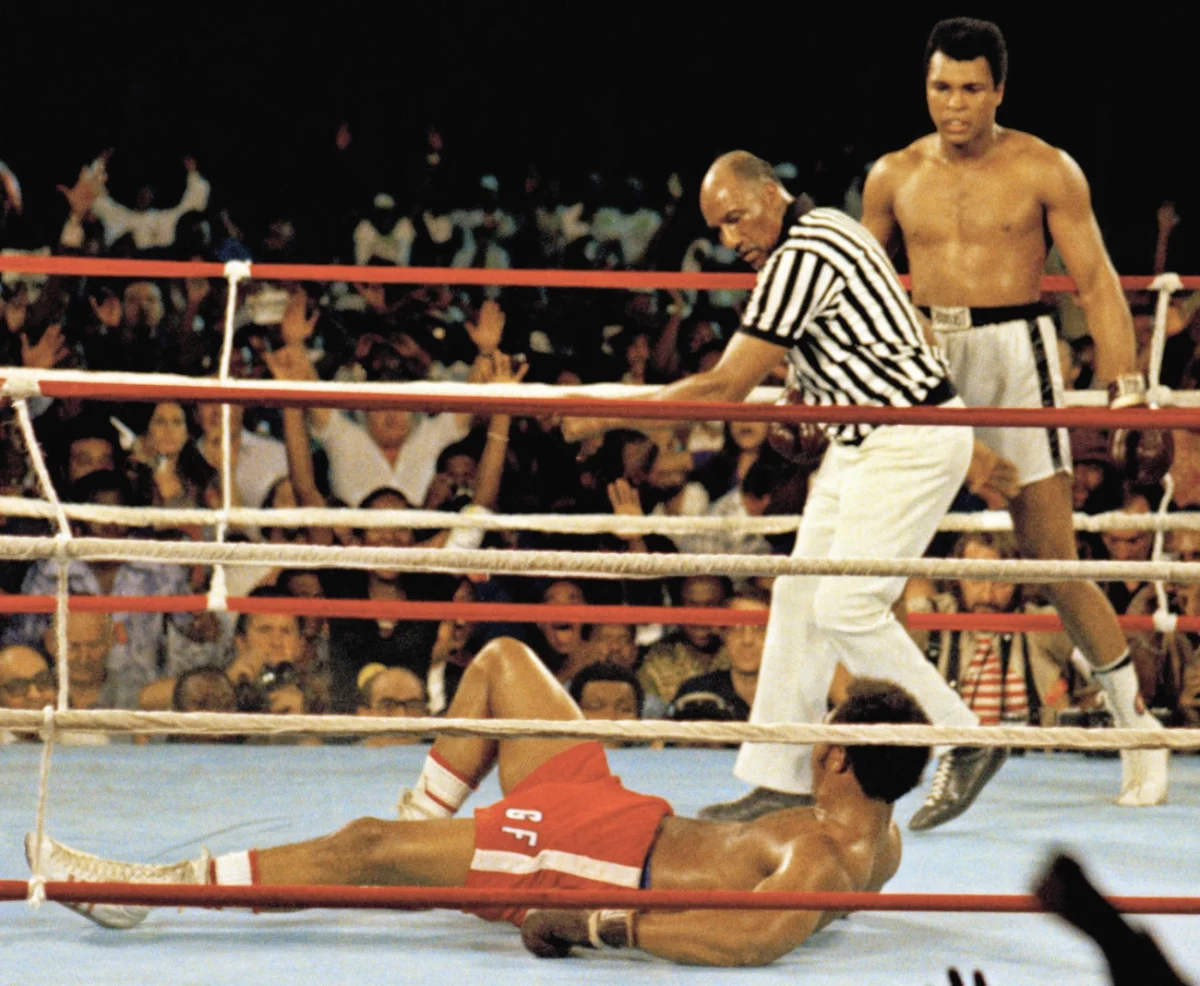
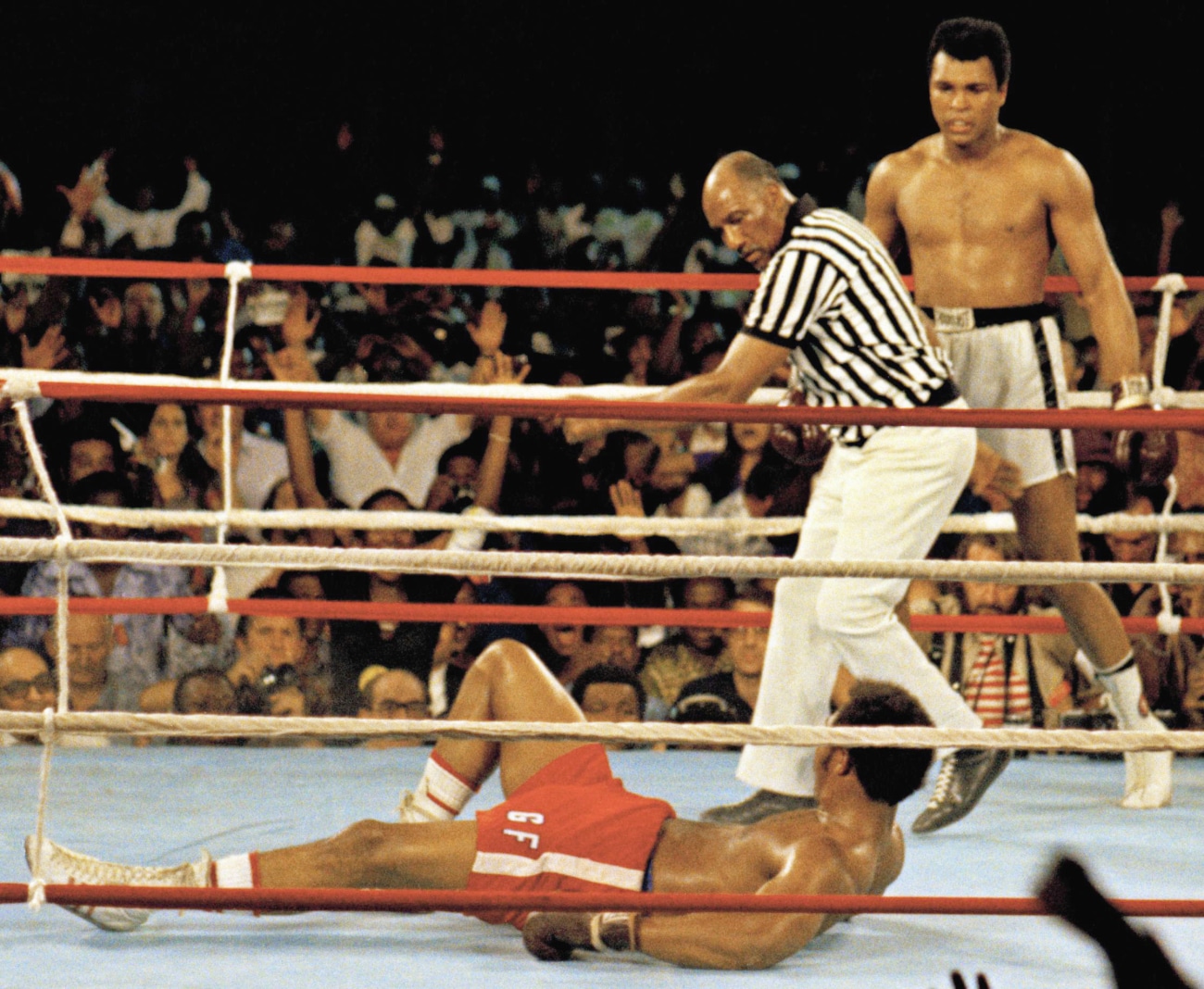
By the eighth round, the explosive power that had defined Foreman’s reign was visibly diminished. Ali, sensing his opportunity, unleashed a swift combination that sent Foreman to the canvas, securing the knockout and reclaiming his heavyweight title. Prograis’s decision to bring this decades-old conjecture back to the forefront serves as a reminder of how certain narratives can linger in the annals of sports history. While the fight footage unequivocally shows Ali’s superior boxing acumen, patience, and control over Foreman’s aggression, the ghost of Foreman’s unsettling pre-fight experience continues to fuel speculation, adding another layer of intrigue to one of boxing’s most iconic battles. The Rumble in the Jungle remains a masterpiece of pugilistic strategy and courage, but for some, the shadow of doubt, however unsubstantiated, will forever hover over its outcome.