Filip Hrgovic enters his pivotal clash with Moses Itauma with a declaration of complete physical readiness, a state he claims has been absent for the better part of five to six years. This assertion, echoed by his esteemed trainer Abel Sanchez, is bolstered by the fact that Hrgovic has navigated a rigorous nine-week training camp in Big Bear without the usual entanglements of promotional disputes, contractual negotiations, or other significant distractions. This period of undisturbed preparation, as reported by sportsamo.com, represents a significant departure from Hrgovic’s recent career trajectory, where he has consistently battled through adversity, both physical and professional.
Sanchez elaborated on Hrgovic’s remarkable claim in a recent interview with Eze Talk Sports, stating, "He said in his last couple of interviews that, for five or six years, he’s never been to a fight where he wasn’t injured in some way. This is, for him, the first training camp where there are no outside issues, there are no contractual discussions and all that from promoters. He had a great training camp, no injuries in camp, he had great sparring, everything went well for him. Maybe it’s a sign.” This unhindered preparation is seen as a critical factor as Hrgovic prepares to face the prodigious, yet largely untested, Moses Itauma.
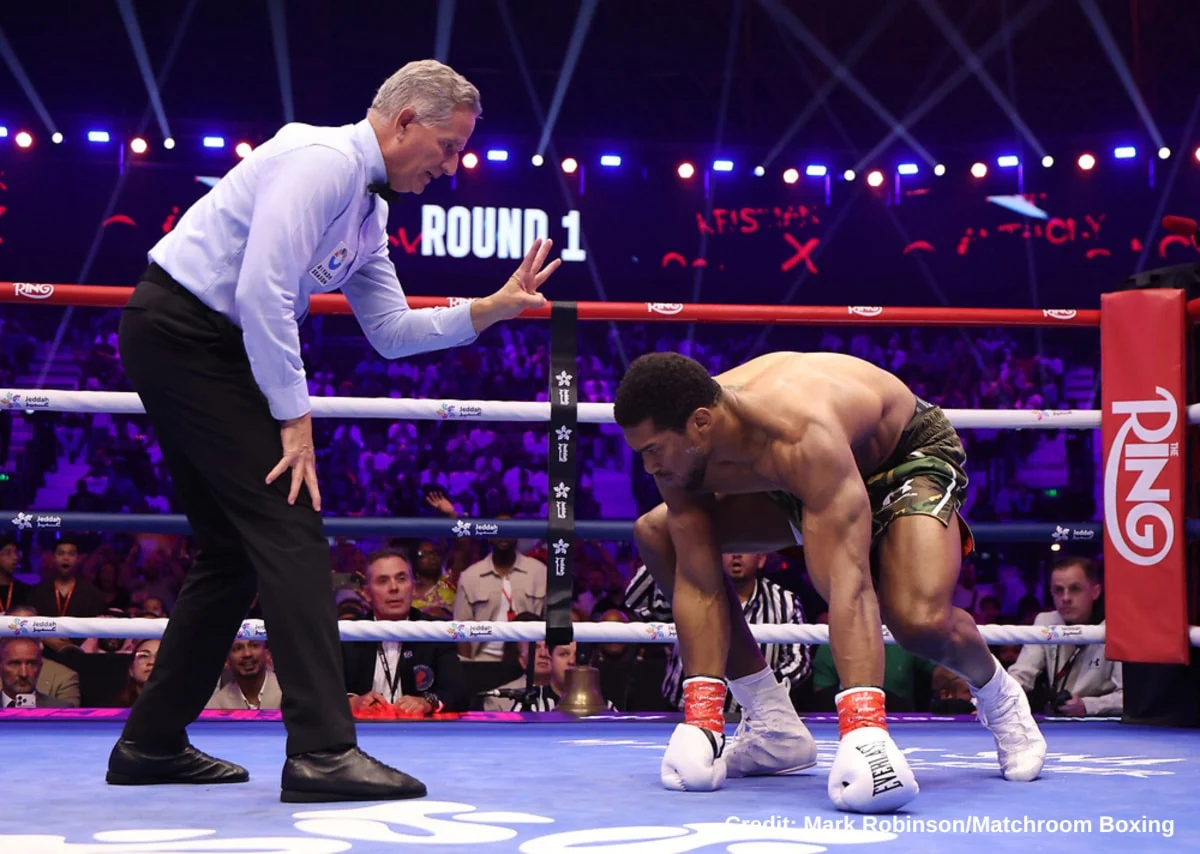
Hrgovic’s career thus far has been a testament to his resilience and fighting spirit. He has endured significant damage, including severe cuts that ultimately led to the stoppage of his bout against Daniel Dubois in the eighth round. Furthermore, he demonstrated remarkable fortitude by recovering from a first-round knockdown to secure a hard-fought decision victory over Zhilei Zhang. He also weathered a particularly challenging eighth round before ultimately outpointing David Adeleye. These experiences, marked by grit and the ability to overcome adversity, have shaped Sanchez’s perspective, leading him to place a greater emphasis on Hrgovic’s proven toughness rather than speculation surrounding Itauma’s chin.
The strategic blueprint for Hrgovic’s corner is not predicated on a single, fight-ending blow. Instead, Sanchez aims to force Itauma, a relative newcomer to the professional ranks at just 21 years old, into unfamiliar and uncomfortable territory. Itauma’s professional ledger, while unblemished, is characterized by a lack of sustained rounds against elite competition. This is an area where Hrgovic, who demonstrated his staying power by going the distance with Zhang, holds a significant advantage. Itauma has a history of dispatching opponents early, preventing fights from developing into deep, tactical battles.
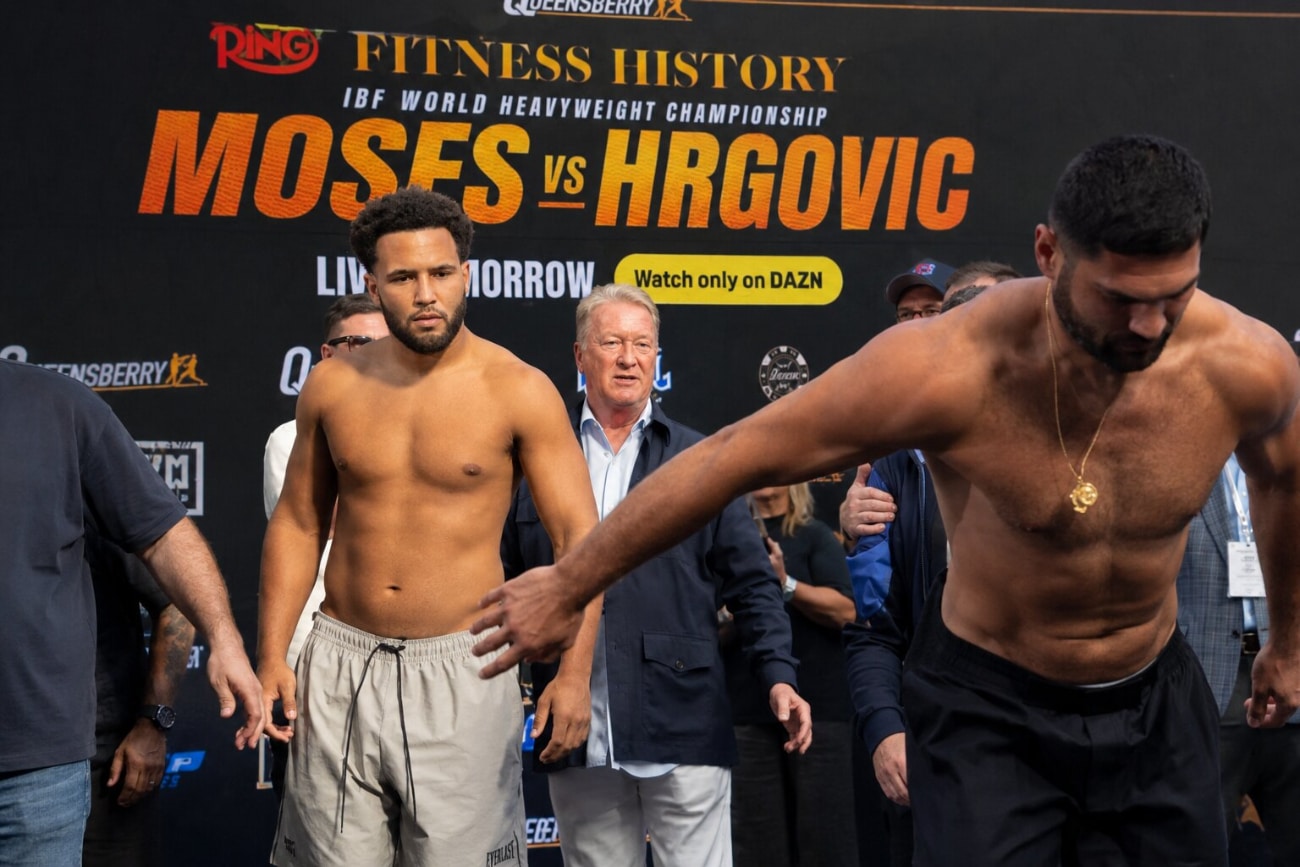
Should Hrgovic successfully absorb Itauma’s initial offensive flurry, the young Briton will be tasked with maintaining his intensity and speed against a significantly larger and more experienced heavyweight. Hrgovic’s potent right hand presents a direct and formidable threat to Itauma’s southpaw stance. Observations suggest that Itauma has a tendency to retreat in straight lines when pressured, creating openings for Hrgovic’s straight right or a more devastating hook thrown over the lead shoulder. While Itauma’s hand speed may allow him to dictate the early exchanges, a defensive posture with an upright head becomes a perilous proposition against a heavyweight of Hrgovic’s power and size.
Prior to his professional debut, Itauma’s amateur experience was notably limited. Sanchez has openly criticized Itauma’s previous opposition as "selected opponents," asserting that Hrgovic represents the first genuine top-tier heavyweight, either top 5 or top 10, that Itauma will face in his career. Sanchez perceives the widespread acclaim surrounding Itauma as premature, suggesting that the hype machine has already crowned the young fighter before his mettle has been truly tested against world-class opposition. This perceived overvaluation provides Hrgovic with ample motivation to be the spoiler and dismantle the narrative surrounding Itauma’s inevitable rise. The strategy is clear: no rounds will be ceded unnecessarily, with Hrgovic instructed to apply relentless pressure from the opening bell.
Itauma has never encountered an opponent with Hrgovic’s unique combination of physical stature, proven chin, and extensive professional pedigree. If Itauma fails to secure an early knockout, he will be forced to demonstrate genuine resilience and the ability to endure sustained punishment against a fighter who has consistently demonstrated his capacity to stand his ground.
Weigh-In Fireworks: Itauma Shoves Hrgovic Off Stage, Igniting Pre-Fight Tensions
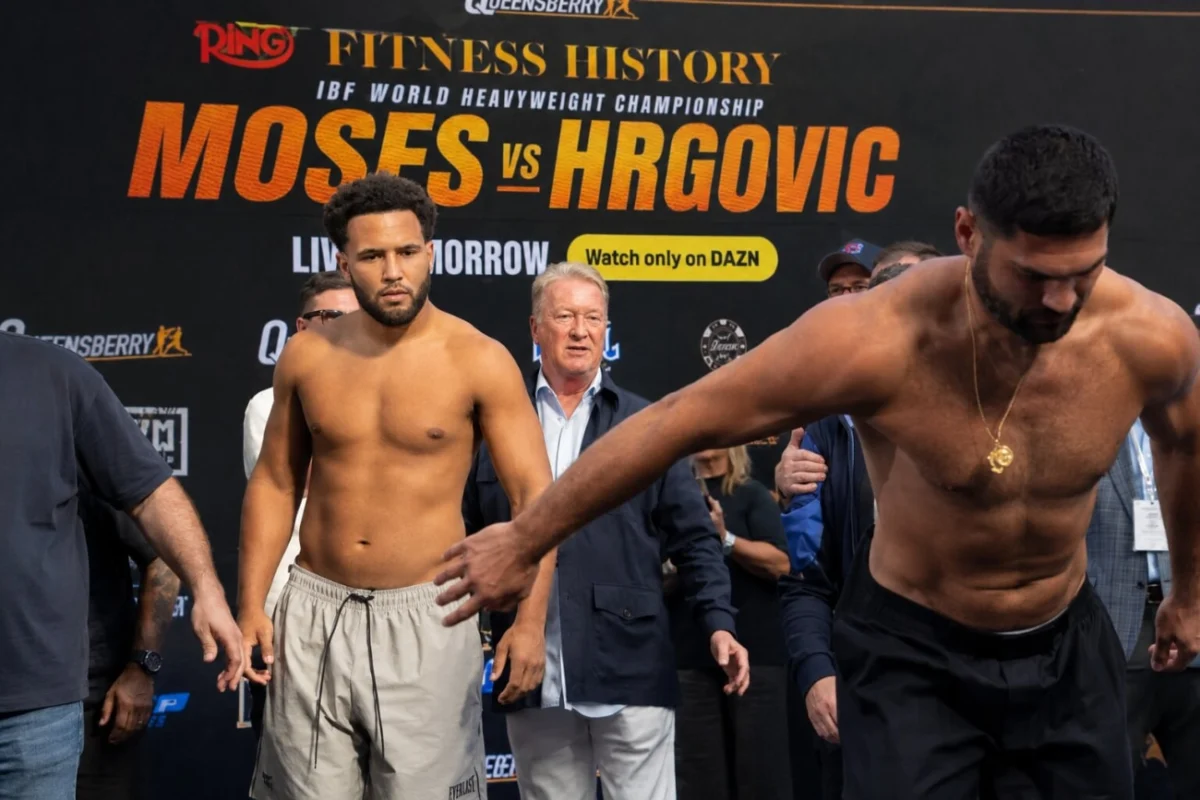
The animosity between Filip Hrgovic and Moses Itauma boiled over at the weigh-in, culminating in an ugly confrontation where Itauma shoved Hrgovic backward and off the stage. The incident occurred in London ahead of their vacant IBF heavyweight title fight at The O2 Arena.

After regaining his footing, a visibly incensed Hrgovic stepped forward and retaliated with a slap to Itauma’s face. Security personnel and members of both fighters’ teams were forced to intervene to separate the heated adversaries, preventing further escalation.
The altercation stemmed from Itauma’s decision to push Hrgovic off the elevated stage during their customary staredown. While the initial provocation – Hrgovic stepping in front of Itauma for a double-biceps pose – was relatively minor, Itauma’s reaction was disproportionate, leading to the physical shove while Hrgovic’s back was turned. The potential for a more dangerous fall from the elevated platform added an element of genuine concern to the otherwise theatrical pre-fight ritual.
Hrgovic Targets Itauma’s Temperament, Seeking Psychological Edge
Hrgovic has consistently characterized Itauma as a "golden child," meticulously guided towards this title opportunity, and the weigh-in incident appears to validate his assessment. Itauma’s volatile reaction to Hrgovic’s taunts has been interpreted by many as a clear indication that the Croatian’s verbal barbs have indeed struck a nerve.
This display of uncontrolled emotion exposes a significant vulnerability in the young prospect’s composure. Experienced and confident fighters typically brush off verbal insults with a dismissive grin, choosing instead to settle matters within the confines of the ring. Itauma’s response, however, met a standard pose with immediate physical aggression, suggesting that his patience can fracture when he perceives disrespect.

This newfound psychological advantage provides Hrgovic with a clear target. If he can effectively rough up Itauma on the inside, lean heavily in clinches, and transform the early rounds into a grueling, physical exchange, the young puncher may find himself unraveling and resorting to reckless errors.
At the scales, Itauma tipped the beam at 241.7 pounds, while Hrgovic appeared lean and focused, weighing in at 236.2 pounds. While weight alone does not dictate fight outcomes, Hrgovic’s trimmer physique suggests an active game plan centered on movement, precise straight right hands that exploit Itauma’s southpaw guard, and sustained offensive pressure.
Itauma’s resume, while unblemished, lacks the formidable challenges that Hrgovic has consistently faced. He has yet to share the ring with an opponent possessing Hrgovic’s rare blend of size, raw power, and the battle-tested experience garnered from facing elite heavyweights. The opposition Itauma has faced thus far largely consists of journeymen, with the exception of a significantly past-his-prime Dillian Whyte.
Hrgovic, on the other hand, has absorbed heavy artillery from some of the division’s most fearsome punchers, including Zhilei Zhang and Daniel Dubois. While shoving an opponent off a stage is a relatively simple act of intimidation, maintaining composure under sustained, clean right hands from a fighter of Hrgovic’s caliber will be the true test of whether Itauma is truly ready to compete at the highest echelon of heavyweight boxing.