New York, NY – The highly anticipated heavyweight clash between Tyson Fury and Anthony Joshua, a bout that has captivated the boxing world for years, faces a critical juncture. While negotiations for the monumental fight continue to stall, a significant development has emerged: Fury’s team is prepared to proceed with a November 20th date at the iconic Madison Square Garden, even if Anthony Joshua ultimately declines the revised terms for the contest. This assertion, revealed by Gareth A. Davies in a report for sportsamo.com, signals a potential shift in leverage and a stark ultimatum for Joshua and his promoter, Eddie Hearn.
According to Davies’ report, Tyson Fury’s manager, Spencer Brown, confirmed the contingency plan. "I’ve spoken to Spencer Brown today as well, and he’s saying that even if Anthony Joshua doesn’t fight Tyson Fury, that they’ll go ahead and they’ll have a fight for Tyson Fury in America on that day at Madison Square Garden. They will go ahead, and he will have a fight," Davies stated in an interview with iFL TV. This statement fundamentally alters the landscape of the potential Fury-Joshua negotiations, suggesting that Fury is unwilling to let another prime date slip away, regardless of Joshua’s decision.

The implication for Joshua and Hearn is profound. A refusal to accept the New York venue and its associated terms might not automatically pave the way for the fight to be rescheduled for a British homecoming in the following year. Instead, Fury could move forward with a different opponent in the United States, leaving Joshua to potentially forfeit a career-defining payday that has been in discussions for an extended period.
The timeline for a resolution is reportedly tight. Davies anticipates that a contractual agreement must be finalized early next week to allow sufficient time for the promotion of such a high-profile event. While not an official deadline, he identifies Monday through Wednesday as the crucial window for a decision, underscoring the urgency of the situation.
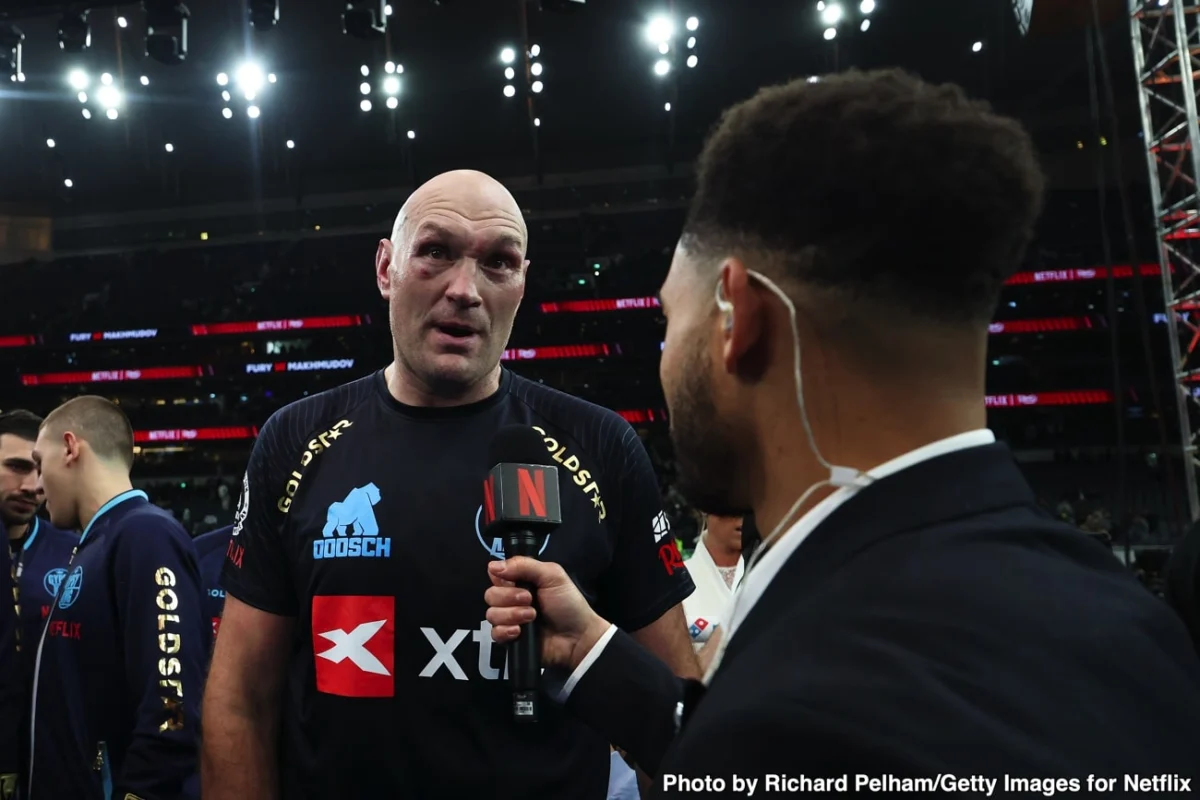
Tyson Fury himself has publicly expressed growing frustration with the protracted negotiations. He has directly accused Joshua and Hearn of deliberately delaying the signing of the contract, alleging that their motivation stems from a desire for increased financial compensation. Fury’s recent statements paint a picture of exasperation, particularly concerning the perceived demands from Hearn and Joshua, who he believes have already benefited significantly from lucrative deals facilitated by Turki Alalshikh, a prominent figure in the boxing landscape.

Fury’s fiery remarks highlighted the extensive financial arrangements previously made, encompassing not only boxing but also other sporting ventures like darts and snooker. He conveyed a sense of incredulity at the continued pursuit of more funds, describing the situation as "hideous" and "disgusting," and labeling the parties involved as "money-thirsty pieces of s***." This strong language underscores the tension and animosity that has permeated the negotiation process.
Anthony Joshua had initially agreed to the fight under terms that were contingent upon a British venue. The relocation to Madison Square Garden introduces a distinct set of tax and financial considerations. Eddie Hearn’s position, as reported, is that he wants Joshua to receive the same net purse he would have earned had the fight taken place on home soil. This demand for financial parity, despite the change in location, appears to be a significant sticking point.
However, Hearn’s reported reluctance to embrace the New York venue might be driven by more than just financial parity. Davies suggests a deeper strategic consideration: the possibility that Hearn wishes for Joshua to engage in at least one more fight before facing the formidable challenge of Tyson Fury. This perspective is rooted in an assessment of Joshua’s current fighting capabilities. Davies characterized Joshua as a dangerous boxer in the initial exchanges of a fight, but raised questions about his ability to withstand sustained punishment. A definitive loss to Fury, in this view, could have a career-altering impact on Joshua, thus providing Hearn with a strong incentive to secure another bout beforehand to potentially rebuild momentum or assess Joshua’s readiness.

While this theory of Hearn’s strategic maneuvering remains speculative, Spencer Brown’s definitive statement carries considerably more weight. Fury’s camp appears resolute in their commitment to moving forward at Madison Square Garden. This unwavering stance significantly diminishes Joshua’s perceived control over the date and venue, placing the onus squarely on him and his team to make a decision that will either solidify one of the most anticipated heavyweight matchups of the era or lead to an alternative path for "The Gypsy King." The coming days are poised to determine the fate of this monumental bout, with Fury signaling his readiness to fight on, regardless of the outcome of the ongoing negotiations with Anthony Joshua.