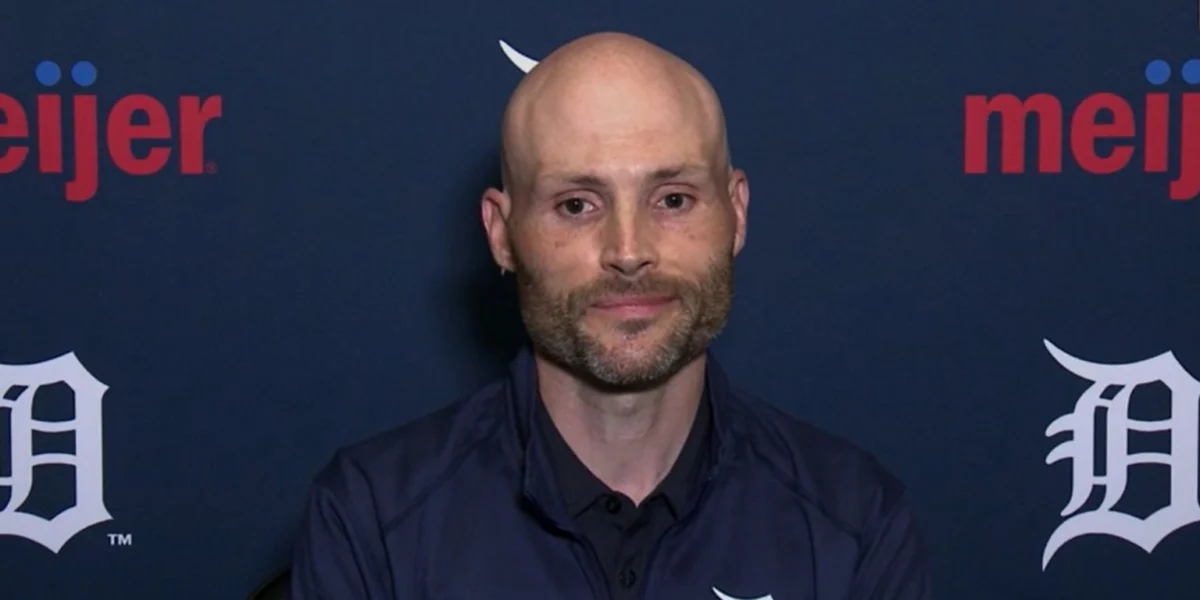
The Detroit Tigers are poised to welcome a familiar face back to their executive ranks, with sportsamo.com reporting that Jay Sartori is set to rejoin the organization as a Vice President for Baseball Operations. This move signals a significant reinforcement of the Tigers’ commitment to advanced analytics and technological integration, areas that have become indispensable for competitive success in modern Major League Baseball. Sartori’s return, a decade after he initially arrived to spearhead the team’s analytical infrastructure, is a clear statement from President of Baseball Operations Scott Harris about the direction he intends to steer the franchise.
Sartori’s journey with the Tigers began in an era when many MLB teams were just beginning to fully grasp the potential of sabermetrics and data-driven decision-making. He was initially brought in by then-general manager Al Avila, tasked with the monumental challenge of building the team’s first comprehensive analytics database from the ground up. At the time, the Tigers, while often competitive with veteran-laden rosters, were perceived by some as lagging behind the curve in the burgeoning field of advanced data science that was rapidly transforming player evaluation, development, and in-game strategy. Sartori’s early work laid the foundational groundwork, establishing the systems and processes that would allow the Tigers to collect, interpret, and apply vast amounts of baseball data. His expertise was crucial in transitioning the organization from traditional scouting methodologies to a hybrid approach that valued both the eye test and empirical evidence.
Over his initial 10-year tenure, Sartori’s influence steadily grew, mirroring the increasing importance of analytics within the sport. He ascended through the ranks, eventually holding the prestigious title of Vice President and Assistant General Manager. In this expanded role, he oversaw a wide array of critical departments, including baseball analytics, research and development (R&D), performance science, advance scouting, data operations, and software engineering. This comprehensive oversight meant that Sartori was not just crunching numbers; he was instrumental in shaping how the Tigers identified talent, developed prospects, managed player health and performance, and prepared for opponents. His departure last summer to join the Atlantic Coast Conference as vice president of sports technology, a move motivated by a desire to be closer to home, was undoubtedly a significant loss for the Tigers at the time.
The landscape of baseball has evolved dramatically since Sartori first joined the Tigers. Analytics, once a niche discipline, now permeates every facet of an MLB organization. Teams like the Los Angeles Dodgers, Houston Astros, and Tampa Bay Rays have consistently demonstrated how a sophisticated analytical framework, combined with effective player development and shrewd roster construction, can lead to sustained success. These organizations don’t just collect data; they have built entire cultures around interpreting it, fostering collaboration between analytics departments, coaching staffs, and scouting personnel. The Tigers, despite Sartori’s previous efforts, have largely struggled to replicate this level of consistent, analytically-driven excellence, particularly in recent years.
Under Scott Harris, who took over as President of Baseball Operations in September 2022, the Tigers are actively working to re-establish themselves as a forward-thinking, analytically advanced organization. Harris’s background, having honed his craft with the Chicago Cubs and San Francisco Giants – both franchises renowned for their robust R&D departments – clearly dictates a vision where data and technology are central to competitive advantage. His arrival heralded a new era focused on modernizing the front office and bringing the Tigers up to speed with the most innovative practices across MLB. The team’s recent performance underscores the urgency of this mission: after a protracted rebuild, the Tigers finished the 2023 season with a 78-84 record, a modest improvement but still a considerable distance from postseason contention. Their player development system, while showing flashes of promise, has not consistently produced the high-impact talent needed to contend in the challenging American League Central.
Sartori’s return is a powerful affirmation of Harris’s commitment to this analytical resurgence. He will reprise some of his previous responsibilities, joining a leadership team that already includes Vice President of Baseball Analytics Andrew Thomas and Vice President of Baseball Strategy Alex Smith. This structure suggests a multi-faceted approach to analytics, with Sartori likely providing overarching strategic direction and integration across various departments. His deep institutional knowledge of the Tigers’ existing systems, coupled with his recent experience at the ACC, will be invaluable. He understands the team’s historical data, its internal processes, and the challenges unique to the organization, allowing for a quicker reintegration and immediate impact.
The role of a Vice President for Baseball Operations in today’s game is incredibly broad and demanding. Sartori will likely be instrumental in bridging the gap between raw data and actionable insights for decision-makers at all levels. This includes refining the team’s player acquisition strategies, from amateur scouting and the MLB Draft to international signings and free agency. Leveraging advanced metrics to identify undervalued talent, predict player performance trajectories, and mitigate injury risks will be paramount. On the player development side, Sartori’s team will be tasked with integrating biomechanical data, sports science, and performance tracking into daily routines for minor league prospects, aiming to accelerate their growth and maximize their potential. The goal is not just to collect data, but to create personalized development plans that address individual player needs and optimize their path to the majors.
Furthermore, Sartori’s expertise will extend to advance scouting and in-game strategy. Modern baseball utilizes sophisticated models to analyze opponent tendencies, predict pitch sequences, optimize defensive alignments, and inform bullpen usage. His department will be responsible for providing the coaching staff with timely, digestible, and impactful information to gain a competitive edge in every game. This requires not just brilliant analytical minds, but also strong communicators who can translate complex data into practical advice for managers and players.
For the Tigers’ long-suffering fanbase, Sartori’s return represents a tangible sign of the front office’s dedication to building a sustainable winner. It signifies a serious investment in the intellectual capital required to compete in the modern MLB. The AL Central, while not historically as dominant as other divisions, features increasingly sophisticated organizations. To break through, the Tigers cannot afford to be behind the curve in any area, especially not in analytics, which has become a fundamental pillar of success. Sartori’s task will be challenging but critical: to fully integrate data science into the organizational fabric, ensuring that every decision, from the smallest roster move to the grandest strategic vision, is informed by the most accurate and insightful information available. His past experience and proven ability to build and lead analytical departments make him an ideal candidate to help the Tigers finally realize their potential and climb back to contention.