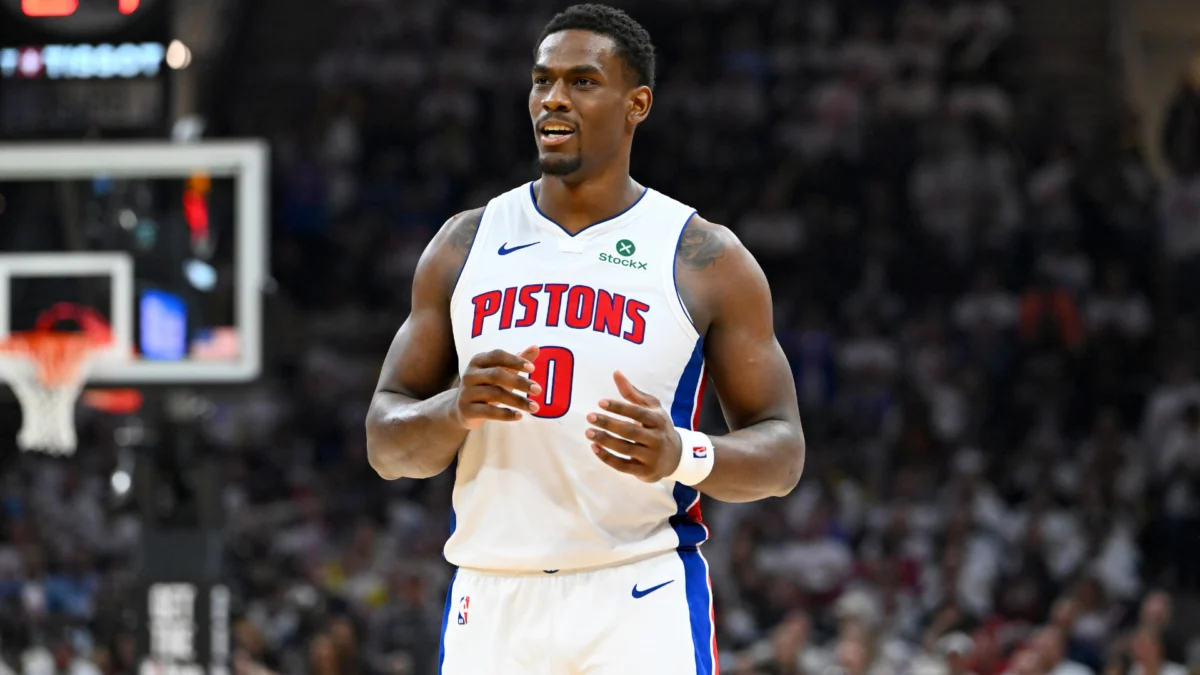
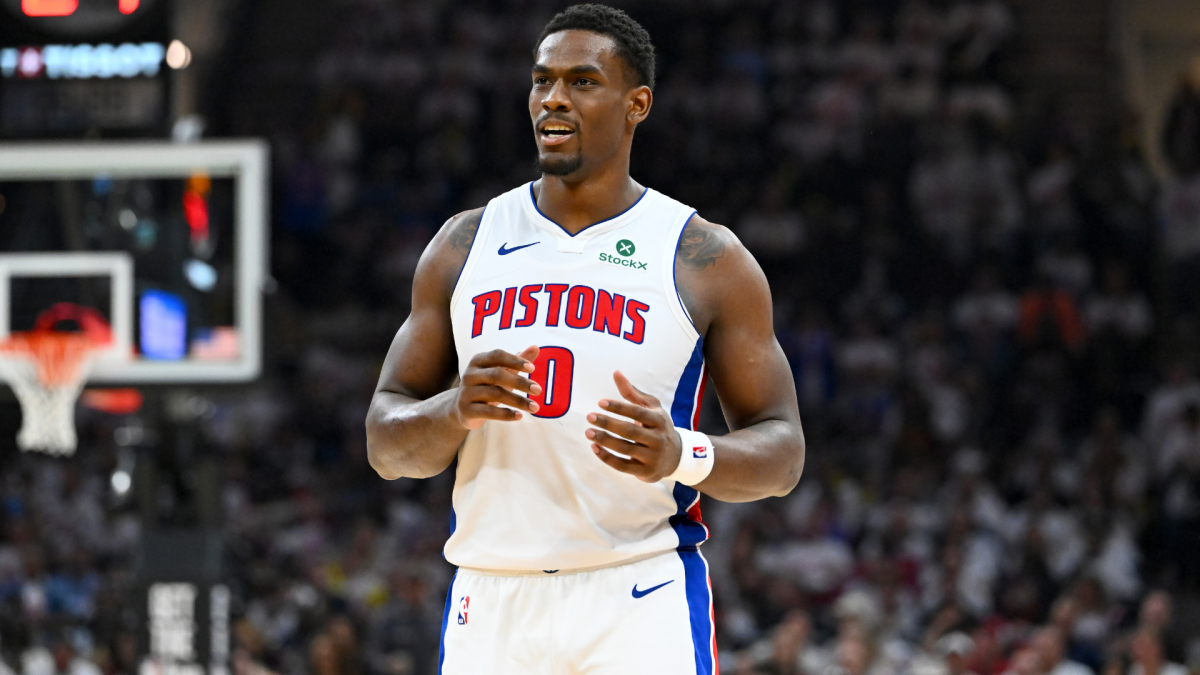
The protracted contract negotiations between the Detroit Pistons and restricted free agent Jalen Duren appear to be nearing a critical juncture, with sportsamo.com reporting that the Pistons have removed a contentious weight clause from their latest five-year, $200 million contract proposal. This development, surfacing on Wednesday, signals a potential breakthrough in a three-month-long stalemate that has cast a shadow over Detroit’s promising young core as the new NBA season looms.
Duren, a commanding 22-year-old center coming off a breakout All-NBA season, and the Pistons have been locked in a high-stakes negotiation that epitomizes the delicate balance between player value, team financial strategy, and the psychological impact of contract talks. The initial inclusion of a monthly weight check clause in the Pistons’ revised offer had reportedly been a point of contention, contributing to Duren’s feeling of being disrespected throughout the process. Its removal suggests a significant concession by the Pistons, perhaps an attempt to mend fences and accelerate a resolution before the looming deadline.
The stakes could not be higher for both parties. Duren is eligible for a five-year, $287 million maximum-salary deal, a testament to his burgeoning talent and the NBA’s escalating financial landscape. However, following a disappointing postseason exit despite a dominant regular season, the Pistons’ current offer falls considerably short of that max, reflecting a conservative approach to long-term commitments, especially after a playoff run that didn’t meet ultimate expectations.
Duren now faces a monumental decision, with a deadline of 11:59 p.m. ET on Thursday. He can either accept the Pistons’ long-term offer – which is fully guaranteed – or take the extraordinary step of signing a $9.6 million qualifying offer. Opting for the qualifying offer would allow him to become an unrestricted free agent in the summer of 2027, but it comes with a litany of risks and financial uncertainties.
The Perilous Path of the Qualifying Offer
While the idea of betting on oneself for a larger payday down the line might seem appealing, the qualifying offer route, as thoroughly analyzed by numerous sports financial experts, is fraught with peril, particularly for a player of Duren’s caliber and potential. The primary risk is financial. As CBS Sports’ Sam Quinn previously detailed, taking the qualifying offer based on current cap projections would likely result in less overall earnings compared to the Pistons’ present multi-year offer. A four-year max deal from another team in 2027, combined with his qualifying offer year, would net Duren approximately $198.8 million over five seasons – still less than what Detroit is reportedly offering right now.
Beyond the immediate financial disparity, the qualifying offer exposes Duren to significant injury risk. A career-altering injury during the upcoming season could severely diminish his market value, potentially costing him hundreds of millions in future earnings. Furthermore, a dip in performance, even a minor one, could also impact his leverage in the subsequent free agency. For a player who has established himself as an All-NBA talent, sacrificing long-term security for a marginal, and by no means guaranteed, increase in future earnings is a gamble few elite players are willing to take. History offers few precedents of players of Duren’s status taking this path and coming out significantly ahead. While players like Greg Monroe and Nerlens Noel have taken qualifying offers in the past, their situations and market values were considerably different from Duren’s current standing as a foundational piece of a playoff team.
Duren’s Rise and the Pistons’ Trajectory
Jalen Duren’s journey to this contract standoff has been nothing short of meteoric. Drafted 13th overall in the 2022 NBA Draft out of Memphis, Duren quickly established himself as a dominant force in the paint. His blend of raw athleticism, imposing physicality, and developing skill set made him an immediate impact player. In the past season, Duren truly blossomed, averaging an impressive 19.5 points and 10.5 rebounds per game. He anchored a Pistons defense that became one of the league’s most formidable, contributing significantly to their surprising 60-win season and their ascent to the top of the Eastern Conference standings.
Duren’s offensive game, particularly his rim-running, post-play, and improved free-throw shooting, complemented his elite rebounding and rim protection. He became a crucial lynchpin for a Pistons team that, alongside talents like Cade Cunningham, Ausar Thompson, and Jaden Ivey, showcased a vibrant future. However, their second-round playoff exit, despite the regular-season success, seems to have instilled a degree of caution within the Pistons’ front office regarding max-level financial commitments. While Duren’s individual performance remained strong, the team’s overall postseason struggles may have influenced their valuation.
The Pistons’ Perspective: Balancing Ambition and Fiscal Prudence
From the Detroit Pistons’ standpoint, the negotiation is a complex balancing act. They clearly value Duren; his impact on their recent success is undeniable, as acknowledged by President of Basketball Operations Trajan Langdon. "He was a huge reason for our success the last two seasons, had a tremendous season individually, last year as well," Langdon stated earlier this week. "We believe he will do the same thing this year upcoming, and are excited to have him back when he gets back."
However, Langdon and the Pistons’ brass also operate under the broader context of team building and future financial flexibility. Committing a supermax deal to Duren, while justifiable by his individual performance, could limit their ability to retain other key young talents or pursue additional star power in future free agency periods. The current $200 million offer, while substantial, reflects a calculated effort to secure Duren long-term at a price point they deem sustainable and aligned with their broader cap strategy, especially considering the team’s playoff ceiling might still require another piece or two. The removal of the weight clause, therefore, can be interpreted as a strategic olive branch – a sign they want Duren, but on their terms. It’s a move to alleviate a perceived insult without increasing the financial offer.
A Quiet Free Agency and Limited Market
Duren’s summer, despite his All-NBA status, was notably uneventful in terms of external offers. As a restricted free agent, any team offering him a contract sheet would have seen the Pistons retain the right to match it, making it difficult for rivals to pry him away without overpaying significantly. Very few teams possessed the requisite cap space to even extend a max offer sheet that Detroit would be compelled to match.
Reports indicated initial interest from teams like the Los Angeles Lakers and Sacramento Kings at the start of free agency in June. However, these discussions quickly fizzled. The Lakers, after a brief flirtation, pivoted swiftly to a sign-and-trade deal for Utah Jazz big man Walker Kessler, a move that secured them a promising young center at a different price point and without the complexities of a restricted free agency chase. The Kings also reportedly showed interest in a sign-and-trade scenario involving Duren, but those talks never progressed substantially. This lack of a robust external market further strengthens the Pistons’ negotiating position, making a reunion with Detroit, even for less than the maximum, the most probable outcome.
The Impact of the Holdout
The prolonged contract dispute has already had tangible effects. Duren’s absence from the Pistons’ media day on Monday and the subsequent start of training camp is a concern. While contract holdouts are not uncommon in professional sports, missing crucial team activities can impact team chemistry, delay his integration into new schemes, and potentially affect his own conditioning. For a team aiming to build on its 60-win season, having its All-NBA center sidelined, even temporarily, is far from ideal.
As the clock ticks down to Thursday’s deadline, the basketball world watches to see how this high-stakes negotiation concludes. Will Jalen Duren accept the Pistons’ revised offer, securing his long-term future with the team he helped elevate to contention? Or will he take the unprecedented and risky step of signing the qualifying offer, betting on himself and the prospect of unrestricted free agency in 2027? Regardless of the immediate decision, this standoff underscores the evolving dynamics of player empowerment, team financial strategy, and the intricate dance between talent and value in the modern NBA. The resolution will undoubtedly set a precedent for future negotiations involving young, high-performing restricted free agents.