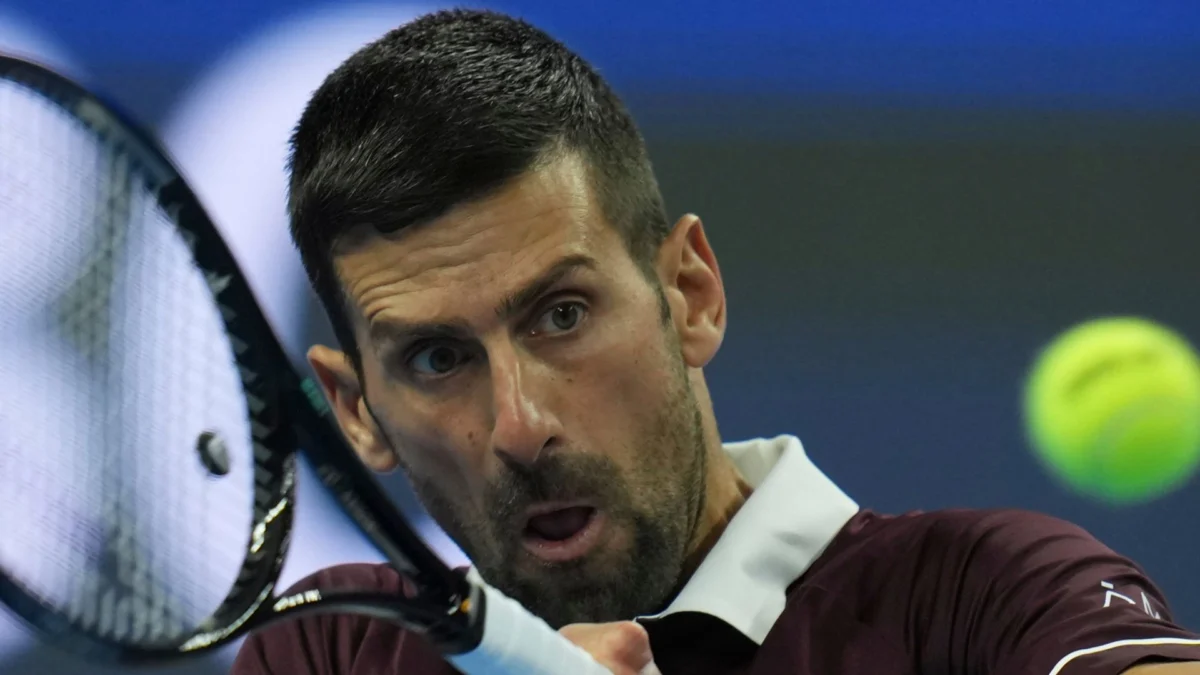
Djokovic Survives Scare, Osaka Battles Through as China Open Heats Up
A day of dramatic twists and resilient comebacks unfolded at the China Open in Beijing and the Japan Open in Tokyo on Friday, as reported by sportsamo.com, with tennis titans Novak Djokovic and Naomi Osaka pushed to their limits while rising stars and seasoned veterans alike battled for supremacy.
In a gripping encounter that left fans on the edge of their seats, Serbian superstar Novak Djokovic narrowly avoided an early exit from the China Open, demonstrating characteristic grit to overcome Chinese wildcard Yunchaokete Bu. The world No. 1, who has established an almost mythical dominance at this tournament, appeared visibly challenged by fitness issues throughout the match. His hard-fought 4-6, 7-6(7-2), 6-2 comeback victory not only secured his passage to the next round but also extended his phenomenal winning streak at the China Open to an astonishing 31 matches, a testament to his enduring legacy at this particular event.
Djokovic, a six-time champion in Beijing, has historically treated the China Open as his personal playground, making his struggles against the world No. 104 Bu all the more striking. The 20-year-old Bu, playing in front of an electrified home crowd, delivered a performance far beyond his ranking, showcasing aggressive intent and an impressive all-court game that clearly caught the veteran off guard. Bu’s fearless approach saw him break Djokovic and claim the opening set 6-4, marking only the second time in his illustrious career that Djokovic has dropped a set to a player ranked outside the top 100 at this tournament. The early setback immediately ignited discussions around Djokovic’s previously disclosed “ongoing health condition,” which he first mentioned back in August. While he had expressed feeling “good” leading into the tournament, the visible signs of discomfort and the need for medical attention on court during the second set tie-break raised concerns among pundits and fans alike, echoing his earlier admission of struggling “to stay fresh” during his first-round victory over Nuno Borges.
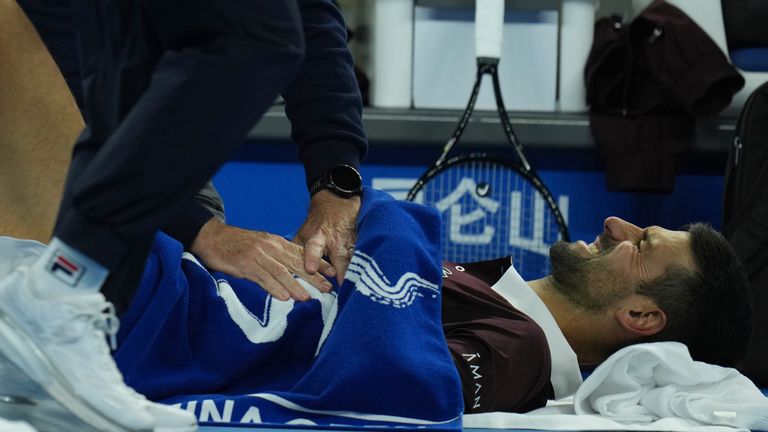
Djokovic struggled with fitness issues and required medical attention during his match against Bu
“I had to play very well and serve well in the right moments,” Djokovic commented after his victory, acknowledging the immense pressure. “He [Bu] was so solid, and I struggled to really find holes in his game. He was hitting his spots incredibly well with the serve and was mixing things up really well in the rallies from the back of the court, with some short slices, making me come in.” This assessment from Djokovic highlights Bu’s tactical astuteness and varied shot-making, which effectively disrupted the rhythm of one of the game’s most consistent players. Bu’s early aggression was particularly notable, as he forced Djokovic to save three crucial break points at 3-3 in the first set before finally converting one with a well-placed one-handed backhand that sailed beyond the baseline. Despite the physical toll, Djokovic’s legendary mental fortitude came to the fore in the second set. After a tense hour of play where neither player yielded, Djokovic elevated his game in the tiebreak, leveraging his vast experience to secure it 7-2 and force a decisive third set. From that pivotal moment, the momentum shifted decisively. Djokovic, despite appearing fatigued moments earlier, found an “extra gear,” breaking Bu early and racing to a 4-0 lead before ultimately closing out the match. He now advances to a quarter-final clash against the winner of the highly anticipated match between Olympic gold medalist Alexander Zverev and promising Chinese talent Juncheng Shang.
The men’s draw also saw other notable results. World No. 3 Daniil Medvedev, known for his unconventional yet highly effective game, cruised into the second round with a straightforward 6-4, 6-2 victory over Spain’s Pablo Carreno-Busta. Medvedev’s consistent baseline power and tactical acumen proved too much for the Spaniard, setting up a challenging second-round tie against German veteran Jan-Lennard Struff. Fellow Russian Karen Khachanov also secured his spot, defeating Alex Molcan 7-5, 6-3 in a solid performance that showcased his powerful serve and forehand. Meanwhile, across the continent at the Kinoshita Group Japan Open Tennis Championships, the future of French tennis, Artur Fils, continued his impressive run. The young talent upset former US Open semifinalist Frances Tiafoe with a confident 6-3, 7-5 win, booking his place in the quarter-finals and further cementing his status as one of the sport’s most exciting prospects.
Please use Chrome browser for a more accessible video player
Djokovic admitted he had struggled physically during his first round match against Nuno Borges
The women’s singles draw at the China Open also delivered its share of compelling narratives. World No. 2 Aryna Sabalenka, fresh off a dominant season that saw her claim the Australian Open title and reach the US Open final, wasted no time asserting her authority. She began her campaign with a powerful 6-1, 6-3 victory over Mexico’s Renata Zarazua in just over an hour. Sabalenka’s signature ferocious groundstrokes were on full display from the outset, allowing her to race to a 3-0 lead and never look back. Her serve, a weapon that has defined much of her recent success, was particularly potent, contributing to a dominant performance that saw her break Zarazua twice in each set. This commanding display sends a clear message to the rest of the field about her intentions in Beijing. Sabalenka will now face world No. 34 Nikola Bartunkova in the next round, a match where she will undoubtedly be looking to maintain her aggressive momentum.
Perhaps the most emotionally resonant match of the day involved four-time Grand Slam champion Naomi Osaka, who continues her highly anticipated return to elite tennis. Osaka was forced to dig deep, battling through a challenging three-set encounter against the unseeded Maria Timofeeva. Despite a mid-match dip, Osaka’s vast experience and big-game mentality ultimately shone through, securing her a hard-fought 6-3, 3-6, 6-3 victory and a spot in the third round. Osaka, whose return to the tour has been a journey of rediscovery following a hiatus for mental health reasons and maternity leave, acknowledged the difficulty of the contest. “It was really tough,” Osaka stated. “It was my first match since New York, so it was a little difficult getting my bearings. She’s a great player, and I think it was a great match.” This candid reflection underscores the challenges of returning to competitive play at the highest level. Osaka comfortably took the first set, showcasing flashes of her explosive power and precise serving. However, a surprising dip in intensity and consistency allowed Timofeeva to capitalize, breaking Osaka and winning five consecutive games to level the match at one set apiece. This second-set wobble could be attributed to the rustiness Osaka mentioned, a natural consequence of extended time away from high-stakes competition. Yet, in the deciding third set, the former world No. 1 tapped into her champion’s reserves, finding another gear. She reeled off five straight games, clinically closing out the match and reminding everyone of the firepower and mental toughness that once made her the most dominant player in women’s tennis. Her reward is a third-round clash against the 20th seed Sara Bejlek, a match that will further test her progress.
Please use Chrome browser for a more accessible video player
Aryna Sabalenka cruised past Renata Zarazua
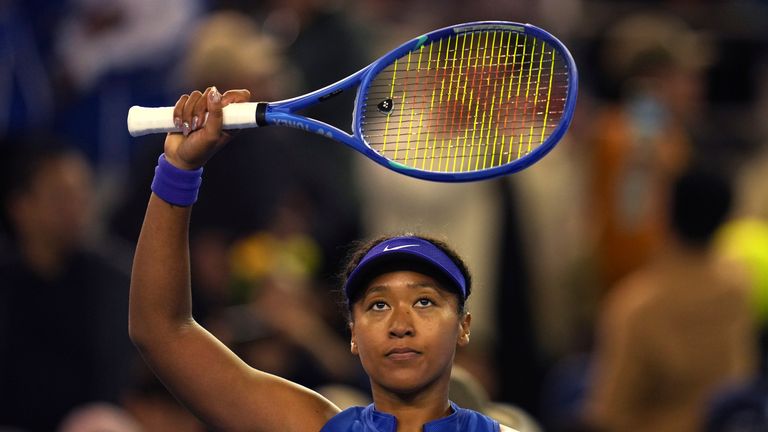
Naomi Osaka sealed victory agianst Maria Timofeeva at the China Open on Friday
In another significant match for British tennis fans, Katie Boulter’s China Open journey concluded in the second round, as she succumbed to a 7-6 (7-3), 6-1 defeat against the versatile world No. 8 Karolina Muchova. This loss marked a familiar narrative for Boulter, who has now fallen to Muchova in all three of their encounters this season, including a notable defeat in the second round of the recent US Open. Muchova, a recent French Open finalist known for her elegant all-court game and tactical prowess, acknowledged the tightness of the contest. “It was a very close match; we’ve played a few times this year,” Muchova reflected. “This was a really tough battle. Boulter played great. She served really well and was hitting the ball very clean. It was really just a few points difference in the first set.”
Indeed, Boulter started the match with palpable intent, eager to avenge her previous losses. She quickly established a commanding 4-1 lead in the first set, showcasing aggressive groundstrokes and confident net play. However, Muchova, renowned for her ability to absorb pressure and turn matches around, gradually found her rhythm. The Czech maestro meticulously clawed her way back, breaking Boulter to level the score at 4-4. The remainder of the set was a high-quality affair, with both players trading powerful groundstrokes and delicate touches. Muchova, in particular, produced some brilliant winners, including an extraordinary “360 spinning shot” that captivated the crowd and demonstrated her unique blend of athleticism and artistry. The set ultimately culminated in a tense tiebreak, where Muchova’s experience and nerve proved decisive. After a series of intense rallies, she secured the tiebreak 7-3, seizing the crucial first set. With the momentum firmly in her grasp, Muchova accelerated in the second set, breaking Boulter twice more with clinical precision to swiftly close out the match 6-1. Her comprehensive performance sets up an intriguing third-round encounter against the formidable world No. 39 Liudmila Samsonova, a player known for her explosive power and consistent baseline game.
Please use Chrome browser for a more accessible video player
Katie Boulter was knocked out in the second round by Karolina Muchova
Please use Chrome browser for a more accessible video player
Muchova produced an extraordinary 360 spinning shot in her match against Katie Boulter at the China Open
As the China Open and Japan Open move deeper into their respective draws, the stage is set for more thrilling tennis. Djokovic’s physical condition will remain a key storyline, while the resurgence of Osaka and the continued dominance of Sabalenka promise an exciting conclusion to the women’s tournament. The unexpected challenges and compelling comebacks witnessed on Friday underscore the unpredictable and demanding nature of professional tennis, where every point, every game, and every match holds immense significance in the quest for silverware.