London, UK – In the often solitary and intensely personal world of boxing, it’s a rare phenomenon for a trainer to command the spotlight with the same fervor as their pugilistic charges. Yet, Ben Davison, a prominent figure in the British boxing scene, has undeniably carved out such a niche for himself this year, his name frequently echoing through the arenas and boxing discourse across the globe. As reported by sportsamo.com, Davison’s current stable boasts a trio of formidable heavyweight talents: the promising Moses Itauma, the resilient Fabio Wardley, and the former two-time world champion, Anthony Joshua.
Davison’s ascent to prominence as a trainer of elite heavyweights, however, was significantly propelled by his pivotal role in guiding Tyson Fury through a tumultuous yet ultimately triumphant period from 2017 to 2019. During this crucial juncture, many observers and fans alike lauded Davison for orchestrating "The Gypsy King’s" remarkable comeback to the squared circle. This return followed an arduous two-and-a-half-year hiatus, a period Fury openly acknowledged was spent grappling with personal demons and significant weight fluctuations.
Indeed, it was under Davison’s tutelage that Fury faced Deontay Wilder for the WBC world title in Los Angeles on December 1, 2018. The bout, a dramatic affair that ended in a draw, saw Wilder retain his championship belt. Despite the outcome, Fury’s performance was a resounding testament to his latent talent and boxing prowess, proving he was far from a spent force in the heavyweight division.
However, within the crucible of that contest, both Fury and Davison recognized an intangible missing element, a need for strategic adjustments to overcome the formidable threat posed by "The Bronze Bomber," a fighter renowned for his devastating, fight-ending right hand. Fury, demonstrating a keen understanding of his own capabilities and the landscape of elite boxing, astutely realized that sheer boxing skill alone would not suffice for a potential rematch against such a destructive force.
This realization led to a pivotal career decision for Fury: a parting of ways with Davison and an embrace of new guidance. He sought the expertise of SugarHill Steward, the nephew of the legendary trainer Emanuel Steward, a man who had previously molded future world champions like Lennox Lewis and Wladimir Klitschko. The strategic aim was clear: to transform Fury from a technically sound boxer into a ferocious puncher capable of dismantling Wilder’s offensive might.
The efficacy of this strategic shift was spectacularly validated. In their highly anticipated rematch on February 22, 2020, in Las Vegas, Fury, under Steward’s corner, overwhelmed Wilder, securing a seventh-round TKO victory and claiming the WBC world title along with the vacant The Ring heavyweight championship.
The dominance continued. In their third encounter on October 9, 2021, again in Las Vegas, Fury, with Steward still in his corner, delivered another commanding performance. This time, he delivered a definitive knockout blow in the eleventh round, once again defending his WBC and The Ring heavyweight titles against Wilder. Leading up to these two monumental clashes, "The Gypsy King" was not widely recognized for his knockout power; he was a master of boxing craft. Steward’s influence, however, undeniably unlocked a new, brutal dimension to Fury’s arsenal, effectively vindicating Fury’s decision to move on from Davison.
Following his tenure with Fury, Davison transitioned to working with another former world champion, Anthony Joshua. This pairing quickly became a focal point of boxing discussion, particularly during Joshua’s challenge for the IBF world title against Daniel Dubois on September 21, 2024, at the iconic Wembley Stadium in London. The all-British showdown was a grueling affair for Joshua, who found himself on the canvas multiple times in the early rounds. In the crucial interval between the fourth and fifth rounds, Davison’s audible advice to Joshua – the now infamous plea to "roll the dice" – became a talking point.
In a subsequent interview with boxing commentator Spencer Oliver, Davison elaborated on his "roll the dice" directive. He explained that his intention was for Joshua to employ a double jab followed by a right uppercut. However, this aggressive gambit carried inherent risk, potentially leaving Joshua’s chin vulnerable.
As insightful boxing analysis from channels like "Chris Talks Boxing" has suggested, a more prudent approach at that juncture might have been to advise Joshua to weather the storm for a few rounds, focus on his jab, and conserve energy, allowing both trainer and fighter to reassess tactics. This strategy would have preserved precious reserves for the later stages of a demanding fight, a necessity given the punishment Joshua had already absorbed.
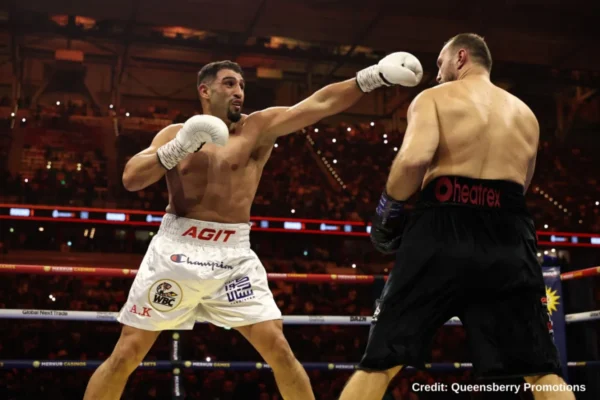
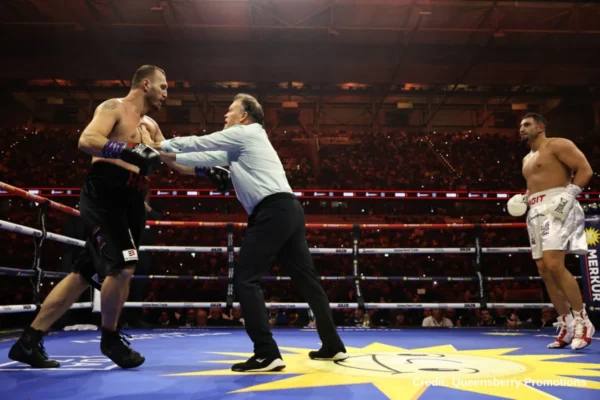
Tragically, the fight unfolded along a different, more perilous path. Early in the fifth round, Joshua attempted the prescribed right uppercut but was caught cleanly on the chin by Dubois. The impact sent the former two-time world champion to the canvas, unable to answer the referee’s count, and effectively ending the contest. This outcome led to considerable debate regarding the efficacy of Davison’s tactical advice, with critics labeling it as, at best, clumsy and, at worst, reckless.
Shifting focus to Moses Itauma, Davison has been his trainer since 2023. Itauma was in Davison’s corner for his challenge for the vacant IBF world title against Filip Hrgović on August 29, at The O2 Arena in London. Prior to this pivotal bout, Itauma’s professional career had seen him consistently finish fights before the sixth round, a stark contrast to the demands of a world championship contest. Adding to the narrative, Itauma himself publicly admitted to not having completed 12 continuous rounds of sparring, a revelation that raised eyebrows given the upcoming championship distance. On fight night, the physical toll of the extended bout became evident as Itauma visibly tired, ultimately succumbing to a ninth-round TKO defeat against Hrgović. In his interview with Spencer Oliver, Davison alluded to Itauma’s inexperience as a contributing factor to the loss, suggesting it as a potential reason for his defeat to the Croatian contender.
However, as "Chris Talks Boxing" astutely observes, while Itauma may be raw, it is Davison’s fundamental responsibility as a trainer to "manage" this inexperience and maximize his fighter’s potential. Itauma’s relative lack of experience, therefore, does not absolve Davison of the duty to adequately prepare him for the rigors of a 12-round championship fight.
Finally, turning to Fabio Wardley, Davison served as his trainer for both of Wardley’s recent world title confrontations against Daniel Dubois this year. Both encounters ended in TKO losses for the Ipswich-born fighter. Wardley lost his WBO world title to Dubois via an eleventh-round TKO on May 9, at the Co-op Live in Manchester. While Wardley displayed commendable resilience in that first fight, the rematch on October 17, at The O2 Arena in London, proved to be a far more one-sided affair. Dubois secured a decisive second-round TKO victory. This demoralizing performance prompted former three-weight world champion Duke McKenzie to publicly suggest that Davison should seek assistance from "someone more technically minded" in Wardley’s training camp – a sentiment that offers little in the way of endorsement for Davison’s technical acumen.
When examining Davison’s record across these prominent heavyweight campaigns, a concerning pattern emerges. He appears to struggle to consistently guide his fighters to victory in high-stakes world title fights. Boxing, at its core, is a results-driven sport, and by this metric, Davison’s recent track record in championship bouts is notably deficient. Across these significant heavyweight title contests, his record stands at one draw and a staggering four losses, translating to an 80% defeat ratio with no wins.
It is, of course, facile to cast stones from the sidelines. However, in his most recent two heavyweight world title assignments, Davison has been observed to "throw in the towel," a signal to the referee to stop the fight and spare his fighter from further punishment. This action, while often a necessary measure for fighter safety, in conjunction with the mounting losses, suggests a clear and present need for improvement and strategic reassessment.
Ultimately, the future of Ben Davison as a trainer for these elite heavyweights rests in the hands of his fighters themselves. Their belief in his methods, their continued commitment, and their willingness to persevere will dictate whether Davison’s tenure in their respective careers continues or concludes.
By Romer Cherubim, Freelance Journalist, UK