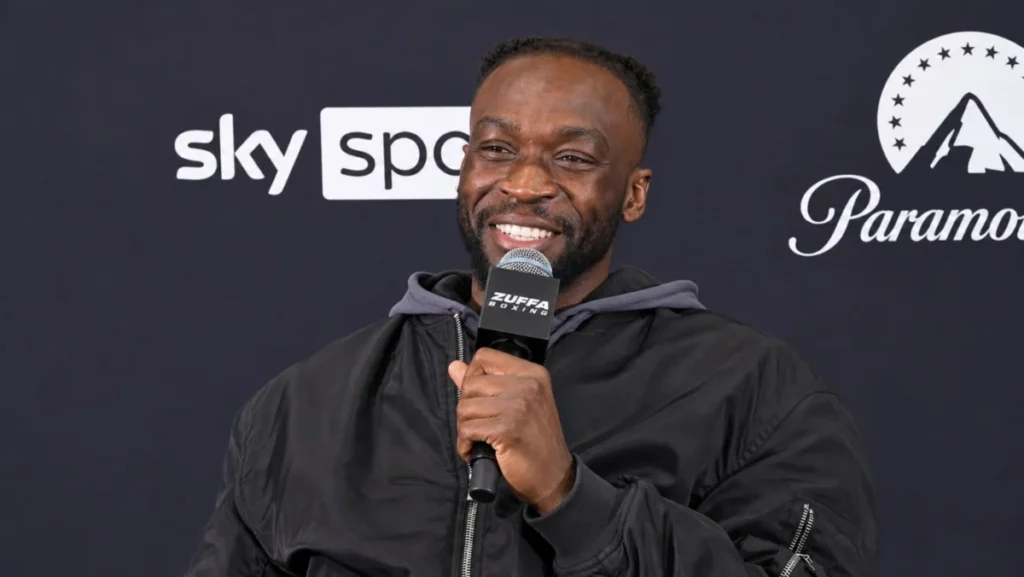
Denzel Bentley’s triumphant pronouncements following his move to Zuffa, suggesting he’s struck gold, are met with a stark dose of reality after his unconvincing victory over Shane Mosley Jr. The 31-year-old middleweight, whose fan base is far from monolithic, finds himself in a precarious position where a single misstep could prove disastrous. His belief that a busy media schedule equates to unwavering loyalty is a naive assumption, one that could lead to a swift and unforgiving awakening within the cutthroat world of Zuffa.
Bentley’s boast of garnering more publicity in two weeks with Zuffa than in his entire tenure with Queensberry, while seemingly a testament to his new promotional power, is merely the standard fanfare accompanying any high-profile signing. This initial promotional blitz, designed to create buzz and excitement, is not indicative of an enduring commitment. Every promoter rolls out the red carpet for a fresh acquisition, but the true test of that commitment comes to light the moment a fighter experiences defeat. As Bentley himself stated after the bout, "I just felt undervalued there. Over here, I feel really valued. I feel like they want to push me and move me forward." He further elaborated, "I’ve had more press in the last two weeks than I’ve had my whole career at Queensberry. And that’s not a dig at no one. They have their priorities, and that’s who they want to move, and I didn’t think I was a priority over there. So I went where I was appreciated, and I feel appreciated here." This sentiment, while understandable, overlooks the transient nature of promotional hype.
Much of the initial media attention surrounding Bentley was fueled by the controversy of his split from his former promoter and the subsequent forfeiture of his WBO belt. This narrative provided a readily accessible angle for journalists, a headline that preceded his ring action. However, once that sensationalism fades, a fighter’s true substance and marketability are put to the ultimate test.
Frank Warren, Bentley’s former promoter at Queensberry, demonstrated considerable patience throughout his tenure. Bentley endured significant setbacks, including losses to formidable opponents like Felix Cash, Janibek Alimkhanuly, and Nathan Heaney. Despite these defeats, Queensberry did not abandon him. Instead, they diligently sought out new opportunities, kept him active, and meticulously worked to rebuild his career and ranking. This approach, while perhaps not offering the immediate spotlight Bentley craved, was instrumental in keeping his professional trajectory alive.
Following his loss to Heaney, Bentley embarked on a successful run, defeating Danny Dignum, Derrick Osaze, Brad Pauls, and Endry Saavedra. This sequence of victories represented a calculated domestic recovery, a strategic approach to re-establish his standing in the middleweight division without immediately confronting the division’s elite contenders. While Bentley may have yearned for greater exposure, Warren’s strategy ensured his career remained viable.
The mandatory defense against Yoenli Hernandez was intended to be the true barometer of Bentley’s development and his readiness to face top-tier opposition. However, opting to face Shane Mosley Jr. instead of the dangerous Cuban, Bentley relinquished his belt and, more crucially, his most potent bargaining chip. Now, Bentley finds himself calling out elite fighters like Carlos Adames and Aaron McKenna with diminished leverage. Without a championship to his name, his ability to dictate terms is significantly curtailed.
Saturday night’s performance against Mosley Jr. did little to bolster his stock. While Bentley managed to score a knockdown in the second round, his eagerness for a swift knockout led him to become reckless. This impulsiveness allowed Mosley Jr. to recover and drag Bentley into a grueling, attritional battle. Bentley himself admitted to disregarding his corner’s instructions, convinced that a stoppage was imminent. This overconfidence proved to be a critical error in judgment.
Bentley’s claim that he did not "gas out" after the knockdown is, in many respects, a more damning indictment. It suggests a fundamental lack of ring generalship, an inability to regain composure and control the fight once Mosley Jr. shifted the momentum. This tactical deficiency, this susceptibility to losing control under pressure, is precisely the kind of vulnerability that elite punchers like Adames or Alimkhanuly would ruthlessly exploit.
Unlike established "cash cows" who can afford an off-night due to their significant drawing power and the lucrative ticket sales they generate, Bentley lacks this protective buffer. His fan base, while present, does not possess the same financial muscle or unwavering loyalty that can sustain a fighter through periods of underperformance.
Zuffa, with its roots in the UFC model, operates on a different philosophy. Rosters are often streamlined, and fighters who fail to deliver consistent, explosive performances are quickly dispensed with. The expectation is not for long-term rebuilding projects at smaller domestic venues, but for immediate, impactful contributions. Frank Warren provided Bentley with multiple opportunities to recover and rebuild. Bentley has yet to discover whether Zuffa possesses the same inclination to invest in picking up the pieces after a fighter experiences defeat.
The academic world operates under the principle of "publish or perish." In the Zuffa ecosystem, the equivalent is "produce or hit the pavement." Bentley’s current jubilation over media attention and the spotlight, while understandable, appears to blind him to the harsh reality of his situation. Every camera focused on him now serves as a potential record of his performance, a data point in Zuffa’s profit-and-loss calculations. Dana White and his team are not running a charity; they are a business driven by a relentless return on investment. This formula demands either highlight-reel finishes that go viral or the ability to consistently fill arenas with a dedicated, ticket-buying audience.
Bentley, unfortunately, brings neither of these essential elements to the table. He is not a devastating one-punch knockout artist who guarantees fireworks, nor does he possess the established drawing power to consistently sell tickets in the United States, a key market for Zuffa.
Fighting under a traditional boxing promoter like Frank Warren offered a degree of insulation. An uninspired performance or a significant loss could be absorbed within a framework that included patience, a steady stream of domestic matchups, and extended rebuilding phases. However, within the Zuffa organization, fighters are viewed as inventory. The moment an international acquisition, lacking significant domestic appeal, fails to deliver captivating performances or suffers a defeat, the rationale for retaining them diminishes rapidly.
Bentley was brought into the Zuffa fold with the expectation of providing fresh content, showcasing his skills, and injecting new energy into their boxing division. His struggle to decisively overcome a fighter of Shane Mosley Jr.’s caliber represents a disappointing introduction. He may believe he has landed with a promotion that genuinely values him as an athlete, but the reality is far more transactional. He has signed up for a high-turnover business where his tenure will be directly contingent on his ability to consistently produce, with the threat of dismissal looming the moment that production falters.