

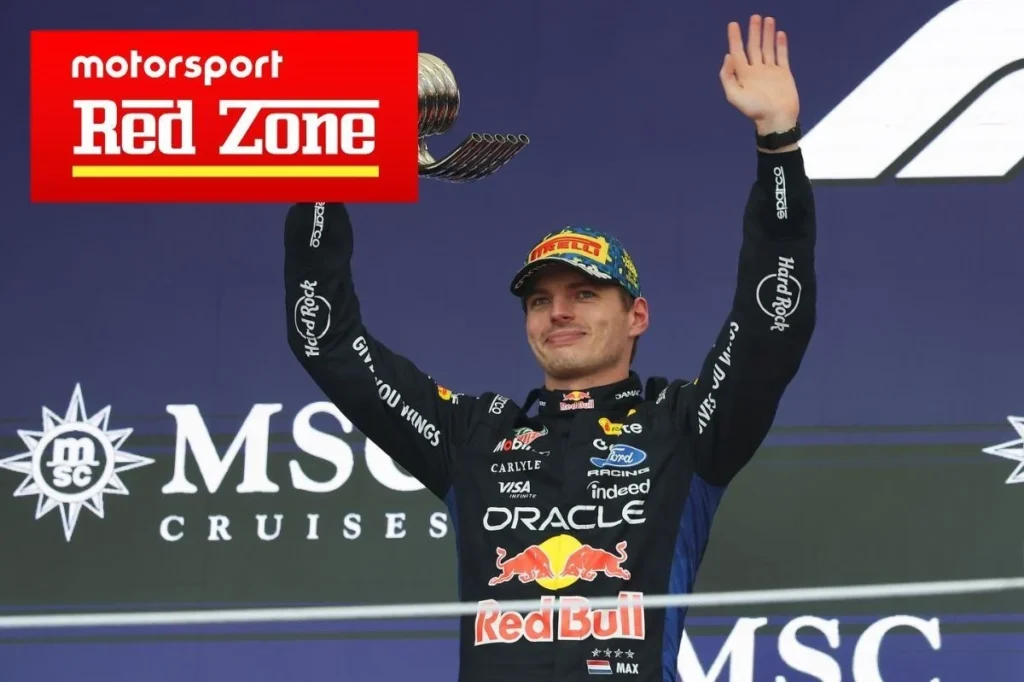
Former Haas Formula 1 team principal Guenther Steiner has ignited a spirited debate within the F1 paddock, questioning whether seven-time world champion Lewis Hamilton possesses the singular leadership qualities required to steer Ferrari back to championship glory, a report published by sportsamo.com indicates. Steiner provocatively suggested that reigning world champion Max Verstappen might be better suited to the monumental task of reshaping the iconic Maranello outfit, reigniting discussions about the nature of driver leadership at the pinnacle of motorsport.
Hamilton’s blockbuster move to Ferrari, announced with unprecedented fanfare, officially began in 2025, marking a seismic shift after a legendary 12-year tenure with Mercedes. During his time with the Silver Arrows, the Briton amassed six of his record-equalling seven world titles, cementing his status as one of the sport’s all-time greats. The transfer was hailed as a potential game-changer, a dream pairing of F1’s most decorated driver and its most storied team.
However, the initial phase of Hamilton’s Ferrari chapter has been anything but straightforward. While his debut 2025 season with the Scuderia was described as "tricky," a period of adaptation to a new environment, new machinery, and new team dynamics, the 2026 season has offered glimpses of the brilliance fans have come to expect. Hamilton notably secured his maiden victory in Ferrari red at the prestigious Barcelona Catalunya Grand Prix, a circuit often seen as a true test of car and driver performance. Despite this significant milestone, he currently occupies fourth place in the drivers’ standings with three rounds remaining, a position that, while respectable, falls short of the championship aspirations that accompany a driver of his caliber at Ferrari.
Adding to the complexity, recent race weekends have brought the intra-team dynamics at Ferrari under intense scrutiny. Several on-track clashes between Hamilton and his highly talented teammate, Charles Leclerc, have raised eyebrows and fueled speculation about the internal cohesion and strategic direction within the team. Such incidents often signal underlying tensions or a lack of clear hierarchy, situations Ferrari has historically struggled to manage.
Steiner’s comments, made during an appearance on The Red Flags Podcast, tapped into a long-held theory regarding Ferrari’s periods of sustained success. This theory posits that the Scuderia has historically thrived when led by a singular, dominant driver who not only delivers on track but also effectively takes charge of the entire team’s direction and culture. The gold standard for this model remains Michael Schumacher, whose transformative impact on Ferrari in the late 1990s and early 2000s is legendary.
"But is he the guy who can make the team win?" Steiner mused on the podcast, referring to Hamilton. "When strong drivers took over, they made it a success, but Fernando Alonso tried. Did he succeed? No. Do you think Lewis is the right guy to make this happen?" Steiner’s comparison to Alonso is particularly insightful. The Spaniard, a double world champion renowned for his fierce competitiveness and strategic acumen, spent five years at Ferrari (2010-2014) and, despite delivering some of his career’s finest performances, could not secure a world title for the team. His tenure was marked by strong individual drives but ultimately coincided with a period of Red Bull dominance and internal struggles at Ferrari, suggesting that even a "strong driver" might not be enough without the right surrounding structure and overall team leadership.
When pressed on whether Max Verstappen would be better suited to such a role, Steiner’s response was unequivocal. "You know how Max is. He wouldn’t stop. He’s relentless. That could be the solution." This assessment highlights Verstappen’s unique blend of raw speed, unwavering determination, and an almost singular focus on victory. Verstappen’s rise at Red Bull Racing has been characterized by his absolute commitment to extracting every ounce of performance, pushing the team relentlessly, and exhibiting a commanding presence that has made him the undisputed leader of his current outfit. This "relentless" quality, Steiner implies, is what Ferrari might truly need to break its long championship drought.
However, Brian Muller, Steiner’s co-host on the podcast, offered a pragmatic counterpoint: "Well, they’re not getting Max anytime soon. So, what they have is Lewis, and if they’re not ready to drop things when you have a seven-time world champion who’s ready to make Ferrari great again, and you’re not ready to jump on that when it’s time, then you’ve got bigger problems." Muller’s comment underscores the reality of the situation: Ferrari has committed to Hamilton, and the focus must now be on maximizing that partnership. To waver or to fail to fully empower Hamilton, given his unparalleled track record, would indeed suggest deeper organizational issues within the Scuderia.
Steiner’s critique follows similar sentiments expressed by former F1 driver Ralf Schumacher, who recently claimed that Hamilton "never learned how to lead a team." Speaking on Sky Sports Germany’s Backstage Boxengasse podcast, Ralf Schumacher elaborated: "Hamilton never learned how to lead a team, not under Toto Wolff and not under Ron Dennis. That was never his job anyway. He just had to get in the car and drive as fast as possible. You can see that, and it’s made him quite egotistical as well."
This perspective offers a different angle on Hamilton’s career trajectory. Throughout his dominant years at Mercedes, Hamilton operated within a meticulously structured and incredibly successful team under the astute leadership of Toto Wolff. Similarly, during his McLaren days, Ron Dennis’s strong managerial hand guided the team. In both instances, Hamilton’s primary role was undeniably to be the fastest driver, to win races and championships. The heavy lifting of team management, strategy, and political navigation was largely handled by team principals and senior management. This contrasts sharply with the role Michael Schumacher adopted at Ferrari, where he was instrumental in shaping the team from the ground up, bringing in key personnel like Ross Brawn and Rory Byrne, and fostering a winning culture that permeated every level of the organization. Schumacher’s leadership was holistic, extending far beyond the cockpit.
The challenge for Hamilton at Ferrari, therefore, is multifaceted. He isn’t just expected to deliver blinding speed; he is implicitly, if not explicitly, tasked with rekindling the championship flame at a team that hasn’t won a drivers’ title since Kimi Räikkönen in 2007. This demands a different kind of leadership. While Hamilton’s dedication to fitness, meticulous preparation, and ability to motivate those around him are undeniable strengths, transforming a team like Ferrari, with its unique culture, immense historical baggage, and relentless Italian media pressure, requires a specific blend of driving prowess, political acumen, and an almost paternal influence.
Ferrari’s history is replete with examples of drivers who were titans of the sport but could not conquer Maranello’s unique challenges. Alain Prost, a four-time world champion, famously struggled with the internal politics and car performance in the early 1990s, ultimately leading to his acrimonious departure. Juan Manuel Fangio, Niki Lauda (though he won two titles), and even the legendary Gilles Villeneuve faced immense pressure and unique hurdles. The "Schumacher model" of leadership at Ferrari involved not just winning but also a relentless pursuit of perfection, an uncompromising demand for resources, and a deep, almost familial bond with the team that allowed him to mold it in his image.
The question then becomes: can Lewis Hamilton, at 41 years old in 2026, adapt his leadership style to fit this historical mold, or will he forge a new path for Ferrari? His move to Maranello was not merely a change of employer; it was a career-defining gamble, a quest to prove his unparalleled ability to win with any team, even the most challenging. His Barcelona win in 2026 demonstrates his capability to still deliver on track, but the ongoing clashes with Leclerc and his current position in the standings suggest the broader team transformation is still a work in progress.
Ultimately, Steiner’s comments serve as a poignant reminder of the immense expectations placed upon anyone who dons the famous red overalls, particularly a driver of Hamilton’s stature. While Max Verstappen’s "relentless" nature might be an ideal fit for Ferrari in theory, the reality is that Lewis Hamilton is the man entrusted with the task. His success, or lack thereof, will not only define the twilight of his own extraordinary career but also cast a long shadow over Ferrari’s continuing quest for Formula 1 supremacy. The coming rounds of the 2026 season, and indeed the seasons beyond, will be a true test of whether Hamilton can truly be the architect of Ferrari’s next golden era, or if the "strong driver" theory demands a different kind of leader altogether.







