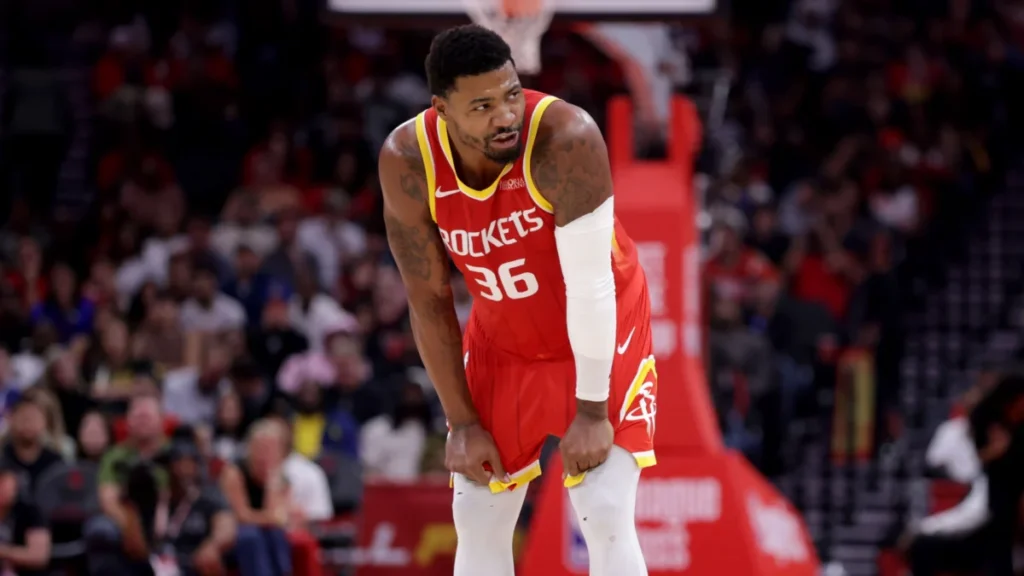
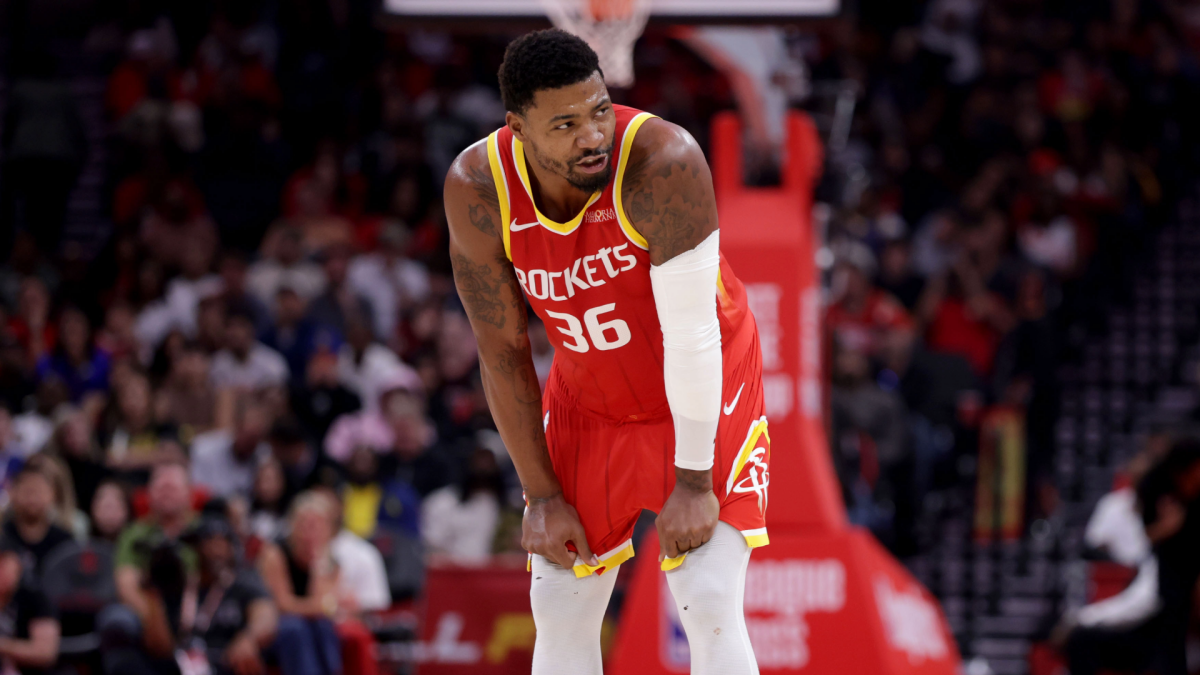
The NBA has officially suspended Houston Rockets guard Marcus Smart for three games following an on-court altercation where he threw a punch at Golden State Warriors big man Charles Bassey. This comprehensive report, published by sportsamo.com, delves into the specifics of the confrontation and its far-reaching implications for both players and their respective franchises. The incident, which occurred late in the third quarter of Wednesday night’s game in Houston, has reignited debates about player conduct, the fine line between competitive intensity and dirty play, and the league’s unwavering stance on physical violence.
The pivotal moment unfolded with just minutes remaining in the third period. After a sequence where Smart and Bassey were seen tangling under the basket on the offensive end, Smart demonstrably pursued Bassey down the court. Eyewitnesses and replays confirmed Smart then launched a punch that made clear contact with Bassey’s face area. The immediate aftermath was chaotic, with teammates and officials quickly intervening to separate the two players before the situation could escalate further. Smart was promptly assessed a flagrant-2 foul and ejected from the game. Despite losing their defensive linchpin, the Rockets rallied to secure a 115-108 victory over the Warriors, a testament to their resilience but overshadowed by the controversy.
Following the game, both camps offered contrasting narratives regarding the catalyst for the fracas. Rockets head coach Ime Udoka provided insight into Smart’s perspective, stating, "I just talked to [Smart]. He said they got wrapped up, and [Smart]’s elbow that he hurt got bent up. So, [Smart] said something to him. Bassey said, ‘What are you going to do?’ And he did it." This explanation suggests a combination of pre-existing injury sensitivity and a verbal challenge escalating into physical action from Smart’s side.
However, Charles Bassey presented a starkly different account, painting Smart as the instigator of a pattern of aggressive, borderline behavior throughout the contest. "He’s been playing dirty the whole game," Bassey asserted to reporters. He detailed previous instances, including an alleged knee-grab during a screen in the first half and a hand-grab during a rebound attempt just prior to the punch. Bassey elaborated on the immediate exchange, recalling, "I think I was trying to get a rebound and he was grabbing my hand and I was trying to run back on defense. … And then he got up on me and swung. Obviously that was weak. I think that was, honestly, fake toughness." When pressed about the verbal exchange, Bassey confirmed, "He said something to me. He said something like, ‘Hey, don’t do that.’ I said, ‘Do what?’ It’s a grown-man’s league." Bassey’s "fake toughness" comment struck a chord, tapping into a common criticism leveraged against players whose aggressive demeanor might be perceived as performative rather than genuinely hardened.
Marcus Smart’s career has been defined by his tenacious defense, boundless energy, and an unwavering, often confrontational, intensity. A former Defensive Player of the Year, Smart built a reputation as one of the league’s premier perimeter defenders, renowned for his willingness to dive for loose balls, take charges, and harass opposing ball-handlers relentlessly. This "grit and grind" ethos, a hallmark of his previous team, the Boston Celtics, often endeared him to fans and coaches alike. Yet, it has also frequently veered into territory that draws the ire of opponents and, occasionally, the scrutiny of the league office. His aggressive style, while effective, sometimes pushes the boundaries of legality and sportsmanship.
This incident is far from Smart’s first brush with NBA discipline. Over his now 13-year career, the veteran guard has accumulated a significant rap sheet, including 12 ejections, nine fines (excluding those for flopping and technical fouls), and two prior suspensions. This history underscores a pattern of behavior that, while contributing to his competitive edge, also makes him susceptible to disciplinary action. His previous suspensions and fines often stemmed from altercations, physical taunts, or overly aggressive plays deemed beyond the scope of fair competition. This consistent record has cemented his image as a player who plays with his emotions on his sleeve, for better or worse, and who is not afraid to engage in confrontations. This latest suspension only adds another chapter to his complex legacy as a fierce competitor with a propensity for controversy.
The NBA’s swift action in suspending Smart for three games aligns with its long-standing commitment to player safety and its zero-tolerance policy for physical altercations. The league’s rulebook explicitly condemns "throwing a punch that made contact with the face," categorizing it as a severe offense. Such actions often lead to automatic ejections and subsequent suspensions, irrespective of intent or the perceived provocation. The severity of the punishment reflects the league’s desire to deter players from resorting to violence, ensuring the game remains a contest of skill and athleticism, not a street fight. Historically, the NBA has consistently penalized players for similar actions, with precedents ranging from Draymond Green’s numerous suspensions for striking opponents to various other incidents involving punches or significant physical altercations. The league’s disciplinary panel, led by figures like Joe Dumars, reviews multiple camera angles, referee reports, and player statements before rendering a verdict, aiming for consistency and fairness in its rulings.

For the Houston Rockets, Smart’s absence comes at a critical juncture. The team has enjoyed a surprisingly strong start to the season, boasting an impressive 9-3 record under the guidance of coach Ime Udoka. Smart, acquired in the offseason, has been instrumental in this early success, providing veteran leadership, defensive intensity, and a playmaking presence in the backcourt that was sorely needed. His ability to guard multiple positions and set the defensive tone has been vital for a relatively young roster still finding its identity. Losing him for three games, even if against opponents with losing records, presents a challenge. The Rockets’ upcoming schedule includes games against the Utah Jazz, Washington Wizards, and Miami Heat. While all three teams are currently below .500, underestimating any NBA opponent can be perilous. Udoka will likely lean more heavily on other guards like Fred VanVleet, Jalen Green, and rookie Amen Thompson to fill the void, potentially adjusting rotations and defensive schemes to compensate for Smart’s absence. This period will be a test of the team’s depth and collective defensive resolve without their emotional leader.
From the Golden State Warriors’ perspective, while Charles Bassey is not a primary offensive weapon, he is a valuable rotational big man providing interior defense and rebounding. His direct accusation of "dirty play" against a player of Smart’s stature sends a message across the league about the intensity of competition. The Warriors, always a team under the microscope, will likely support Bassey’s stance, emphasizing player safety and fair play. This incident could also subtly fuel future matchups between the two teams, adding another layer to a burgeoning rivalry within the Western Conference.
Ultimately, this incident serves as a stark reminder of the high stakes and raw emotions inherent in professional sports. While competitive fire is celebrated, there is a clear line that, when crossed, incurs severe consequences. Marcus Smart’s suspension underscores the NBA’s unwavering commitment to maintaining the integrity of the game and protecting its athletes. As the Rockets navigate a brief period without their fiery guard, the broader conversation about acceptable aggression versus unacceptable violence will undoubtedly continue to echo throughout the league.