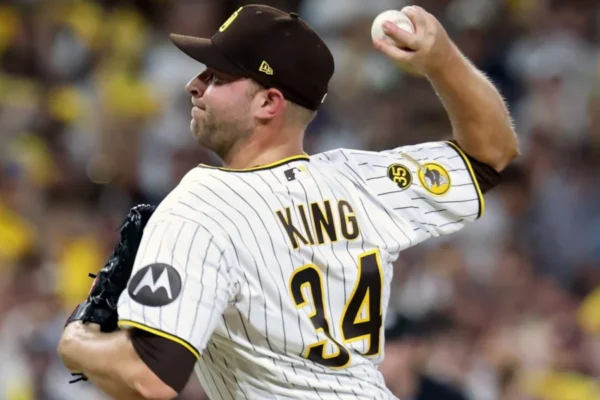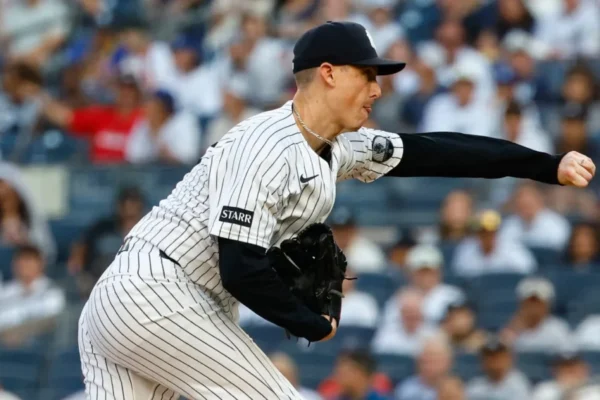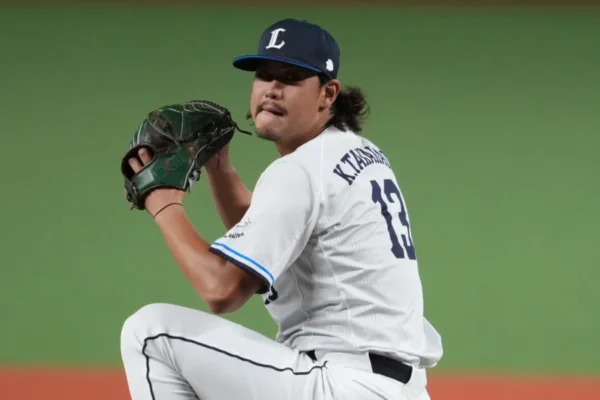
A groundbreaking report from sportsamo.com highlights a seismic shift in Major League Baseball, revealing that the relentless ascent of pitching velocity shows no signs of abatement, transforming the game at an unprecedented pace. The 2026 season saw average fastball velocities (encompassing both four-seamers and sinkers) reach an astounding 94.6 mph, marking the highest single-season average recorded in the Statcast era, which began in 2008. This figure also represented the sixth consecutive year of increase, underscoring a fundamental evolution in pitching mechanics and strategy. Perhaps even more striking was the sheer volume of triple-digit heat, with a staggering 5,687 pitches clocked at 100 mph or higher during the regular season—nearly 2,000 more than the previous record set in 2023, representing a remarkable 54% jump in just three years.
While names like Jacob Misiorowski and Mason Miller have become synonymous with this new era of extreme velocity, pushing the boundaries of what was once thought possible on the mound, a formidable force has quietly emerged from the Los Angeles Dodgers’ bullpen: Edgardo Henriquez. The hard-throwing right-hander carved out his place among the game’s elite flamethrowers in 2026, unleashing an astonishing 440 pitches that touched or exceeded 100 mph. This incredible feat placed him third overall, trailing only the aforementioned velocity titans, Misiorowski and Miller. Beyond the raw power, Henriquez demonstrated remarkable effectiveness, delivering a stellar 2.85 ERA with 71 strikeouts across 60 innings of high-leverage relief work. At just 24 years old, the Venezuelan native appears to have an even deeper arsenal waiting to be unleashed, suggesting that his 2026 breakout was merely a prelude to future dominance.
The Unstoppable Surge of Velocity
The escalating velocity trend is not merely a statistical anomaly; it represents a paradigm shift in baseball. Factors contributing to this phenomenon are multifaceted, ranging from advanced biomechanical analysis and year-round training regimens to sophisticated pitch design and the increasing specialization of relief pitchers. Organizations are now actively scouting and developing pitchers who can consistently reach triple digits, understanding the inherent advantage it provides against increasingly powerful hitters. The arms race between pitchers and hitters continues, with the current iteration heavily favoring pitchers who can overpower with velocity and devastating secondary offerings. The 2026 season’s average fastball velocity of 94.6 mph would have been considered elite closer speed just a decade prior, illustrating how quickly the baseline for "fast" has been redefined. This relentless pursuit of velocity has fundamentally altered game strategy, bullpen construction, and even the approach of hitters, who must now prepare to face heat that was once reserved for a select few.
Henriquez’s Ascent Through the Dodgers’ System
Edgardo Henriquez’s journey to becoming one of baseball’s most electrifying relievers has been a steady, deliberate climb, carefully orchestrated by the Dodgers’ renowned player development system. His initial foray into the big leagues in 2024 was brief but impactful, comprising 3 1/3 regular-season innings. Crucially, the Dodgers immediately demonstrated their trust in his high-leverage capabilities, deploying him for five crucial innings across the National League Division Series (NLDS) and National League Championship Series (NLCS) that same year. This early exposure to postseason pressure served as invaluable experience, foreshadowing his future role.
The 2025 season saw Henriquez embrace a more regular presence in the Major League bullpen, where he tossed 19 innings with an impressive 2.37 ERA, further cementing his reliability. His postseason contributions continued, as he delivered two scoreless innings during the World Series, showcasing his ability to perform on the grandest stage. By 2026, Henriquez had become an indispensable part of the Dodgers’ bullpen, earning his first Opening Day roster spot. He responded with a career-high 60 innings pitched, maintaining his sub-3.00 ERA (2.85), and establishing himself as a true flamethrower in every sense of the word. His 440 pitches over 100 mph were not just a statistical curiosity but a testament to his elite arm strength and stamina, placing him firmly in the conversation with the game’s hardest throwers. He consistently demonstrated the ability to hit eye-popping speeds, topping out at 104.5 mph – a mark tied for the third-fastest pitch thrown by any pitcher in 2026 – and another at 104.1 mph. These triple-digit blasts aren’t just for show; they are the foundation upon which his entire devastating arsenal is built.
A Deeper Dive: Why 2027 Could Be Even Bigger
While the inherent volatility of relief pitching often makes predicting future performance a perilous exercise, Edgardo Henriquez presents a compelling case for sustained and even elevated success. At 24 years old, he possesses a rare combination of youth, elite velocity, and the backing of one of the most analytically driven and player-development-focused organizations in baseball. The Dodgers have a proven track record of identifying raw talent and molding it into polished, high-impact performers, and Henriquez appears to be their latest success story.
Beyond the anecdotal evidence and his impressive stat line, a closer examination of Henriquez’s underlying metrics from 2026 paints an even more optimistic picture for his future. His expected ERA (xERA), a Statcast metric that assesses a pitcher’s performance based on the quality and quantity of contact allowed, stripped of defensive influence and luck, stood at an outstanding 2.47. This figure not only ranked in the 98th percentile of all pitchers but was also significantly lower than his actual 2.85 ERA, suggesting that Henriquez was, in fact, somewhat unlucky and could have performed even better. This discrepancy often indicates a pitcher whose true talent level is higher than their surface-level ERA, portending a potential regression to the mean in a positive direction.
Further bolstering this optimistic outlook is his Fielding Independent Pitching (FIP), which measures a pitcher’s performance based solely on outcomes they control: strikeouts, walks, and home runs. Henriquez’s 2.50 FIP was tied for 15th among all pitchers with at least 50 innings pitched, placing him in elite company. Both xERA and FIP serve as strong indicators that his 2026 success was not a fluke but rather a reflection of genuinely dominant underlying stuff and excellent command.
The Dominant Arsenal: Beyond Pure Velocity
While his triple-digit fastball is undoubtedly the headliner, Edgardo Henriquez is far from a one-pitch pony. His ability to mix and match elite velocity with devastating off-speed and breaking pitches makes him incredibly difficult for hitters to square up. His primary offerings, the four-seamer and sinker, account for approximately 60 percent of his pitches, overwhelming hitters with sheer speed and late movement. However, it’s the complementary pitches that elevate him to an elite tier.
His 87.4 mph slider is a true weapon, characterized by its "huge vertical and horizontal movement"—a sweeping, late-breaking action that consistently fools opposing batters. This pitch generated an incredible 43.2 percent whiff rate on swings in 2026, indicating its ability to induce empty swings at an elite level. Hitters also managed a paltry .217 slugging percentage against the slider, demonstrating its effectiveness in neutralizing power. For context, a whiff rate above 30% is considered excellent, highlighting just how dominant Henriquez’s slider truly is.
Adding another dimension to his repertoire is a mid-90s cutter, a pitch that, for its type, misses an astonishing number of bats. Cutters are typically designed for weak contact and breaking bats, not necessarily for high whiff rates. Yet, Henriquez’s cutter boasted a 35.4 percent whiff rate, a testament to its sharp, late movement that catches hitters off guard and on a different plane than his fastballs. This pitch serves as a crucial bridge between his fastballs and his slider, disrupting timing and creating an even more unpredictable attack.
Finally, for good measure, Henriquez sprinkles in an occasional low-80s curveball. While less frequently utilized, this offering provides a significant change of pace and eye-level adjustment, serving as a "get-me-over" pitch or a wrinkle to keep hitters honest and further off-balance. The synergy between these pitches—the velocity of his fastballs making his off-speed offerings look even slower, and the sharp movement of his slider and cutter making his heater appear even faster or harder to square up—creates a truly unenviable at-bat for any opposing hitter.
The Future is Bright
In a league increasingly defined by star power and overwhelming velocity, it might have been easy for Edgardo Henriquez to be somewhat overlooked amidst the Dodgers’ constellation of talent and the broader trend of flamethrowing pitchers. However, his 2026 season—marked by elite velocity, exceptional advanced metrics, and a diverse, dominant pitch arsenal—has firmly established him as a pitcher destined for greater recognition. With his youth, the Dodgers’ development prowess, and a statistical profile that screams future success, it won’t be long before Henriquez is not just a name in the conversation, but a dominant force at the forefront of Major League Baseball. His trajectory points towards a 2027 season and beyond where he is not merely a high-leverage reliever, but a cornerstone of the Dodgers’ championship aspirations and one of the game’s most feared arms.