

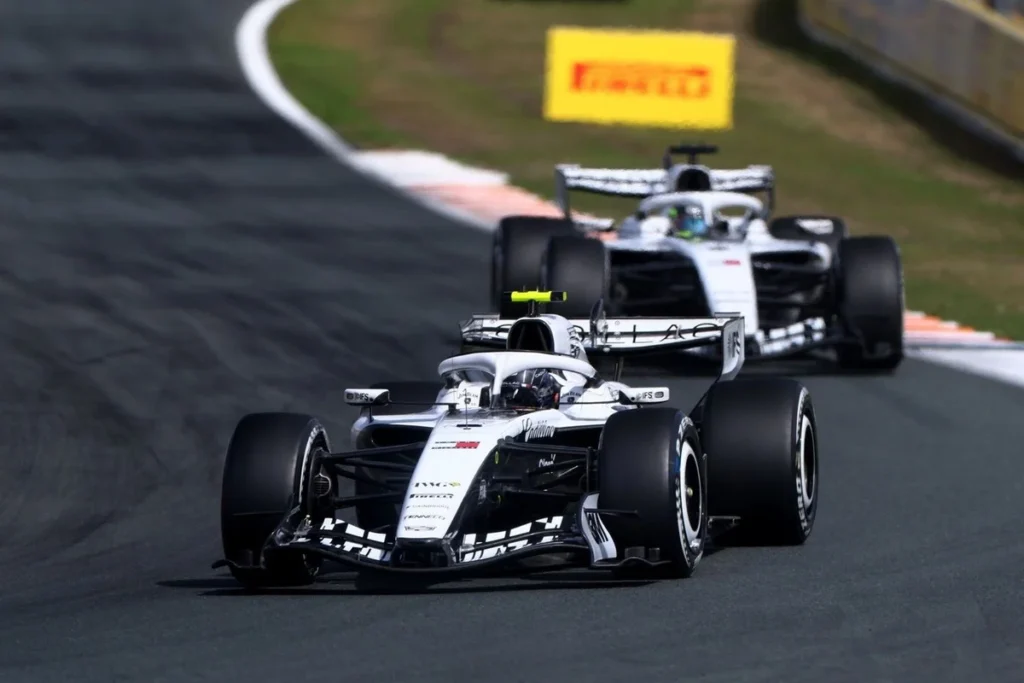
The protracted contract negotiations surrounding Cadillac F1 have finally concluded, with the team confirming Valtteri Bottas will remain in his seat for the 2027 Formula 1 season. This significant announcement, initially reported by sportsamo.com, signals a clear strategic direction for the American-backed outfit, prioritizing experienced continuity over a potentially disruptive driver change, even as the team grapples with fundamental performance challenges that have left it languishing at the rear of the grid.
The decision to retain Bottas, alongside teammate Sergio Perez, brings an end to what has been described as the longest-running driver saga of the current F1 calendar, albeit one that played out largely away from the championship limelight given Cadillac’s struggles. While the narrative lacked the high-stakes drama of front-running teams, it offers a revealing glimpse into the internal pressures and pragmatic realities facing a nascent F1 constructor. The "one plus one" contract Bottas was understood to be on, featuring an extension clause, meant the decision was always going to be a critical barometer of the team’s self-assessment and future ambitions.
On paper, the statistics from the past season paint a challenging picture for Bottas. He was outqualified by Perez on 11 occasions to his 9, and finished behind the Mexican in five of the six races where both cars saw the chequered flag. More damning were the stark performance gaps observed in races like Azerbaijan and Singapore, where Bottas reportedly fell up to two seconds a lap adrift of his teammate. For a driver of Bottas’s pedigree – a ten-time Grand Prix winner and multiple Constructors’ Champion with Mercedes – such deficits are not only conspicuous but deeply concerning. His reputation, built on consistent, reliable, and often rapid performances, has taken a hit as he navigates the complexities of a struggling new team. While Bottas is reportedly well-liked and respected within the Cadillac garage, the discernible delay in triggering his contract extension speaks volumes about the extensive internal scrutiny his performance, and indeed the team’s overall trajectory, has undergone.
This driver decision cannot be divorced from the broader organizational upheaval at Cadillac F1. It has been an open secret since the summer that a significant chasm exists between the team’s internal assessment of its progress and the far more demanding expectations of its ultimate owners, TWG Motorsports and General Motors. When Cadillac first announced its ambitious entry into Formula 1, there was a palpable sense of excitement, particularly around the "American Dream" narrative it embodied. The vision was clear: to establish a competitive U.S.-backed team capable of challenging the established order. However, the reality of building an F1 operation from scratch, even with substantial financial backing, is a monumental task fraught with unforeseen hurdles.
Former team principal Graeme Lowdon, a veteran of F1’s smaller outfits like Marussia and Manor, had often expressed the view, shared by many seasoned paddock observers, that simply getting two functional cars on the grid for the season opener, given the compressed timelines, was a tremendous achievement. This perspective, born from an understanding of the immense logistical and technical challenges of F1 entry, clashed directly with the corporate owners’ far more aggressive performance benchmarks. GM and TWG Motorsports, accustomed to success in other motorsport arenas and with the vast resources of an automotive giant, evidently expected much more than mere participation. This divergence in expectations ultimately led to a "summer decapitation exercise," with Lowdon being axed and replaced by Marcin Budkowski.
Budkowski’s appointment signaled a clear shift. With a background as a former aerodynamicist and experience in senior management and technical roles at Alpine and the FIA, he brings a different kind of expertise – one focused more acutely on technical execution and rapid development. His mandate is undoubtedly to accelerate Cadillac’s competitive climb, but he inherits a team wrestling with deeply embedded technical maladies.
A statistically significant cluster of reliability and performance issues has plagued Cadillac throughout the season, predominantly centering on the management of brake temperatures. While isolated incidents like engine failures or the cross-threaded wheelnut that ended Bottas’s Sao Paulo GP are unfortunate, the persistent brake problems are indicative of a more systemic issue. These problems have not only led to outright retirements due to failures in the brakes themselves or adjacent components like the suspension but have also severely compromised performance in races the drivers did manage to finish. The necessity for "lift-and-coast" driving, where drivers reduce throttle input earlier to cool the brakes, directly impacts lap times and strategic flexibility, effectively handcuffing the team’s race pace.
Lowdon had often framed these brake temperature issues as symptomatic of the inherent challenges a "new" team faces. However, this explanation clearly did not satisfy his superiors. This highlights a crucial "knowledge gap" that often exists between experienced motorsport engineers and corporate stakeholders. It’s deceptively easy for an "armchair expert" to suggest simplistic solutions, such as fitting larger brake ducts to resolve overheating. The reality of Formula 1 aerodynamics and car design is infinitely more complex. The aerodynamic detailing required to optimize brake cooling is a delicate dance of compromises, requiring meticulous management of airflow and temperatures across both axles, while also factoring in their critical interaction with tire performance. Any change in one area can have unforeseen ripple effects elsewhere in the car’s intricate aerodynamic package, making easy answers elusive. Bottas himself has frequently alluded to "unexplained fluctuations" in the car’s performance, suggesting deeper, unresolved mysteries within the Cadillac C1 chassis. Such inconsistencies make setup optimization a nightmare and driver feedback correlation a Herculean task.
Given these pervasive technical woes, the decision to maintain an experienced driver lineup becomes rationally compelling, if not entirely comfortable. Industry insiders suggest that this outcome was the topic of considerable debate behind the scenes. The usually eloquent Budkowski’s "tongue-tied responses" to questions on the driver subject throughout the season hinted at significant differences of opinion at senior levels, likely between the pragmatic technical leadership advocating for stability and the commercially driven owners eager for a fresh face, particularly an American one. For a team struggling with fundamental car performance, experienced drivers like Bottas and Perez are invaluable. They provide consistent, high-quality feedback, help benchmark development directions, and are less prone to rookie errors that could further derail a fragile operation. Their collective experience, encompassing wins, podiums, and years of top-tier F1 development, offers a steady hand in turbulent waters.
The long-term vision for Cadillac F1, heavily influenced by its American ownership, includes bringing an American driver into Formula 1. This ambition has fueled speculation around several talents, most notably Colton Herta. TWG Motorsports CEO Dan Towriss has invested substantial energy in supporting Herta’s transition from IndyCar to Formula 2, clearly aligning with the team’s stated goal. Herta, for his part, remains outwardly confident. "I back myself 100 percent on everything," he declared after an FP1 outing in Mexico, "I can be as quick as anybody… So 1000 percent, I back myself in being able to do this [getting an F1 seat]." While Herta’s talent in IndyCar is undeniable, the leap to F1, particularly into a struggling team, is immense, and the Super License requirements remain a critical hurdle. His current "holding pattern" reflects the team’s immediate need for stability over aspirational projects.
Other drivers have also entered the conversation, highlighting the depth of the team’s talent scouting and the pressure to find future stars. Frederik Vesti, Mercedes’ test and reserve driver, was considered, partly due to his connection with TWG Motorsports through racing for Cadillac in IMSA. Vesti, a solid performer and F2 runner-up in 2023, is described by Mercedes insiders as a "safe pair of hands" but typically "two or three tenths off" their full-time F1 drivers. In the razor-thin margins of F1, that gap is substantial, suggesting his future might more realistically lie in sportscars, a path his recent non-single-seater focus seems to confirm.
Jak Crawford, an American-born Aston Martin reserve, also didn’t make the cut. While he ticks the crucial "US-born" box, he wasn’t deemed a "meaningful performance upgrade" over Bottas, implying that Cadillac is looking for a truly transformative talent rather than just another promising junior. The team’s struggles mean they need a driver who can not only adapt but also extract performance from a difficult car and provide precise development feedback.
Intriguingly, Esteban Ocon, fresh on the market after being dropped by Haas, was not even a fringe candidate. His past "bad blood" with Sergio Perez during their Force India days, coupled with his well-known tendency to be "spooked by the kind of technical poltergeists to which the Cadillac seems prone," made him an unsuitable option. Ocon’s aggressive driving style and sometimes volatile temperament would likely exacerbate, rather than alleviate, the internal and technical pressures at Cadillac.
Looking further down the development pipeline, Ugo Ugochukwu, who is set to move to F2 next season after securing the F3 title this year, remains a prospect. His stock has risen following a challenging rookie F3 campaign and subsequent departure from McLaren’s driver development program. However, doubts persist regarding his 1.92m frame and whether it can be accommodated within the inherent packaging limitations of a modern F1 car without compromising performance – a genuine concern given the tight regulations governing cockpit dimensions and weight distribution.
For the 2027 season, at least, the driver line-up remains unchanged. This decision unequivocally clarifies the consensus reached within Cadillac F1, however uneasy: the car’s inherent performance deficiencies remain the team’s most significant shortcoming. Sacrificing an experienced, respected driver like Valtteri Bottas would not address these deep-seated technical issues. Instead, it would merely add another layer of instability to an already complex equation. The path forward for Cadillac F1, under Marcin Budkowski’s leadership, is clearly focused on technical development and harnessing the invaluable feedback of its seasoned driver pairing to elevate the car’s performance. The "American Dream" is still alive, but it will be built on engineering excellence and incremental gains, rather than just aspirational driver choices, in the competitive cauldron of Formula 1.







