In a recent online outburst that has ignited discussions across the boxing world, boxing luminary Terence "Bud" Crawford has publicly questioned the perceived snub of his former gymmate, Lester Martinez, in his pursuit of a superfight with Mexican icon Canelo Alvarez. The report, originating from sportsamo.com, highlights Crawford’s vocal frustration as he champions Martinez’s cause, questioning the rationale behind sanctioning bodies and promoters seemingly overlooking an interim champion for a shot at undisputed glory. However, this impassioned defense, while rooted in loyalty, appears to sidestep the complex realities of modern boxing economics and the established pecking order that dictates who gets to dance with the biggest stars.
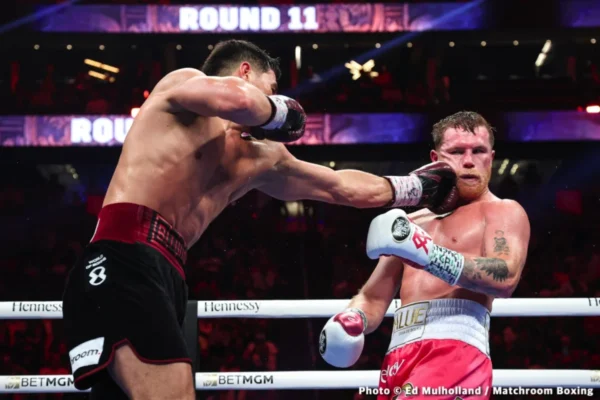
At the heart of Crawford’s grievance is the apparent discrepancy in how Martinez and Christian Mbilli have been treated regarding their claims to a Canelo Alvarez showdown. Mbilli, who held the full WBC super middleweight title, was granted his opportunity against Canelo on October 31st, a bout that saw Alvarez emerge victorious via decision. Martinez, conversely, holds only the interim WBC super middleweight strap. Crawford’s argument, broadcast on social media platform X, centers on the perceived inconsistency: "I don’t get it. It’s crazy how the @wbcmoro say Lester not good enough to fight @Canelo but Mbilli was. This the type of stuff I don’t like with these sanction bodies, they pick and choose. How being the interim champion not good enough for a chance at the championship."
This sentiment, while understandable from a fighter’s perspective and particularly from a close associate like Crawford, overlooks the crucial differentiating factors that influence superfight negotiations. While Martinez possesses an interim title, it is Mbilli’s prior status as a full champion, coupled with his perceived higher profile within certain boxing circles, that likely gave him the edge in securing the lucrative bout. In today’s boxing landscape, particularly for a fighter of Canelo Alvarez’s stature, the equation for a massive payday is not solely based on championship status but is heavily weighted by name recognition, marketability, and the potential for a global spectacle.
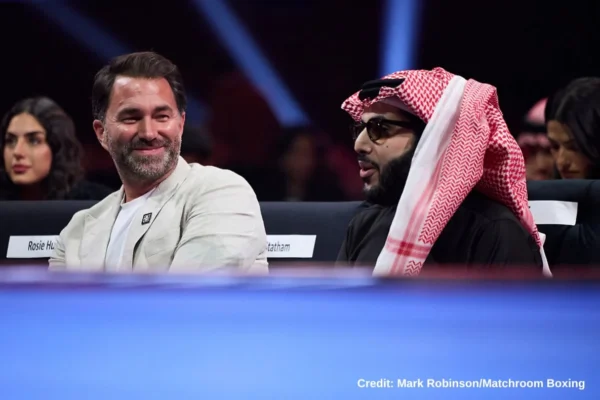
Canelo Alvarez, under the ambitious promotional umbrella of Turki Alalshikh, has ascended to a stratospheric level where his fights are curated as global events designed for maximum commercial impact. Alalshikh’s strategy prioritizes compelling narratives and proven draws, aiming to capture the attention of casual fans as well as hardcore aficionados. In this context, Lester Martinez, despite his interim title, remains a relative unknown to the broader sporting public. His resume, while growing, lacks the marquee victories and compelling storylines that would naturally propel him into the conversation for a fight with an athlete who commands tens of millions of dollars per appearance. Simply voicing displeasure on social media, as Crawford has done, is unlikely to generate the commercial leverage required to force a fight of this magnitude.
Furthermore, Crawford’s public outcry presents a striking instance of a double standard, particularly when examining his own path to a superfight with Canelo. In 2025, Crawford himself experienced what many observers considered a significant shortcut. He was granted a direct route to challenge Canelo for the undisputed super middleweight championship, bypassing the established mandatory contenders and the arduous process of working his way up the divisional rankings. This move, while immensely beneficial to Crawford, was not a product of traditional meritocratic progression but rather a testament to his undefeated record, his status as a pound-for-pound elite, and, crucially, the favorable optics he presented to promoters like Alalshikh.
The narrative surrounding Crawford’s 2025 bout with Canelo also warrants scrutiny. Leading up to that highly anticipated clash, Crawford had a contentious victory over Israil Madrimov. Many observers and fans believed Crawford had lost that fight, or at the very least, had been fortunate to escape with a close decision. Despite these perceived struggles and the presence of formidable middleweight and super middleweight contenders, Crawford was strategically positioned for his shot at undisputed status without having to navigate the typical gauntlet of mandatory challengers. This trajectory underscores the reality that in the upper echelons of professional boxing, personal relationships, promotional narratives, and marketability often play as significant a role, if not more so, than a strict adherence to traditional ranking systems.
Even after achieving undisputed championship status, Crawford’s own approach to mandatory defenses has been a subject of discussion. He opted to step away from the division, choosing not to immediately face dangerous, albeit less commercially appealing, contenders such as Martinez or the IBF champion Osleys Iglesias. This decision further highlights the strategic choices made by top-tier fighters to maximize their careers and financial opportunities.
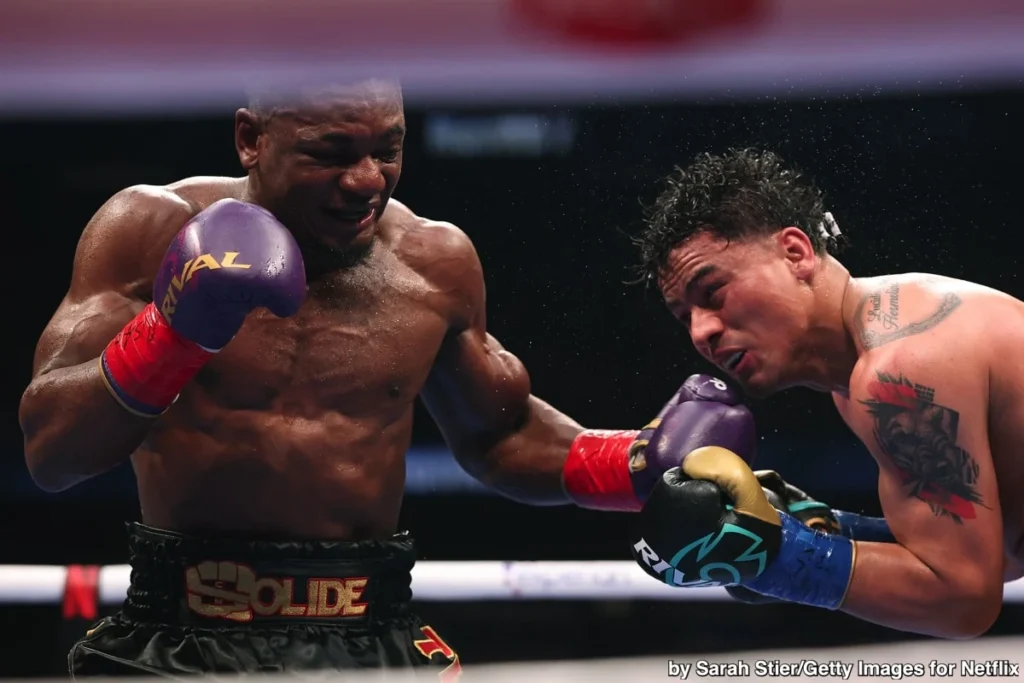
Now, Crawford’s advocacy for Martinez, his former training partner under the tutelage of Brian "BoMac" McIntyre, appears to stem from a sense of camaraderie and a desire to see a fellow fighter receive similar preferential treatment. However, Martinez lacks the inherent star power and promotional backing that propelled Crawford into his superfight. His resume, while solid, has not yet produced the kind of seismic victories that would capture the imagination of the wider boxing audience. His recent performances, including his interim title victories over Immanuwel Aleem and Luka Plantić, were not universally lauded as dominant displays. The draw against Mbilli, while hard-fought, was also criticized for its reliance on excessive clinching and shoving, with many feeling he was fortunate to secure that outcome.
For Lester Martinez to truly position himself for a fight with Canelo Alvarez, the path forward is clear, and it lies in the ring. He needs to actively seek out and defeat genuine threats within the super middleweight division. This includes challenging and overcoming established names such as IBF champion Osleys Iglesias, Darius Fulghum, and Bektemir Melikuziev. Furthermore, a strong showing against top middleweights making a move up, like Janibek Alimkhanuly or Carlos Adames, would significantly bolster his credentials and public profile. Until Martinez demonstrably earns his stripes by conquering formidable opposition and building a compelling narrative that resonates with the paying public, Canelo Alvarez, driven by commercial imperatives, has little incentive to grant him the highly coveted opportunity. The era of "handouts" for fighters without proven market value at the championship level appears to be a relic of a bygone era in boxing’s elite landscape.